


























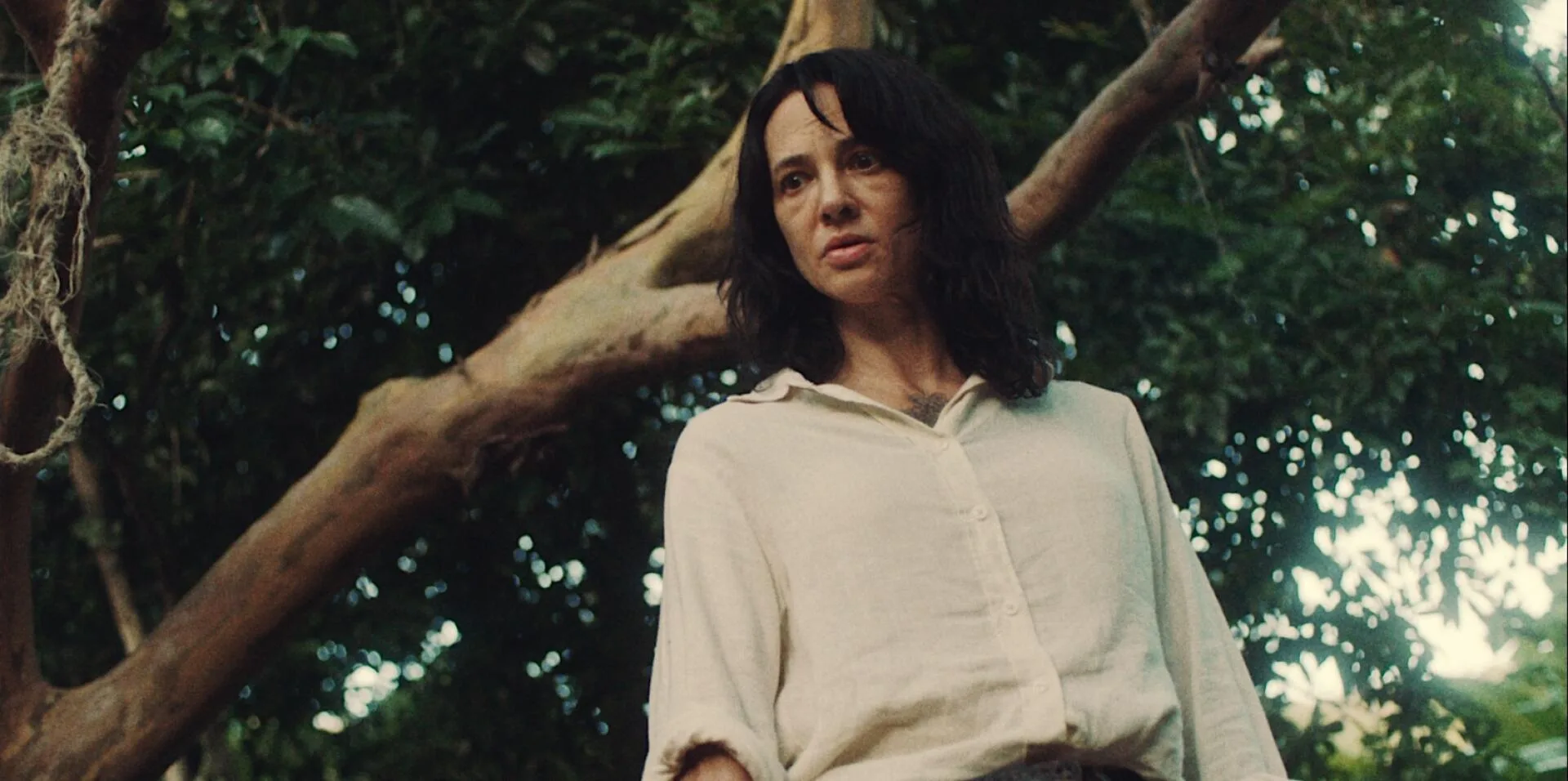

Jorge Thielen Armand’s third feature arrives in the Directors’ Fortnight at Cannes carrying the particular weight of a filmmaker who has found his obsession and refuses to let it go. Like his previous works La Soledad and La Fortaleza, Death Has No Master plants itself inside a decaying property and waits, watching what the walls do to the people trapped within them. The Venezuelan jungle presses in. The past refuses to stay buried. And a woman named Caro, played by Asia Argento, steps off a plane into a country that no longer recognises her, to claim a house that no longer belongs to her in any meaningful sense.
The premise is deceptively simple: Caro has inherited her late father’s cacao plantation and wants to sell it. What she finds is a crumbling mansion occupied by former staff with no intention of leaving. Beneath that property dispute runs something far darker — a reckoning with colonial inheritance, cyclical violence, and the particular rot that sets in when ownership is contested across generations. Armand’s film is slow, atmospheric, and uneven, alive with dread in ways its drama sometimes fails to match.
The Law of the Strongest
The conflict at the film’s centre is waged on two fronts simultaneously, and Armand is shrewd enough to make both feel legitimate. Caro wants the house. Sonia (Dogreika Tovar), the daughter of her father’s former housekeeper, has been living there for years with her young son Maiko (Yermain Sequera), and Venezuelan law is on her side: occupants of five years or more acquire rights that complicate eviction beyond simple legal remedy. When Caro pushes, Sonia pushes back with a claim more personal than legal, suggesting that Maiko is Caro’s father’s child.
What makes this standoff philosophically interesting is that neither woman is wrong, exactly. Caro arrives wearing leather boots and a gaucho hat, expecting the deference of ownership, receiving instead the cold arithmetic of abandonment. Where was she, Sonia asks, while the house fell apart? Caro’s absence has its own moral cost. She embodies something the film treats with clear-eyed scepticism: the assumption that inherited title survives neglect, that the right to a place can be preserved across decades of distance.
Sonia, in contrast, represents a different kind of claim — presence, labour, survival. The police make their sympathies plain. The community is hers. When Caro turns to Roque (Jorge Thielen Hedderich, the director’s father, a recurring figure across Armand’s work), a fixer with connections to men carrying assault rifles, the film’s thesis crystallises: “the law here doesn’t work.” What follows is the inevitable logic of a world where legality has long since ceded to force.
The film opens with a dreamlike sequence of masked, bloodied men in a ravine, a scene that hovers between personal trauma and colonial memory. Armand never explains it. Children in the film discuss murder with the flat affect of weather reports. The ending seals the argument: violence is generational, self-replicating, and the blood spilled today has already been promised to tomorrow.
Also Read






The Mansion as Wound
The house does not merely host the story. It enacts it. A stone construction of chipped parquet, Corinthian column motifs, peeling plaster, and Victorian furniture being slowly digested by the encroaching jungle, the mansion feels less like a location than an organism with memory. Armand’s location work achieves something rare: the building carries history in its fabric, as though grief has mineralised into its walls over generations.
The grainy cinematography reaches deliberately toward 1970s genre cinema, summoning the humid paranoia of Deliverance and the brutal moral geometry of Sam Peckinpah’s Straw Dogs. There is something of Italian giallo in the film’s visual grammar too, an influence Argento’s presence only deepens. The sound design by Sylvain Bellemare layers torn fragments of laughter and ghostly voices into the ambient noise, so that the past feels present as a physical pressure rather than a narrative device. Vittorio Giampietro’s score sustains a nerve-fraying disquiet through the quieter passages, doing some of the heaviest thematic lifting.
Recurring objects, a whip, a machete, knives scattered with a casualness that registers as ominous, seed the violence with a Chekhovian patience. The hallucinatory visions that stalk Caro through the mansion remain deliberately unresolved. They may be trauma resurfacing, or something closer to colonial guilt made sensory. Armand is wise not to explain them.
The pacing is slow by design, and this is where the film splits. The first act is genuinely oppressive, the pressure building through atmosphere rather than incident, which is an achievement. The middle section, however, repeats its gestures too often. Caro looks at faded photographs. Caro lies in bed. The film’s carefully constructed dread begins to feel like stasis.
What the Cast Can and Cannot Carry
Asia Argento learned Spanish for the role and brings to it a feral physicality that serves the film’s register well. Her instincts are sound; her presence is commanding in the film’s more visceral passages. The problem is the character herself, who is written too sparsely to bear the weight placed on her. Caro’s backstory, her father’s alcoholism, her childhood departure, the trauma the opening sequence implies, exists in outline rather than depth. The film expects us to feel the accumulated damage of her history without quite giving us enough to feel it with.
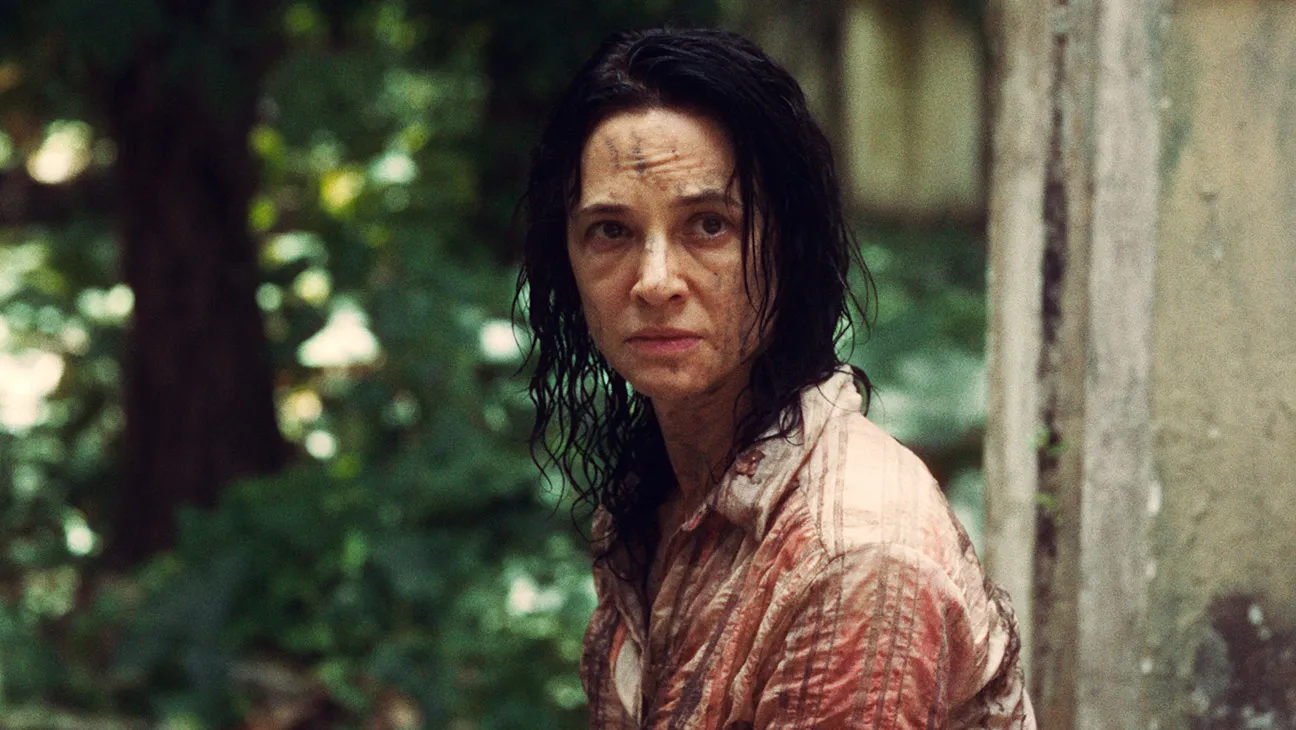
There is also a tonal friction in the casting that the film never fully addresses. Argento brings with her the cultural freight of European genre cinema, and placing that freight into a specifically Venezuelan postcolonial story creates a register that sits slightly askew. It may be an intentional alienation effect, Caro as permanent outsider; it may be a miscalculation. The film seems genuinely uncertain, which is itself a kind of answer.
Dogreika Tovar, a non-professional, is the film’s most convincing performance. She holds the screen with quiet authority, making Sonia’s claims feel lived-in and complex, and she holds her ground against Argento without strain. Yermain Sequera as Maiko registers strongly in a small role. Hedderich brings a worn pragmatism to Roque that fits the film’s moral landscape precisely.
Where the atmospherics exceed the drama is also where Death Has No Master reveals the gap between what it is and what it aspires to be: a film of genuine menace, occasionally brilliant, and somewhat less than the sum of its dread.
Death Has No Master is a psychological revenge thriller that premiered in May 2026 as part of the Directors’ Fortnight section at the 79th Festival de Cannes. Directed by Jorge Thielen Armand, the film tells the story of Caro, a woman who travels from Italy back to her birthplace in Venezuela to sell her late father’s colonial cacao plantation. As of May 2026, the film is appearing at international film festivals; information regarding wider commercial streaming or theatrical distribution platforms will likely be announced following its festival circuit run.
Full Credits
Title: Death Has No Master (La muerte no tiene dueño)
Distributor: H264 Distribution
Release date: May 2026 (World Premiere: Directors’ Fortnight at the 79th Festival de Cannes)
Rating: Not publicly rated
Running time: 95 minutes
Director: Jorge Thielen Armand
Writers: Jorge Thielen Armand, Luis Armando Arteaga
Producers and Executive Producers: Jorge Thielen Armand, Stefano Centini, Arantza Maldonado
Cast: Asia Argento, Jorge Thielen Hedderich, Jericó Montilla, Dogreika Tovar, Rafael Gil, Yermain Sequera
Director of Photography (Cinematographer): Luis Armando Arteaga
Editors: Felipe Guerrero
The Review
Death Has No Master
Death Has No Master is a film of real atmospheric power undone by uneven execution. Armand conjures genuine dread from decaying walls and layered sound, and his postcolonial allegory has teeth. But the script leaves its protagonist too thin to carry the moral burden placed on her, and the middle act mistakes repetition for tension. When the violence finally arrives, it earns its brutality. Getting there tests patience.
PROS
- Masterful atmosphere and sound design
- Sharp postcolonial allegory
- Dogreika Tovar's commanding performance
- Viscerally effective finale
CONS
- Argento's character is underwritten
- Sluggish middle act
- Hallucinatory elements feel underdeveloped
- Tonal friction never fully resolved