
























Haitian filmmaker Michèle Stephenson shapes a disquieting portrait of historical reckoning in her 96-minute documentary True North, which premiered at the Toronto International Film Festival. The film turns toward the 1969 student protest at Sir George Williams University in Montreal, Quebec, now recognized as the largest campus protest in Canadian history.
A racism complaint from West Indian students against biology professor Perry Anderson widened into an existential standoff after the university administration refused a transparent investigation. Students began a two-week peaceful occupation of a ninth-floor computer lab. That quiet resistance ended in violence when a police raid sparked a destructive fire, leaving over two million Canadian dollars in damages and nearly one hundred arrests.
Stephenson places this local fracture inside an international field of resistance against systemic bias and colonial structures. The film strips away Canada’s polished reputation for peace, revealing cracks beneath the ice. Through this historical wound, True North interrogates state identity and suggests that state violence often carries the shape of the colonial architecture it claims to have left behind.
Anatomy of the Diaspora
Stephenson makes a deliberate structural choice by withholding the university sit-in until roughly an hour into the film. The first half rests on the personal histories of the participants, allowing lived experience to gather weight before the institutional rupture arrives.
We follow the linear paths of Norman Cook, Brenda Dash, Rodney John, Philippe Fils-Aimé, and Rosie Douglas. Their migrations from Haiti, Dominica, Trinidad and Tobago, and Toronto converge in Montreal, forming a constellation of displaced lives searching for refuge, thought, and breath.
The film faces grim geopolitical realities with clear eyes. One student flees the American-backed dictatorship of François Duvalier in Haiti, escapes state terror, encounters the threat of the US military draft, and finally takes a bus to Montreal. The city was becoming a beacon for Caribbean intellectuals after the 1968 Congress of Black Writers. Stephenson builds a dense domestic record to show that university bias existed as a systemic standard, a practice woven through institutional life.
Also Read





The film invokes the forced destruction of Africville in Halifax, Nova Scotia, where a historic Black community was razed after residents had been systematically denied running water and sanitation. This act of domestic erasure mirrors Canadian corporate and institutional exploitation abroad, specifically through aggressive banking interests and schools run by Quebecois nuns in the Caribbean.
The Silver and the Discord
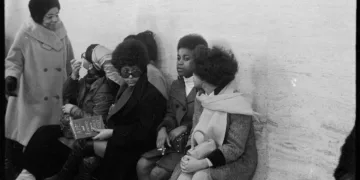
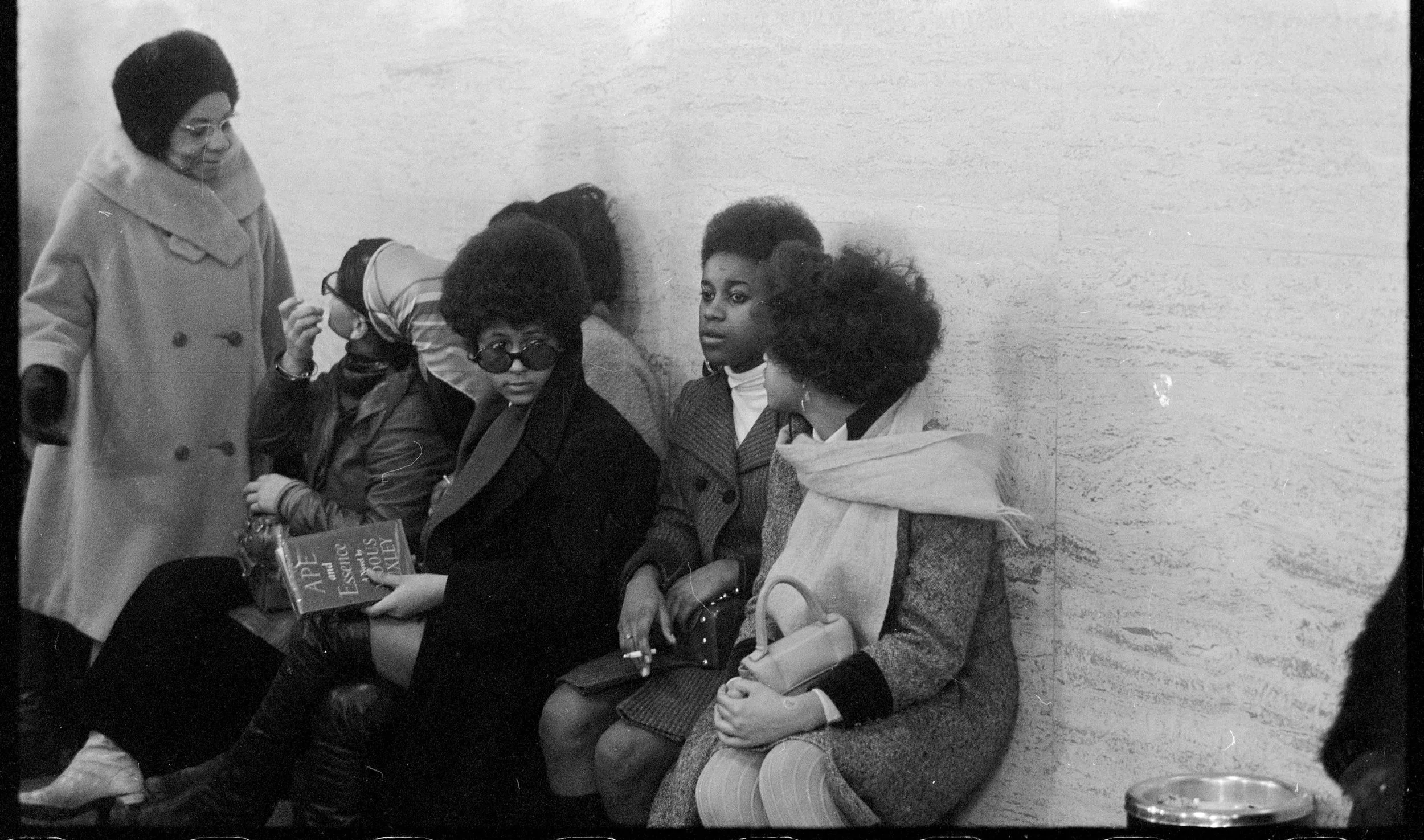
The film’s aesthetic identity operates as a haunting passage across time. Stephenson shoots the contemporary interviews in monochrome, matching the extensive 16mm archival footage from the late 1960s. The choice creates a stark visual continuity, compressing the distance between past events and present reflections. The archival material carries a fragile, silvery quality, its fine grain resembling ghosts preserved on celluloid. History appears less like a sealed record than a presence still breathing in the room.
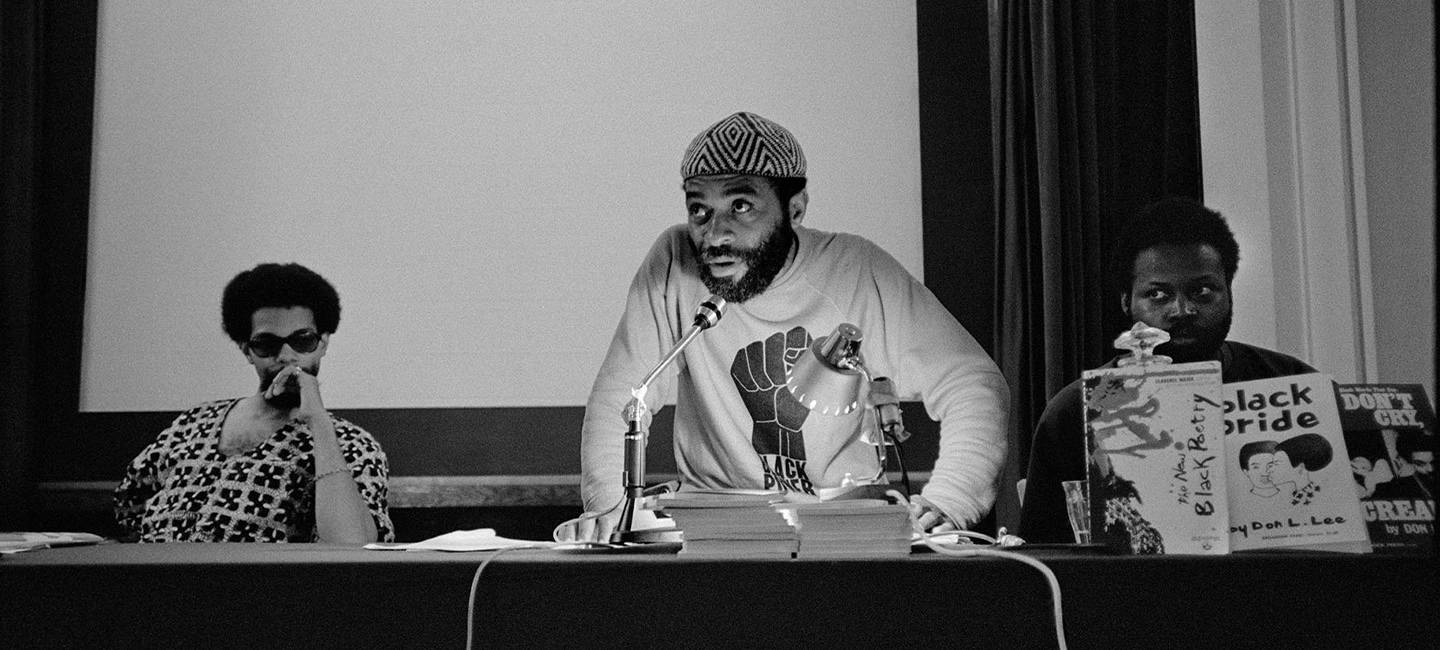
That visual haunting finds its echo in an auditory landscape shaped by composer Andy Milne, who uses discordant jazz and vintage gospel selections to evoke deep spiritual unrest. The music functions as an emotional anchor, especially through the recurring traditional spiritual song “I’m Gonna Sit at the Welcome Table.” The track becomes a profound symbol of the discrimination faced by these students.
It gives sound to their demand for equal treatment and to the melancholy of a promise continuously delayed. The music suggests that the past remains unsettled, a low frequency beneath the false calm of the present. Through these deliberate choices, the film becomes an elegiac space where memory and sound dissolve the seams between decades, leaving the viewer alone with history’s unresolved weight.
The Myth of the Polite State
The documentary delivers a severe challenge to the popular global image of Canadian multiculturalism, placing polite public demeanor beside institutional bigotry. This hypocrisy takes shape through the actions of professor Perry Anderson, who penalized a Black student with a zero after a traumatic car accident and permitted a white classmate to reschedule an exam missed for a Florida vacation. The institution protected the oppressor. The mainstream media then acted as an extension of state power, demonizing the student activists as lawless agitators.
The film finds unexpected resilience in the long-term path of these targeted leaders. After enduring police brutality, prison terms, and targeted deportations, figures like Rosie Douglas transformed suffering into acute political literacy, with Douglas eventually becoming the Prime Minister of Dominica. Stephenson leaves her audience with a sober realization about the cyclical nature of human struggle.
These historical conflicts remain deeply tethered to modern societal friction surrounding immigration and discrimination. True North asks viewers to sit within the cold light of uncomfortable systemic truths. It suggests that genuine liberation requires the painful dismantling of the myths we build to keep ourselves warm.
True North premiered internationally at the Toronto International Film Festival on September 6, 2025, and subsequently screened at the Chicago International Film Festival, the International Documentary Film Festival Amsterdam (IDFA), and the Kingston Canadian Film Festival. The documentary is slated to make its television broadcast premiere across the United States on the PBS series Independent Lens on July 6, 2026, making it accessible on the PBS App and official streaming platforms.
Where to Watch True North (2025) Online



Full Credits
Title: True North
Distributor: ITVS, Firelight Media Inc., Black Public Media, PBS (Independent Lens)
Release date: September 6, 2025
Running time: 96 minutes
Director: Michèle Stephenson
Writers: Michèle Stephenson
Producers and Executive Producers: Leslie Norville (Producer), Miranda de Pencier (Executive Producer), Nelson George (Executive Producer), Stanley Nelson (Executive Producer for Firelight Media), Marcia Smith (Executive Producer for Firelight Media), David Eisenberg (Supervising Producer), Noland Walker (Consulting Producer)
Cast: Dr. Norman Cook, Brenda Dash, Rosie Douglas, Josette Elysée Pierre-Louis, Philippe Fils-Aimé, Dr. Rodney John, Rocky Jones
Director of Photography (Cinematographer): Stephen Chung
Editors: Shannon Kennedy, Sarah Enid Hagey
Composer: Andy Milne
The Review
True North
True North stands as an unvarnished, visually haunting excavation of state-sanctioned amnesia. By refusing to isolate the Sir George Williams University protest from the wider geography of colonial displacement, Michèle Stephenson converts a historic student occupation into a profound meditation on the enduring mechanics of systemic bias. The stylistic decision to anchor raw, monochrome modern reflections alongside the ghostlike quality of archival 16mm celluloid collapses the protective distance of time. Despite moments where the expansive scope risks overcrowding individual narratives, the documentary delivers a necessary, poetic rupture to the mythology of national innocence.
PROS
- Immersive visual continuity established by pairing contemporary monochrome cinematography with archival 16mm film grain.
- Complex structural focus that prioritizes deep personal histories and transnational global systems above basic linear event recaps.
- A challenging, discordant musical landscape featuring symbolic arrangements that elevate the emotional urgency of the material.
- Exceptional historical value that uncovers overlooked connections regarding corporate exploitation and international student activism.
CONS
- Deferring the central campus sit-in for nearly an hour might test the patience of viewers seeking a conventional, plot-driven historical documentary.
- The extensive breadth of global, historical, and economic contexts leaves less screentime to deeply explore the granular dynamics inside the occupied computer laboratory.