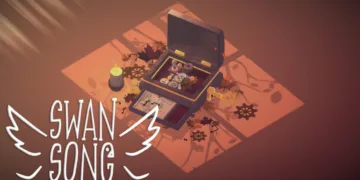






















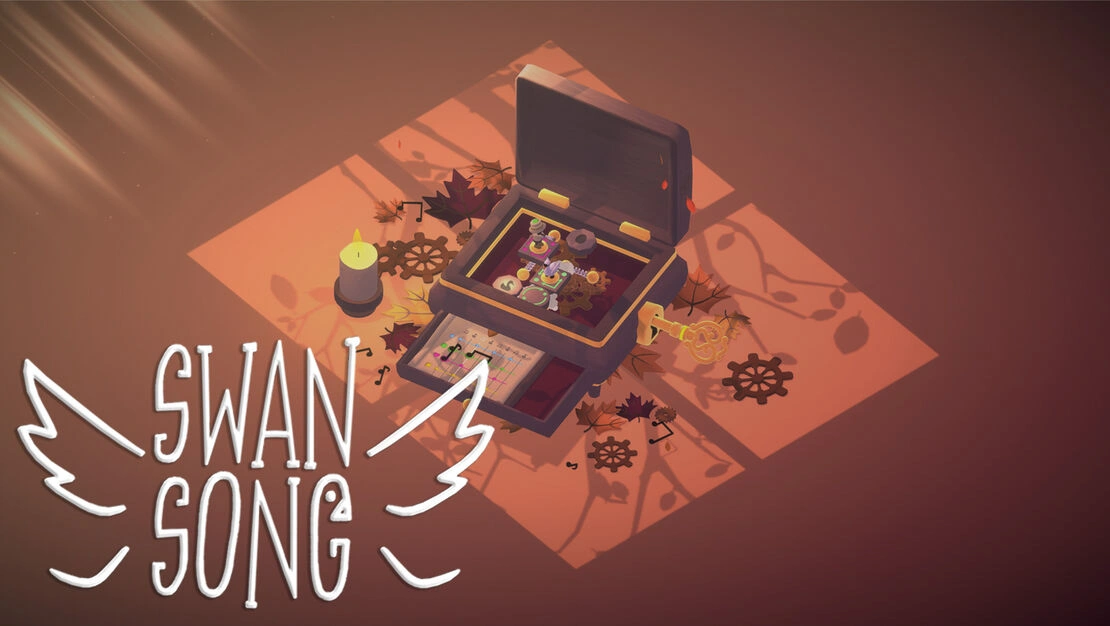

Swan Song is a small game with a careful sense of scale. Business Goose Studios sets the entire experience inside a magical music box, then asks the player to guide a wooden swan across tiny clockwork stages by arranging musical notes on a color-coded score sheet. It sounds like a simple puzzle premise, and mechanically, it is. The strength of the game comes from how much feeling it draws from that simplicity.
Across nine chapters, Swan Song tells the story of a family shaped by illness, death, and grief. The player never walks through a house, speaks to characters, or makes dialogue choices. Instead, the game presents objects, letters, recordings, photographs, and small memories that slowly sketch out a father, a mother, and their daughter.
It is a quiet structure, closer to Gorogoa or A Little to the Left than a traditional narrative game, yet its emotional aim is closer to the intimate grief of Before Your Eyes. The game lasts around three hours, which suits its delicate design. It feels tactile, melancholy, and precise, like a keepsake opened with care.
Puzzles That Think in Beats
The main puzzle system in Swan Song is built around timing. The swan moves automatically with the rhythm of the music box, while platforms, lifts, rotating tiles, hazards, and other mechanisms respond to notes placed on a simplified musical sheet. Each colored line controls a matching colored object on the board. Your task is to arrange the notes so the world shifts at the exact moment the swan needs a path.
This makes the game feel less like solving a static grid and closer to programming a tiny performance. You place a note, turn the key, watch the swan move, then adjust the arrangement when something goes wrong. Failure rarely feels harsh, since the game keeps your note placement intact. You are free to tinker, rewind, and refine without a timer, score penalty, or pressure system hovering over you.
The progression is smart. Early puzzles focus on basic movement, then the game adds double activations, tied notes, ghost notes, glass notes, disappearing tiles, rotating platforms, fragile paths, catapults, clock hands, and hunters who can fire at the swan if activated at the wrong time. Each new idea arrives cleanly, gets room to breathe, then returns later in combination with older mechanics.
That structure gives Swan Song some of the satisfaction found in the best indie puzzle games. Like Baba Is You at a far gentler pitch, it teaches through interaction rather than instruction. Like Monument Valley, it values elegance and readability, making the player feel clever without demanding brute-force mastery.
The limits are clear. The game usually hands you the exact notes required for a solution, which narrows experimentation. Some puzzles can be solved through trial and error because the possible placements are limited. A hint system would have helped during the trickier boards, and a speed-up option would have made repeated attempts smoother. Dragging notes can also feel slightly fussy.
Still, the system works because its rules are clean and its feedback is immediate. You know why the swan failed. You know what to change. That clarity gives the game a steady mechanical pleasure.
Grief Told Through Objects
Swan Song tells its story in fragments. Between puzzle sequences, the music box reveals pieces of a family’s past: medical documents, postcards, letters, photographs, voice recordings, and keepsakes. The mother has died after illness. The father, unable to process the loss directly, creates the box as a memorial gift for his daughter. The swan, the music, and the machinery all become part of his attempt to preserve what is slipping away.
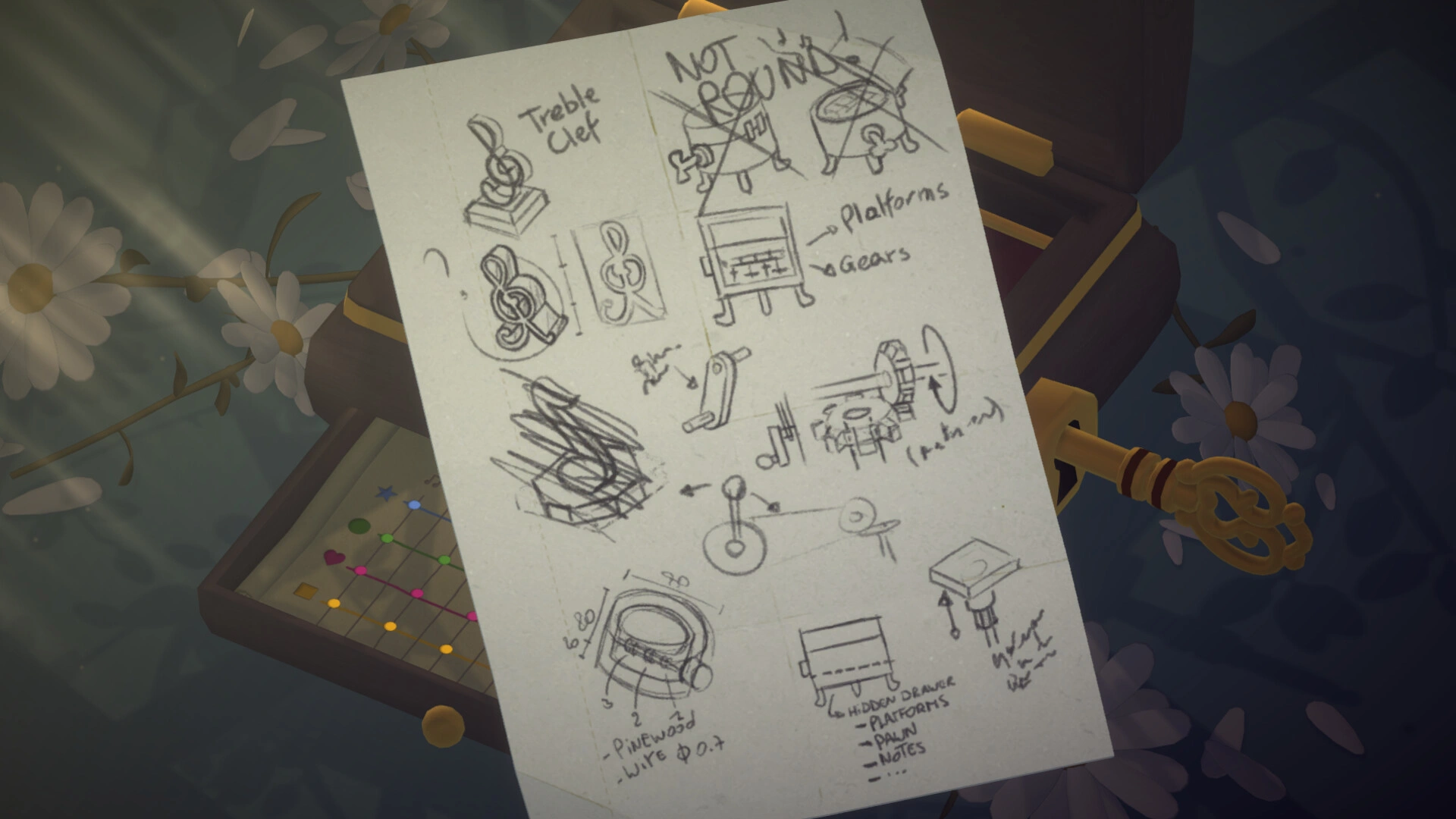
There are no visible characters and no conventional cutscenes. That restraint gives the game much of its power. A hospital memory, a child’s declining grades, a parent’s inability to cope, or an ordinary household object can carry pain without the game spelling out every feeling. It trusts small details.
This is where the mechanics and story meet, though the connection is uneven. At its best, guiding the swan feels like guiding memory itself, arranging pieces of the past so they briefly align. The act of placing notes becomes a ritual, one that mirrors the father’s need to put grief into order. That gives the puzzle solving a thematic charge beyond simple completion.
Yet the game does not always sustain that link. Some puzzles feel mechanically separate from the emotional material surrounding them. You may solve a clever timing challenge, then receive a touching narrative fragment, with the two sitting side by side rather than fully merging. The story also leans on familiar grief-drama beats, and the title’s symbolism can feel direct.
Still, the sincerity matters. Swan Song treats loss with care. It avoids melodrama, uses voice work sparingly, and finds sadness in ordinary family traces. For a game with no branching choices, the emotional consequence comes from participation. You are the one turning the key, setting the rhythm, and opening the next memory.
Handcrafted Atmosphere, Gentle Repetition
The art direction is one of Swan Song’s most convincing achievements. The music box has a warm wooden texture, with brass-like accents, moving gears, sliding platforms, and fragile little mechanisms that look handmade. Each chapter places the box in a new setting that reflects the emotional state of the story: rain at the window, wilted flowers, moving boxes, darker rooms, and quiet domestic spaces that feel lived in without needing a full environment to explore.
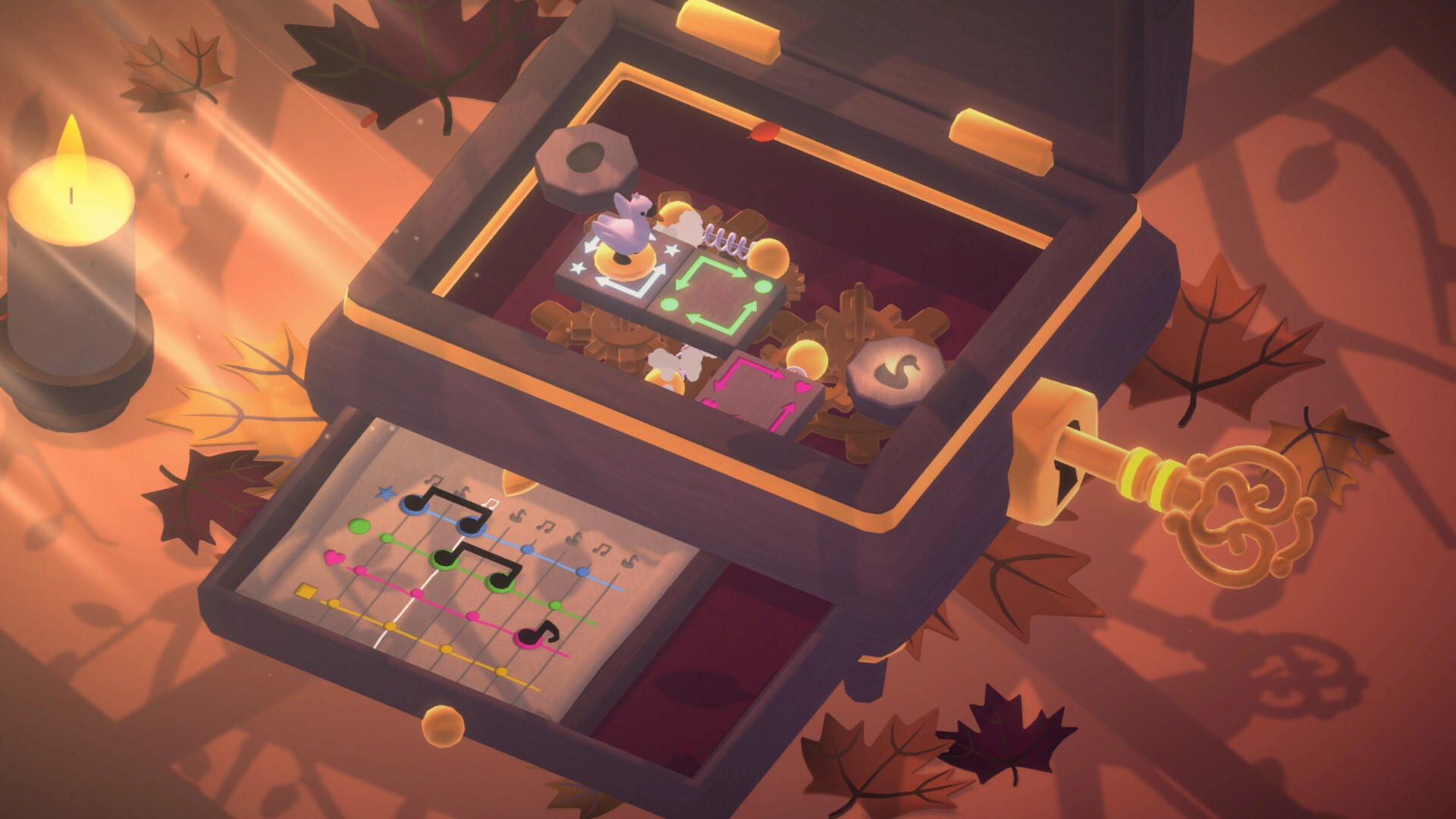
The swan itself has just enough character. Its tiny movement across the board gives it a fragile presence, which makes every fall, collision, or narrow escape land with a little comic panic. Platforms glide, hinges turn, tiles collapse, and clockwork pieces click into place with satisfying physical weight. The game understands the pleasure of watching a machine do exactly what you asked it to do.
Sound is equally important. The score is soft and mournful, guiding the game’s reflective mood without smothering it. Voice recordings add intimacy, and the musical structure of the puzzles gives the whole experience a clear identity. Few puzzle games make their interface feel this connected to their theme.
The main issue is pacing. For a three-hour game, Swan Song sometimes stretches its rhythm slightly too far. The repeated loop of observing, composing, rewinding, and refining begins to feel predictable in the second half. New mechanics continue to appear, yet the emotional and mechanical cadence becomes familiar before the final chapter.
Still, the game’s restraint works in its favor. Swan Song is modest, sincere, and carefully made. Its strongest moments come when the music, miniature machinery, and memory-driven storytelling move together, turning a tiny wooden swan’s path across a box into a quiet act of remembrance.
The Review
Swan Song
Swan Song is a tender, cleverly built puzzle game that turns clockwork timing into an act of remembrance. Its music-box mechanics are readable, satisfying, and carefully paced, while its story handles grief with restraint and sincerity. Some puzzles feel rigid, and the second half repeats its rhythm a little too often, but the handcrafted visuals, gentle score, and emotional storytelling give it lasting warmth.
PROS
- Clever music-box puzzle design
- Warm handcrafted art style
- Touching story about grief and memory
- Forgiving trial-and-error structure
- Strong sound design and score
CONS
- Puzzle solutions can feel restrictive
- No hint system
- Repetition in the second half
- Some story beats feel familiar
- Note placement can feel slightly clumsy