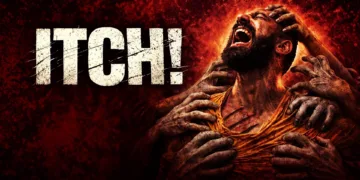



























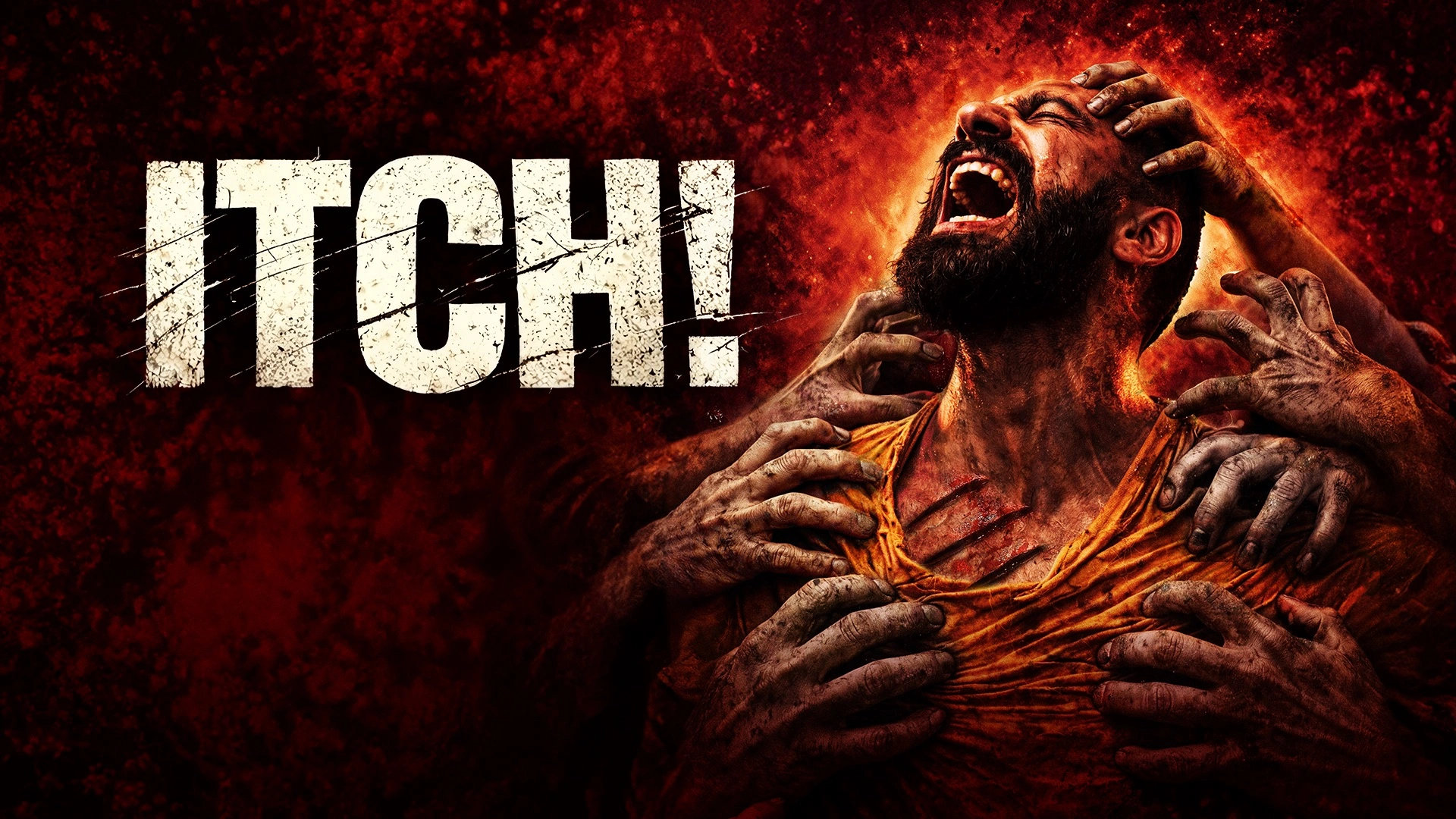

Itch! takes a blunt, nasty little idea and scratches until it bleeds. Written, directed by, and starring Bari Kang, the film imagines a mysterious outbreak that drives people into uncontrollable itching, self-mutilation, violent panic, and death. The result is zombie-adjacent horror with a body-horror trigger: infection here does not begin with a bite or a stumble through fog, but with a need for relief so intense that the body becomes its own enemy.
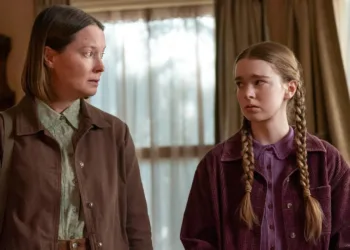
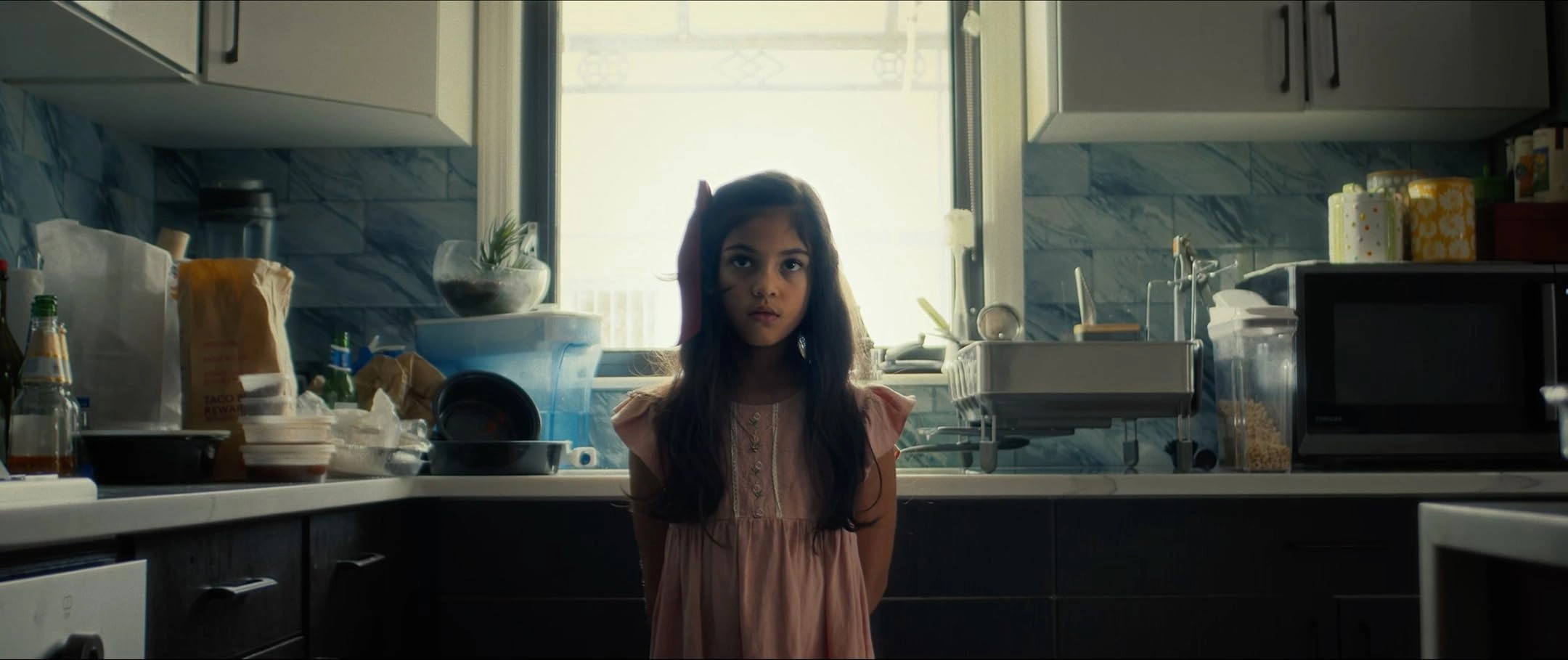
Kang plays Jay, a grieving widower trying to raise his young daughter Olivia after the death of her mother. Olivia no longer speaks, communicating through writing while Jay drifts through guilt, exhaustion, and hidden bottles of liquor. Most of the film unfolds inside Jay’s family-run New York store, a cramped refuge where employees, customers, and angry visitors become trapped as the city collapses outside.
That modest scale gives Itch! its identity. This is a survival film built from shutters, aisles, security cameras, phone alerts, and nervous glances at exposed skin. Its world feels small, yet every sound beyond the door suggests disaster spreading fast.
The Store Becomes a Trap
The strongest dramatic idea in Itch! is that Jay enters the apocalypse already overwhelmed. He is returning to work after personal loss, managing his father’s store, worrying about money, caring for Olivia, and trying to function as a parent while emotionally absent. The outbreak does not interrupt a stable life. It invades one already cracked.
The store becomes shelter first, then prison. Miguel, a former employee seeking what he believes he is owed, arrives with unresolved anger. Gabriella, his hot-tempered niece, brings more volatility into an already tense space. Lisa, the current employee, adds workplace resentment. Henry, an ordinary customer caught in the wrong place, becomes one of the film’s more interesting figures because his uncertainty feels recognizably human. Jay’s father remains present through family obligation and strained communication, grounding the film in generational pressure.
Kang’s script understands that people do not become noble simply because disaster arrives. They become louder versions of themselves. Fear sharpens old resentments. Prejudice slips out. Grief turns into poor decisions. Jay wants to protect Olivia from what is happening, yet the crisis forces him to teach her how unsafe the world can be. That emotional contradiction gives the film its best human material.
The structure does lean on familiar outbreak mechanics. Hidden infections, barricaded survivors, sudden attacks, reanimation, and internal distrust all appear in recognizable form. Some side characters remain closer to function than flesh. Still, the store’s pressure-cooker setup keeps the drama moving, especially when Jay’s parental failure and survival instinct collide.
Horror Built From Sound, Texture, and Restraint
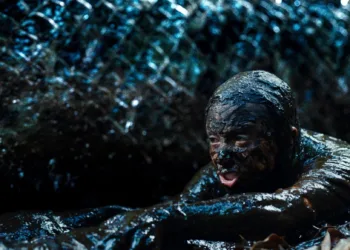
The horror in Itch! works because the central threat is tactile. Watching someone scratch until skin breaks has a strange involuntary power. The viewer starts to feel phantom irritation, which is a clever trick for a film working with limited resources. The opening image of Jay pulling at his fingernails with pliers immediately announces the movie’s appetite for discomfort. It is ugly, intimate, and hard to shake.
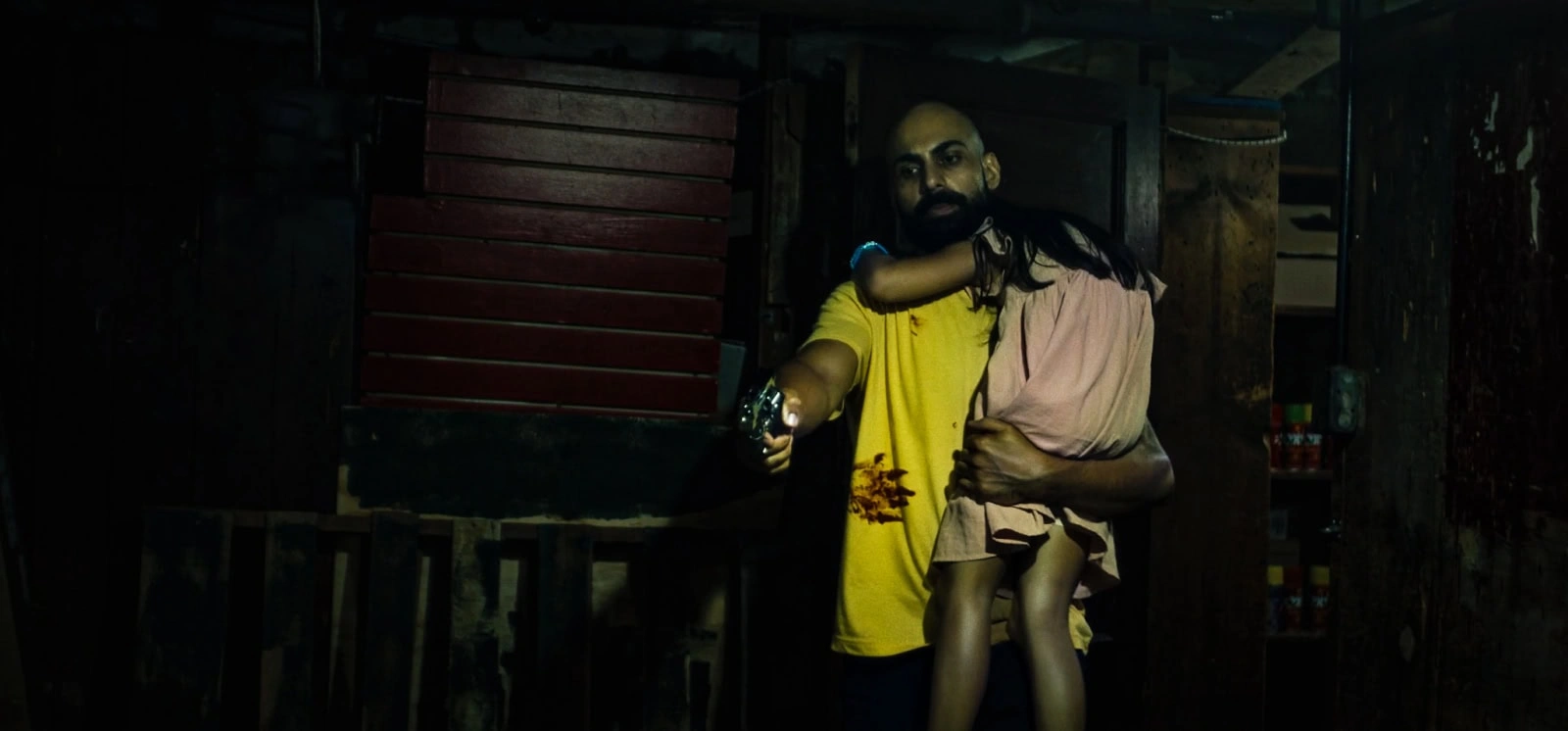
Kang does not have the budget for vast city destruction or crowds of infected bodies flooding the frame, so the film turns restriction into mood. Metal shutters seal the characters inside. CCTV footage gives partial glimpses of chaos. Phone warnings make the crisis feel official, yet incomplete. The sound design does a great deal of heavy lifting, suggesting violence, panic, and collapse just beyond view. That unseen world matters. It lets the imagination fill in what the production cannot show.
The grainy, rough-edged visual style gives the film an old-school horror personality without making it feel like cosplay. There is a pleasingly practical quality to the gore, especially when the scratching becomes frantic and bloody. Since the film uses these moments sparingly, they carry weight.
The pacing is less consistent. Some conversational stretches drain the menace, and a few action beats pause long enough to call attention to the mechanics. Still, the best scenes treat infection as pain, shame, compulsion, and terror. The infected are frightening because they look trapped inside their own bodies before they become dangerous to anyone else.
The Social Body Starts Scratching Too
Itch! is at its sharpest when the disease becomes a mirror for social panic. Early media chatter blames refugees for a scabies-like outbreak, a detail that instantly places the film inside a recognizable culture of suspicion. Before anyone understands the illness, people are already searching for someone to blame. That feels painfully current.
The immigrant and working-class setting gives the survival story extra weight. Jay’s family store is no polished commercial playground. It is a vulnerable small business on a rough New York street, shaped by labor disputes, money pressure, family duty, and daily exposure to hostility. The outbreak makes danger visible, yet the film suggests danger was already part of the air. Racism, conspiracy thinking, economic stress, and grief circulate like irritants beneath the skin.
Kang’s performance is restrained in a way that suits Jay. He plays him as a man whose exhaustion has hardened into numbness. Olivia Kang gives the film a fragile emotional center through silence, writing, and watchfulness. Douglas Stirling brings useful ambiguity to Henry, while Patrick Michael Valley and Ximena Uribe supply the enclosed group with heat and conflict.
Itch! is uneven and sometimes too familiar in its genre beats, with a scale that limits the scope of its outbreak. Still, it has a strong hook, a grimy sense of place, sincere feeling, and enough social bite to separate it from routine survival horror. It understands that panic spreads through bodies, families, stores, streets, and stories people tell before the truth arrives.
Itch! is a claustrophobic American sci-fi horror thriller that arrived on premium video-on-demand and digital platforms on April 21, 2026. Written, directed by, and starring independent filmmaker Bari Kang, the plot follows a sudden, gruesome pandemic known as “The Itch” that transforms its infected hosts into manic, self-destructive shells who rapidly scratch themselves to death. In a desperate bid for safety, a grieving widower named Jay and his estranged young daughter Olivia seek refuge inside a sprawling department store alongside a fragile group of survivors. However, as suspicion spreads through the locked-down building and the threat of infection mounts, the sanctuary transforms into a psychological prison where the survivors face violent infighting and a desperate struggle to stay alive. Audiences can rent or purchase the thriller on digital services including Apple TV and Amazon Prime Video.
Where to Watch Itch! (2024) Online





Full Credits
Title: Itch!
Distributor: Trinity Content Partners, Seven Tales Entertainment, Lucky Movies, Apple TV
Release date: April 21, 2026
Rating: PG-13
Running time: 82 minutes
Director: Bari Kang
Writers: Bari Kang
Producers and Executive Producers: Bari Kang, Monica De Oliveira
Cast: Bari Kang, Patrick Michael Valley, Ximena Uribe, Mia Ventura Lucas, Douglas Stirling
The Review
Itch!
Itch! is a scrappy, tactile survival horror film that turns bodily discomfort into genuine dread. Its contained setting, gritty texture, and strong sound design help offset its modest scale, while Bari Kang grounds the story in grief, family pressure, and social paranoia. Some character beats feel thin, and the outbreak plot follows familiar routes, but the film’s raw concept and emotional sincerity leave a mark.
PROS
- Strong body-horror concept
- Gritty, claustrophobic store setting
- Effective sound design
- Sincere father-daughter emotional core
- Smart social subtext
CONS
- Some familiar outbreak tropes
- Uneven pacing
- A few underdeveloped side characters
- Limited scale occasionally shows
- Action scenes can feel stiff