

























![Kingdom Hearts Collection [I-III] Review](https://gazettely.com/wp-content/uploads/2026/10/Kingdom-Hearts-Collection-I-III-1-360x180.webp "Kingdom Hearts Collection [I-III] Review: KHII Holds Steady as Newer Entries Fluctuate 37")



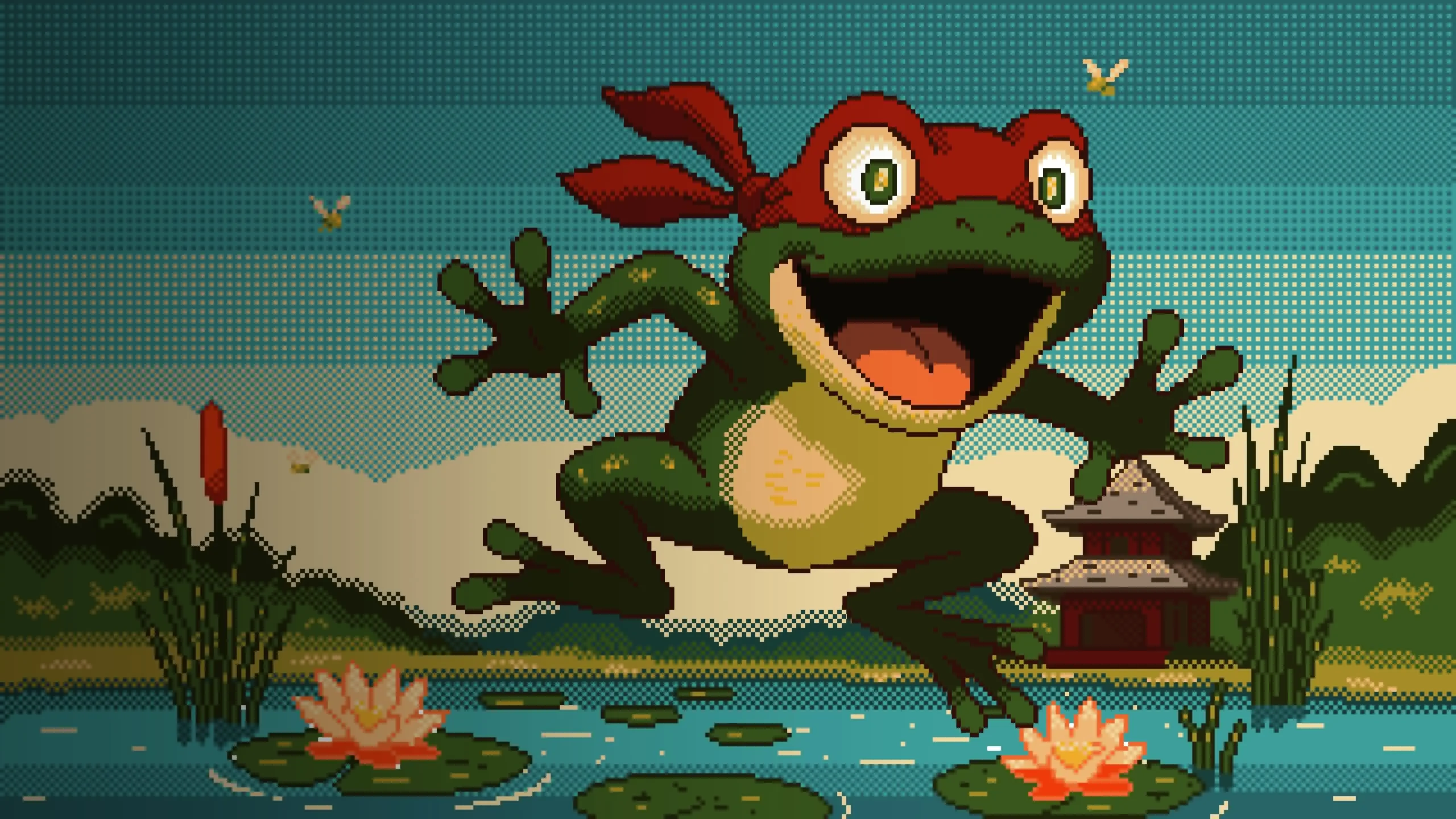

A frog that can only think in diagonals is a fine arcade joke until the joke starts asking for surgical precision. Direction Quad, developed by No Checkpoint and published by Eastasiasoft, builds its whole identity around that single restriction.
Quad, a lazy frog apprentice chosen to complete ten tribal trials, moves through swamp obstacle courses under the loose guidance of the Wise Toad. The story barely lifts its head above the lily pads, which suits a game this mechanically narrow. It is here for movement, timing, coins, insects, spikes, lasers, springboards, and frequent mud-flavored death.
The closest ancestor is clearly Frogger, yet the borrowing comes with a strange mutation. The classic frog crossed roads and rivers through four direct inputs. Quad behaves like a bishop on a chessboard, always sliding through diagonals, always moving, never granted the mercy of standing still. That one design choice gives the game its personality and its main wound.
Movement as Translation
The game’s control scheme asks the player to translate instinct into geometry. Once a level starts, Quad hops forward on a diagonal path. A button press pivots his movement, while springboards can shift him into a new directional lane. If he is heading upward, the available movement may be up-left or up-right. A right-facing springboard can turn the whole problem sideways, forcing the player to think in a new axis while hazards close in.
That system sounds elegant on paper, and early stages give it a clean arcade clarity. A narrow path becomes a rhythm of left-right taps. A springboard beside a spike turns into a tiny lesson in timing. A collectible placed off the safe route tempts the player into a sharper line. The idea has the compact discipline of old coin-op design, where one rule could define an entire machine.
The trouble is that Direction Quad often feels like it was designed by someone who trusts the rule too much. Directional overlap can make it hard to read where Quad is truly heading after a bounce. A cluster of springboards near a corner can turn the screen into a small identity crisis. Am I moving up, right, or toward another instant death? The answer arrives after the frog hits a wall.
Trial, Error, and Thin Patience
The stages are short, sometimes clearable in seconds, yet that brevity cuts both ways. Quick retries keep the pace from collapsing, while repeated failure exposes how severe the collision rules are. A slight brush against spikes, a mistimed pivot in a corridor, a single overcorrection near a laser, and Quad is finished. The game teaches through death, but there is a difference between learning a pattern and feeling tricked by your own thumbs.
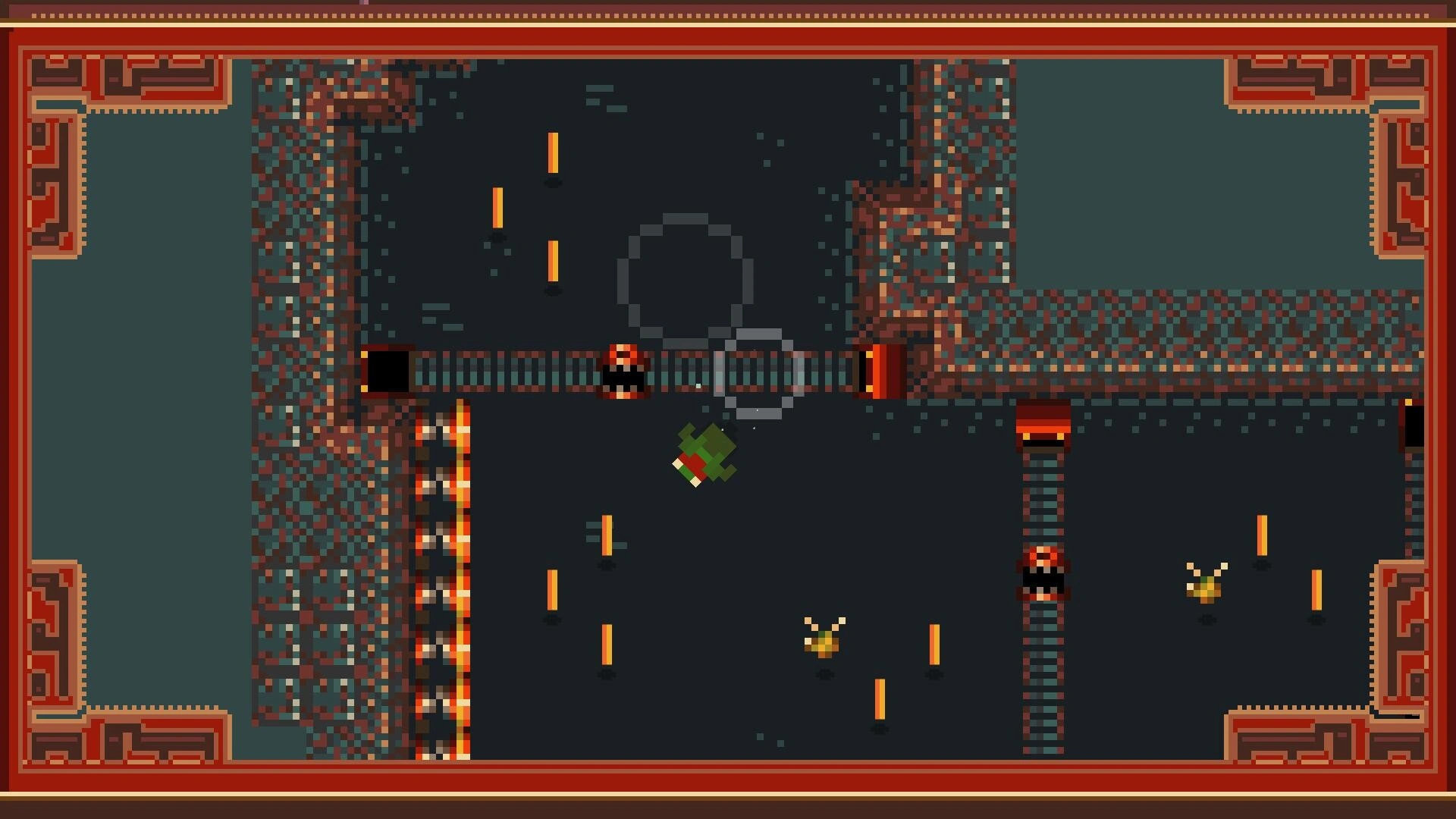
Later levels add switches, enemies, tight chicanes, timed hazards, and boss-like sequences that demand clean execution over a longer stretch. These ideas give the level design density. They also reveal how little the central loop changes. Success starts to resemble a rhythm game without a visible beat: memorize the stage, press at the right instant, repeat until the route settles into muscle memory.
Optional coins and insects sharpen the problem. Reaching the exit can already feel prickly. Chasing a perfect route turns some stages into pixel-measured penance. There is a niche pleasure in that, especially for players raised on arcade cruelty or modern precision platformers. The game does not fail because it is hard. It struggles because the difficulty often comes from uncertainty about the movement state rather than a clean read of the obstacle.
Retro Shape, Portable Value
The pixel art understands the assignment better than the controls sometimes do. Quad, the Wise Toad, springboards, traps, collectibles, and enemies are readable at a glance. The swamp tiles repeat often, and the color range does little to stop one retry-heavy stage from bleeding into the next, yet clarity matters here. A prettier screen with muddier hazard language would have been a disaster.
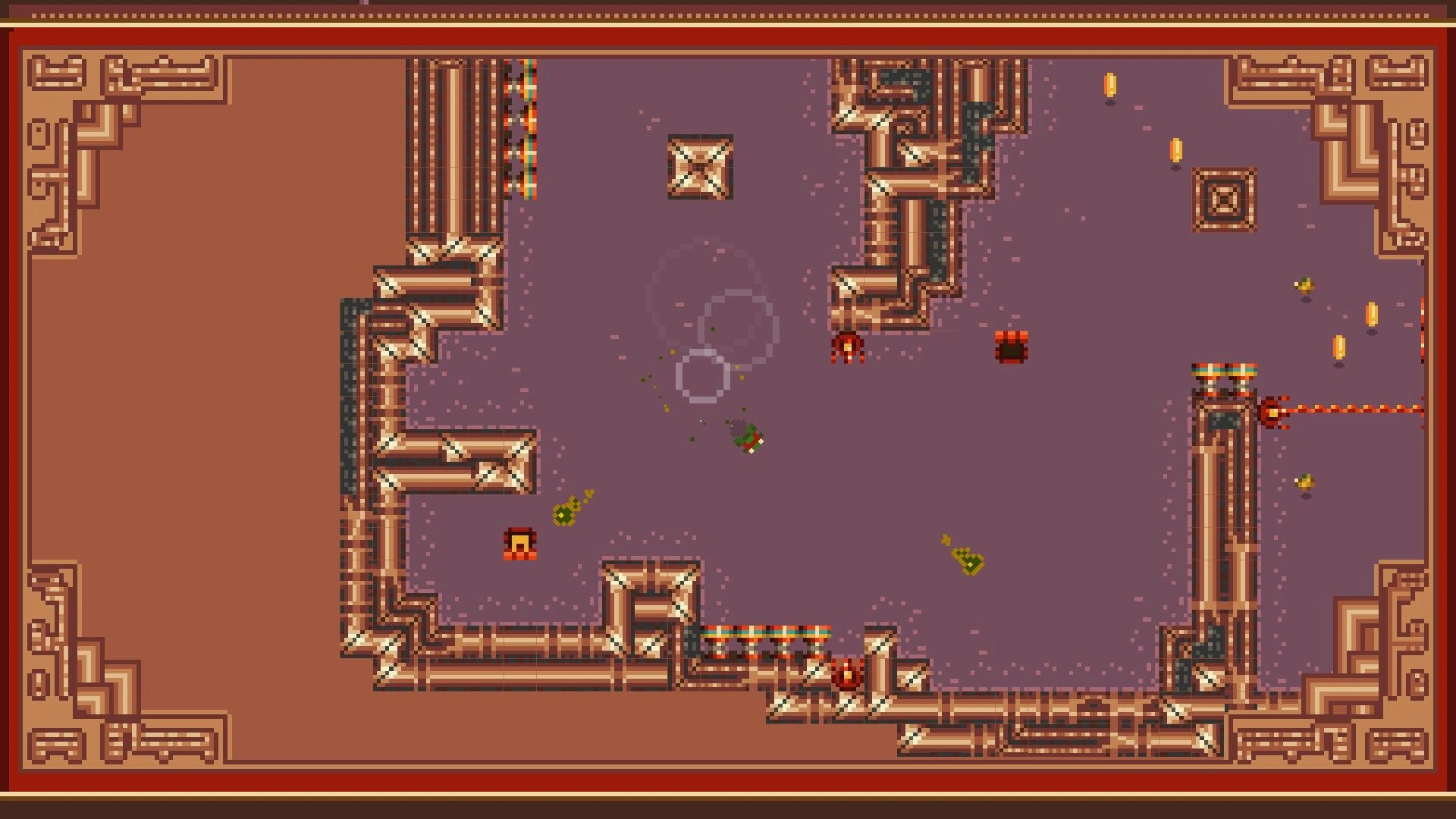
Sound follows the same small-scale retro approach. The music has an 8-bit and 16-bit flavor, light enough for short sessions, nagging enough during a stubborn level. Jump sounds, bumper hits, and death cues do their job. Performance stays steady, which is essential for a game this dependent on exact input timing.
The low price helps frame the experience. On PlayStation, the Cross-Buy release gives buyers access to PS4 and PS5 versions, with separate trophy lists and a fairly direct Platinum path tied to clearing selected levels across the worlds. For trophy hunters, that may give Direction Quad a practical appeal beyond its design experiment.
As a small console puzzle game, it sits in an odd cultural space: a retro arcade homage filtered through modern trophy economy and bite-sized digital storefront logic. It admires the hardness of older games, then packages that hardness for players who may be here for a quick Platinum or a cheap weekend challenge. That mismatch is fascinating. It is also why the frog keeps landing somewhere between invention and annoyance.
The Review
Direction Quad
Direction Quad has a strong arcade premise: a frog forced to move like a chess bishop through swamp trials built from spikes, lasers, springboards, coins, and insects. Its clearest moments turn diagonal movement into sharp spatial comedy. Too often, the same rule turns into confusion, with deaths caused by unreadable direction shifts or merciless collision checks. As a cheap trophy-friendly curiosity, it has value. As a precision puzzler, it hops into its own trap.
PROS
- Clever diagonal movement hook
- Readable pixel art
- Short, focused stages
- Steady performance
- Cross-Buy trophy appeal
CONS
- Frustrating control scheme
- Harsh collision detection
- Repetitive swamp visuals
- Thin story setup
- Limited mechanical growth