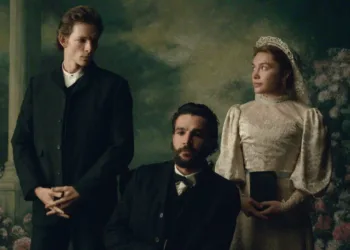




























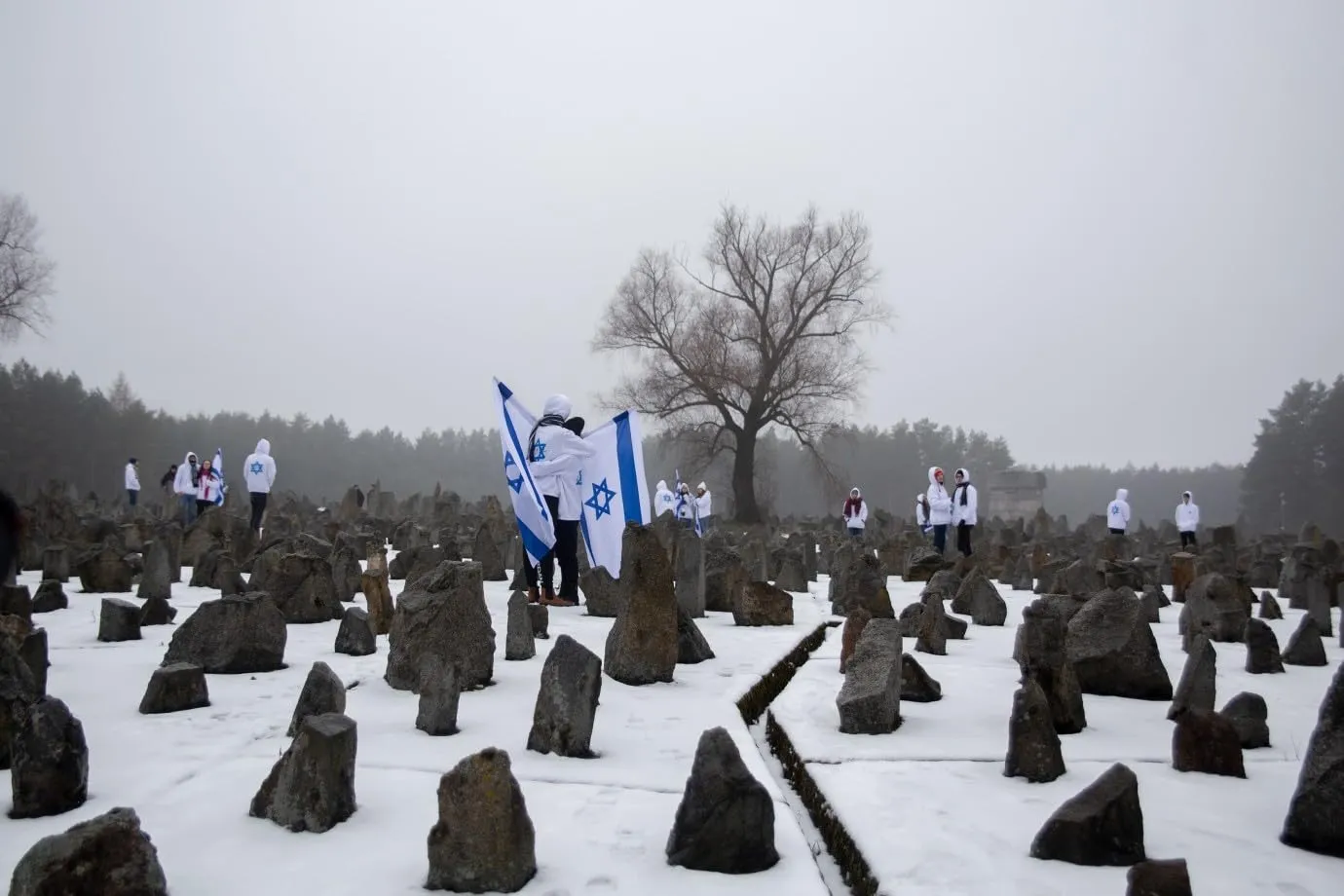
Asaf Saban’s Delegation presents a cultural ritual specific to Israel: the high school trip to Holocaust memorial sites in Poland. This journey, undertaken just before students begin their mandatory military service, is designed as a solemn pilgrimage to forge a connection with national history and trauma. The film centers on a trio of friends caught within this structured experience.
There is the socially awkward Frisch, the immature heartthrob Ido, and the sharp, observant Nitzan. Their tangled web of affection and jealousy provides the immediate drama of their lives. The film establishes its core tension within this setup.
These students are confronted with the immense weight of the past, yet their attention is frequently captured by the urgent, personal dramas of their own youth. The film positions itself to examine the gap between a prescribed historical experience and the unscripted reality of living through it. It questions what it means to inherit a past that feels both monumental and distant.
The Dissonance of Youth
The film’s power comes from its steadfast refusal to sanctify its subjects or their mission. The teenagers act with an authenticity that is often uncomfortable. They are absorbed by budding romances, social anxieties, and petty arguments, frequently seeming oblivious to the hallowed ground on which they stand. A romantic rejection becomes a more immediate and tangible pain than the abstract weight of historical atrocity.
This portrayal creates a tone that is authentic, avoiding the purely reverential atmosphere that saturates many films dealing with this subject. Saban’s direction captures the awkward, self-absorbed, and deeply human behavior of adolescents. The visual language reinforces this disconnect; the camera might frame a student with headphones on, lost in a pop song, while the blurred background reveals the stark barracks of a concentration camp.
This is not a critique of the characters but an honest depiction of the psychological defenses of youth. The trip itself is shown as a highly structured, almost performative affair. The organized group sessions designed to process emotion feel stilted, and the constant security briefings highlight a central paradox: the students are encouraged to feel pride in their identity while simultaneously being warned to hide any Hebrew or Jewish signifiers for their own safety in Polish cities.
This regimented effort to manufacture a specific emotional and educational outcome stands in stark contrast to the messy, contradictory feelings the students actually experience, revealing the limits of institutionalized remembrance and top-down identity formation.
Forging Identity on Contested Ground
Within this charged environment, the formulaic tour becomes an inadvertent catalyst for profound personal shifts. Frisch’s development is central to the film’s purpose. Initially defined by his social insecurity, he performs a quiet act of rebellion by breaking away from the supervised group. His decision to hitchhike alone to Auschwitz is a pivotal moment.
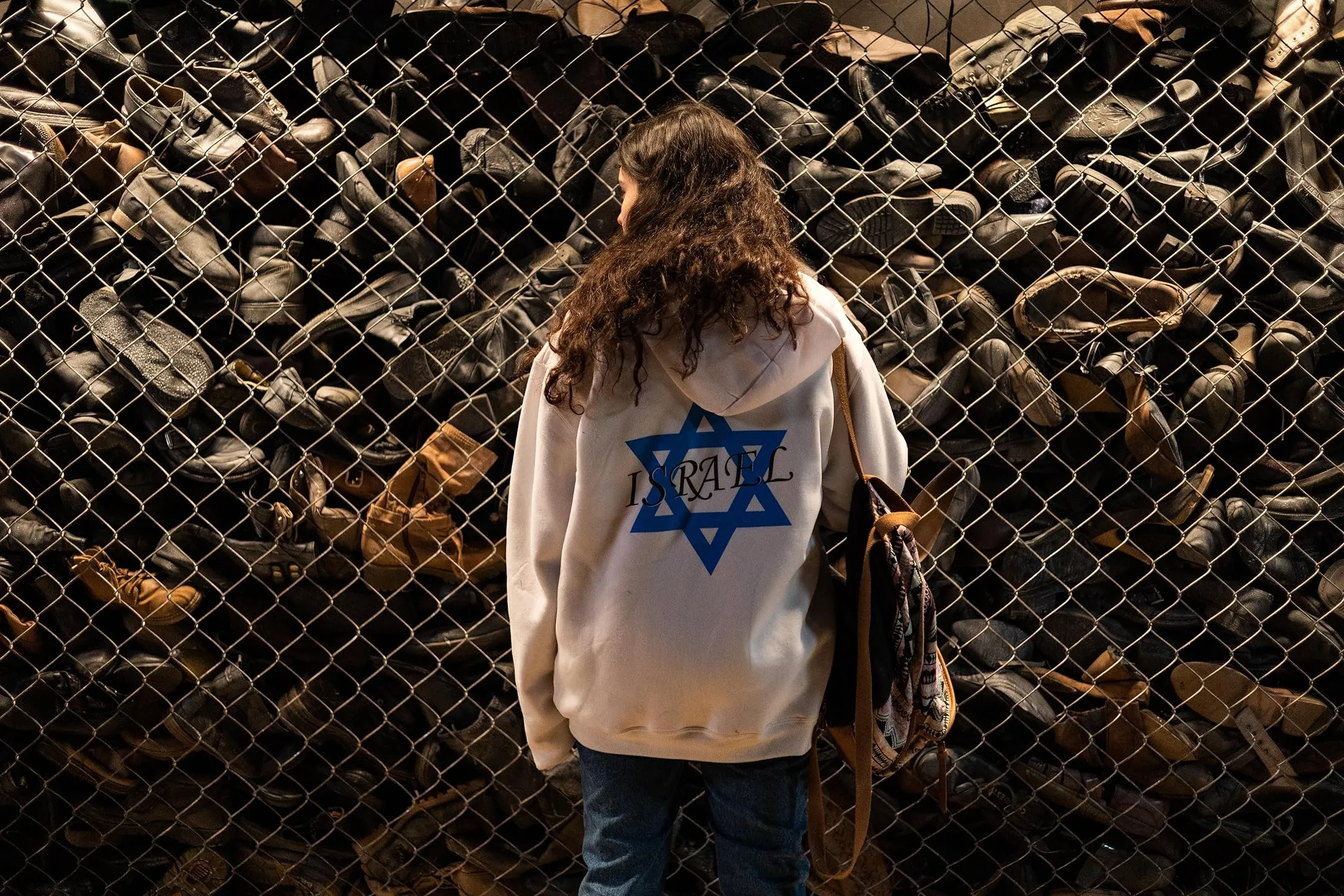
The unscripted encounters he has with Polish locals—a simple sharing of food, a moment of human connection—offer a perspective entirely absent from the official tour. It is a move away from a purely Jewish-centric narrative of Poland and toward a more complex, human-to-human interaction that challenges the “us versus them” mentality such trips can reinforce. His solitary trek is an assertion of independence, a search for an unmediated truth.
Nitzan offers a different mode of processing; she attempts to channel her disquieting feelings into performance art. This intellectualized effort to make sense of the incomprehensible can be read as a critique of the performative grief she sees around her. Her art asks what an authentic response to such horror can even look like for a generation so removed from it. Providing another critical layer is Frisch’s grandfather, a survivor who accompanies the group.
His personal, anecdotal stories—of a first love, of a simple meal—stand apart from the official, monumental narrative of the Holocaust presented by the tour guides. His testimony re-humanizes the past, presenting it not as a museum exhibit but as a fabric of individual lives, full of texture and normalcy before the catastrophe.
A New Grammar for Historical Cinema
Delegation succeeds by deliberately sidestepping the conventions of the traditional historical film. It is not a film about the Holocaust itself, but about its long, complicated afterlife. The focus remains fixed on the contemporary characters, using the past not as the subject, but as the charged environment for a modern coming-of-age story. The filmmaking reflects this perspective.
The editing is dynamic and energetic, with abrupt cuts that mirror the restless minds and shifting moods of its young protagonists, moving from a somber memorial to a boisterous teenage argument in a single beat. Saban employs a clever layering technique by showing the students watching films like Fiddler on the Roof and Escape from Sobibor on the bus.
This suggests their understanding is already shaped by media before they arrive, positioning their trip as a search for something real behind the images they have already consumed. This speaks to a broader, global experience of understanding history through screens. The soundtrack reinforces this dualism, mixing somber memorial music with the characters’ own playlist of pop and rock.
The film closes with a potent cover of Joy Division’s “Love Will Tear Us Apart.” The choice of a British post-punk anthem is significant. It internationalizes their very specific Israeli experience, suggesting that the pains of growing up are universal. The film ends not with a grand statement on history, but with a quiet, poignant recognition of a personal loss, scored by a song that speaks to a generation’s shared sense of alienation.
Delegation will be released in US theaters on August 1, 2025. You can stream or buy the film on platforms like Amazon Prime Video, Amazon Video, Fandango at Home (Vudu), Fawesome, Tubi, and Apple TV.
Full Credits
Director: Asaf Saban
Writers: Asaf Saban
Producers: Yoav Roeh, Aurit Zamir, Roshanak Behesht Nedjad, Agnieszka Dzeidzic
Executive Producers: No information found
Cast: Yoav Bavly, Naomi Harari, Leib Levin, Ezra Dagan, Alma Dishy
Director of Photography (Cinematographer): Bogumił Godfrejów
Editors: Michal Oppenheim
Composer: Maniucha Bikont
The Review
Delegation
Delegation is a thoughtful and refreshingly honest film that succeeds by focusing on the messy intersection of personal adolescence and monumental history. Refusing easy sentimentality, it presents a sharp, authentic portrait of a generation grappling with a past they can only understand through a modern lens. It's a powerful statement on the nature of memory itself, valuing individual, unscripted discovery over prescribed reverence.
PROS
- An authentic and unapologetic portrayal of teenage behavior.
- A nuanced examination of generational memory and inherited trauma.
- Strong, compelling character arcs, particularly that of the protagonist, Frisch.
- An unconventional and intelligent filmmaking style that avoids genre clichés.
- Effective use of music and visual storytelling to underscore its themes.
CONS
- The non-reverential tone may be jarring for viewers expecting a more traditional film about the Holocaust.
- The persistent focus on teenage drama against a tragic backdrop could be perceived as dissonant.
- The narrative occasionally feels it is juggling too many thematic threads at once.