





















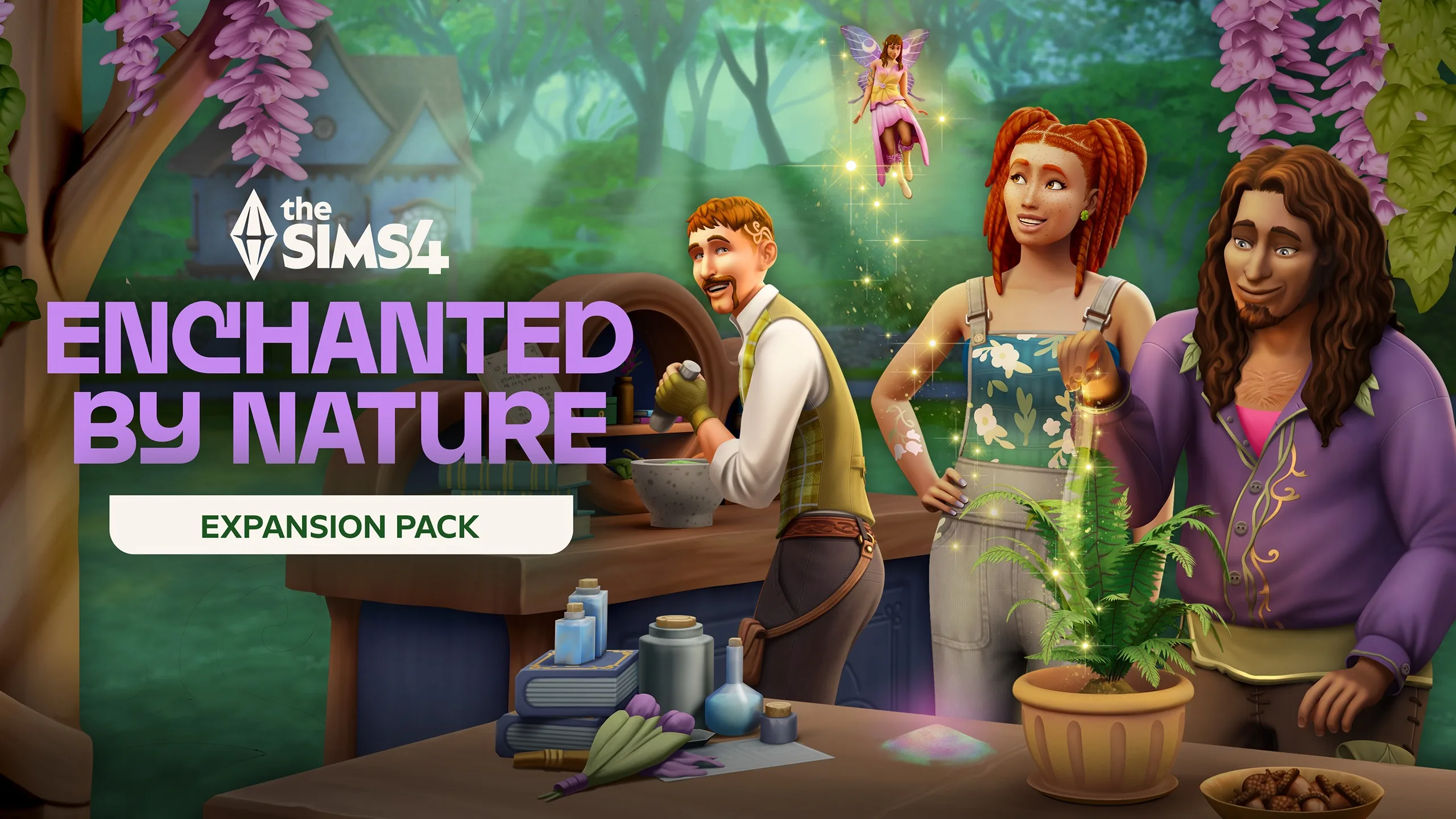

The Sims 4 returns to the realm of the supernatural with Enchanted by Nature, an expansion that introduces the long-awaited Fairy occult. This pack transports players to the verdant, lore-rich world of Innisgreen, a land inspired by Irish myth. It’s more than a simple addition of a new life state; the expansion weaves in new ways to play, centered around a self-sufficient lifestyle and a deep connection to the natural world.
Players can now guide their Sims to live off the land, brew potent elixirs, and navigate a world teeming with magical secrets. At its heart, this pack explores the whimsical and chaotic potential of fairies, giving them powers that directly influence the emotions and relationships of other Sims. Paired with a distinctive new career and a collection of fantastical build items, Enchanted by Nature offers a substantial and thematically cohesive experience. It aims to revitalize the game by focusing on deep occult gameplay and storytelling within its new, sprawling environment.
A World Apart
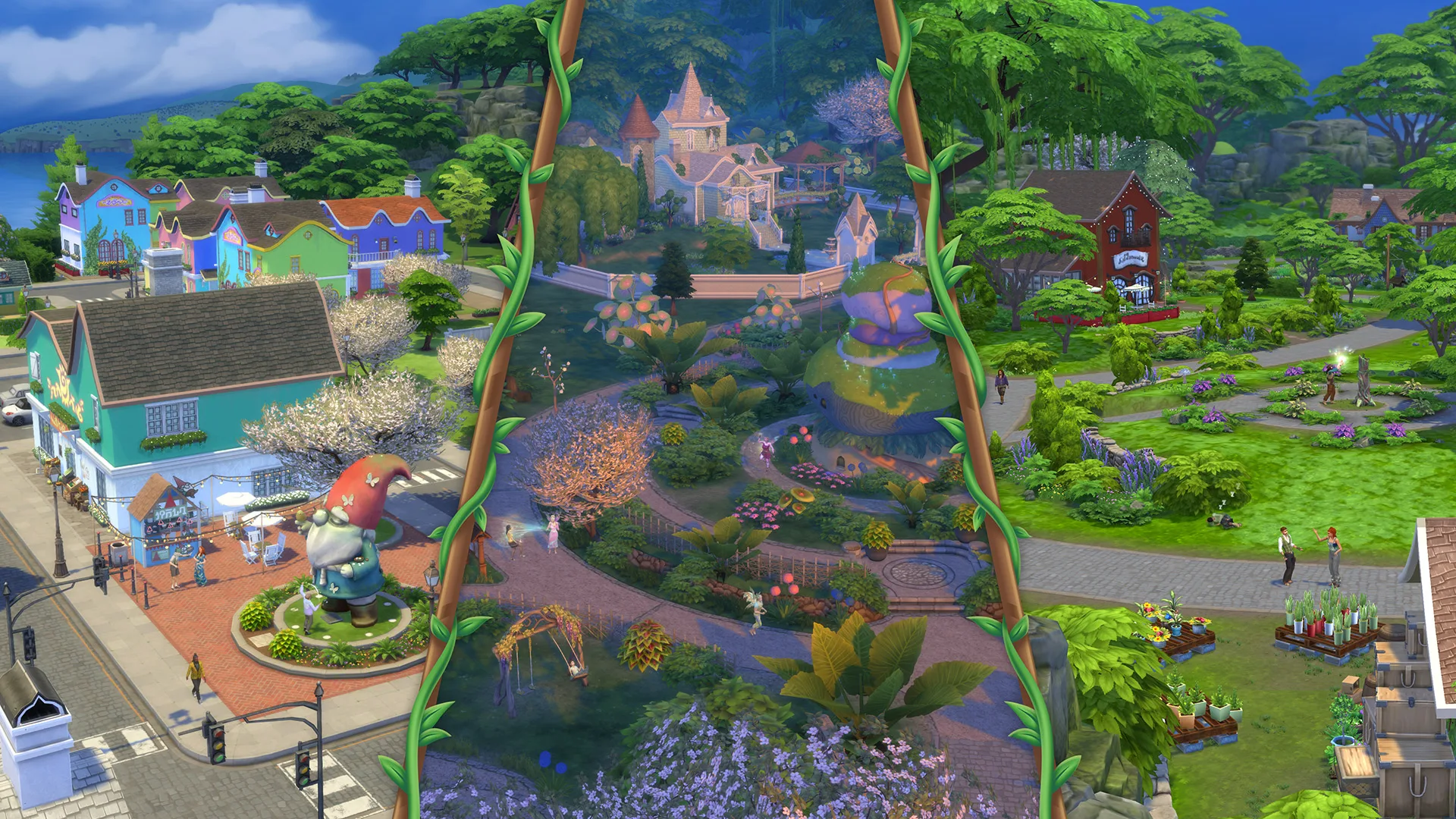
The foundation of any great Sims expansion is its world, and Enchanted by Nature delivers with Innisgreen. Drawing from Irish countryside and Celtic myth, the world is a significant step up in scale and ambition. Unlike the intentionally compact occult worlds of Glimmerbrook from Realm of Magic or the gritty Moonwood Mill from Werewolves, Innisgreen feels sprawling and full of life.
Its landmass feels comparable to several previous magic-themed worlds combined, and this size is utilized to create a genuine sense of exploration. The world is saturated with a mystical atmosphere, from the dappled light filtering through ancient trees to the ambient glow of magical flora after dusk. This feeling of a living, breathing space is enhanced by a commitment to discoverable lore, inviting players to uncover its secrets.
The world’s character is defined by its three distinct neighborhoods. The Coast of Adhmor is the bustling seaside town, where quaint buildings house a vendor selling apothecary goods and rabbit-hole venues like a used bookstore. It’s also home to an amusingly oversized gnome museum, a testament to the pack’s quirky sense of humor.
Yet, this neighborhood also contains a large, decorative plaza that feels like a missed opportunity for genuine Sim interaction, serving more as a backdrop than a destination. Sprucederry Grove offers a different flavor, presenting a wooded residential area where modern homes are beautifully integrated with the surrounding forest. It’s an ideal place for your Sim to live, as it’s teeming with the local magical populace.
Also Read






The true centerpiece, however, is the Everdew Forest. This is the magical heart of the world, a breathtaking zone of perpetual twilight where the Fairy High Council resides. The visuals here are stunning, with bioluminescent plants and mystical architecture, including a spectacular buildable lot situated inside a colossal tree. This neighborhood is the reason to play in Innisgreen.
The world is further enriched by NPCs with genuine, interconnected backstories, from the estranged divine figures of Spruce Almighty and Mother Nature to the gnome-obsessed mortal Glen Nhoam. This gives the world a narrative depth reminiscent of the classic Sims 2 neighborhoods, making the townies feel like part of a larger story. Players are drawn into this lore through “Fables,” a new quest system where locals present riddles and tasks that yield magical rewards and peel back the layers of Innisgreen’s history.
The Power and Whimsy of Fairies
The main attraction, the Fairy occult, is executed with a gratifying depth that avoids the missteps of past additions like the disappointingly shallow Mermaids from Island Living. Becoming a fairy is refreshingly straightforward, achievable either directly in character creation or via a simple in-game quest that has you commune with Mother Nature. The core gameplay loop is governed by a new primary need, Emotional Force, which replaces the mundane requirements of bladder and hunger.
This resource is the fuel for all fairy magic, and it depletes as powers are used. Replenishing it requires a strategic choice: you can absorb emotions from other Sims, which can have social consequences, or you can send your fairy to retreat inside a tiny fairy house, taking them out of active play for a short time. Neglecting this need is perilous, as complete depletion leads to a new, dramatic death type.
Beyond this central mechanic, fairies have a host of innate abilities. They can fly instead of jogging, shrink down to play with dollhouses and other objects in a charming display, and generate Fairy Dust. This dust is a tangible resource used to enchant items—making a plant self-watering, for instance—or even to bring garden gnomes to life as temporary, task-oriented helpers for cleaning or gardening.
The Fairy skill tree is where the gameplay truly comes into its own, offering extensive specialization across four branches: Manipulation, Emotion, Nature, and Customization. This is where a fairy’s personality is forged. A fairy focused on Manipulation and Emotion can become a powerful agent of chaos, capable of starting or ending relationships with a single spell, filling a rival with rage, or torturing them with a host of magical ailments.
A Nature-focused fairy, conversely, can cause plants to grow instantly or duplicate their harvest. The system includes a clear morality axis with Harmonious and Discordant paths. Committing to one path unlocks unique, powerful abilities while locking out the other, a design that encourages meaningful roleplaying and replayability as your Sim’s autonomous actions will reflect their alignment. This level of detail extends to the customization in Create-a-Sim.
The wing designer is a triumph, echoing the deep fur system from the Werewolves pack. It gives players granular control over wing shape, size, color, and opacity, complete with a color wheel and stamp tools for intricate patterns. This system, paired with other cosmetic options like different horn styles and glowing tattoos, ensures that every fairy can be visually unique and a true expression of the player’s vision.
Thriving in the Wild
Supporting the fairy theme are new skills and character options that deepen the expansion’s nature-focused gameplay. The Natural Living skill is a robust system for Sims who wish to live off the grid. The progression feels earned and rewarding. At lower levels, your Sim will suffer from negative moodlets like “Awkward Sleep” when on the ground or social embarrassment from relieving themselves in a bush.

As the skill increases, these penalties vanish, and your Sim becomes a master of the outdoors, capable of expertly foraging for specific ingredients, bathing in ponds for a hygiene boost, and sleeping peacefully under the stars. This skill is complemented by the new Apothecary skill, which uses a dedicated crafting table to brew a wide array of elixirs, charms, and cures.
The gameplay loop here is satisfying, requiring Sims to gather ingredients through foraging or gardening before they can craft. It integrates perfectly with the updated Gardening system and its three new magical plants: the Lightning Root, which can be connected to the power grid to lower bills; the Moody Shrub, which produces harvestable Emotion Potions; and the Aura Bush, which can be used to generate buffs.
This expansion introduces three new aspirations to guide players: Nature Nomad, Elixir Enthusiast, and Fairy Stories. While they serve as effective tutorials for the new systems, their design can feel underdeveloped. The Nature Nomad aspiration, in particular, suffers from poor pacing. It starts with simple tasks that can be completed quickly, then suddenly demands a level nine Natural Living skill for its second stage.
This abrupt difficulty spike creates a long, grinding period that disrupts the sense of guided progression. The new traits offer interesting roleplaying hooks but come with notable caveats. Mystical provides a useful boost to nature skills, and Disruptive is a perfect fit for a chaotic Sim. The Plant Lover trait, however, is a double-edged sword.
While it fits the pack’s theme, its implementation can become a source of constant frustration. A Sim with this trait receives negative moodlets not only when plants die but also when they are harvested, creating a persistent cycle of sadness that can derail other activities and make gardening a chore rather than a joy.
A Shift in Balance
Enchanted by Nature introduces several new underlying systems that fundamentally alter gameplay for all Sims, not just the magical ones. The Naturopath career is a 10-level active profession, functioning as a work-from-home variation on the Doctor career from Get to Work. The core loop involves patients visiting your Sim’s home lot, where you must perform diagnostic interactions before crafting and administering a cure using your Apothecary skill.

The concept is strong and thematically appropriate, but the execution can be clumsy. Patients frequently wander off mid-diagnosis to use your computer or eat your food, and they often linger long after being cured, turning a professional consultation into a frustrating exercise in household management. The ailments themselves are a clever, if sometimes overbearing, new mechanic.
These magical sicknesses manifest with both visible effects and gameplay consequences; a Sim with Sonic Sinuses might shatter a nearby lamp while also getting a temporary Handiness boost. Their frequency can feel relentless at times, shifting the mechanic from a fun challenge to a mandatory chore, though this can be mitigated by disabling the feature in the game’s settings.
Two permanent new mechanics, Balance and Luck, are also added to the Simology panel, adding a fresh layer of complexity to a Sim’s life. Balance is a visible meter that provides constant feedback, fluctuating based on your Sim’s moodlets. A series of positive events will keep them balanced, while a bad day can send their Balance spiraling downward, making them more susceptible to ailments and causing their needs to decay faster.
Luck, conversely, is a hidden attribute that operates behind the scenes. It subtly influences the outcomes of chance-based events across the game, from the rarity of foraged collectibles to the likelihood of a job promotion. As this system cannot be disabled, it introduces a permanent element of randomness that may not appeal to players who prefer to have complete control over their Sims’ fortunes.
Crafting a Fantastical Aesthetic
When it comes to customization, the expansion presents a clear philosophy of quality over quantity. The Create-a-Sim assets are heavily skewed toward the fairy aesthetic, offering a beautiful collection of floral gowns, jumpsuits, dungarees, and clothing crafted from leaves. For players aiming to create an ethereal or nature-bound character, the options are superb, complete with new hairstyles that incorporate leaves and whimsical highlights.

For anyone seeking more general-purpose attire, however, the selection is noticeably sparse. This limitation is compounded by a persistent issue with the game’s clothing filters, which hide many items that would look perfectly fine on any Sim behind gendered tags, artificially shrinking the already small wardrobe for players who don’t know to disable them.
Build Mode is arguably the stronger of the two creative suites. While it contains fewer objects than a typical expansion, each piece is highly distinctive and thematically rich. The aesthetic is a wonderful blend of rustic charm and “Hobbit-style” coziness, defined by moss-covered furniture, thick wooden desks, and charmingly mismatched windows paired with iconic round doors.
Standout items like a spectacular waterfall shower, toadstool-shaped shelves, and an enchanting rug with different magical emblems in each swatch allow for the creation of truly unique and magical homes. There is also a delightful set of whimsical items for a child’s room. The most significant critique here is the baffling list of omissions.
For a pack centered on nature, the near-total lack of new outdoor plants, pond decorations, or even a single new terrain paint is a major disappointment. This absence is keenly felt when trying to build the lush landscapes the pack seems to encourage. The new houseplant mechanic, which allows you to place harvestables in indoor pots, is a nice idea that, much like the laundry system, can quickly become a micromanagerial burden, especially when paired with the demanding Plant Lover trait.
The Review
The Sims 4: Enchanted by Nature
The Sims 4: Enchanted by Nature is a substantial and ambitious expansion that largely succeeds on the strength of its core features. The Fairy occult is one of the most mechanically deep and engaging life states in the franchise, and the world of Innisgreen is a beautiful, sprawling playground rich with lore. While let down by underdeveloped aspirations, frustrating secondary mechanics, and a niche CAS catalog, the pack's powerful thematic vision and high-quality build items make it a magical and worthwhile addition for players who embrace the supernatural.
PROS
- An engaging and deep Fairy occult system with meaningful gameplay choices and extensive customization.
- Innisgreen is a vast, beautiful, and lore-rich world that encourages exploration.
- The new skills, Natural Living and Apothecary, introduce satisfying new ways to play.
- Build Mode items are thematically distinct and high-quality, enabling wonderfully creative builds.
- Strong narrative elements and interconnected townie backstories enrich the world.
CONS
- Create-a-Sim content is sparse and overly niche, offering little for non-fairy Sims.
- New aspirations feel underdeveloped and have significant pacing issues.
- Certain mechanics, like the frequency of ailments and the Plant Lover trait, can become more annoying than fun.
- The active Naturopath career feels clumsy and tedious in its execution.