





















In the endless content churn of streaming platforms, every reality dating show needs a gimmick. Are You My First? arrives with a concept that feels both novel and strangely archaic: a resort filled with attractive singles who all claim to be virgins.
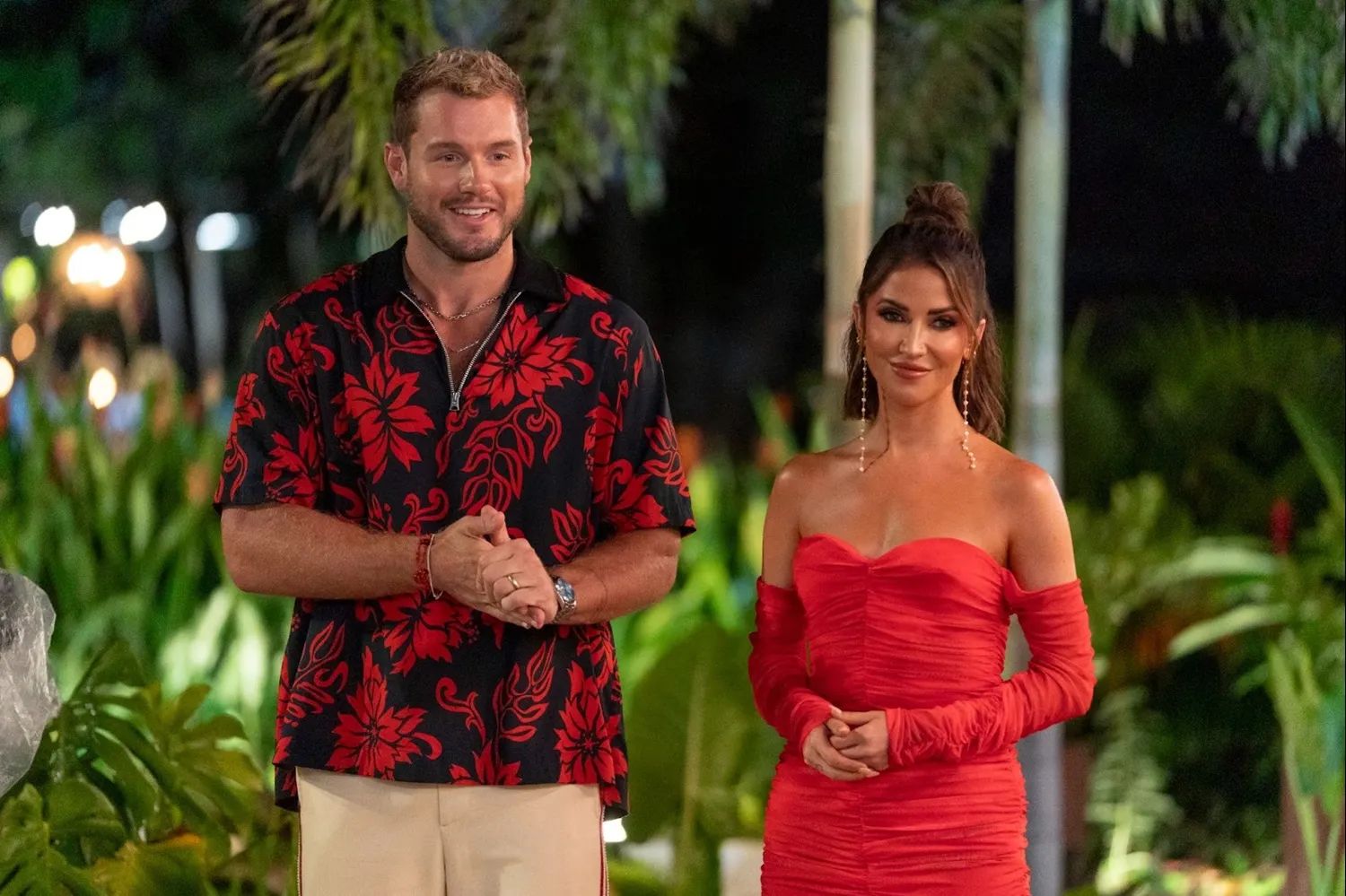
Hosted by Bachelor franchise alumni Kaitlyn Bristowe and Colton Underwood, the series places its cast on a sun-drenched beach with the explicit goal of finding love, a process that might lead to their first sexual experience. The show immediately wraps itself in the familiar visuals of its genre predecessors, presenting a glossy, tropical backdrop for a competition built around sexual inexperience.
It positions itself as an exploration of a significant human milestone, yet its tone is that of a standard, lighthearted romantic contest. This initial setup signals a series less interested in deep personal discovery and more focused on the spectacle of its central premise.
A Game with No Clear Goal
The architecture of Are You My First? is built on the well-worn foundation of shows like Love Island, a format so ubiquitous it has created a kind of reality television monoculture. Contestants, chosen for their telegenic qualities, are placed in a controlled environment designed to accelerate intimacy. The daily rhythm of mingling, forming connections, and participating in producer-led activities is instantly recognizable.
The series leans heavily into its theme with challenges that are almost comically on-the-nose. A trivia game about sexual knowledge requires participants to literally pop cherries to answer, reducing a complex subject to a juvenile pun. Another event, a “white party,” has contestants use colored paint to physically mark their romantic interests, a visual gimmick made for social media clips. These activities feel less like organic ways to build relationships and more like carefully constructed set pieces designed to reinforce the show’s one-note theme.
Where the show departs from convention, it becomes perplexing and reveals its structural weaknesses. The elimination ceremony, branded with the dramatic title “Virgin Sacrifice,” discards the central mechanic that gives other dating shows their narrative drive: the coupling. Instead of asking contestants to choose a partner, the show implements a strange, quasi-strategic voting system.
Each person votes for a member of the opposite sex they believe is least likely to find a partner on the island. This borrows a survivalist logic from shows like Survivor but feels entirely out of place in a romantic context. It severs the link between personal connection and game survival, creating a confusing set of stakes. Viewers are left to wonder if they should be rooting for genuine couples or for savvy players, a dissonance that undermines emotional investment.
This confusion is compounded by the show’s sluggish pace, a common ailment in the streaming era where episode orders are often too large for the amount of available story. The initial episodes are dominated by circular and repetitive conversations. The cast discusses their virginity, their hopes for a connection, and their anxieties, but these conversations rarely lead to tangible progress.
Moments of physical affection are few, and the development of relationships is glacial. This narrative inertia creates a strange paradox. The show is built around a significant, life-altering event, yet it seems afraid to move its participants toward it. The slow burn feels less like intentional romantic tension and more like a production team stretching limited material to fill a ten-episode order, leaving the viewer with a sense that nothing of importance is happening.
Portraits of Inexperience
The series makes a notable effort to diversify the narrative around virginity, assembling a cast whose reasons for celibacy extend beyond a singular religious motivation. This is, perhaps, its most modern attribute. Viewers meet Rachael, a 30-year-old who candidly discusses how the medical condition of vaginismus has shaped her sexual life.

Her openness is striking, yet the show repeatedly requires her to explain her condition to each new potential partner, turning a personal medical issue into a recurring plot point. We are also introduced to Mike, a devout Christian who previously appeared on The Bachelorette, and Noah, whose Mormon faith informs his decision to wait.
Their perspectives represent a more traditional viewpoint often seen in American media. These glimpses into different personal histories offer the potential for a meaningful cultural conversation about the complex ways individuals approach sexuality, faith, and physical well-being.
The show, however, fails to provide the necessary framework for such a discussion to occur responsibly. A glaring omission is the absence of any on-screen professionals, like therapists, sex educators, or counselors. The contestants are left to navigate a deeply personal and emotionally charged experience entirely on their own, guided only by producers and hosts whose primary goal is to create entertainment.
This lack of support represents a significant ethical blind spot, particularly in light of the growing “duty of care” conversations surrounding reality television in other parts of the world. Placing people in a high-pressure environment to confront their insecurities about intimacy without offering professional guidance feels exploitative. It suggests an industry that is willing to use sensitive personal issues for dramatic effect without taking full responsibility for the well-being of its participants.
This superficial approach means the contestants’ stories are never explored with any real substance. They become talking points rather than pathways to genuine understanding. Rachael’s vaginismus is used to create moments of awkward disclosure. Mike and Noah’s faith is presented as a simple biographical fact.
The show does not investigate the nuances of these experiences. It does not ask how their faith communities view their participation on the show, nor does it give Rachael the space to discuss her condition outside the context of explaining it to a man.
The participants feel less like fully realized people and more like character sketches, each embodying a different “type” of virgin. Their potential for depth is flattened to serve the show’s high-concept premise, leaving the human element of the series feeling underdeveloped and secondary to the gimmick.
A Premise Built on Faith
The entire structure of Are You My First? rests on a foundation of pure, unprovable trust. The show operates on an honor system, taking its twenty-one contestants at their word without any possible method of verification. This reliance on an unverifiable personal claim creates a persistent and distracting skepticism that hangs over every single interaction.
As a viewer, one cannot help but question the authenticity of the cast, scrutinizing their behavior for any sign of deception. This dynamic fundamentally alters the viewing experience, shifting it from one of vicarious romance to one of cynical investigation. The central premise becomes the central mystery, but not in a way that generates compelling television. Instead, it creates a barrier to belief, making it difficult to invest in the emotional lives of people whose defining characteristic on the show might be a fabrication.
The credibility of the entire project fractures completely when the show’s own marketing confirms these suspicions. Previews for later in the season include a clip of a male contestant confessing, “I’m not really a virgin.” The decision to include this moment in a trailer is a fascinating production choice. It signals that the creators are aware of the premise’s fragility and have chosen to embrace the drama of the lie over the integrity of the experiment.
The deception itself becomes the selling point. This meta-narrative suggests a deep cynicism at the heart of the production, an acknowledgment that the “reality” of reality television is entirely malleable. The show is not about virgins finding love. It is about the spectacle of people claiming to be virgins, a subtle but important distinction that redefines the show as an exercise in performance.
This hollowness is mirrored and amplified by the hosts. Bristowe and Underwood, both veterans of a franchise that perfects the art of manufactured romance, provide narration that is tonally flat and filled with labored jokes. Their commentary feels disconnected from the action, like a superficial layer added in post-production to inject energy into otherwise dull moments. Colton Underwood’s presence is a particularly missed opportunity.
His own journey on The Bachelor was defined by his virginity, a storyline that was dissected across popular culture. His complicated history with that label is never examined here. He functions not as a guide with unique insight but as a brand ambassador for the show’s shallow premise. The hosts fail to ground the show or probe its central conceit, reinforcing the feeling that Are You My First? is a series with a provocative idea but absolutely nothing meaningful to say about it.
The unscripted series Are You My First?, hosted by Colton Underwood and Kaitlyn Bristowe, premiered on Hulu in the U.S. and Disney+ internationally on August 18, 2025. All 10 episodes were released for streaming on the premiere date. Hulu offers a 30-day free trial for new and eligible returning subscribers. The premiere episode also aired on ABC on August 18th. Viewers without cable can watch for free by signing up for the 5-day trial offer from DirecTV.
Full Credits
Director: James Barker
Producers and Executive Producers: Peter Geist, David George, Adam Sher, Simon Thomas, James Barker, Grant Mansfield, Karen Plumb, Alan Eyres
Cast: Colton Underwood, Kaitlyn Bristowe, Andrew, Brooklyn, Jade, Godwin, Farha, Mike, Noah
The Review
Are You My First?
Are You My First? presents a high-concept premise that quickly dissolves under scrutiny. The series is a structurally confused and ethically shallow exploration of its subject, trading genuine insight for a flimsy, unverifiable gimmick. It represents a cynical trend in streaming content where the hook is more important than the execution. The result is a hollow and unfulfilling viewing experience that fails both as entertainment and as a social experiment.
PROS
- Presents a diverse cast with varied reasons for their virginity.
- The high-concept premise is initially attention-grabbing.
CONS
- The central premise is unverifiable and ultimately undermined by the show itself.
- Lacks necessary psychological or professional support for participants, raising ethical concerns.
- Confusing format and slow pacing create a boring viewing experience.
- Superficial exploration of contestants' personal stories.
- Hosting and narration feel flat and disconnected.