





















![Kingdom Hearts Collection [I-III] Review](https://gazettely.com/wp-content/uploads/2026/10/Kingdom-Hearts-Collection-I-III-1-360x180.webp "Kingdom Hearts Collection [I-III] Review: KHII Holds Steady as Newer Entries Fluctuate 40")
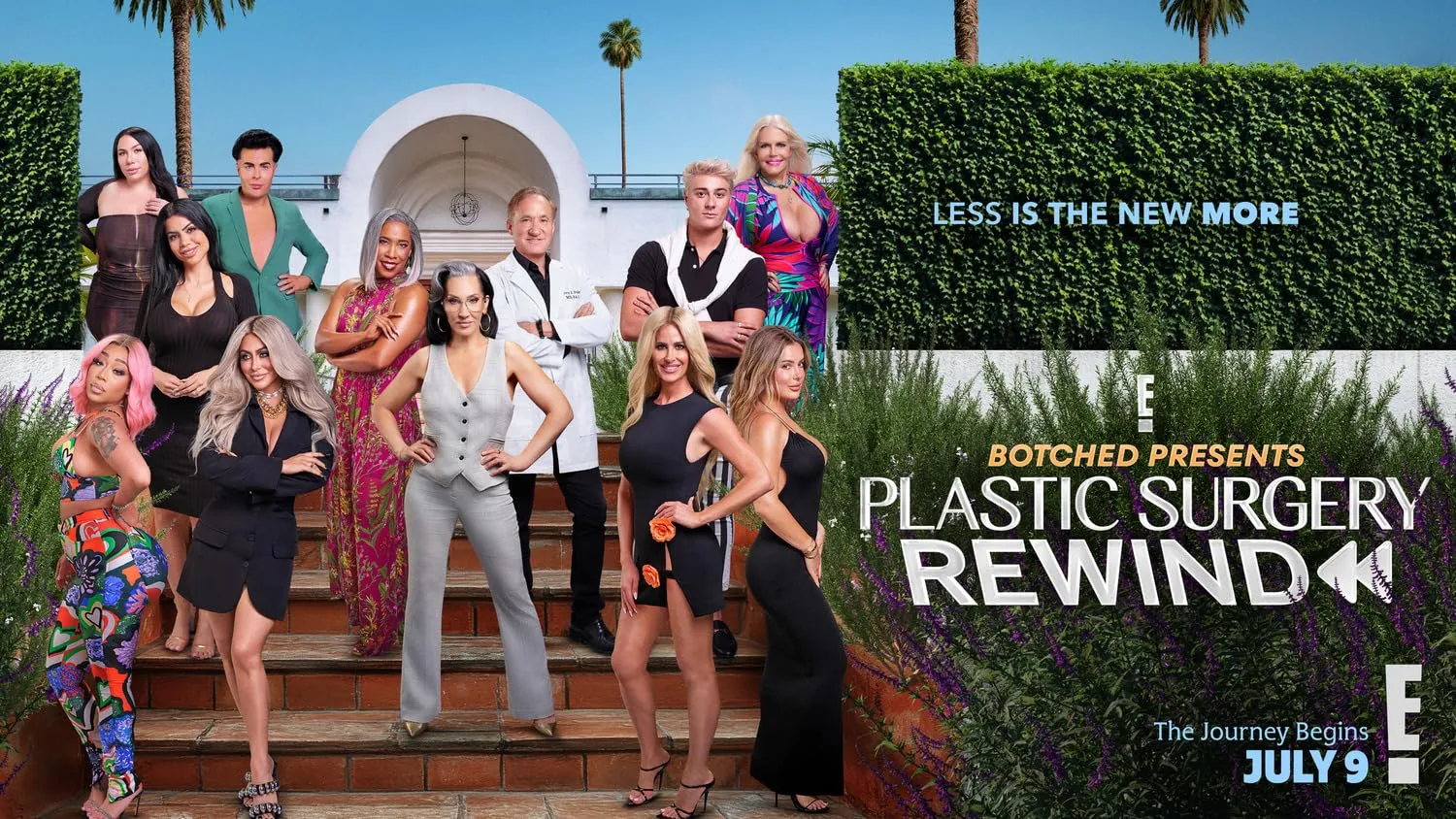

There comes a point in every aesthetic revolution when the pendulum, having reached its apex, begins its inevitable swing back. Botched Presents: Plastic Surgery Rewind positions itself at this precise moment of cultural reversal. The series gathers a flock of minor celebrities and major influencers, individuals whose faces and bodies have served as public canvases, and sequesters them in the “Rewind Retreat.”
Here, in this strange secular monastery, they must consider the ultimate act of post-modern piety: undoing their own creation. Their spirit guides on this strange pilgrimage are a telling triad. Host Michelle Visage offers empathetic counsel, surgeon Dr. Terry Dubrow provides the grounding of physical law, and therapist Dr. Spirit probes the psyche.
They are here to pursue “natural,” a concept so fraught with contradiction in this context it becomes almost mystical. The process culminates in a walk through the “Time Tunnel,” a bit of stagecraft that functions as a gateway to either a new future or a re-imagined past.
The Political Economy of the Body
The cast is a living document of what might be termed aesthetic capitalism, a condition where one’s physical form is an asset to be managed, leveraged, and depreciated. The dilemmas presented are far from simple vanity.
They are brutal calculations at the intersection of identity and income. The show’s most direct lesson in this subject comes from Larissa Santos Lima, a personality from the 90 Day Fiancé machine whose brand is inseparable from her extensive surgical modifications. Her anxiety about reducing her breast implants is not rooted in a Platonic ideal of beauty.
It is the anxiety of a CEO considering the liquidation of a profitable asset. Her body is her primary enterprise, with her OnlyFans account serving as its stock exchange. To reverse her surgeries is to risk a market crash, a direct hit to her revenue stream. She speaks a language of finance applied to flesh, making her struggle a stark referendum on the commodification of the self.
This transactional view of the body is contrasted with a more insidious form of inheritance seen in the mother-daughter dyad of Kim Zolciak and Brielle Biermann. Their presence introduces the concept of a cosmetic genealogy, where insecurities, anxieties, and their surgical remedies are passed down like genetic traits. Kim, a veteran of reality television’s gaze, treats cosmetic intervention as a routine part of maternal guidance, a tool for her daughters to “fix” anything they dislike.
Brielle, having absorbed these lessons from a young age, has been modifying her face with fillers since she was a teenager. Now, she faces a uniquely modern paradox. The very procedures meant to keep her looking young and desirable may have created a dependency; she fears that dissolving the filler will not return her to a baseline but will instead accelerate the appearance of aging. It is a cruel feedback loop, a trap where the solution becomes the problem, illuminating how generational anxieties are physically inscribed onto the next of kin.
The cast’s anxieties extend into different professional spheres. Jessica Dime, a rapper, voices concern that “toning down” her appearance could damage her career. Her look is not an accessory to her music; it has become part of the brand, a visual signifier expected by her audience. Her dilemma questions the nature of artistic identity. Is her appearance a genuine expression or a uniform she must wear to remain legible within her genre? Others, like social media figures Sebastian Bails and Alan McGarry, represent the pressures of the digital panopticon.
Their existence is a performance for an unseen, algorithmically-driven audience that demands constant novelty and aesthetic perfection. Their pursuit of surgery is a direct response to the relentless judgment of likes, shares, and comments, a desperate attempt to appease a crowd that can never be satisfied. Their stories show that the operating table is often the last stop for those buckling under the weight of maintaining a flawless digital facade.
The Scalpel, The Mirror, and The Mind
The show’s therapeutic process is governed by a trinity of modern experts, each representing a crucial force in the contemporary negotiation of the self. Dr. Terry Dubrow is more than a surgeon; he is the avatar of physical limitation, the high priest of material consequence. In a world that sells the fantasy of infinite transformation, he is the sober voice explaining the unyielding laws of biology. He speaks of scar tissue, nerve damage, and the simple fact that skin, once stretched, does not always return.

His consultations are a necessary ballast, grounding the high-flying desires of the participants in the dense, unforgiving reality of the human body. He represents the point where will and want collide with the stubborn facts of flesh and bone. His scalpel can remove an implant, but it cannot excise the desire that put it there in the first place, a distinction that gives his role a tragic, Sisyphean quality.
Beside him stands Michelle Visage, who functions as the empathetic witness and master of ceremonies. Her authority is not academic but experiential; she has walked this path herself, having famously removed her own breast implants. This personal history provides her with the credentials to guide the cast through their own turmoil. She is not a doctor or a therapist but a fellow traveler, which makes her counsel feel less like a prescription and more like a shared secret.
The show’s most potent ritual is one she leads: the collective removal of makeup. This act transcends a simple beauty exercise. It is a form of public confession, a ceremonial stripping of the armor worn daily. In this moment of shared, pale-faced vulnerability, the rigid hierarchies of fame and follower counts seem to momentarily dissolve. Visage here becomes a high priestess of exposure, guiding the participants to a place where their unadorned faces might reveal something true.
The trio is completed by Dr. Spirit, the expedition’s psychological cartographer. Her role is to map the labyrinthine corridors of the psyche that led each participant to the retreat. She practices a form of rapid-fire emotional archaeology, digging for the foundational traumas and insecurities buried beneath years of cosmetic layering. The process, however, exists within a strange paradox. This is televised therapy, a private process made public, which raises unsettling questions about its authenticity.
Can a genuine breakthrough occur when cameras are present to capture it for a television narrative? Or does the therapeutic arc inevitably become another performance, a compelling plot point in the week’s episode? Dr. Spirit’s work is to find the “why,” but she must do so within a format that prioritizes the “what” and the “wow.” She navigates the difficult space between genuine healing and good television, a tension that pulses through her every interaction.
The Performance of Authenticity
Ultimately, this series uses the surgeon’s table as a stage for a much larger drama about the modern soul. Its true subject is not the reversal of surgery but the agonizing labor of identity construction in an era of perpetual surveillance. The central theme is the search for an “authentic self” in a culture that rewards curated performance. This leads to the show’s most profound and troubling contradiction: the tyranny of the “natural.”
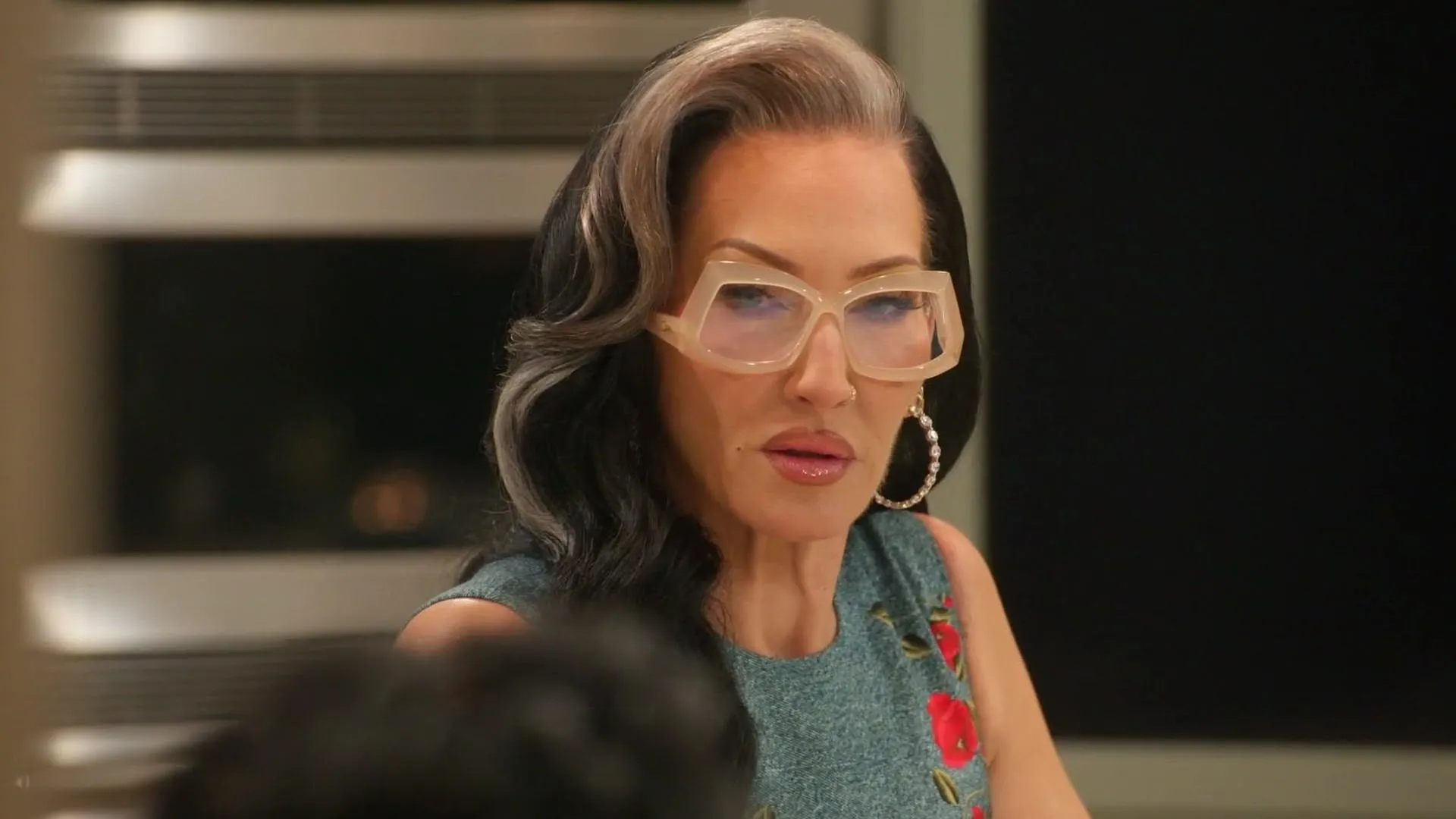
The retreat’s stated goal is a return to a more natural state, yet this “natural” is not a passive condition one can simply fall back into. It has become the new, and perhaps most demanding, aesthetic standard. It is a look that often requires its own expensive regimen of treatments, nutrition, and, yes, subtle cosmetic work to achieve. It is not an escape from artifice but its most sophisticated form, an illusion of effortlessness that requires maximum effort.
The participants’ approach to their bodies is quintessentially postmodern. They treat their physical forms as mutable texts, documents that can be endlessly written, erased, revised, and have previous versions restored. This constant editing of the exterior self raises destabilizing questions about the interior. If one’s face and figure are in a state of perpetual flux, where does a stable identity reside?
The show offers no easy answers, suggesting that the self may not be a fixed point to be discovered but a process to be managed. The moments of genuine connection, of raw vulnerability during a therapy session or a makeup-free conversation, are presented as emotional breakthroughs. They offer a powerful counter-narrative to the polished images the participants usually project.
This brings us to the show’s most complex, unresolved question. Can a system effectively critique itself? The series diagnoses the sickness of a beauty culture obsessed with perfection while being an immaculate product of the very entertainment industry that perpetuates that culture. The participants’ deeply personal search for self-acceptance is packaged into a commercial product, their pain and catharsis edited for dramatic effect and sold to an audience.
Their performance of authenticity becomes another commodity. The show holds up a mirror to a distorted culture, yet the mirror itself is part of the funhouse, reflecting and amplifying the very spectacle it purports to examine. The participants may leave the retreat feeling changed, but they return to the same world, the same cameras, and the same pressures that shaped them. The cycle remains unbroken.
“Botched Presents: Plastic Surgery Rewind” is a reality TV series that premiered on E! on July 9, 2025. Episodes of the series are also available to stream on Peacock Premium, fuboTV, and other streaming services seven days after they air on E!. The show follows a group of celebrities and social media influencers as they consider reversing their cosmetic surgeries for a more natural look.
Full Credits
Director: Karen Kurzbuch
Producers: Paul Michael Gibbs, Adam Vetri, Matt Cox, Rikardo Gomez
Executive Producers: Jackie Palombo, Emma Conway, Terry J. Dubrow, Rebecca Hertz, Charlie Van Vleet, Ben Turner
Cast: Michelle Visage, Terry J. Dubrow, Spirit, Larissa Dos Santos Lima, Aubrey O’Day, Alan McGarry, Kim Zolciak-Biermann, Brielle Biermann, Kathy Brown, Jessica Dime, Sebastian Bails, Sophia Elgerabli
Composer: ooogabeybaby
The Review
Botched Presents: Plastic Surgery Rewind
Botched Presents: Plastic Surgery Rewind is a surprisingly sharp examination of the anxieties driving the cosmetic industry, offering moments of genuine psychological insight. The series succeeds as a cultural document, revealing how identity has become a commodity. It remains trapped within the entertainment machine it critiques, turning vulnerability into a commercial product. It is a compelling, if deeply conflicted, look at the modern performance of self, worth watching more for its unsettling questions than for any answers it provides.
PROS
- Offers a deep psychological exploration of modern beauty standards.
- Examines the complex link between physical appearance, personal identity, and professional income.
- Features moments of genuine vulnerability that cut through the typical reality TV artifice.
- The guidance from experts, particularly Dr. Spirit, provides a thoughtful therapeutic framework.
CONS
- The show is a product of the very entertainment culture it critiques, creating a central conflict of interest.
- The therapeutic process can feel performative and tailored for television rather than for genuine healing.
- It implicitly promotes the "natural look" as a new, equally demanding trend, rather than a true escape from aesthetic pressure.
- Its focus on the specific anxieties of influencers and celebrities may not resonate with a broader audience.