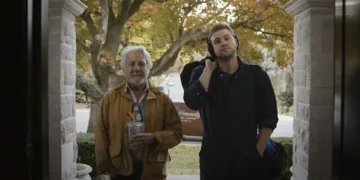


























A particular skill can feel like a superpower or a weakness, sometimes both at once. In Tuner, a young man’s rare hearing condition is the source of his greatest talent and his deepest pain. The film centers on the strange irony of his gift. We meet Niki White, a former piano prodigy whose career was cut short by hyperacusis, a condition that makes everyday sounds unbearably loud.
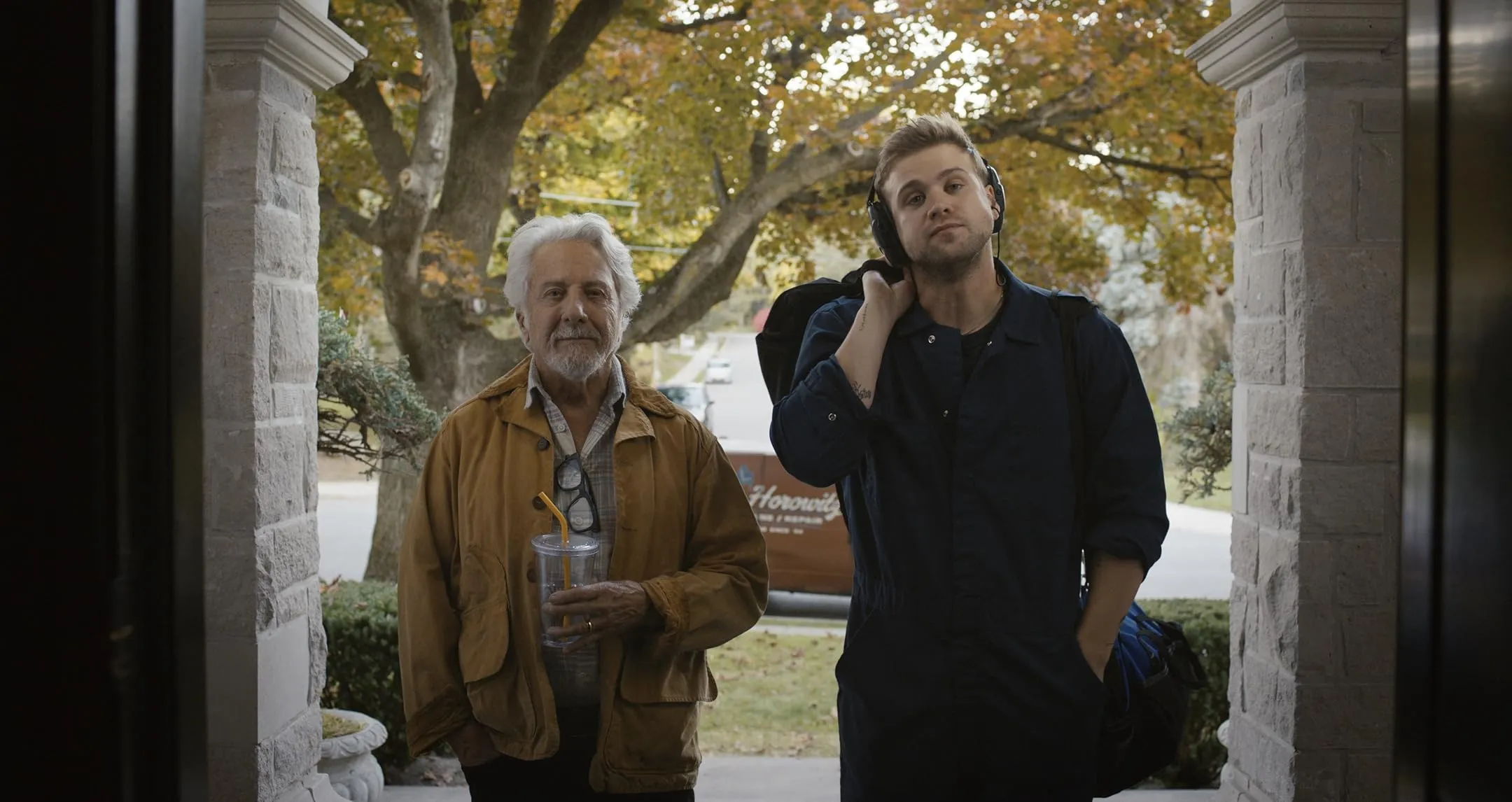
He now works as an apprentice piano tuner for Harry Horowitz, a veteran of the craft who is, in a turn of poignant fate, losing his own hearing. Niki’s life takes an unexpected direction when he discovers his sensitivity allows him to hear the delicate clicks of a safe’s tumblers. His ability to create harmony from a piano’s chaotic strings translates perfectly to the world of crime.
He is pulled between the structured world of music and the dangerous allure of a life as a safecracker. The film presents itself as a quiet character study that slowly develops into a tense thriller with a romantic heart, asking what a person does when their curse is also their calling.
Finding the Right Frequency
Leo Woodall carries the film with a performance of remarkable subtlety. He portrays Niki’s internal state through his physicality; his shoulders are often hunched and his movements are hesitant, the posture of someone guarding himself against an auditory assault. The earplugs he constantly wears are more than a prop; they are a barrier that defines his every interaction.
When he is focused on a task, however, a quiet confidence emerges, channeling a savant-like intensity that feels completely authentic. This transformation is the core of his character. The film’s emotional weight rests on his dynamic with Harry, played with a warm, stubborn humor by Dustin Hoffman. Hoffman provides a necessary gravitas, acting as the story’s foul-mouthed but lovable heart.
Their relationship is a study in contrasts, a poignant parallel where one man has too much sound in his life and the other is losing it. Their bond forms the foundation of the film. Niki’s connection with Ruthie, a talented music student, offers him a glimpse of the life he lost.
The scene where he tunes her piano is charged with unspoken feelings, a moment of nonverbal communication that reveals his deep musicality and sparks their romance. This connection complicates his choices, giving him something precious to lose as he becomes entangled with a menacing criminal boss who raises the stakes of his new secret life.
Composing a Heist
Director Daniel Roher mixes genres with a steady hand, creating a film that feels like a throwback to the character-focused dramas of the 1990s, recalling pictures like Good Will Hunting. The story moves from quiet, intimate scenes to suspenseful heist sequences without feeling jarring.
The safecracking moments are edited with a playful energy, using snappy cuts and close-up shots of mechanical parts. Roher focuses on the tactile nature of the work, with insert shots of piano strings and hammers during tuning that are later mirrored by images of tumblers and gears inside a vault. This visual parallel strengthens the central idea of the film.
The heists themselves feel less like gritty crimes and more like puzzles to be solved, turning the click of a dial into a tense musical composition. The pacing here is excellent, building suspense from process instead of overt threats. This approach allows the film to explore the idea that methodical skill, whether applied to art or crime, comes from the same place of deep focus and sensitivity. The result is a thriller that prioritizes character and craft over cheap spectacle.
Pitch Perfect and Off Key
The sound design in Tuner is its most impressive accomplishment. Like in the film Sound of Metal, the auditory landscape is a primary storytelling tool. The mix shifts aggressively between overwhelming barrages of city noise and the focused silence of Niki’s work, giving the audience a direct, immersive simulation of his condition. This technical craft makes his struggle tangible.
The screenplay, however, does not always show the same level of nuance. Its structure is meticulously built, with every plot point and character motivation explained with absolute clarity. This precision becomes a weakness. For example, the script goes to great lengths to ensure Niki remains morally pure; his first major target is an unscrupulous person, a detail that conveniently absolves our protagonist of any difficult choices.
This heavy-handed approach removes ambiguity and lessens the narrative tension. The story falters most in its third act, which relies on predictable crime-thriller conventions and a final twist that strains believability. The attempt to resolve every thread neatly feels artificial. Tuner is a film about finding a new way to listen to the world when your own path is lost. Woodall’s performance and the exceptional sound work make it a worthwhile experience, even when the script hits a few wrong notes.
Full Credits
Director: Daniel Roher
Writers: Robert Ramsey, Daniel Roher
Producers and Executive Producers: JoAnne Sellar, Lila Yacoub, Teddy Schwarzman, Michael Heimler, Noah Segal, Christina Piovesan, Courtney L. Cunniff, John Friedberg, Andrew Golov, Robert Ramsey, Mary Anne Waterhouse
Cast: Leo Woodall, Dustin Hoffman, Havana Rose Liu, Lior Raz, Tovah Feldshuh, Nissan Sakira, Gil Cohen, Jean Reno
Director of Photography (Cinematographer): Lowell A. Meyer
Editors: Greg O’Bryant
Composer: Will Bates
The Review
Tuner
Tuner is a well-composed character study elevated by an excellent central performance and groundbreaking sound design that places you directly in the protagonist's head. Its exploration of talent and identity is thoughtful. The film's potential is hampered by a screenplay that prioritizes neat plotting over genuine moral complexity, leading to a predictable and overly convenient final act. It is a film with a brilliant concept that is executed with considerable craft, yet its cautious storytelling strikes a flat note.
PROS
- A nuanced lead performance from Leo Woodall.
- Exceptional and immersive sound design that enhances the story.
- A unique and engaging central premise.
- A warm supporting performance from Dustin Hoffman.
CONS
- The screenplay is often heavy-handed and predictable.
- The story avoids moral complexity for its protagonist.
- The third act relies on contrived plot developments.
- The romantic subplot feels underdeveloped.