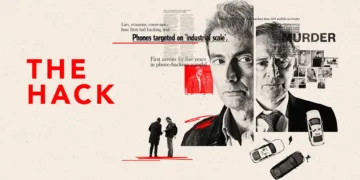









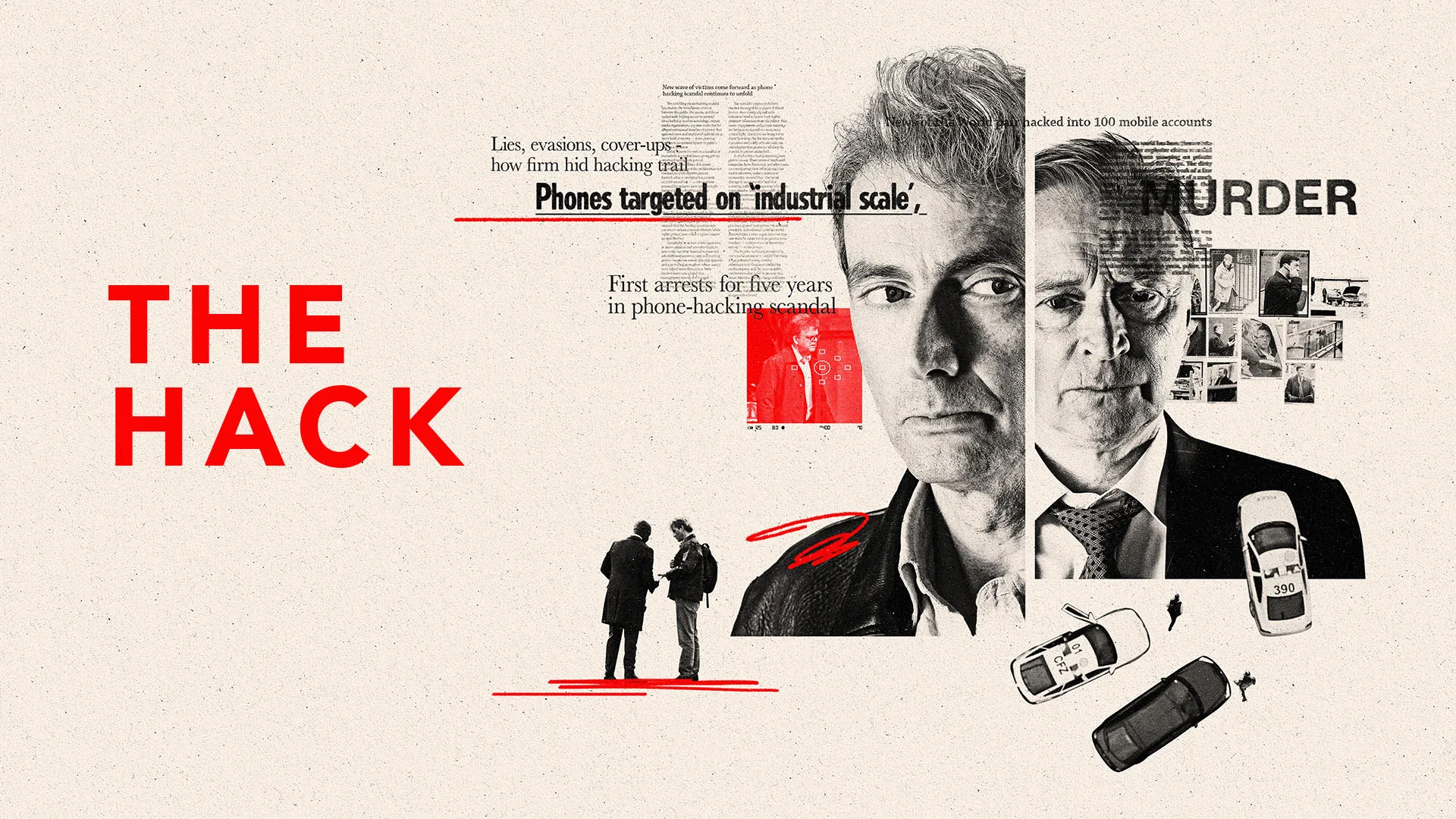

Before the internet learned to shout, the tabloids mastered the art of the whisper. They dealt in secrets, the kind that could build a career or burn a life to the ground. Jack Thorne’s seven-part drama, The Hack, is about the moment those whispers became a roar, exposing the rotten machinery used to capture them. The series drops us into 2008, a time that feels both recent and ancient. Here, the crime of hacking a mobile phone’s primitive voicemail was a dirty little secret in Fleet Street, dismissed as an isolated incident. The show argues it was an industrial-scale operation.
Our way into this conspiracy is Nick Davies, a reporter for The Guardian whose idealism has been worn down to a nub. He is tired of the state of his profession, tired of the fight. Then a source gives him a story that could incinerate the entire media establishment and its cozy relationship with the police and politicians. The Hack is framed as a journalistic crusade, a lone reporter against a corporate Goliath. It is a story about the mechanics of truth: how it is found, how it is verified, and how it is violently suppressed by those who profit from lies. The stakes are immense, touching on everything from individual privacy to the health of a democracy.
Two Dramas for the Price of One
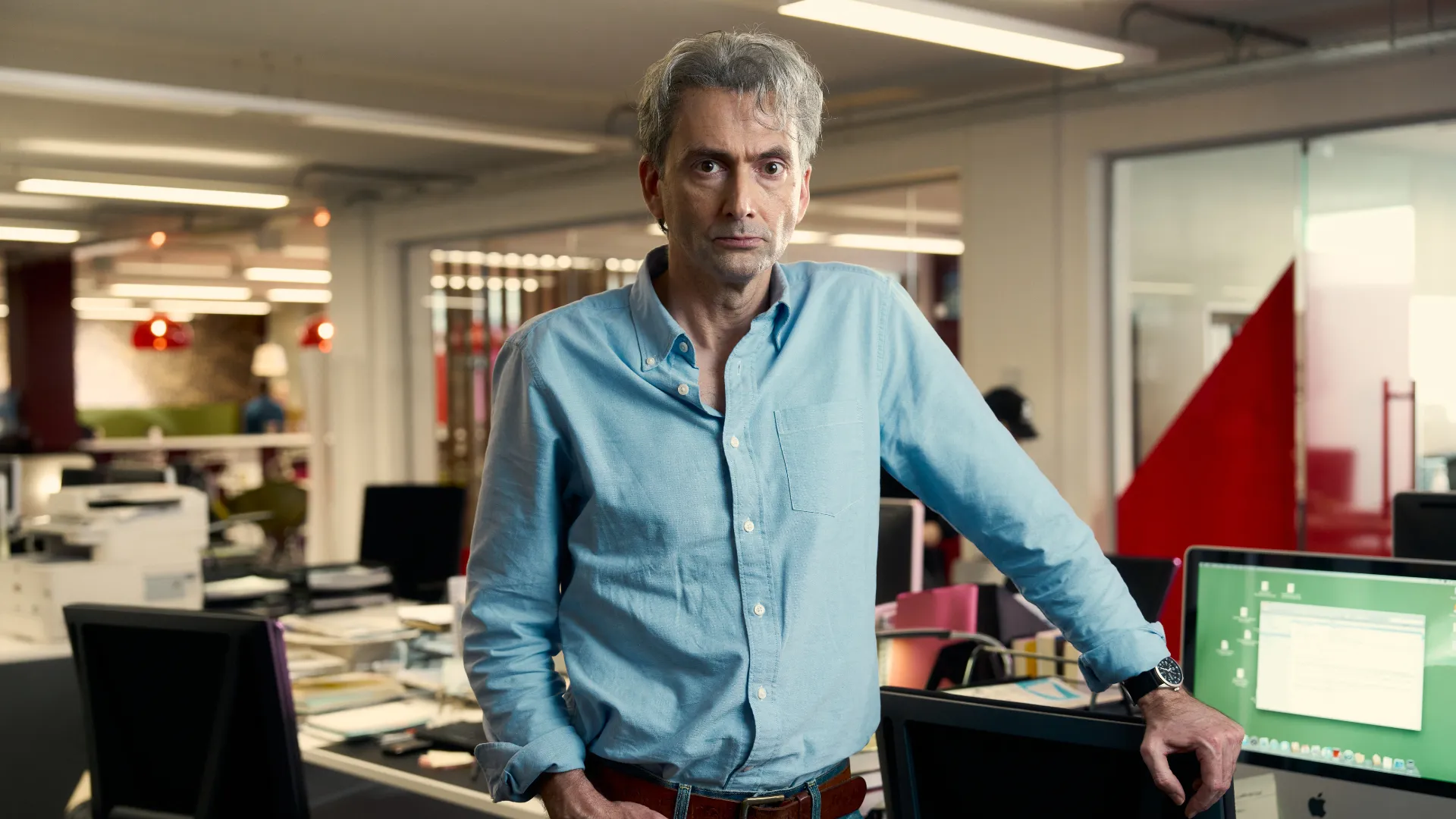
The Hack is a series with a split personality, presenting two parallel investigations that sit together with the awkwardness of strangers on a park bench. The primary plot is a deep dive into the journalistic procedural, following Nick Davies (David Tennant) as he chases the phone-hacking story. The series excels at depicting the sheer, unglamorous grind of the work.
Thorne’s script and Lewis Arnold’s direction linger on the frustrating realities: the endless calls to people who refuse to talk, the meticulous cross-referencing of documents, the delicate dance of coaxing a terrified source to go on the record. The visual language emphasizes this monotony through cluttered newsroom desks and grey, rainy London streets.
Progress is measured in inches, not miles. To give this professional obsession a personal anchor, the script includes flashbacks to Davies’s abusive childhood and a present-day subplot involving his son. These threads are meant to forge a clear psychological line from his past trauma to his current crusade against bullies. The connection feels more like a screenwriter’s neat diagram than a messy, human truth.
At the same time, the show runs a completely separate storyline following DCS Dave Cook (Robert Carlyle). He is a detective tasked with reopening the infamous 1987 murder of private investigator Daniel Morgan, a case that has long been a dark stain on the Metropolitan Police. Cook’s investigation is a classic, somber police procedural. It is shot and paced like a completely different show, with a darker color palette and a more deliberate, quiet tension.
His work gradually reveals the tendrils of corruption connecting Morgan to News International, linking his cold case to Davies’s breaking story. In theory, this dual structure should offer a panoramic view of institutional decay. In practice, the two plots struggle to mesh. The show lurches between Davies’s stylistically adventurous world and Cook’s grounded, gritty one. The tonal whiplash is severe and persistent, making the series feel less like a cohesive whole and more like two interesting but ill-suited dramas were forced into a seven-episode cohabitation.
An All-Star Press Pass
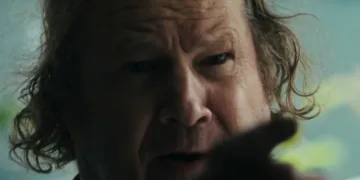
A drama of this scale lives or dies by its central performances, and The Hack has assembled a formidable cast to do the heavy lifting. David Tennant is the engine of the series, portraying Nick Davies as a man running on a volatile cocktail of caffeine, principle, and pure rage. His physicality is key; he carries the weight of his investigation in his slumped shoulders and the restless energy in his constant movement.

It is a portrait of obsession. Tennant makes Davies a difficult protagonist, whose righteousness often tips over into self-importance. This complexity is vital, saving the character from becoming a simple crusading hero. When he turns to the camera to speak to the audience, he does so with a weary, conspiratorial air, making his exposition dumps feel less like a lecture and more like a secret being shared.
The supporting cast provides a sturdy foundation. Toby Jones, an actor incapable of a false note, plays editor Alan Rusbridger with a masterful blend of weary managerial oversight and steely journalistic integrity. He is the calm center in Davies’s storm. On the other side of the narrative divide, Robert Carlyle gives DCS Dave Cook a profound sense of dignity. His performance is quiet and internal, showing a decent man worn down by a lifetime of navigating a compromised system.
Beyond the leads, the call sheet reads like a who’s who of British television. Actors like Adrian Lester, Eve Myles, and Steve Pemberton appear in pivotal roles, their familiar faces lending an immediate gravity to the proceedings. The sheer density of talent suggests a collective belief in the project’s importance, as if the acting community itself was deputized to retell this crucial chapter of modern British history.
Too Clever by Half?
For a series about a grim abuse of power, The Hack employs a startlingly whimsical and self-aware style. Its most debated feature is the relentless breaking of the fourth wall. Nick Davies frequently pivots from a dramatic scene to address the camera directly, explaining a fine point of press law or offering a cynical comment on the person he just spoke to.
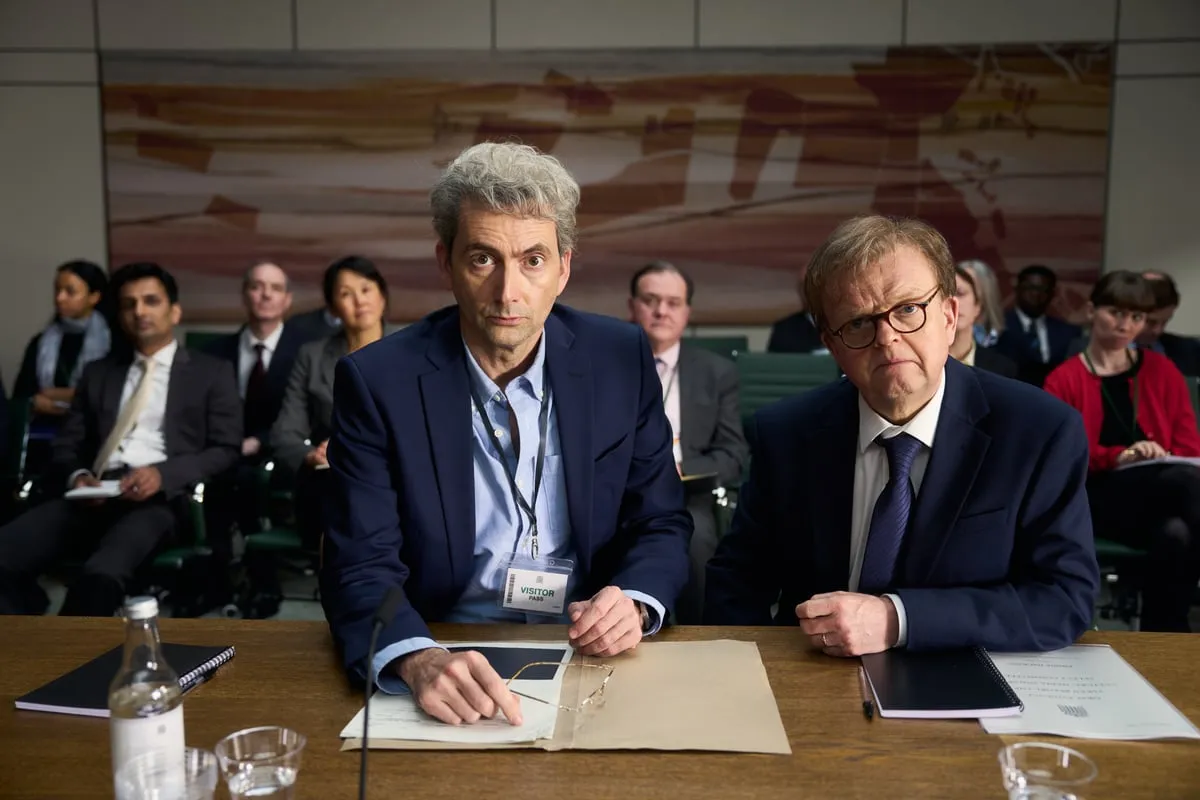
This device, popularized in everything from political satires like The Big Short to character studies like Fleabag, is used here as a narrative shortcut. It is a tool to untangle a notoriously complex story for the viewer. While occasionally effective, the technique more often feels like a crutch.
It breaks the immersive spell of the drama, pulling us out of the story to remind us we are watching one. Worse, it imbues the series with an air of smugness, as if it is congratulating itself on its own clever storytelling. The tone is less that of a trusted guide and more that of a know-it-all who will not let you experience things for yourself.
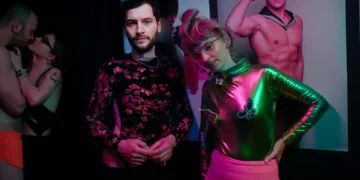
This theatrical impulse extends beyond the direct addresses. The series is littered with surreal and jarring stylistic flourishes that detract from its serious subject. In one sequence, anonymous sources are represented by blink-and-you-miss-them celebrity cameos. In another, advertisements on the tube come to life. These moments are presumably meant to add visual flair and a postmodern wit to what could otherwise be a dry procedural.
The intention may be to capture the disorienting, media-saturated world of the 21st century. The result, however, is a collection of gimmicks that feel profoundly out of sync with the human cost of the scandal. They are distracting, silly, and they actively work against the gravity of the real events being depicted. The story of the hacking scandal is powerful enough on its own; it did not need these decorative frills.
Preaching to the Choir
Jack Thorne’s script has moments of genuine power, capturing the charged quiet of a clandestine meeting or the acidic bite of a newsroom confrontation. It is also hampered by a surprising amount of clunky and repetitive dialogue.
Characters are constantly telling Nick Davies he looks exhausted, a point the audience and Tennant’s performance have already made abundantly clear. The show’s penchant for metaphor reaches its low point with a recurring CGI dung beetle, trundling across the screen to symbolize the dirty work of journalism. It is a visual so unsubtle it feels insulting to the viewer’s intelligence.
The series admirably tackles massive themes of power, privacy, and accountability. It wants to be an important statement on the health of public life. Yet its own tone gets in the way. The Hack treats its journalistic heroes with a reverence that feels suffocating. Davies and Rusbridger are framed, both literally and figuratively, as knights of truth.
The camera often shoots them in heroic poses, battling the shadowy forces of Rupert Murdoch’s empire. This creates a simplistic moral universe of unimpeachable protagonists versus cartoonish villains, flattening the real-world complexities of the scandal. The show acts as a powerful reminder of a shocking abuse of power. But in its eagerness to canonize its heroes and celebrate its own importance, does it risk becoming the very thing it critiques: a story with only one side?
The Hack is a seven-part true crime drama series. It premiered on September 24, 2025, on ITV1 and is available for streaming on ITVX and Stan. The series tells two stories, the work of investigative journalist Nick Davies in uncovering the phone hacking scandal at the News of the World and the police investigation into the unsolved murder of private investigator Daniel Morgan.
Full Credits
The Review
The Hack
The Hack is a frustrating yet important piece of television. It is anchored by superb performances from David Tennant and a formidable ensemble cast, successfully telling a vital story about the abuse of power in modern Britain. Its impact is frequently undercut by a disjointed narrative structure and a host of self-aware stylistic gimmicks that distract from the drama. The show is a compelling history lesson that cannot resist getting in its own way, making it a worthy but flawed undertaking.
PROS
- Powerful and complex lead performances from David Tennant, Robert Carlyle, and Toby Jones.
- Tackles a significant and complex real-world scandal with serious intent.
- Effectively captures the painstaking, unglamorous reality of investigative journalism.
- An impressive supporting cast adds weight to even minor roles.
CONS
- The dual-narrative structure feels disjointed and creates jarring tonal shifts.
- Stylistic choices, like breaking the fourth wall and surreal vignettes, are often distracting.
- The script can be repetitive and employs heavy-handed metaphors.
- A reverential tone towards its journalist heroes simplifies a complex story.