





























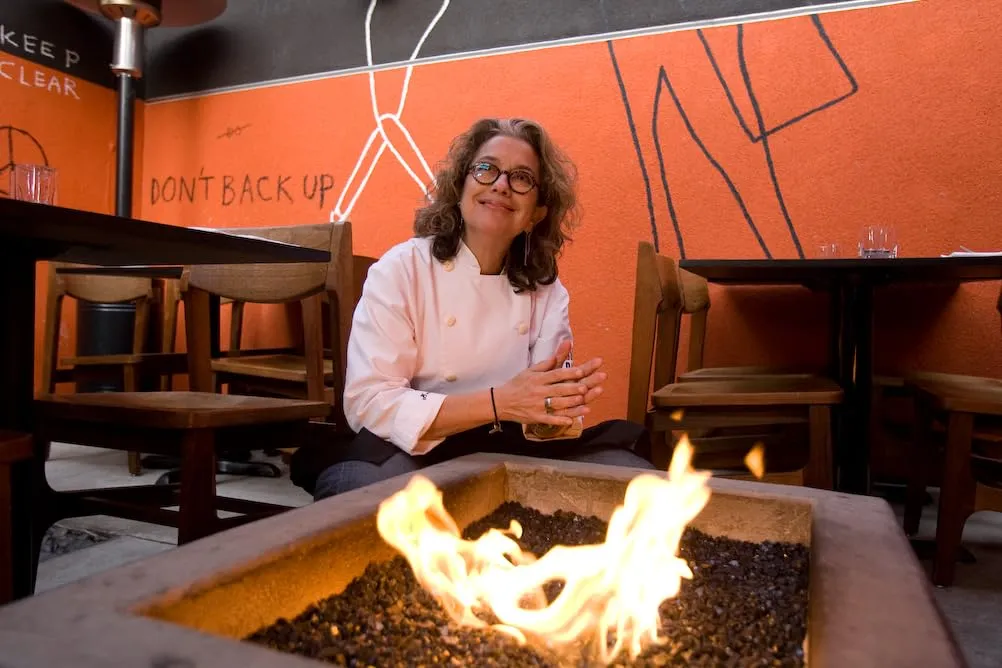
To abandon a known world is a particular kind of madness. It is an act of self-negation, a wager against one’s own history. This is the existential space where Liz Lachman’s documentary Susan Feniger: Forked begins. It finds the celebrated chef Susan Feniger, long defined by her formidable culinary partnership with Mary Sue Milliken, choosing to dissolve that identity.
She steps out of the light of shared success into the shadows of a solo venture, a global street food restaurant called STREET. Lachman, filming her own spouse, forgoes the polished sheen of the food-television complex for something far more raw and immediate.
Her camera acts as an intimate witness to the messy, unglamorous process of creation. This is not a film about food so much as it is about the architecture of a dream and the brutal physics that threaten its collapse. The central question is not whether the restaurant will succeed, but whether an identity can be rebuilt from scratch.
The Optimist in the Arena
Susan Feniger operates as the film’s unwavering kinetic center, a figure of perpetual motion against a tide of entropy. Her optimism is less a personality trait and more a philosophical position, a stubborn refusal to bow to the mounting evidence of failure. She is resourceful, yes, but her defining quality is an infectious, almost baffling, resilience.
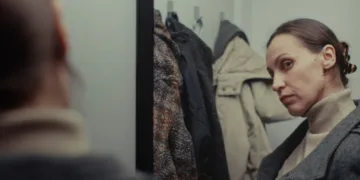
Lachman’s camera holds on her in tight, personal shots, capturing the easy smile that rarely falters, even as contractors deliver bad news. The film masterfully intercuts this present-day struggle with archival footage, ghosts from a past life of television appearances and established accolades. These bright, saturated clips of the “Too Hot Tamales” era stand in stark visual contrast to the grainy, spontaneous footage of her current reality.
They serve as a constant reminder of the world she left behind, heightening the stakes of her solitary gamble. The audience is drawn into her orbit, becoming invested not in the simplistic drama of success or failure, but in the more profound spectacle of watching a human spirit refuse to be extinguished by circumstance.
A Phenomenology of Failure
The film’s middle act descends into a kind of bureaucratic noir, a forensic examination of the thousand mundane cuts that can bleed an enterprise dry. Lachman’s vérité style is perfectly suited for this, her camera a dispassionate observer of the conflict between artistic vision and logistical reality.
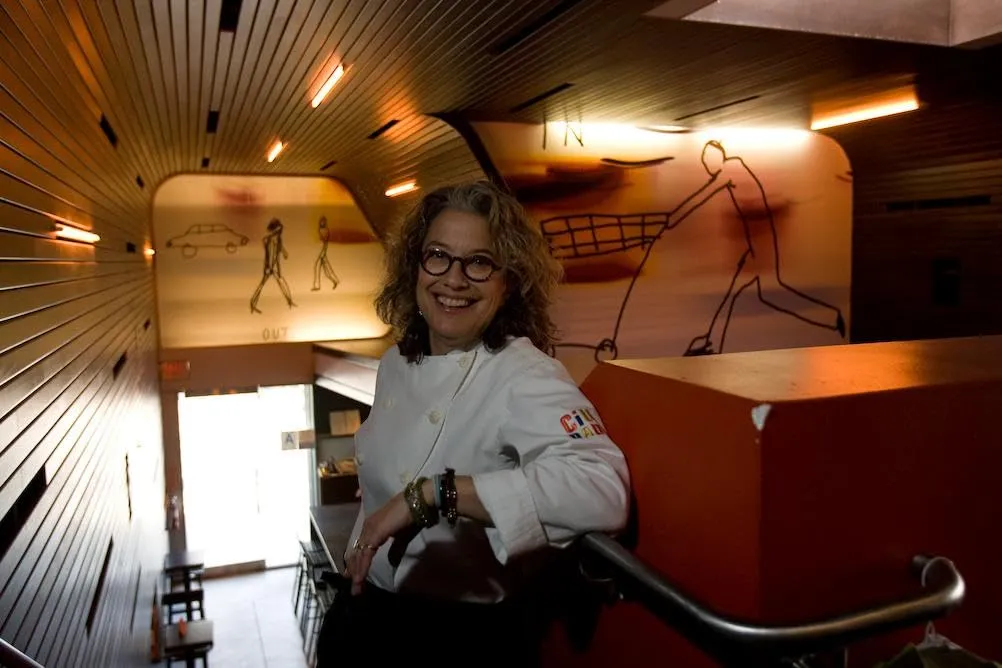
The narrative follows Feniger from the sensory richness of Asian street markets—scenes shot with a fluid, exploratory grace—to the stark, unforgiving skeleton of her Los Angeles building site. Here, the lighting is harsh, the angles are tight, and the soundscape is a discordant symphony of power tools and anxious phone calls.
The antagonist is not a person but the system itself: a labyrinth of permits, inspections, and unforeseen structural flaws. There is a dry, tragic humor in watching a world-renowned chef, a master of complex flavors, utterly confounded by the intractable problem of faulty plumbing. It is a grounded, unsparing depiction of the brutal friction of entrepreneurship, where the greatest threat to a dream is often the suffocating dullness of reality.
The Raw Document
Ultimately, Lachman’s filmmaking captures a portrait of a specific moment, refusing the neat resolutions of a conventional documentary. The aesthetic is one of radical immediacy. The handheld camera work and low-fidelity image quality create a subjective, almost claustrophobic experience, trapping the viewer inside Feniger’s relentless present tense.
This is not a flaw; it is the film’s central thesis. It functions as a time capsule, a raw feed of an experience that resists easy summary or grand reflection. Miriam Cutler’s score is crucial here, its energetic rhythms driving the pacing and amplifying the sense of constant, low-grade anxiety that hums beneath the surface.
The film offers no tidy moral about the nature of success. Instead, it presents a compelling document of the process itself. It is an honest, personal, and deeply felt look at the sheer force of will required to create something new, leaving the viewer to ponder the ambiguous line between passionate determination and reckless self-delusion.
Susan Feniger. Forked is a verité style documentary film that premiered on the festival circuit in 2022 and was generally released in 2023. Described as a “culinary disaster film,” it follows renowned celebrity chef Susan Feniger as she attempts to open her first solo restaurant, STREET, which aims to bring global street food under one roof in Los Angeles. The film, shot by Feniger’s longtime partner and director Liz Lachman, chronicles Feniger’s journey to Southeast Asia for culinary inspiration and her subsequent struggle with the daunting tasks of construction, financing, and innovating new recipes for the restaurant. It is an inspirational and often humorous story about starting over and dealing with the inevitability of failure in pursuit of a passion. The film is available to rent or buy on various video-on-demand platforms, including Prime Video, Apple TV, Google Play, and Fandango at Home (Vudu).
Full Credits
Director: Liz Lachman
Writers: Liz Lachman
Producers and Executive Producers: Lisa Donmall-Reeve, Liz Lachman
Cast: Susan Feniger, Wolfgang Puck, Bobby Flay, Mary Sue Milliken, Barbara Fairchild, Kajsa Alger
Director of Photography (Cinematographer): Matt Simpkins
Editors: Joan Gill Amorim
Composer: Miriam Cutler
The Review
Forked
Susan Feniger: Forked is less a culinary film and more a raw, existential document. It forgoes narrative polish for a visceral, vérité look at the brutal friction between creative ambition and logistical reality. Liz Lachman’s intimate lens captures a compelling portrait of resilience, not as a triumphant hero's journey, but as a study in stubborn endurance. It is a fascinating, unfiltered time capsule of a singular struggle, more interested in the chaotic process than in a tidy outcome. An honest and deeply human film.
PROS
- A deeply compelling and energetic central subject in Susan Feniger.
- Intimate, vérité filmmaking provides an authentic and raw perspective.
- An unflinchingly honest depiction of the unglamorous side of entrepreneurship.
- Possesses a strong emotional core that makes the viewer invested in the journey.
CONS
- The unpolished, low-fidelity aesthetic may not appeal to all viewers.
- Its "time capsule" approach offers little retrospective analysis or broader context.
- A narrow, sometimes repetitive focus on the logistical minutiae of opening a business.