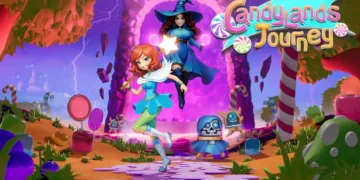

























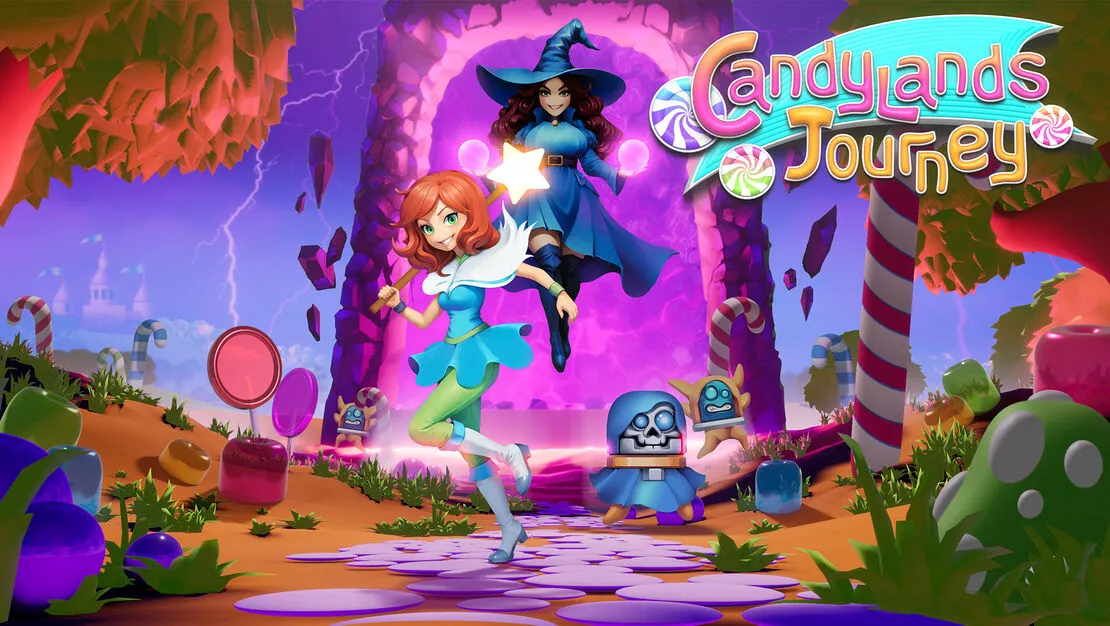

Candylands Journey presents itself as a love letter to the platformers of the 90s, complete with pixel art that could have graced the SNES library and a premise straight out of Saturday morning cartoons. You play as a young witch tasked with recovering the stolen Magic Crystal from the Pastry Witches who’ve terrorized Magic University.
The setup is deliberately simple, offering 15 candy-coated locations filled with enemies, collectibles, and boss encounters. Developed by the three-person team at Spell Pie and published by Sometimes You, this is a modest production that wears its retro inspirations proudly.
At $9.99 and clocking in around three to four hours, it positions itself as an accessible, bite-sized adventure aimed squarely at casual players and younger audiences. The whimsical aesthetic promises lighthearted fun, though the execution reveals significant design oversights that undermine the experience.
Mechanical Foundations and Progression Systems
The core gameplay loop borrows liberally from classic platformers while adding light RPG-style progression. Your witch’s primary weapon is a magic wand that starts with infinite bubble attacks, a clear homage to Bubble Bobble. These bubbles trap enemies temporarily, allowing you to either jump on them for extra height or wait for the bubble to pop and eliminate the threat. This mechanic provides both offensive and platforming utility, though its limited range can feel restrictive during chaotic encounters.
The spell system expands as you collect jewelry fragments scattered throughout each level. Gathering 100 fragments converts them into a single gem, which you spend at the Magic University shop between stages. Here you can purchase seven additional spell types beyond your default bubbles. The elemental options like fire, ice, and lightning function predictably, while oddball choices like summoning frogs, rabbits, or bats inject genuine personality into combat.
Each non-bubble spell operates on limited ammunition that replenishes by breaking colored vases found in levels. This creates a resource management layer, though the system introduces an immediate problem: these vases blend seamlessly into the environment. They appear decorative rather than interactive, leading to confusion about how to refill your magical arsenal. The game offers no tutorial explanation, leaving players to stumble upon the solution through trial and error.
The hat system adds another dimension to your capabilities. Defeated enemies occasionally drop headgear that grants specific abilities when worn. Some hats let you headbutt through breakable blocks, others enable gliding by holding the jump button, and a few provide stat bonuses like increased defense or attack power. You can swap these freely or purchase them directly from the shop, and certain hats like the high-jump variant can trivialize sections of levels. The system feels borrowed from games like Super Mario Bros. 3 or Kirby, though it lacks the tight integration those titles achieved.
Progression is deliberately forgiving. You begin with five hearts and can find extras in treasure chests. Cat statues function as checkpoints, respawning you nearby after death with no penalties. There’s no life counter, no game over screen, and all collected items and defeated enemies remain cleared even after dying. This extends to boss fights, where you can throw yourself at the Pastry Witches repeatedly without consequence. The generosity makes the game accessible to younger or less experienced players, though it also strips away meaningful challenge.
The puzzle piece collection system exposes a critical design flaw. Each level contains one puzzle piece necessary to unlock the final boss, and these pieces are visible from the start. However, many require specific spells you won’t own yet, forcing you to backtrack through completed levels once you’ve purchased the necessary magic. For a game targeting children, this creates unnecessary confusion. Standing at the end of the first level, staring at an unreachable collectible with no indication that it’s currently impossible to obtain, feels like poor communication.
Visual Artistry Undermined by Clarity Issues
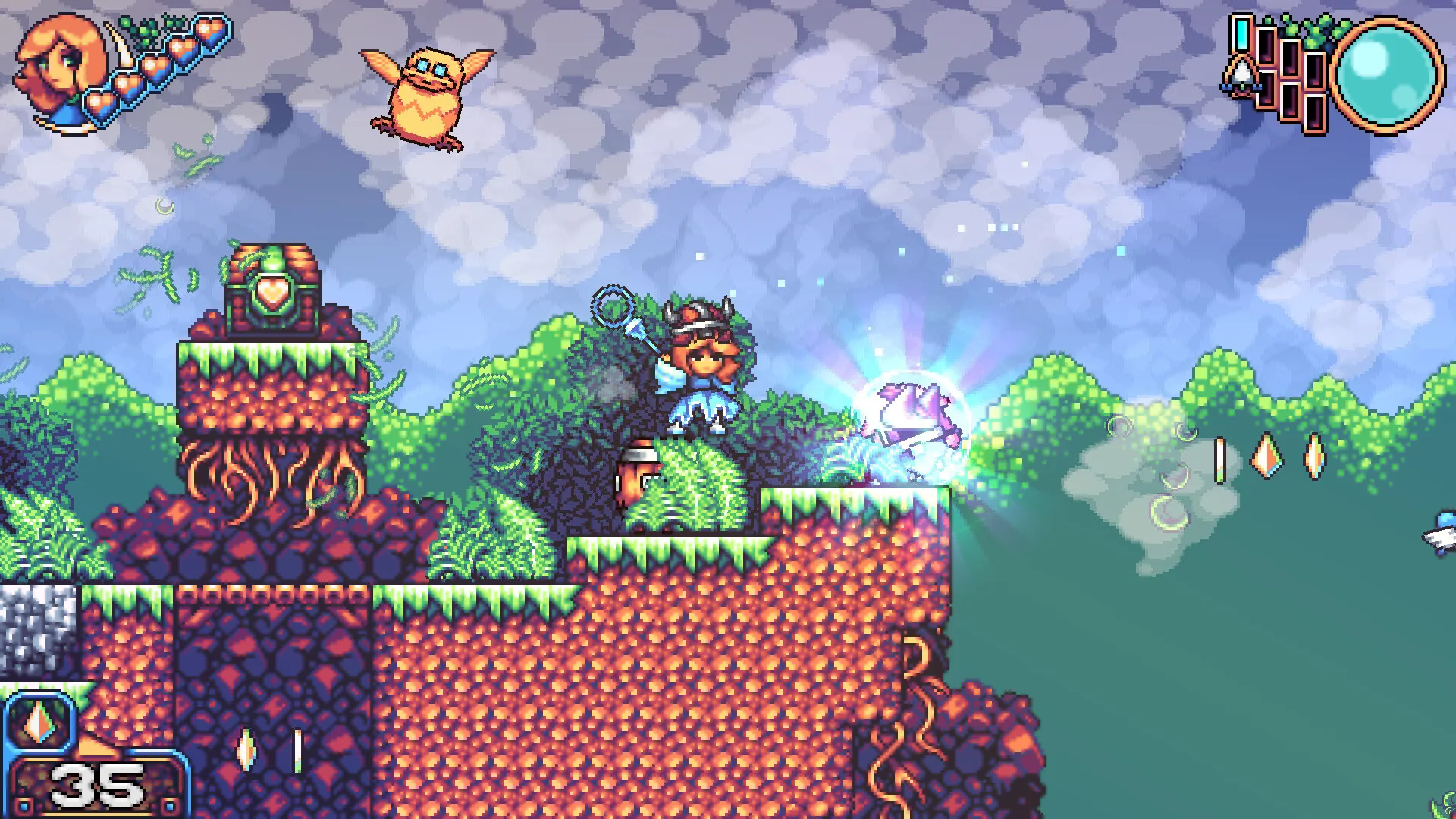
The pixel art style radiates charm, evoking the Genesis and SNES era with detailed sprite work and vibrant color palettes. Each of the 15 biomes brings distinct visual flavor, from ancient ruins and shadowy caves to underwater expanses and candy-themed castles. The intricate backgrounds and foreground elements showcase genuine artistic talent.
The soundtrack matches this aesthetic, delivering upbeat, whimsical tracks that capture the magical atmosphere. Enemy defeat sounds add amusing touches that reinforce the lighthearted tone. Performance remains smooth across PlayStation and Xbox platforms, with consistent frame rates and minimal loading times.
However, this visual ambition creates catastrophic gameplay problems. The detailed art actively works against player comprehension, turning every screen into a puzzle of visual parsing. Background elements and interactive objects blend together so thoroughly that you can’t reliably tell what surfaces are solid walls versus decorative scenery. Spiky objects that traditionally signal danger in platformers appear in the deep background, blocking paths that are actually open.
The underwater sections exemplify this issue most severely. Jellyfish and mines should register as immediate threats, but their designs and colors merge with the aquatic backgrounds, rendering them nearly invisible until you’ve memorized their spawn locations. Some enemy types look like non-threatening NPCs rather than hostile creatures. The decorative vases that refill spell ammunition appear indistinguishable from purely aesthetic background props, forcing you to approach every colorful object and test whether it’s interactive.
During intense action sequences, the screen becomes an overwhelming mess of overlapping visual information. Foreground details obscure enemies and platforms, while background layers push forward into what feels like gameplay space. You can’t intuitively read the environment the way functional level design demands. Instead, you memorize through repeated deaths which visual elements matter and which are just decoration. This represents a fundamental breakdown in visual communication, where the game’s beauty actively impedes your ability to play it. This playability crisis persists throughout the entire adventure, never improving as you progress.
Structure, Encounters, and Lasting Value
The 15 levels spread across a world map, each offering linear progression punctuated by light exploration. Some stages gate advancement behind finding emeralds to break blockades or keys to unlock doors. The opening level functions as a bare-bones tutorial, providing button prompts without contextual teaching. You learn mechanics through experimentation rather than guided instruction, which aligns with older design philosophies but may frustrate modern players expecting clearer onboarding.
Enemy variety expands steadily as you progress. New creature types join the existing roster rather than replacing them, meaning later stages accumulate threats that demand different tactical approaches. Some enemies can only be damaged by specific spell types, creating situations where bubble spam won’t suffice. This gradual difficulty increase works in theory, though the visual clarity problems undermine any legitimate challenge the enemy design might present.
Boss battles against the Pastry Witches punctuate certain levels, offering larger-scale encounters that should provide exciting climaxes. Instead, they expose shallow design thinking. Each witch follows predictable patterns: spawn minions, fire projectiles, move to new position, repeat. Their health bars are substantial but deplete quickly under sustained assault. The first boss can be trivialized by standing in a corner and spamming bubbles, never engaging with the intended mechanics. None of the bosses introduce unique gimmicks, phase transitions, or environmental interactions that would make them memorable.
The puzzle pieces, clearly visible but often inaccessible, demand backtracking through completed levels once you’ve purchased the necessary spells. This creates tedious busywork in a game already light on content. You can replay levels to grind jewelry fragments if you want to purchase all spells early, and the game lets you keep all progress between runs.
At three to four hours for completion, Candylands Journey fits the “weekend game” mold popular in the 90s. There’s modest reason to return after finishing: tracking down missed puzzle pieces, experimenting with spell combinations you didn’t use initially, or pursuing the trophy list tied to collectibles and boss defeats. However, once the credits roll, most players will feel satisfied putting it down permanently.
The Review
Candylands Journey
Candylands Journey has the foundation for a charming retro platformer: creative spell mechanics, nostalgic pixel art, and accessible design. However, severe visual clarity issues transform what should be straightforward platforming into an exhausting exercise in deciphering cluttered environments. Beautiful artwork obscures enemies, hazards, and interactive objects, making visual confusion the primary challenge rather than skill-based gameplay. Repetitive boss fights and forced backtracking compound these problems. While the three-to-four hour experience offers decent value at $9.99, the core playability issues prevent it from reaching its potential.
PROS
- Creative spell variety with whimsical options like summoning frogs and rabbits
- Charming pixel art aesthetic with diverse biomes
- Accessible difficulty suitable for younger players
- Decent value for the price point
CONS
- Severe visual clutter obscures enemies and interactive objects
- Repetitive, uninspired boss battles
- Forced backtracking for puzzle pieces creates tedium
- Poor tutorial leaves critical mechanics unexplained
- Extremely forgiving difficulty removes meaningful challenge