
























![Kingdom Hearts Collection [I-III] Review](https://gazettely.com/wp-content/uploads/2026/10/Kingdom-Hearts-Collection-I-III-1-360x180.webp "Kingdom Hearts Collection [I-III] Review: KHII Holds Steady as Newer Entries Fluctuate 37")



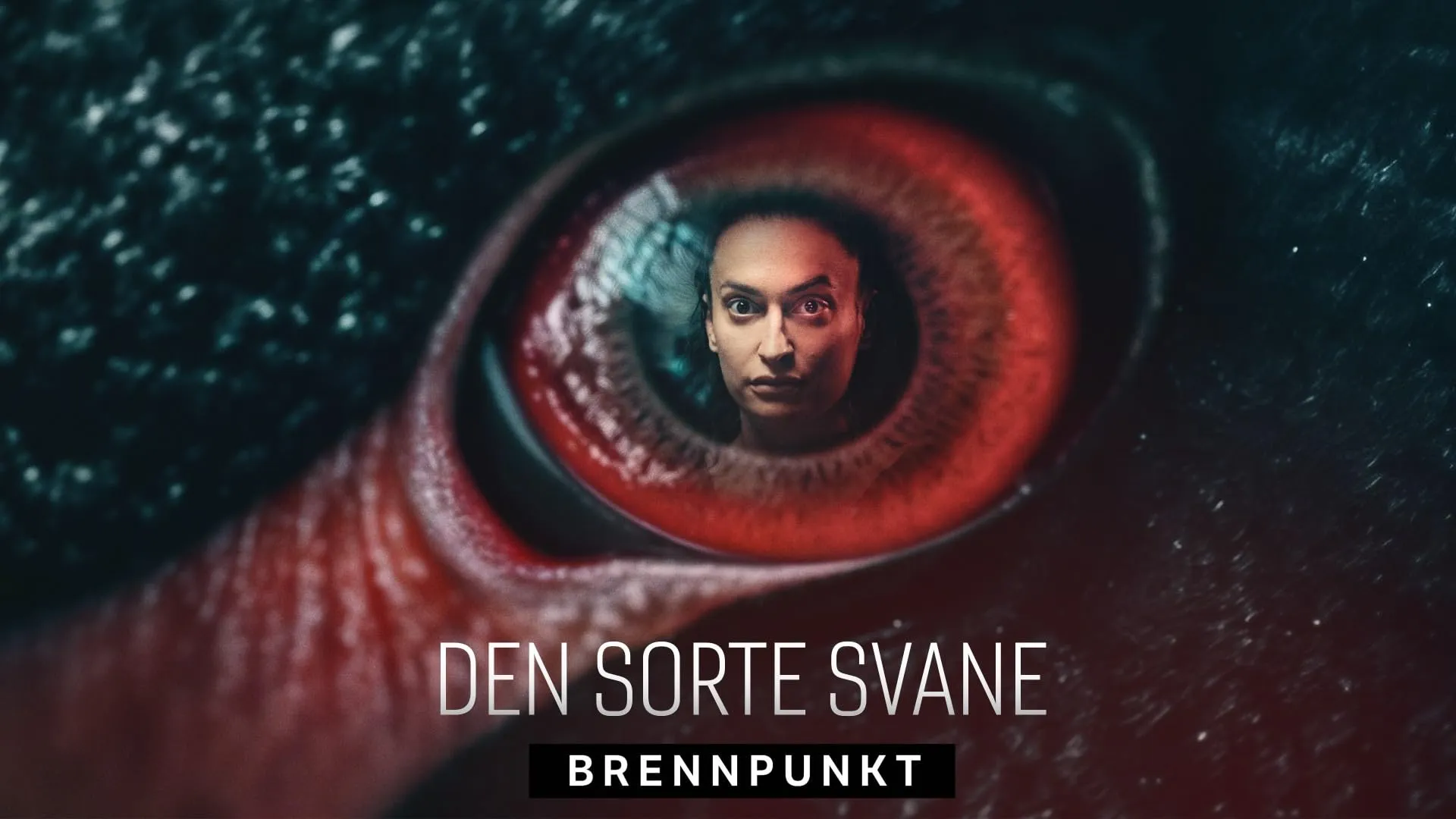

The Black Swan is a four-part investigative documentary series conceived and directed by the provocateur filmmaker Mads Brügger. It turns on an audacious decision by Amira Smajic, a lawyer who once cruised the murkiest channels of financial crime, to become an insider source. She wants to expose the criminal networks she previously served, and she does so in full view of Brügger’s camera.
The title points to epistemic philosophy. A “Black Swan” is the sort of event no one budgets for, the thing that arrives out of frame and forces a rewrite of the possible. Brügger uses that idea as a loaded metaphor. The surprise here is not an alien invasion or a rogue wave. It is the cracking of Denmark’s own story about itself. For decades the country stood as a beacon of integrity, praised as the least corrupt nation on Earth. The series invites a less flattering inventory of what sits beneath that polite surface.
Brügger’s inquiry maps a criminal symbiosis that feels almost biomedical, like a parasite that learned to speak the host’s language. Gangs and hardened biker crews occupy one pole. At the other stand respected businessmen, lawyers, and construction executives who wear legitimacy like a tailored suit. Their co-dependent arrangement launders “dirty” money with the efficiency of a bureaucratic routine. The result is systemic rot that eats into the welfare state and thins the trust that holds Danish social contracts together.
The Schizophrenia of the Source
Amira Smajic is the hinge of this enterprise, a figure so complex that any clean label feels like a bad joke. Born a Bosnian refugee, she is presented through flashes of past life: a desperate childhood, a sharpened appetite for financial security, a survival logic forged early. This background gives a partial rationale for her decade spent orchestrating fraud and money laundering, even as it never excuses it.
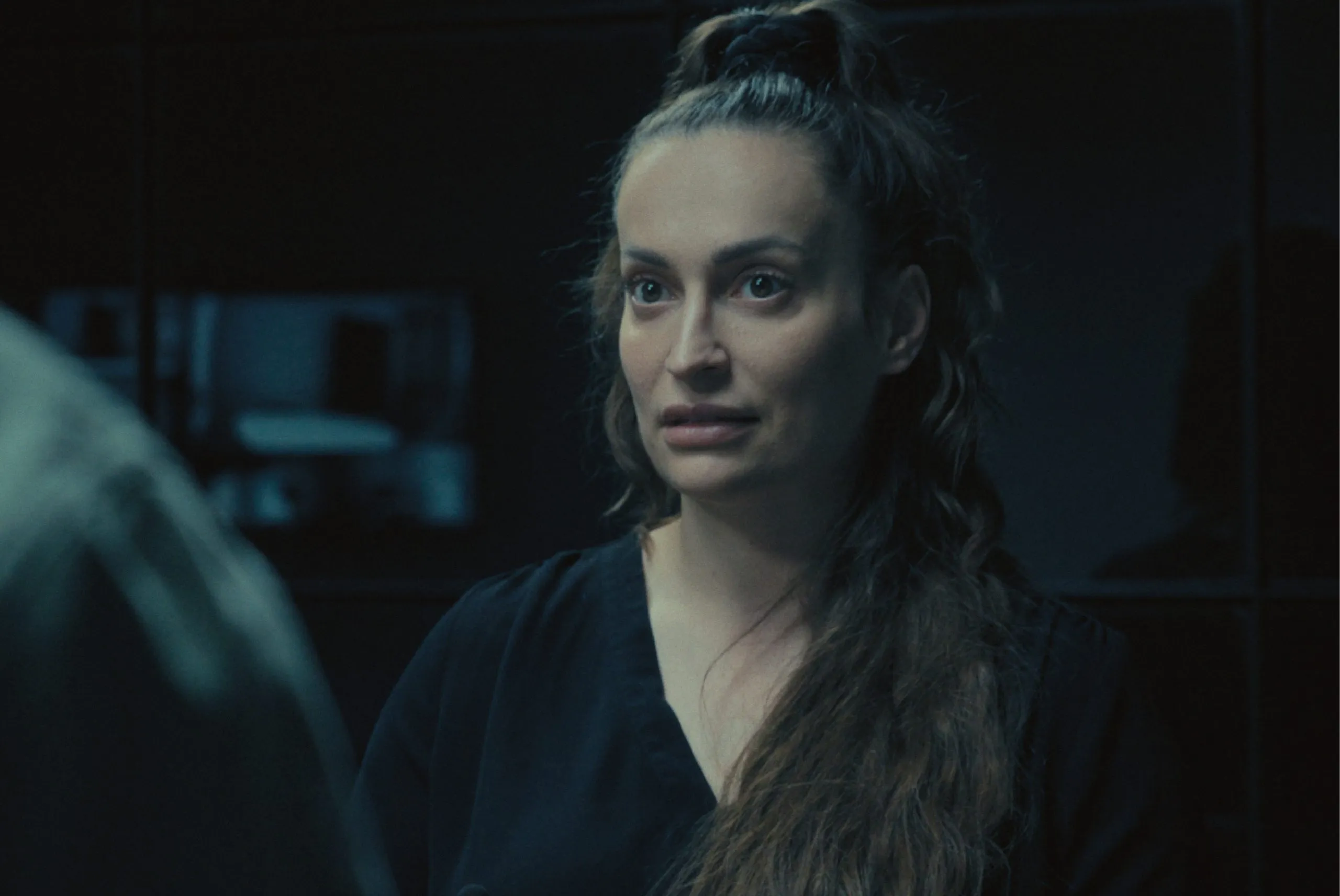
She shows up at Brügger’s doorstep asking for “reformation.” She describes her criminal career as an addiction, something thrilling and poisonous that she wants to quit. Then she speaks in a register that suggests habits do not dissolve so easily. In the underworld she is “The Ice Queen,” famous for a calm, unreadable manner while discussing crimes that should make a room recoil. The nickname functions like a warning label, and she seems to wear it with practiced ease.
Her work for the series plays out as an extended performance art piece. In a Copenhagen office wired with hidden cameras and microphones, we watch a six-month stretch where she gives confidences to Brügger while coaxing them from clients. One visual cue hovers in the background like a thesis: a print of Frida Kahlo’s The Two Fridas on the wall of her spartan office. Two versions of the same woman, one with a cut-out heart, become a neat symbolic shorthand for Smajic’s divided self, former criminal and professed reformist. Her remorse may be genuine, or it may be the prelude to a clever power play. Brügger lets the uncertainty stay alive.
Risk presses close. Fasar’s violent threats hang in the air, turning ordinary conversations into tense negotiations with death. The close call in which a client reaches toward a hidden electrical socket is staged by sheer circumstance as a moment of pure physical suspense. When Smajic calls herself a “wretched human being,” the line can read as naked self-loathing or a tactical bid for sympathy. The series treats both readings as plausible. That refusal to settle her internal contradiction is where the portrait finds its nerve.
The Architecture of Deceit
The major revelation is the smooth operation of a dualistic “kleptocracy,” a term used here to define rule by thieves regardless of political office. One half is a white-collar network of respected figures from major firms. These people supply the structural know-how to sanitize criminal money. They are accountants of predation, fluent in paperwork, quiet about their ethics.
We hear about “fake invoice factories” and tangled laundering schemes described with almost casual pride. Martin Malm, the archetypal “bougie” businessman, narrates his obfuscations with giddy entitlement. He frames illicit finance as finding a cheat code in the game of life, a trick smart people deserve to use. His lack of moral apprehension lands as a special kind of chill, the smile that comes from believing the rules are for other people.
Across the same pipeline runs the criminal underworld, the necessary engine of violence and supply. Fasar Abrar Raja, a former Bandidos biker with a Rasputin-esque presence, embodies unvarnished menace. He speaks as if murder is a casual option, and he offers Smajic a perverse invitation to watch an assassination live. The threat is not theatrical bluster. It is ballast, a weight that makes the white-collar complicity look even more grotesque by proximity.
Seen together, this interlocking system fractures Denmark’s “least corrupt” myth. The welfare state’s privileged society grew on thick trust, and that trust, what the series names “institutional naivety,” left soft seams for predators to pry open. Danish innocence reads here as a gossamer veil, thin and elegant, ready for domestic forces to pierce.
Style, Tension, and the Crisis of the Fourth Estate
Brügger’s filmmaking works as active scenery. His presence is an ingredient in the story, steely and detached, sometimes cold, sometimes faintly pompous. He keeps Smajic at arm’s length, letting her confessions sit in the air without rushing to comfort or condemn. Highly stylized interviews and meticulous reconstructions give the documentary a polished, cinematic sheen. The rooms resemble a CIA situation room, and the vibe toys with Scandi-noir aesthetics. The point seems clear enough: reality can feel as gripping as the genre Denmark exports.
The early episodes move slowly, with a patient accretion of detail. It can feel like watching a case file assemble itself page by page. That deliberate pace pays off in a finale that knocks the floor out from under assumptions about the entire operation. The final episode arrives as a seismic moment, a masterclass in handling a story that appears to spin out of control. It forces a rethink of Smajic’s performance, and of Brügger’s own role in staging it.
The ethical perimeter expands once the investigation turns toward institutional failure. The series uncovers evidence of law enforcement bodies, specifically the NSK, the National Special Crime Unit, conducting espionage against journalists and sources. There is also audio of officers instructing a criminal on how to manipulate testimony so he can evade prosecution. The critique shifts from everyday corruption to a crisis of legitimacy lodged inside the welfare state itself. The state’s response plays as an attack on the free press, and the documentary watches that retaliation with an almost clinical stare.
Resonance and the Global Mirror
The Black Swan hit Denmark like a public reckoning. Nearly half of all Danes watched, turning the series into a national phenomenon. The aftershocks came fast: police investigations, high-profile arrests, resignations, and rapid legislative reform. It is hard to watch that chain reaction without feeling the old democratic fantasy flicker back to life, for better or worse.
The series runs on a dual focus, a systemic exposé of rot paired with a close character study of Smajic. The pairing leaves viewers with “many questions and unfinished business,” a phrase that feels less like a tease and more like a civic diagnosis. The mirror it holds to Denmark’s proudest virtue reflects a gossamer veil shielding a festering reality, and the glimpse is hard to unsee.
Its relevance stretches far past the North Sea. The documentary offers a global template for how organized crime, aided by white-collar expertise, preys on societies defined by trust and privilege. The universal principle it leaves behind is chilling in its plainness. If corruption this deep can live in Denmark, it can live anywhere.
The Black Swan is a Danish investigative documentary series that premiered on TV 2 in Denmark on May 28, 2024. The series sent shockwaves through the country for its revelations of systemic corruption. It centers on a corporate lawyer who, using hidden cameras, exposes the deep collaboration between organized crime (including biker gangs) and white-collar professionals (lawyers, businessmen, contractors). The documentary’s initial four episodes led to national outrage and numerous real-world investigations and reforms. It was broadcast in the UK on BBC Four and is available for streaming on TV 2 Play in Denmark.
Full Credits
Title: The Black Swan (Den sorte svane)
Distributor: TV 2 (Denmark), BBC Four (UK), Rialto Channel (New Zealand)
Release date: May 28, 2024 (Denmark)
Running time: 7 Episodes (approximately 45–60 minutes each)
Director: Mads Brügger, Peter Vesterlund, Steen Schat-Holm, Thomas Østerlin Koch
Writers: Mads Brügger, Thomas Østerlin Koch
Producers and Executive Producers: Peter Engel (Producer), Wingman Media (Production Company)
Cast: Amira Smajic, Mads Brügger, Fasar Abrar Raja, Martin Malm, Nicolai Dyhr, Lise Roulund
The Review
The Black Swan
The Black Swan is a chilling, expertly crafted piece of investigative television that functions as a sophisticated character study and a political exposé. It effectively shatters the perception of Denmark as an incorruptible haven, instead revealing a profound structural crisis where the professional elite and the criminal underworld are mutually interdependent. The final episodes pivot the focus to institutional complicity, cementing the series as a devastating and essential critique of modern societal failure. It achieves genuine, urgent real-world impact.
PROS
- Amira Smajic is a uniquely complex and unreadable anti-heroine.
- Devastatingly exposes the co-dependency between white-collar professionals and organized crime.
- Documents real-world risk and the process of a major, high-tension investigation.
- Led directly to arrests, legal reforms, and a national reckoning in Denmark.
CONS
- The initial episodes can be slow due to the meticulous detail-gathering.
- The persistent ambiguity of the source's motivations may frustrate viewers seeking clear moral answers.
- Brügger's stylized, cinematic techniques may occasionally overshadow the structural analysis.







