
























![Kingdom Hearts Collection [I-III] Review](https://gazettely.com/wp-content/uploads/2026/10/Kingdom-Hearts-Collection-I-III-1-360x180.webp "Kingdom Hearts Collection [I-III] Review: KHII Holds Steady as Newer Entries Fluctuate 37")



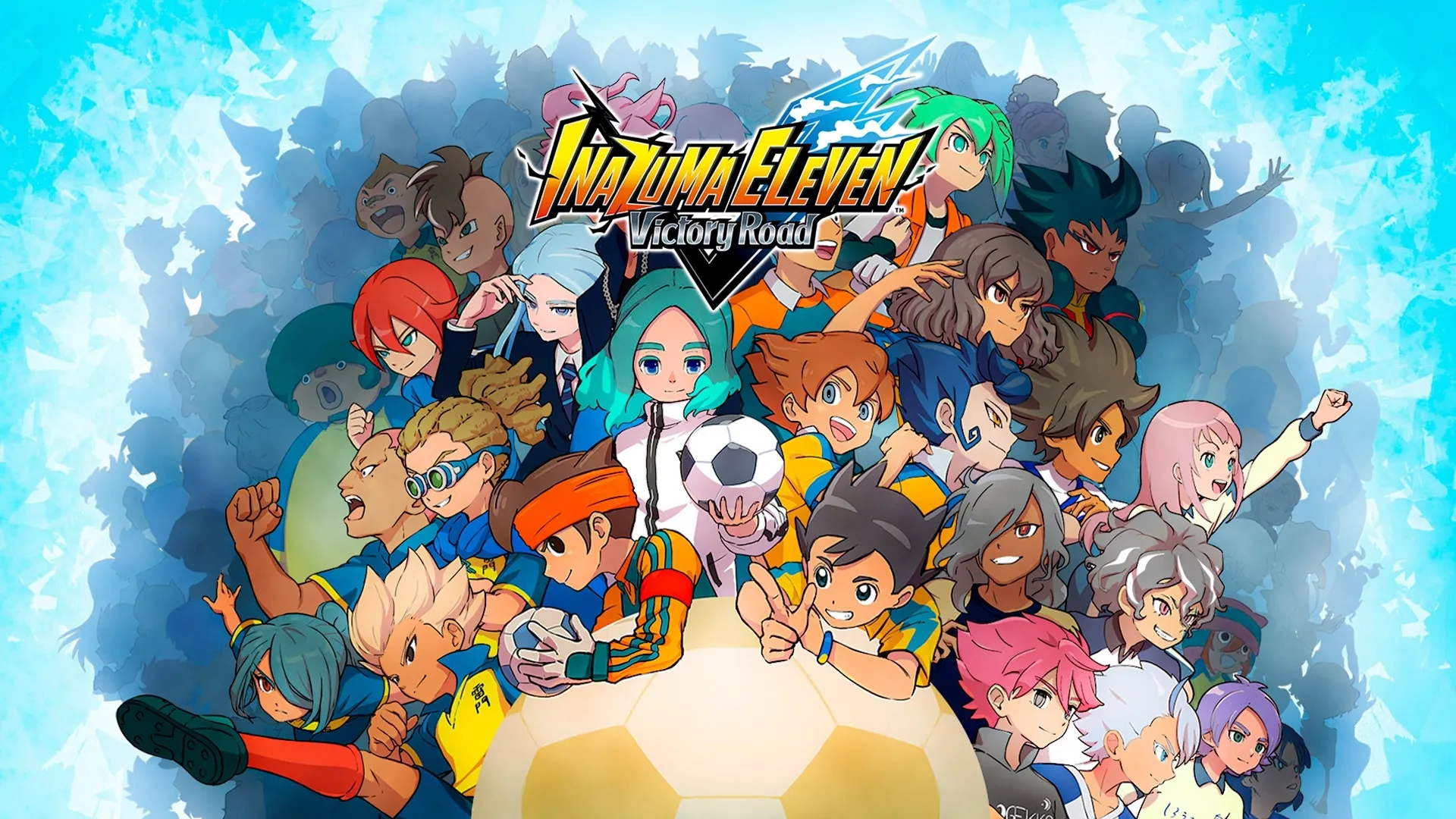

Inazuma Eleven: Victory Road arrives after a long development cycle and positions itself as a major comeback for a much-loved series. The franchise has long appealed to players who enjoy the mix of high-stakes anime drama and tactical football simulation. From its early days, it staked out an unusual corner of the sports genre, pairing collectible characters and RPG-style growth systems with matches on the pitch.
Victory Road updates that formula for modern platforms while preserving the exaggerated, dramatic games and signature special techniques that define the brand. Set 25 years after the original story, it connects two generations of players, serving both as a welcoming entry point for newcomers and a fresh chapter for long-time fans. This combined goal shapes its effort to reintroduce a cult favorite to a wider audience.
The Narrative’s Deep Bench
Story Mode immediately frames competition through two leads, Destin Billows and Harper Evans, who embody different philosophies toward football. Destin stands for a methodical, strategic approach built on teamwork, while Harper represents the fiery, improvised style that has long defined the series. Their relationship creates a central tension between planning and raw emotion, and both paths lead to success on the pitch.
Destin’s personal storyline carries particular weight, anchored in his recovery from a heart condition and his renewed commitment to the sport, which gives emotional weight to the exaggerated on-field spectacle. Players side with either South Cirrus Junior High or the prestigious Raimon Junior High and see how contrasting beliefs about the game shape the culture around each team.
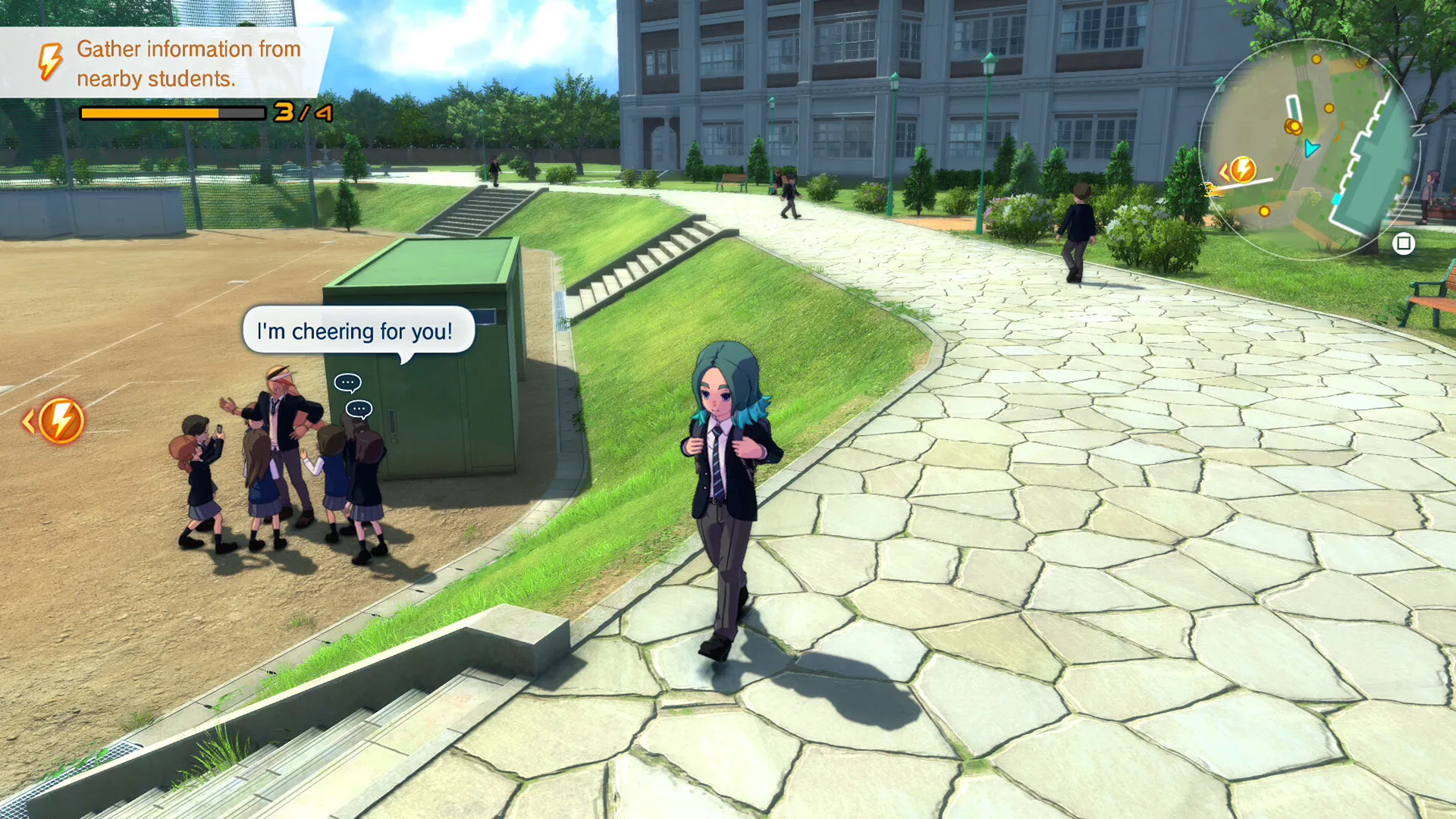
The story structure follows a familiar shonen anime pattern built around recruiting teammates, restoring a club, and building toward a decisive showdown. This template keeps the campaign moving with clear goals. The writing shines in its attention to character detail, examining motivations, rivalries, and growth over time.
That focus on personal stakes turns each match into more than a scoreboard event, since victories and losses tie back to individual arcs. Long-time followers of the series will notice subtle nods and cameo appearances from returning characters, which link this installment to earlier entries and reward those who know the history.
Gameplay: A Strategic Kick-Off
The game functions as a hybrid, mixing real-time football simulation with the structure of a turn-based strategy RPG. Players direct their squad across 11v11 or 5v5 matches, deciding on offensive surges, defensive shapes, and how to position key roles on the field.
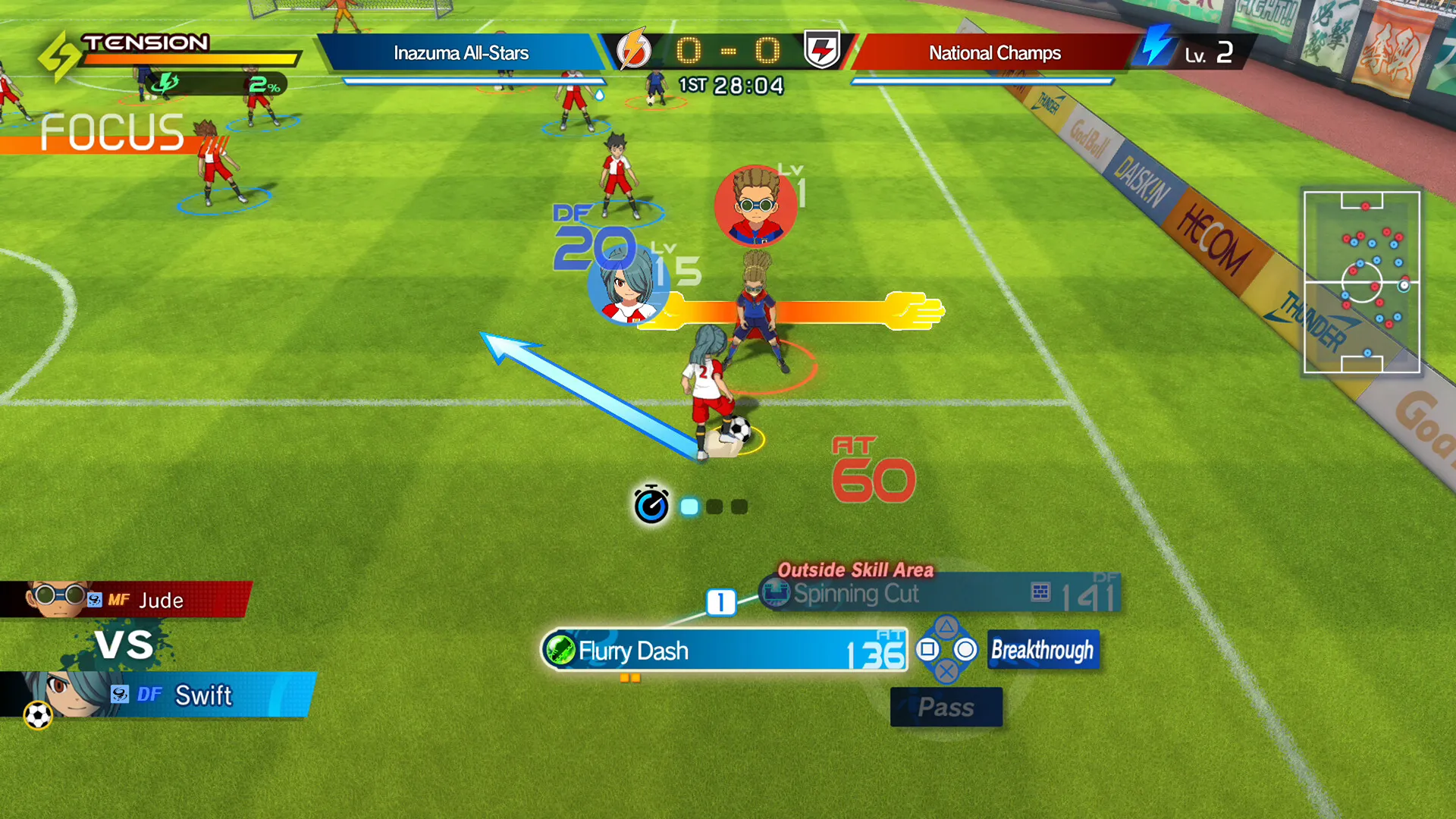
Match flow frequently shifts into Focus Battles, short duels that trigger when characters contest the ball. These exchanges rely on quick rock-paper-scissors choices or directional inputs. They introduce volatility that mirrors the chaotic clashes seen in anime matches, but their regular appearance can slow the rhythm of play and may frustrate fans of smoother sports games.
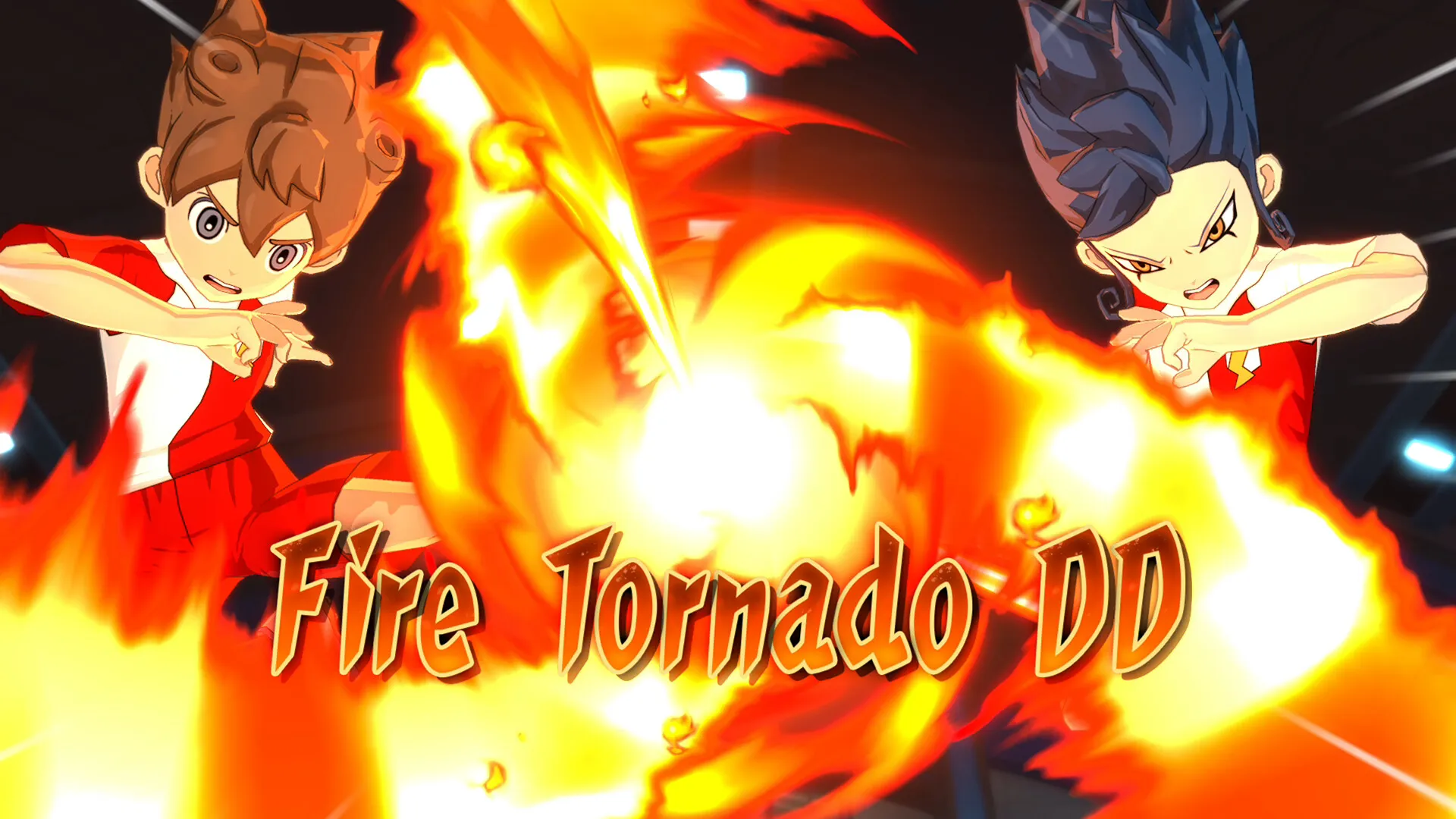
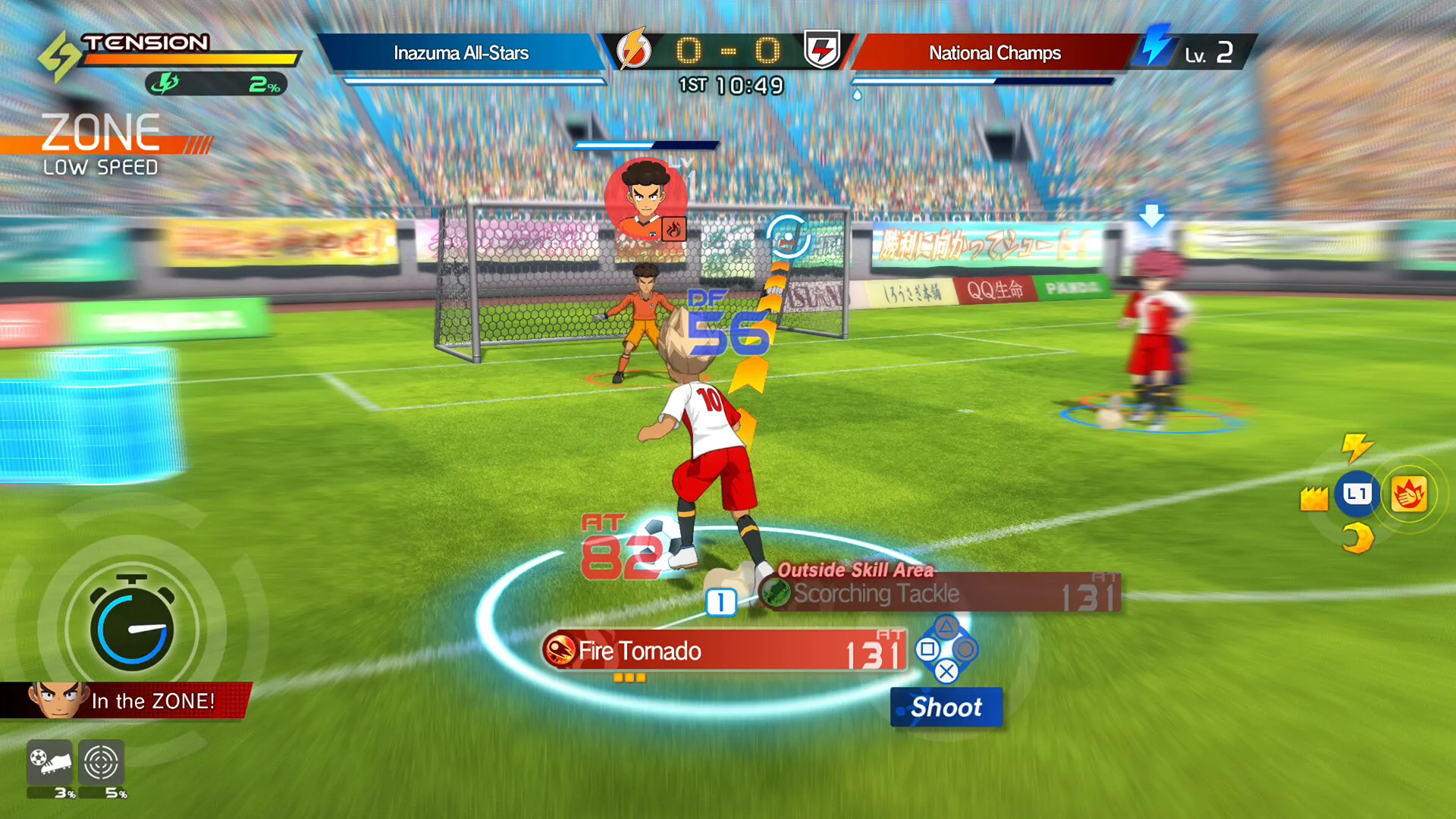
Winning consistently depends on effective use of Hissatsu Techniques, the game’s signature special moves. These flashy abilities run on the Tension gauge, a central resource that governs both offensive actions and goalkeeper defenses. Close to the goal, the Zone mechanic activates, slowing time and providing space for key tactical choices, such as lining up a Direct pass for scoring bonuses or erecting defensive Walls.
In practice, the system functions as a layered puzzle about timing, positioning, and resource management, as players try to break the opposing formation. Element matching, such as Fire beating Wood, and numeric comparisons of power values deepen these clashes. A higher Shot Power will beat a lower Goalkeeper Power (KP), yet the need to manage Tension and plan around Zones prevents the experience from becoming a simple numbers comparison.
RPG training inside Story Mode lands with less impact. The Active Time Battle sequences introduced early in the campaign feel basic and shallow, and they resemble padding more than meaningful development. By contrast, the Special Training mini-games provide a stronger structure for growth. These activities range from straightforward timed button presses to rhythm-style challenges, turning experience grinding into a more varied and enjoyable loop that feeds directly into team improvement.
Longevity and the Pursuit of Glory
Replay value rests heavily on the additional modes. Chronicle Mode stands out by allowing players to revisit pivotal matches from the series’ history. It also powers the extensive Player Collection system, which opens access to more than 4,500 recruitable characters.
Pulling these players into the squad feeds straight into the RPG progression layer, where XP boosts statistics, unlocks skills, and strengthens special moves. Building a roster becomes a long-term project, and careful curation of lineups rewards players who level specific roles, such as Strikers and Defenders, to serve a chosen playstyle.
The process of assembling a top-tier team, however, can feel demanding. Reaching the highest-ranked Hero characters often requires repeating matches three times to unlock the necessary Hero Battles. Combined with the absence of a chapter select for later story content, this repetition can turn targeted hunts for specific recruits into a slog. The Player Universe system offers another route for building teams, yet the Hero Battle grind remains the most dependable way to finalize an ideal lineup.
Online Multiplayer, framed as Battle Bay Stadium, layers competitive play on top of that progression. It features ranked tournaments and general matches with cross-platform support, with performance locked to 60fps to keep play stable. The competitive mood can suffer, though, because lower-level squads regularly collide with max-level teams. That gap in power makes meaningful wins hard to achieve. Commander Mode, which allows AI control in online play, also cuts into the sense of direct competition and can create less engaging matches for players who want tense, skill-driven encounters.
Presentation: Spectacle and Sound
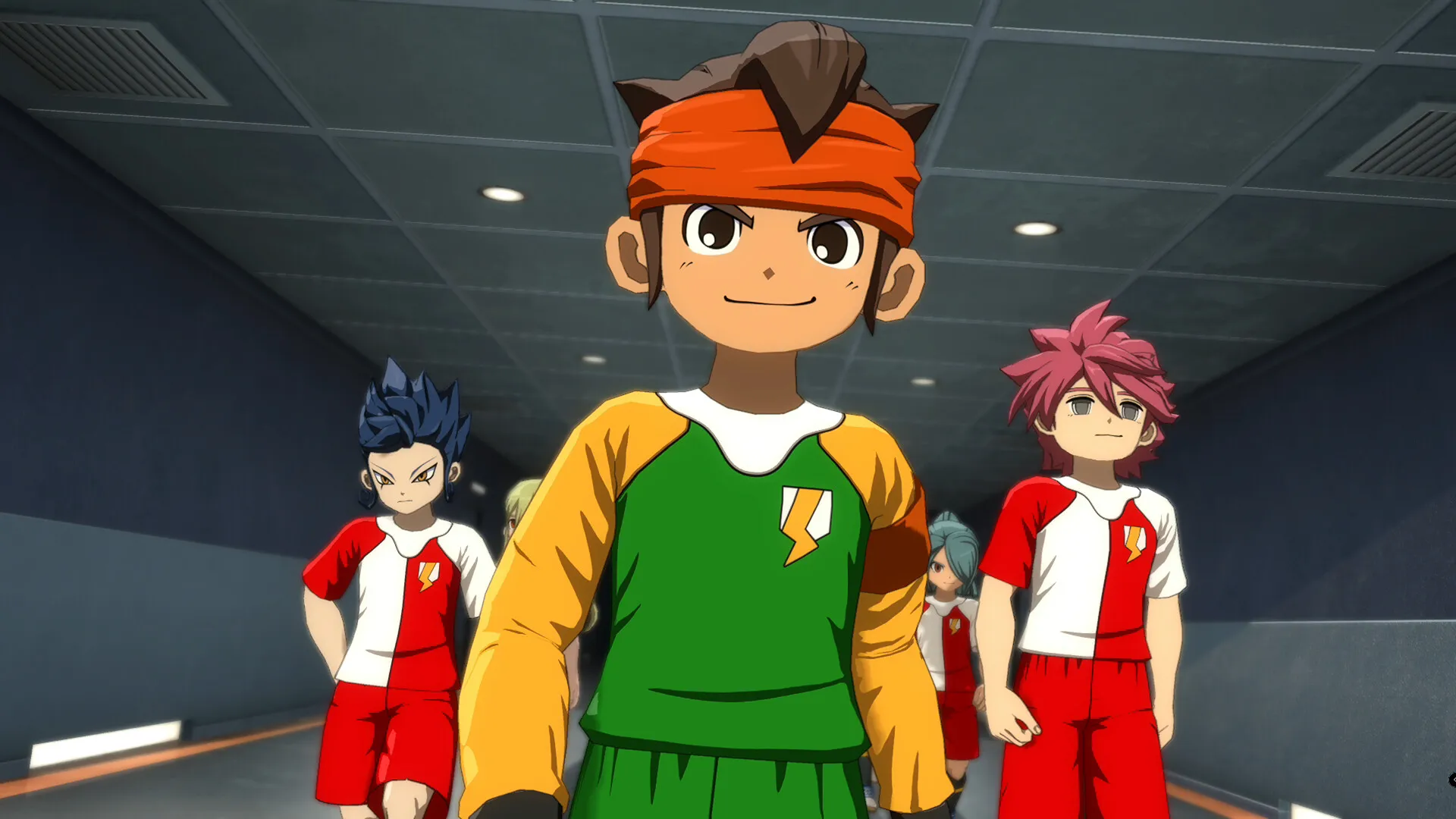
Visual presentation is one of Victory Road’s strongest cards. The game delivers a striking, high-quality anime look. Work from LEVEL-5 keeps characters clearly differentiated, fluid in motion, and rich with color.
Special Moves form the visual peak, playing out in dramatic cut-ins packed with large-scale energy effects and environmental flourishes that recall a big shonen battle sequence. Pre-rendered scenes by MAPPA frequently approach movie-level animation quality and give key narrative beats a cinematic polish.
The soundtrack carries the same intensity, with energetic tracks that heighten the drama of each match. Sound effects serve a functional role, offering clear cues during tackles and Focus Battles to support quick decision making. Voice work, however, introduces a rough edge. English and Japanese audio tracks are both present, yet the English performance often falters, with flat deliveries and abrupt edits that can briefly pull players out of the emotional flow created by the visuals and music.
The Cross-Platform Challenge
Victory Road holds up well on most current systems, reflecting careful optimization. On PC, the feature set is especially strong, offering ultrawide support, HDR, and configurable graphics presets, including an HQ Mode that improves environmental detail. The game maintains a steady 4K 60fps on modern consoles and also runs well on handheld PCs such as the Steam Deck.
Performance comparisons across Nintendo Switch hardware tell a more complicated story. The Switch 2 Edition represents a major leap over the original Switch version, with higher resolution, a doubled frame rate target, and reduced loading times. It delivers a high-quality handheld experience. In docked play, however, it still trails the PC build, with visible issues in distant texture filtering and shadow quality.
The initial Switch 1 release struggles more heavily, marked by frame rate drops, culled animations, and long loading screens. For portable sessions, players gain the most from choosing the Switch 2 Edition when that option is available. On PC, the quick initial load is held back somewhat by the Easy Anti-Cheat system, which introduces a minor but noticeable snag in an otherwise well-realized port.
The Heart of the Game
Inazuma Eleven: Victory Road carries some pacing problems and structural issues in its online play, yet the experience it delivers remains deeply satisfying. The game presents a steep learning curve, especially around its Focus Battle mechanics and occasional spikes in difficulty.
The payoff for persistence feels substantial. Learning how to chain Special Moves, arrange effective formations, and balance the Tension gauge creates a real sense of strategic accomplishment. The mix of layered tactics and loud, explosive anime spectacle turns each intense match into a memorable event.
With a long narrative campaign and a huge roster to chase in Chronicle Mode, the package offers significant value for dedicated fans of this style of sports RPG.
The Review
Inazuma Eleven: Victory Road
Inazuma Eleven: Victory Road successfully revitalizes the franchise, delivering a game with immense strategic depth and a high-stakes, emotionally charged narrative. The spectacular anime action is beautifully rendered, making every match feel like a cinematic showdown. While the online environment is hampered by level imbalances and the occasional slow pace of Focus Battles, the sheer volume of content and the rewarding progression system secure its position as a definitive entry point for newcomers and a long-awaited triumph for series veterans.
PROS
- Emotionally resonant narrative with compelling character arcs and a strong shonen anime style.
- Successful blend of real-time sports action and RPG mechanics that reward team planning and resource management.
- Chronicle Mode offers over 4,500 collectible players, ensuring exceptional longevity.
- High-quality anime aesthetics and dramatic, cinematic special moves.
- Strong optimization, particularly on PC and Switch 2, with cross-platform play.
CONS
- Focus Battles frequently interrupt match flow, which may deter players seeking simpler sports action.
- Competitive multiplayer often features severe level gaps, leading to frustrating, unwinnable matches for low-level teams.
- Collecting high-rank characters requires excessive repetition of the same Hero Battles in Chronicle Mode.
- The game suffers noticeable technical and performance issues on the original Nintendo Switch.
- Inconsistent quality in the English voice track.







