

























![Kingdom Hearts Collection [I-III] Review](https://gazettely.com/wp-content/uploads/2026/10/Kingdom-Hearts-Collection-I-III-1-360x180.webp "Kingdom Hearts Collection [I-III] Review: KHII Holds Steady as Newer Entries Fluctuate 37")



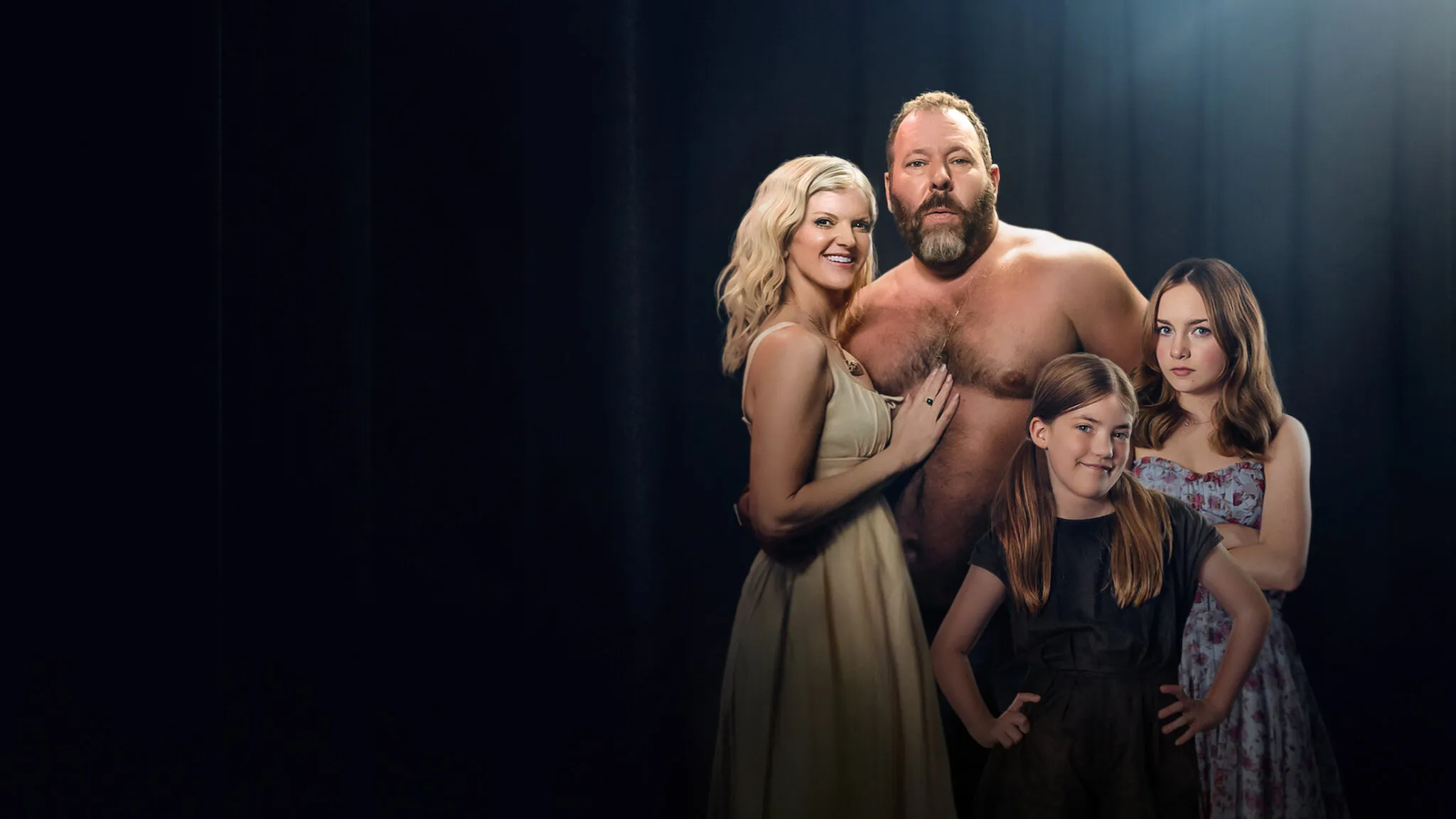

Free Bert casts Bert Kreischer as a fictionalized version of himself, a comedian known for a shirtless stand-up routine. The season opens at Rob Lowe’s birthday party in Beverly Hills, a polished space where extreme wealth and careful manners set the rules. Lowe encourages Bert to streamline his act and lean harder on the gimmick, and the note lands like a professional nudge with personal consequences. Bert starts questioning what his volume and public persona do to the people living beside it, especially now that his family is trying to settle into a new environment.
That anxiety sharpens once his daughters, Georgia and Ila, enroll in a prestigious private school. The school’s code of conduct demands restraint, and Bert has to decide how much of his instinctive behavior he can temper without turning himself into a stranger.
The pressure is practical and social at once: his choices can shape his children’s standing, and the series keeps returning to the friction between a brand built on excess and the quieter demands of suburban parenting. Bert keeps trying to split the difference between responsible father and party icon, and the narrative runs on the strain of that balancing act as the family moves through the judgment-heavy corridors of elite education.
The Conflict of Authenticity
The shirtless brand works as the show’s primary symbol. On stage, it reads as freedom and confidence. In private life, it becomes a problem he cannot stop carrying into rooms that expect polish. A key scene with a school therapist crystallizes the conflict when the therapist suggests Bert wear a collared shirt.
The request comes across as a direct challenge to identity, treating his default presentation as something that needs correction. The therapist reads the bare chest as undisciplined. Bert reads it as honest. The scene frames the season’s larger preoccupation with social performance and who gets to define it.
Rob Lowe’s early advice also feeds a quieter kind of stress, the anxiety that comes from being managed. Lowe stands for the packaged celebrity who knows how to keep an image tidy, and his push to refine the gimmick carries a faint hint of product development.
Bert hears help, then feels himself being reduced. That tension turns physical once Bert tries to keep his voice down and his shirt on. The collar becomes its own storytelling device: a wearable reminder of the rules he is attempting to follow. The show even ties the metaphor to sensation, with the fabric chafing and irritating him in ways that mirror his frustration with Beverly Hills standards.
The season keeps searching for the person behind the party-boy image, and it treats that search as a question of construction. Is the loudness an act, or is it the real language he speaks? Bert learns that muting his comedic voice leaves him hollow, and the absence does not read as growth. It reads as vacancy.
The script argues that the routine is not a trick pasted on top of him; it is how he connects with the world. When he tries to become “normal,” he loses recognizability to himself, and the series presses on the cost of that attempted evolution. It keeps asking what fatherhood requires in this setting, and whether “better” means dismantling the version of Bert his family actually loves. Those questions give the season its most sincere beats.
Domestic Dynamics and Character Roles
Arden Myrin plays LeAnn as the stabilizing force in the household. The writing avoids turning her into the familiar sitcom scold, and the performance supports that choice. She understands Bert’s career because she chose this life with clear eyes, and she deals with the fallout of his missteps with pragmatic calm. LeAnn wants the family to succeed at the new school and aims for a low profile that keeps trouble away. She also refuses to demand that Bert erase himself. Her loyalty holds even when his antics trigger social isolation.

Georgia and Ila function as two distinct mirrors for Bert’s behavior. Georgia carries a teenager’s embarrassment with the added weight of a famous father, and she treats that fame as a social liability. She wants him to fade into the background so she can build an identity that belongs to her.
Ila, a perceptive preteen, values his authenticity and pushes him to stay true to himself. The show signals that difference through language: Ila uses a level of profanity that stands out beside her classmates. It is less a cheap gag than a marker of household culture, a family rhythm built on blunt talk.
That raw honesty becomes a small form of resistance against the rehearsed politeness of their new neighbors. The shared swearing works like shorthand for trust, a way of saying they do not need scripts with each other. Bert, meanwhile, keeps facing choices that pit his own comfort against his daughters’ success.
He makes real parental sacrifices, showing up for orientations and attempting to befriend other parents who look at him like an escaped confetti cannon. He absorbs the glares because he loves his kids. He works to restrain the urge to crack a joke at the worst moment, and the series treats that restraint as a form of care.
The domestic scenes carry a sincerity that counterbalances the louder comedy. The Kreischers stay tightly bound, and that unity is presented as their main defense against external pressure. They protect one another, and the show uses that loyalty to give emotional weight to the season’s conflict.
The Social Hierarchy of Beverly Hills
Landon and Chanel Vanderhall serve as the season’s central antagonists, embodiments of the school’s highest social tier. They are wealthy benefactors who demand conformity, and their power rarely needs volume. The control shows up in small exclusions, careful cold stares, and the kind of politeness that functions like a locked gate. The private-school ecosystem operates through passive aggression, and the Vanderhalls understand the rules because they helped write them.
Bert disrupts that ecosystem through sheer directness. He does not grasp the unwritten codes, and he does not have the temperament for conversational fencing. He says what he thinks in a place where people keep meaning tucked behind manners, which makes him visible in the worst way.
The tension spikes during the T-Pain incident. Bert appears on a livestream to support Georgia and tries to help her gain popularity, treating the moment like a fatherly assist with a little show-business energy. His lack of restraint turns the appearance into a scandal when he reveals private details that other students weaponize through cyberbullying.
The story makes the point cleanly: instincts that play well on stage can be hazardous in a sensitive environment. Bert wants to help, and his impulse leaves his daughter exposed. The Vanderhalls seize the mistake, using it to push the Kreischers further to the margins while framing Bert as a threat to the school’s reputation.
Bert responds through the one tool he trusts: his professional work. He uses his stand-up act to mock Landon and the school board, and the move reads as a return to familiar habits. He drops the careful politeness and turns his platform toward the hypocrisy he sees in the elite. The retaliation deepens the conflict with the headmaster and puts his daughters’ education in jeopardy. The show presents comedy as a weapon that can draw blood in a world that prefers injuries delivered with a smile.
Bert realizes he cannot win the social game by playing it the way the school expects. He shifts tactics, pushing the institution to face its own biases through the kind of direct joke it cannot comfortably absorb. The Beverly Hills crowd comes off as brittle, protected by status and offended by honesty. Bert’s bluntness forces reactions they have learned to avoid, and that confrontation becomes part of the season’s critique of wealth and hierarchy.
Production Style and The Final Resolution
Jarrad Paul and Andrew Mogel shape the series with a specific interest in the gap between public fame and private reality, and that interest shows in how the scenes alternate between performance and home life. The six-episode structure keeps the pace quick, and the tone carries a nostalgic echo of early-2000s comedies: raunchy, unapologetic, and willing to swing for shock. One subplot involves a teenage character who needs scrotum surgery, which opens the door to explicit talk about sexual acts. The series leans into that kind of material as part of the comedic expectation around Bert’s persona.
The pacing holds together, moving from broad comedy toward a more focused look at the family’s internal dynamics. Episodes build on each other in a clear progression, with the school conflict serving as the spine for character choices. Bert does change across the season, yet the ending interrogates the value of that change. He comes to see the quieter version of himself as a loss, not a better model. The resolution lands when the family stops chasing approval and chooses solidarity in the face of the school board’s judgment.
The finale gives the seasonal arc a satisfying landing by rejecting the premise that good fatherhood requires blandness. Bert recognizes that his authentic self is the version that can protect his daughters, even when that authenticity causes friction.
The emotional payoff comes from watching the family refuse the Beverly Hills facade and commit to their own loud, messy reality. The closing note is defiant: the world may remain unprepared for someone like Bert, and Bert chooses to live without asking permission. The season starts with a joke about a bare chest, then closes by arguing that the joke has a story attached, and the story matters.
Free Bert is a scripted comedy series that premiered globally on Netflix on January 22, 2026. The show stars stand-up comedian Bert Kreischer as a fictionalized version of himself—a famously shirtless party legend who finds his life turned upside down when his daughters are accepted into an elite Beverly Hills private school. Forced to trade his “wildcard” persona for a more restrained image to help his family fit in, Bert navigates a world of social status, parental anxiety, and elite school politics. The six-episode first season is currently available for streaming on Netflix in over 190 countries.
Full Credits
Title: Free Bert
Distributor: Netflix
Release date: January 22, 2026
Rating: TV-MA
Running time: 20–30 minutes
Director: Jarrad Paul, Andrew Mogel, Bert Kreischer
Writers: Bert Kreischer, Andrew Mogel, Jarrad Paul
Producers and Executive Producers: Bert Kreischer, LeeAnn Kreischer, Tony Hernandez, Lilly Burns, Elise Henderson, Judi Marmel, Michael Amodio
Cast: Bert Kreischer, Arden Myrin, Ava Ryan, Lilou Lang, Chris Witaske, Mandell Maughan, Sophia Reid-Gantzert, Robert Jon Mello, Braxton Alexander, Matthew Del Negro, Noshir Dalal, Christine Horn, Rob Lowe, T-Pain
Director of Photography (Cinematographer): Brandon Cox
Composer: Jeff Cardoni
The Review
Free Bert
Free Bert succeeds as an exploration of the friction between a loud public persona and the quiet requirements of domestic life. The series is most effective when it focuses on the internal cost of social conformity rather than chasing broad laughs. While the comedic pacing can feel uneven, the sincere chemistry within the fictional Kreischer family provides a grounded emotional anchor. It offers a refreshing look at parental anxiety through a lens of raw, unfiltered honesty.
PROS
- Authentic domestic chemistry between Arden Myrin and the younger cast.
- Insightful commentary on the performance of social status in elite circles.
- Sincere character growth that avoids typical sitcom clichés.
- Strong supporting performances that add depth to the Beverly Hills setting.
CONS
- Uneven comedic timing that occasionally prioritizes shock over substance.
- Reliance on crude subplots that may alienate viewers seeking the show's deeper themes.
- A brief six-episode runtime that leaves some secondary characters underdeveloped.







