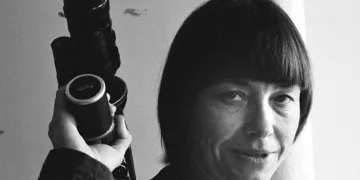












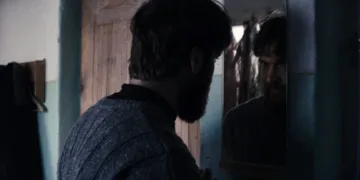
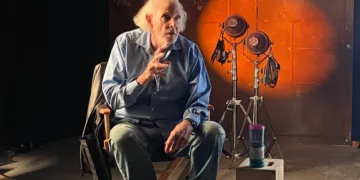
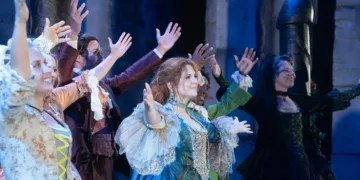
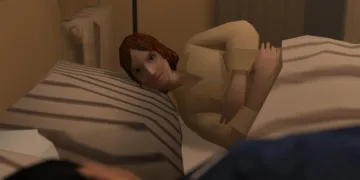









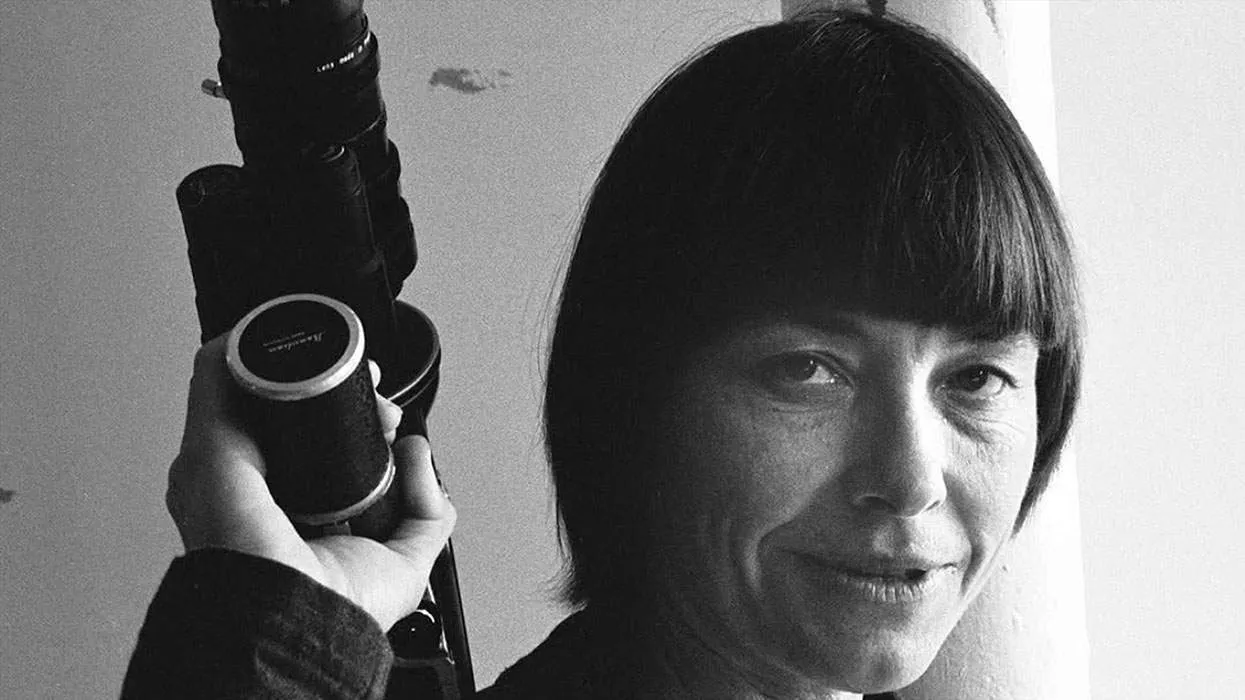

It is Sundance 1993, and the room at the premiere of “Nitrate Kisses” carries the charge of an impending rupture. On screen, a man looks straight into the camera and dryly assigns the sudden visibility of young lesbians to one culprit: Barbara Hammer. Hammer turns up soon after in the footage, wearing an ushanka and flashing a bright, gap-toothed grin that reads like a dare.
“Barbara Forever” draws its energy from that same moment of insurgent self-definition. Director Brydie O’Connor shapes five decades of personal archives into a portrait with pulse and motion. The images retain the warm, soft desaturation of early camcorder tape, where interiors settle into a beige haze and time clings to the light.
O’Connor works closely with Hammer’s widow, Florrie Burke, keeping the material rooted in a shared history that is lived, specific, and unguarded. Hammer emerges as an avant-garde iconoclast with a clear-eyed understanding of self-documentation. She built a record for a community long erased by mainstream memory.
The Sonic Evolution of a Self-Created Life
The film refuses the tidy straight line that biographical storytelling often demands. It bypasses childhood and begins when Hammer was thirty, the age she marked as a true beginning, artist and lesbian in the same breath. Her path from a motorcycle-riding housewife in Northern California to a radical filmmaker supplies the film’s arc, with transformation presented as practice rather than slogan.
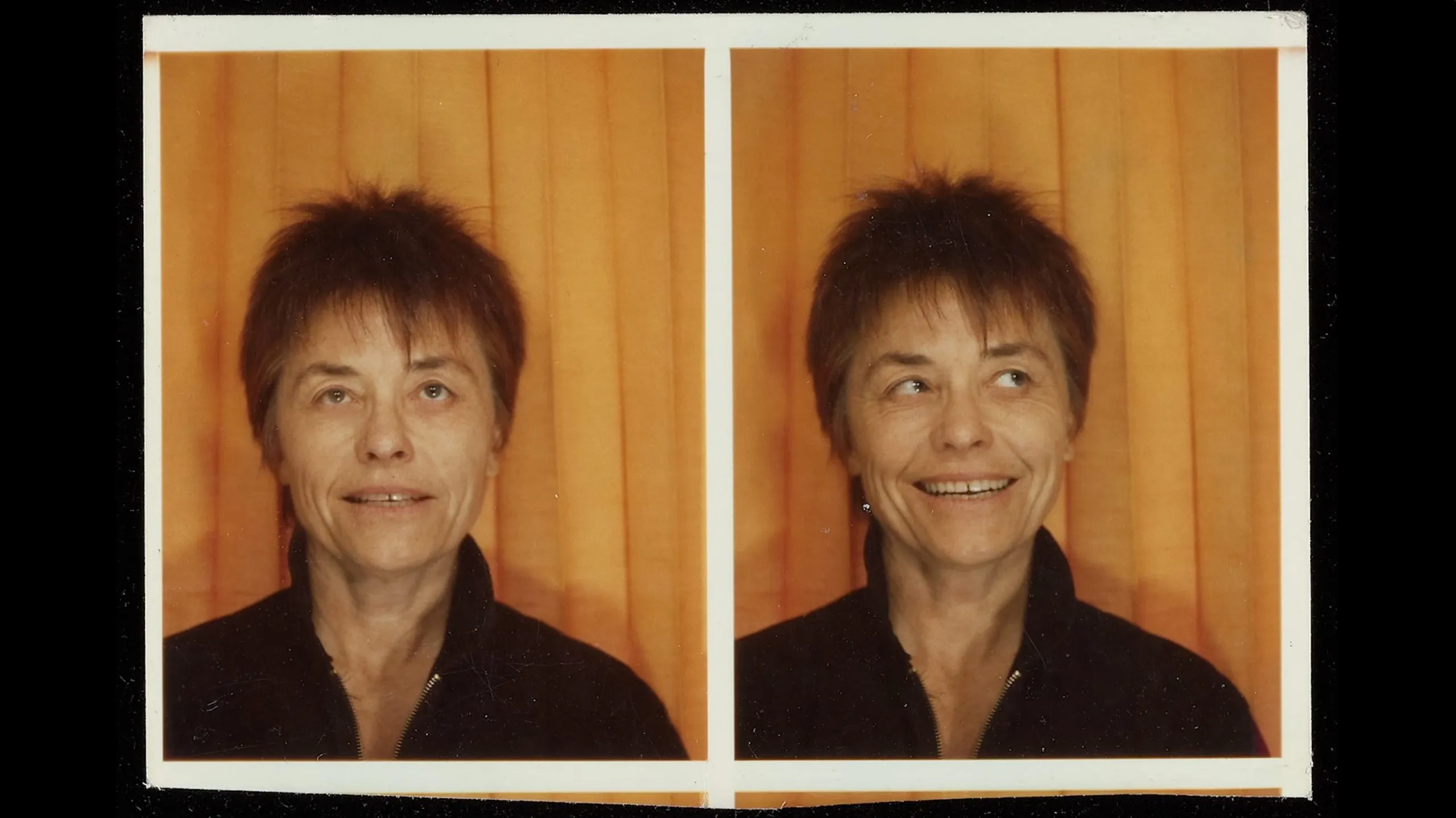
Hammer’s voice leads, and the soundtrack refuses the polish of a single, consistent narration. Audio shifts across the years with the honesty of whatever device happened to be nearby. Early recordings carry a youthful vigor that later gives way to a rougher, shakier delivery during years of ill health. The change plays like a sonic calendar, intimate in the way it lets time be heard rather than explained.
O’Connor sidesteps the contemporary talking-head parade and commits to a non-linear edit that braids eras into a continuous session. The emphasis stays on Hammer’s interior point of view and the slow work of finding language for a life. Burke serves as the present-day touchstone, offering a gentler, steadier reflection on decades shared.
Tactile Cinema and the Biological Frame
The film’s visual vocabulary extends Hammer’s radical aesthetics with clarity and appetite. The camera studies bodies with curiosity that holds scientific attention alongside sensual interest. Skin, light, and movement become a tactile grammar, creating viewing that feels physical, as if texture has been pressed into the frame.
Early work such as “Dyketactics” establishes a new kind of lesbian erotica, and “Nitrate Kisses” later widens that gaze to include elderly lovers. Across the decades, a recurring image returns: Hammer flexing her biceps, smiling as she does it. The gesture plays as a through-line of physical defiance, unchanged even as time rewrites everything else.
O’Connor matches subject with form by adopting an avant-garde structure, especially in the passages addressing Hammer’s ovarian cancer. The medical chapter becomes a phantasmagorical montage. X-ray imagery and internal body-camera footage melt into broken celluloid, carried by Taul Katz’s haunting score. Match cuts link the energetic motion of youth to the quieter, more deliberate movements near the end, treating the changing body with the same attentive rigor granted to the strong one.
Legacy through Intergenerational Solidarity
The film’s final movement turns to continuity, locating Hammer’s mission in the community that held her and the artists who follow. Her relationship with Joey Carducci brings forward transmasculine solidarity within a wider lesbian landscape, presenting a feminism that expands past its early limits. The documentary stresses the political urgency of keeping personal archives while queer history faces systemic threats.
Hammer’s physical traces move into the Yale library and into public galleries, yet the film places equal weight on living testimony: Burke’s memory and the work of younger filmmakers shaped by Hammer’s example. Hammer once spoke of wanting fame for what she gave to an audience.
This record preserves that desire as something active. It stands as a collection of artifacts and as a catalyst for future art. The archive behaves like a living entity, and Hammer remains a fixed presence in cinema history through the lively preservation of her spirit.
Barbara Forever premiered at the 2026 Sundance Film Festival on January 24, 2026, making a significant impact in the U.S. Documentary Competition. Directed by Brydie O’Connor, this archive-driven portrait of iconic filmmaker Barbara Hammer explores her radical life and five-decade legacy of queer experimental cinema. Following its premiere, the film moved to the Berlinale for screenings in early February 2026. While it was developed with support from the Hulu/Kartemquin Accelerator—suggesting a likely future home on streaming platforms—it is currently navigating the festival circuit and seeking wider theatrical or digital distribution as of February 10, 2026.
Full Credits
Title: Barbara Forever
Distributor: Killer Films, Kartemquin Films, Sundance Institute
Release date: January 24, 2026
Running time: 102 minutes
Director: Brydie O’Connor
Writers: Brydie O’Connor
Producers and Executive Producers: Elijah Stevens, Brydie O’Connor, Claire Edelman, Christine Vachon
Cast: Barbara Hammer, Florrie R. Burke, Joey Carducci
Director of Photography (Cinematographer): Brydie O’Connor, Barbara Hammer
Editors: Matt Hixon
Composer: Taul Katz
The Review
Barbara Forever
Barbara Forever is a masterclass in archival storytelling, transforming a vast personal history into a rhythmic, living document. Brydie O’Connor avoids the dryness of a typical retrospective, instead delivering a film that pulses with the same radical energy as Barbara Hammer’s own work. It is a vital, sensory experience that honors the past while reaching toward the future of queer cinema.
PROS
- Immersive use of rare, tactile archival footage.
- Avoids "talking head" clichés for a more intimate voice.
- Powerful depiction of intergenerational queer solidarity.
CONS
- Occasionally skips over broader historical context like the AIDS crisis.
- Non-linear structure may disorient viewers seeking a traditional bio.