







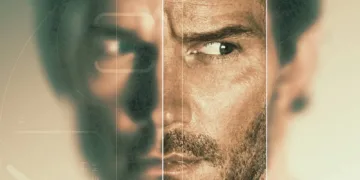
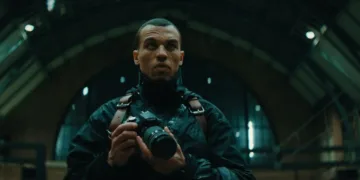












The narrative begins in the airless quiet of a bedroom that has contained a young life for seventy-six straight days. Klara lives in a kind of stasis, her agoraphobia hardened into a bodily rule that grows out of her mother’s death. The silence of the house holds, then breaks, through Kang’s voice.
As the host of a radio program, he becomes her sole thread to a world she cannot yet step back into. That relationship changes shape once she sends a landscape painting to his broadcast. The gesture shifts her position from listener to participant, turning private feeling into a message carried across distance.
Directors Inés Pintor and Pablo Santidrián take the story from its Wattpad origins and translate its digital intimacy into cinematic terms. The premise carries a constant pressure: four walls offer shelter, and a stranger’s voice offers a fragile kind of hope. The film treats the bedroom as double-coded space, a place of refuge that also locks the body in place.
The Weight of Shared Silence
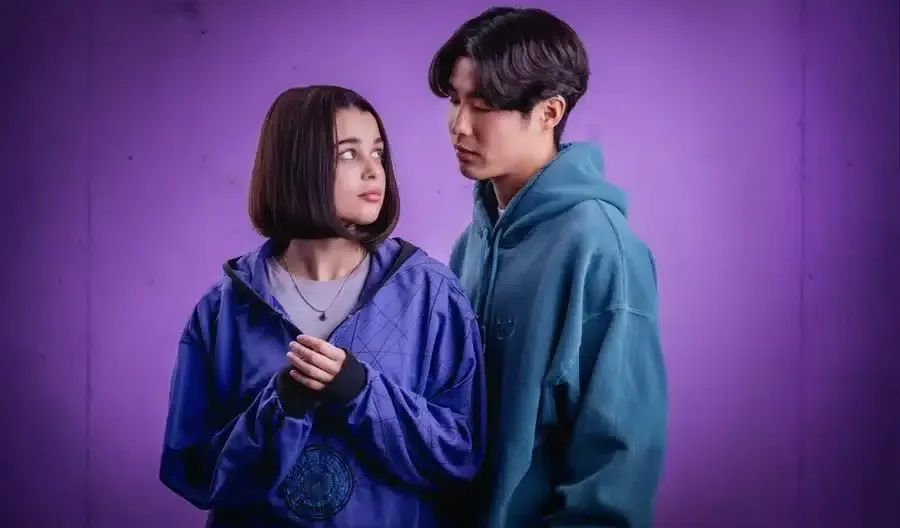
Berta Castañé plays Klara with striking restraint. The performance refuses the loud, familiar shorthand of teenage anguish and leans on physical choices that communicate the grind of social anxiety. Each movement suggests a mind measuring exits, distances, and risk. Jae Woo Yang’s Kang meets that energy with an essential steadiness. The character arrives without the polished fantasy that often flatters romantic leads; he reads as someone shaped by fraternal guilt and loss, carrying his past in the pauses between words.
Their chemistry lives in recognition. Pain becomes a shared language, and emotional safety becomes the terms of the bond. Nuno Gallego brings a flash of levity as Diego, a reminder that lighter possibilities still exist outside Klara’s sealed room. That lift also makes Yana’s thin construction harder to ignore.
Positioned as an antagonist, she moves through motivations that feel sketchy beside the film’s central pair. Claudia Traisac gives Kamila, Klara’s sister, a grounded weariness that speaks to the quiet work of waiting. Her presence frames healing as something that draws on other people’s endurance, time, and care.
The Visual Syntax of Anxiety
The cinematography gives Klara’s interior life a visible grammar. Floating white text and colored strings drift across the frame as markers of thought in motion, suggesting a mind that never settles into silence. Light carries its own argument. Warm amber tones bathe the home, shaping it into sanctuary, while the radio station and school register through colder illumination that feels less forgiving and more exposed.
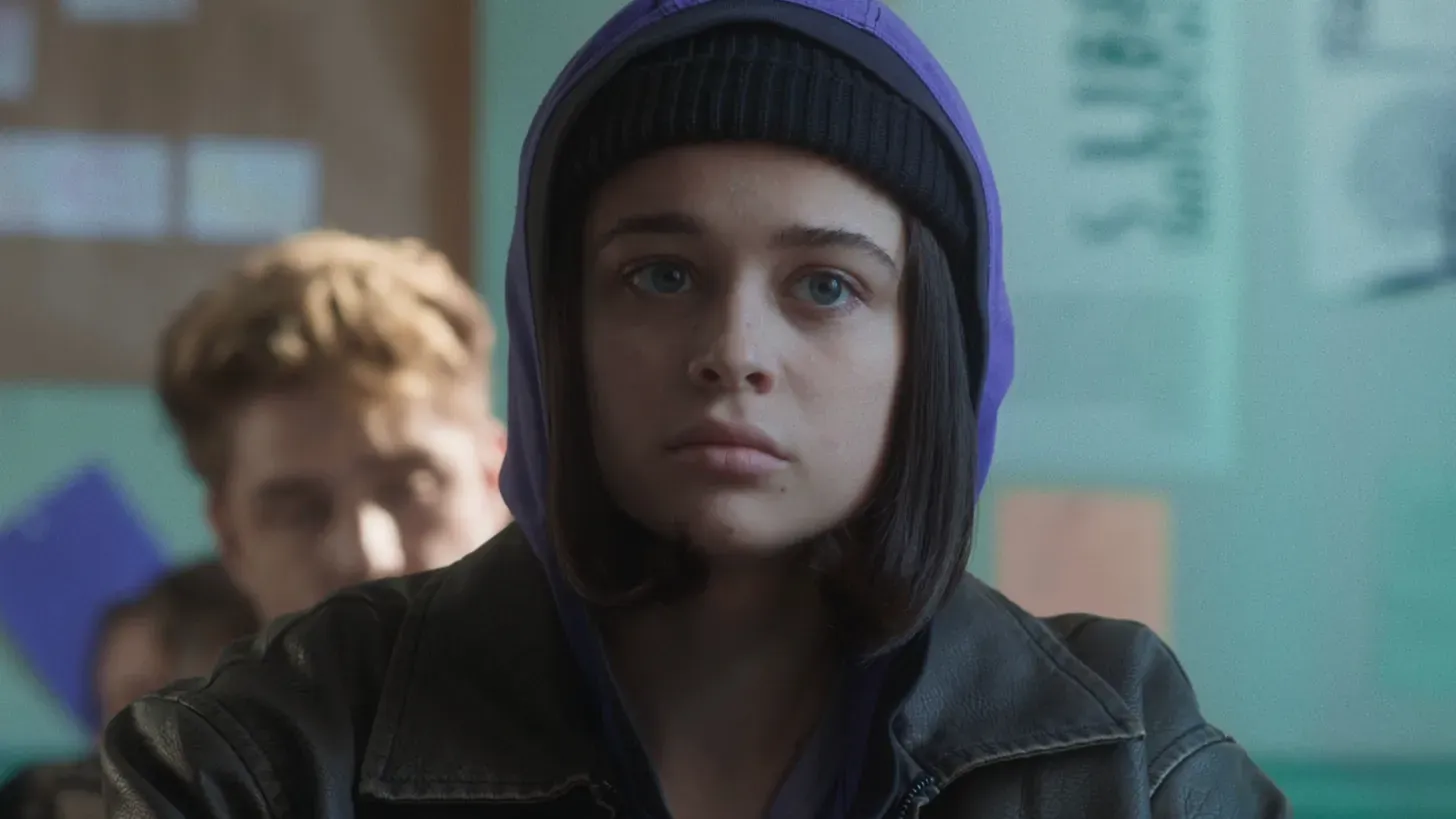
Pintor and Santidrián lean heavily on close-ups, committing the film’s emotional stakes to faces and breath. The camera lingers on expressions long enough for subtext to surface, letting small shifts do the work that dialogue cannot. The score tracks the story’s emotional beats with a gentle hand, staying close to the scenes like a melodic afterimage without pulling focus from what is spoken and what is withheld.
A key symbolic moment lands when Klara removes her wig. The action reads as a visual declaration of self-acceptance, a relinquishing of armor built for a world that watches and judges. It is a direct image of exposure, chosen rather than forced.
The Melancholy of Recovery
Therapy and artistic practice sit in the film as tools of survival, placed alongside connection without being replaced by it. The narrative treats romance as meaningful and real, while keeping the work of mental health in view as its own sustained labor. The script approaches a scene involving mastectomy scars with notable integrity, offering rare visibility to physical trauma in a genre that often keeps such truths out of frame.
The structure shifts as the final act approaches. The earlier passages study isolation with patience, then the pacing tightens into a run of emotional events. The acceleration risks squeezing the thematic room the film has spent time building, even as it pushes characters toward change. The drama draws power from trauma’s internal pressure instead of leaning on the familiar device of a temporary breakup. Conflict remains rooted in what the characters carry, not in manufactured misunderstandings.
Melancholy stays present even as success arrives, and the film frames healing as ongoing, unfinished, lived day by day. The characters learn how to carry their history forward in ordinary life. The closing mood holds cautious optimism, earned through effort rather than promised by a single turning point.
Follow My Voice is a poignant Spanish coming-of-age drama that premiered globally on January 2, 2026. Directed by the duo Inés Pintor and Pablo Santidrián, the film is an adaptation of the popular Wattpad novel by Ariana Godoy. It tells the story of Klara, a teenager grappling with agoraphobia and grief, who finds a path back to the world through her connection with a charismatic radio host named Kang. The movie is available to stream exclusively on Prime Video, offering a sensitive exploration of mental health and the power of human connection.
Full Credits
Title: Follow My Voice (Sigue mi voz)
Distributor: Prime Video, Amazon MGM Studios
Release date: January 2, 2026
Rating: PG-13
Running time: 1 hour 41 minutes
Director: Inés Pintor, Pablo Santidrián
Writers: Inés Pintor, Pablo Santidrián, Ariana Godoy
Producers and Executive Producers: Antonio Asensio, Mercedes Gamero, Paloma Molina, Pablo Nogueroles, Aron Levitz, David Madden, Lindsey Weems Ramey
Cast: Berta Castañé, Jae Woo Yang, Claudia Traisac, Fernando Guallar, Itziar Ituño, Nuno Gallego, Yasmina Drissi, Sofía de Iznájar, Adrià Salazar, Victoria Oliver, Ethan Kim, Alberto Jo Lee, Iñaki Mur
Director of Photography (Cinematographer): Andreu Ortoll
Editors: Raquel Marraco
Composer: Nico Casal
The Review
Follow My Voice
Follow My Voice avoids the shallow traps of its genre by centering on the quiet weight of trauma. While the pacing in the final act feels hurried, the film maintains a steady emotional truth. It treats healing as a patient, ongoing labor rather than a quick romantic fix. The visual representation of anxiety provides a thoughtful addition to the story. It stands as a grounded study of recovery, relying on the strength of its lead performances to move through familiar narrative beats.
PROS
- Lead actors provide nuanced performances.
- Representation of mental health remains grounded.
- Visual effects effectively mirror internal thoughts.
- Sensitive handling of physical recovery scenes.
CONS
- Final act suffers from rushed pacing.
- Antagonist lacks depth.
- Plot relies on some predictable genre tropes.