




























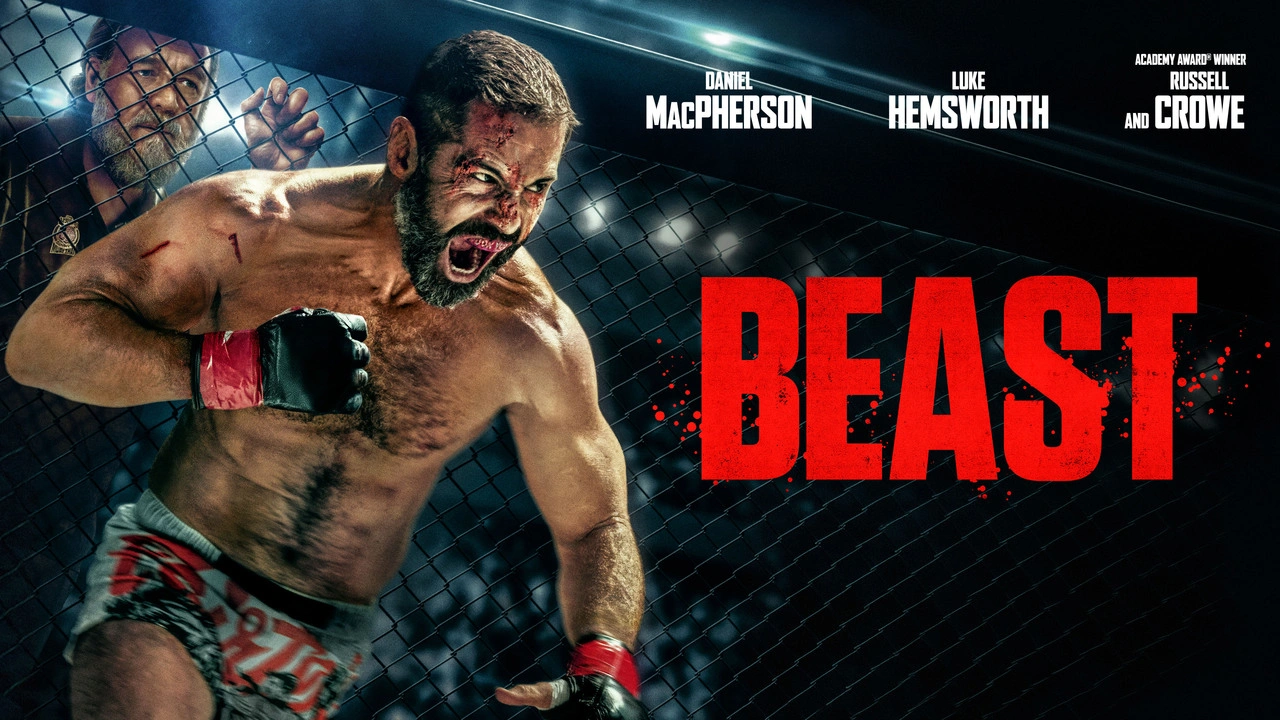

The salty air around Sydney harbor carries the life Patton James has tried to rebuild after leaving the cage. Once known as the General, a fighter whose reputation came from quick, decisive violence, he now works on a commercial fishing trawler, pulling traps from cold water instead of stepping into the controlled chaos of ONE Championship. The move from elite mixed martial arts to hard maritime labor marks a deep fracture in identity.
Patton is an ex-con trying to secure a quieter future with his wife, Luciana, and their young daughter, Maddie. Their peace is thin. The boat comes back with empty traps, with little fish or crab to show for the work, and the family’s money troubles tighten. Maddie needs costly treatment from a specialist.
At the same time, Patton’s younger brother, Malon, falls into trouble with a local loan shark named Barry. Malon is scheduled to fight Xavier Grau, the rival who remains tied to Patton’s past. Patton’s return to the octagon grows from family pressure, financial panic, and old violence waiting for one final reckoning.
Maritime Superstition and the Economic Cage
The film builds its story through a distinctly Australian working-class setting. Patton’s life after fighting is tied to the sea, the harbor, and a job that offers exhaustion without honor. His skipper calls him a Jonah, a term loaded with maritime superstition.
Within that belief system, Patton becomes the man who brings bad luck, the presence blamed for empty traps and failed work. That label isolates him inside the community he is trying to join. The film treats this rejection as part of his larger displacement. Patton has left a life of sanctioned brutality, yet ordinary life gives him little room to breathe.
The fishing trawler becomes a second cage, shaped by economic strain rather than sport. Its rhythm is slow, repetitive, and punishing. Patton’s former career carried adrenaline and public recognition. His current work gives him aching labor and financial fear.
The shift speaks to a familiar post-fighting story, yet the regional texture gives it sharper meaning. This is a world where survival depends on the weather, the sea, the boss, and the day’s catch. Patton’s body has changed roles, from weapon to tool, and the film keeps returning to the cost of that change.
Family obligation drives the plot with clear mechanical force. Maddie’s medical emergency becomes the trigger that removes Patton’s margin for hesitation. He goes back to the cage because survival has become too expensive. The choice is rooted in domestic need, which gives the film a grounded pressure absent from the flashier world surrounding Malon.
The younger James brother is built as Patton’s direct foil. Malon belongs to a modern, image-driven fight culture. He cares about social media status and the appearance of success. His debt to Barry comes from maintaining a lifestyle he has not earned.
That brotherly contrast gives the film one of its strongest cultural lines. Patton represents an older model of masculinity, quiet, dutiful, and physically burdened. Malon represents a louder digital-era version, shaped by performance, image, and visible status.
The film views both men with some sympathy. Malon’s arrogance carries desperation. Patton’s silence carries damage. Their bond gives the second act its emotional shape, since Patton sees himself as the protector of Malon’s future and physical safety.
When Malon is injured, his debt and danger transfer to Patton. The story then draws on the underdog tradition through a harshly shortened training schedule. A professional fighter usually needs six months to prepare. Patton has seven weeks. That compression gives the comeback structure its urgency.
The training montage works like a record of bodily punishment. It shows a man forcing a softened, overworked body back into fight condition after a decade of labor. The film’s mechanics are simple, yet effective: every workout turns time, injury, and age into obstacles that the story can measure.
Forgiveness gives the plot its quieter emotional base. Patton’s fractured bond with Sammy, his former trainer, creates the film’s most restrained moments. Patton wants absolution from the man he failed years earlier. That desire carries weight equal to the fight itself.
The match may solve the immediate crisis, yet the training scenes carry another kind of conflict. Patton is trying to repair the bond with Sammy while preparing to risk his body again. The film’s best dramatic movements happen when those aims begin to overlap.
The Physical Language of the Fallen Champion
Daniel MacPherson plays Patton James with tight restraint. Patton speaks little, so MacPherson builds the character through posture, stillness, and controlled movement. His body communicates the parts of the past that the script leaves quiet. There is a constant simmer in the way he carries himself, a sense that the General remains under the surface. MacPherson gives the character a stoic frame onto which the audience can read regret, fatigue, and old discipline.
His physical commitment gives the film credibility. The transformation from broken fisherman to focused athlete feels believable because MacPherson makes the work visible. Patton’s return never looks easy. His body seems to resist the task before it begins to remember it.
That detail matters in a sports drama built around aging, debt, and the violent uses of labor. MacPherson also gives Patton a weary dignity that keeps him from feeling like a stock comeback figure. The General becomes a man trying to reclaim enough of himself to protect the people around him.
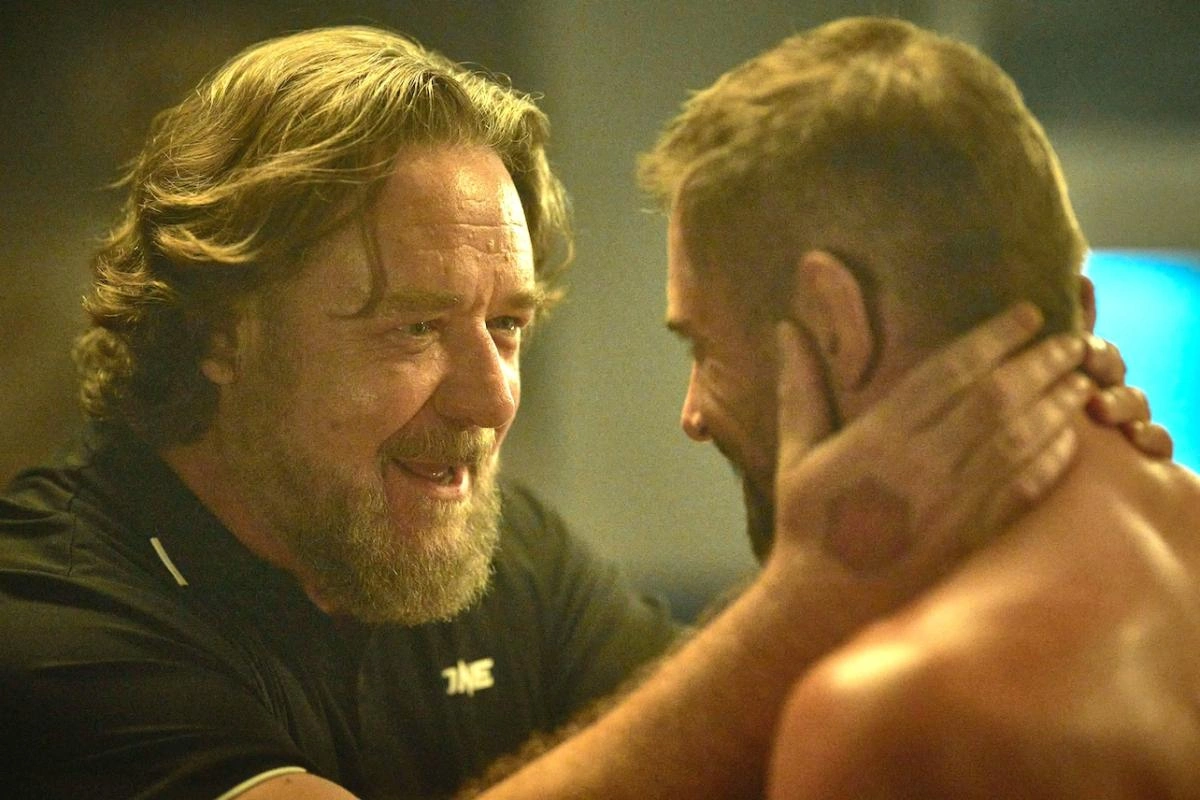
Russell Crowe appears as Sammy, the grizzled mentor marked by disappointment and gravity. Sammy has been diminished by time. He uses crutches and moves with a heavy gait, which gives his presence a physical history of its own. His philosophy is built around moments and memories. He tells Patton that if a man fails to take the moment, he will never own the memory. That line shapes the training material with a reflective charge. The film treats the gym as a place where old damage, regret, and discipline share the same air.
Crowe spends much of his screen time watching, listening, and withholding. During the final match, Sammy views the fight on a small office television. His growling commentary seems aimed inward as much as outward. That choice gives the mentor role a sharper melancholy. Sammy is tied to the legacy of the gym, while the fight itself belongs to a modern arena of branding, broadcast clips, and public spectacle. His distance from the cage becomes part of the story’s emotional geography.
The antagonist, Xavier Grau, is played by Bren, who brings a legitimate martial arts background to the production. Grau feels physically imposing from the start. He has the quality of a sports-cinema villain from an earlier era, a fighter defined by sharp movement, precision, and threat. He represents the peak of professional violence, and his presence gives Patton a living image of the path he left. Bren also handled the fight coordination, which helps make Grau’s style distinct and intimidating.
The supporting cast fills out the film’s social world. Mojean Aria plays Malon as insecure and aggressive, capturing a young man desperate to prove his worth. Luke Hemsworth gives Gabriel Stone a slick, predatory quality.
Gabriel views fighters as assets, which turns the fight business into another economy of extraction. Kelly Gale supplies the emotional stakes as Luciana. She represents the fragile peace Patton may lose. Her fear builds quietly because she understands the danger facing her husband.
Amy Shark and George Burgess complete the training camp as Rose and Neal. Rose takes over coaching duties when her father refuses, bringing a scrappy, tattooed energy to the gym. Neal functions as the gentle giant who supports Patton’s return. These figures give the film a sense of community built through grit and shared hardship. The gym becomes a small social network where loyalty, history, and physical risk sit side by side.
Broadcast Brutality and the Neon Arena
The combat sequences show a clear commitment to visceral realism. Mark Duncan and Bren worked to give the choreography an immersive quality. The grappling and striking carry weight, and the blows feel tied to bodies with limits.
The use of ONE Championship branding places the fictional story inside a recognizable modern mixed martial arts environment. That detail connects Patton’s personal crisis to the current landscape of professional combat sports. The fight is scored through damage, endurance, and pain, giving the sport a brutal texture without turning it into cartoon violence.
Thomaz Labanca’s cinematography creates a strong visual split between Patton’s two lives. The harbor scenes are shaped by pale blue skies and dark, cold water. Those images suggest slow labor, repetition, and a kind of emotional chill. Conversational scenes use frequent shifts of focus, keeping attention on the characters during quieter passages. This technique gives stillness a visual pulse, which suits a film where so much is carried through silence and withheld feeling.
The arena brings a different visual language. The palette shifts into vivid, multi-colored lighting. Blood appears with a rich red intensity against the neon environment. That change marks Patton’s passage from ordinary hardship into public violence. The film understands the cage as spectacle, a place where pain becomes an event for audiences, promoters, and those with money riding on the outcome. The visual shift gives the climax a global sports-media feel while keeping Patton’s personal stakes visible.
Sound design plays a major role in the film’s physical impact. Each punch and kick lands with a percussive force that suggests real contact. The soundtrack uses groaning strings and a martial beat, building tension toward the final encounter. The score avoids a conventional inspirational tone. It stays dark and intense, matching a story where victory carries visible cost. The sound mixing gives each blow enough weight to make the viewer flinch.
Tyler Atkins directs the final fight with an awareness of modern media consumption. He combines cinematic coverage with clips styled like traditional television broadcast footage. The long, detailed sequence cuts between the ring and the places where others watch. Luciana is terrified at home.
Sammy watches on his computer at the gym. Barry watches from his headquarters. This editing pattern links the fight to its consequences across Patton’s circle. The violence reaches every part of his life, from the family home to the gym to the lender waiting for payment.
That structure helps the climax function as the meeting point for the film’s narrative threads. The domestic story, the brotherly debt, the old trainer’s disappointment, and the professional fighting world all converge inside the broadcast image. The film balances the tenderness of Patton’s family life with the raw power of the octagon. It understands the genre’s mechanics while keeping attention on the human cost behind the spectacle.
Beast premiered in the United States on April 10, 2026, followed by its Australian theatrical release on April 23, 2026. Directed by Tyler Atkins and co-written by Oscar-winner Russell Crowe, the film follows a former MMA champion who is forced out of retirement and back into the cage to protect his family and save his younger brother from a dangerous debt. Set against the backdrop of Sydney’s coast and the high-stakes world of ONE Championship, the movie is currently available to watch in theaters across North America and Australia.
Where to Watch Beast (2026) Online










Full Credits
Title: Beast
Distributor: Lionsgate, Grindstone Entertainment Group, Rialto Distribution
Release date: April 10, 2026
Rating: R, MA 15+
Running time: 1 hour 54 minutes
Director: Tyler Atkins
Writers: David Frigerio, Russell Crowe
Producers and Executive Producers: David Frigerio, John Schwarz, Michael Schwarz, Jamie Arscott, Tim O’Hair
Cast: Daniel MacPherson, Russell Crowe, Luke Hemsworth, Bren Foster, Mojean Aria, Kelly Gale, George Burgess, Amy Shark, Sol Nc Carrico
Director of Photography (Cinematographer): Thomaz Labanca
Editors: Todd E. Miller
Composer: Brian Cachia
The Review
Beast
The film functions as a solid entry in the Australian combat drama tradition. It avoids reinvention. It relies on the strength of its performances and the visceral reality of its fight staging. Daniel MacPherson brings a quiet dignity to a role that could easily fall into cliché. The production succeeds by grounding its familiar tropes in a specific regional context. It explores the intersections of family duty and professional violence with effective simplicity. While the narrative follows a well-worn path, the technical execution ensures a satisfying experience for those who appreciate the physical language of the cage.
PROS
- The choreography feels heavy and grounded in the actual mechanics of professional mixed martial arts.
- Daniel MacPherson uses silence and physical presence to portray a weary, believable champion.
- The visual contrast between the cold Sydney harbor and the saturated arena lighting creates a strong sense of place.
- The integration of professional branding and realistic training sequences adds legitimacy to the sporting environment.
CONS
- The plot relies heavily on established genre archetypes and predictable story beats.
- Several supporting figures feel like props for the protagonist's motivation.
- Certain domestic scenes feel stagnant compared to the high energy of the fighting segments.