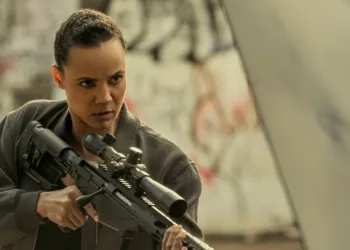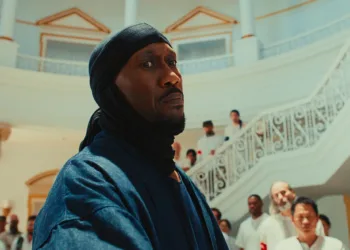










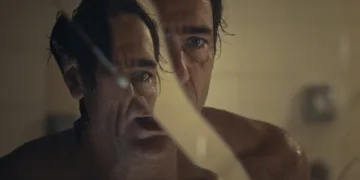














HBO’s long-delayed third season of Euphoria has arrived with a sharper, riskier reset: a five-year jump out of high school, a grim new criminal pipeline for Rue, and a major new antagonist in Adewale Akinnuoye-Agbaje’s Alamo Brown. The April 12 premiere sends Zendaya’s character into Mexico as a drug mule still trapped by the debt she owes Laurie, then steers her toward Alamo, a Southern club owner and trafficker who spots ambition in her and decides to use it.
Levinson told TheWrap that Alamo’s entrance was designed to tell viewers “everything” about him at once, while Akinnuoye-Agbaje described the bond that follows as a “twisted” mentor-disciple relationship built on exploitation.
That story turn does two jobs for the series. It pushes Rue into adult consequences, and it signals how far Season 3 wants to move away from the hallways and house parties that defined the show’s first run. HBO confirmed in January that the new season would span eight episodes, and follow-up coverage after the premiere made clear that Levinson sees this stretch as the endgame; he has said he has no plans for a fourth season, while Zendaya recently said “closure is coming.”
The shift carries emotional weight offscreen too. The season returns after a gap of four years, shaped by labor strikes, scheduling conflicts and personal loss. At the Los Angeles premiere, Levinson dedicated the season to Angus Cloud, Eric Dane and producer Kevin Turen.
Dane, who died in February, completed scenes that now stand as his final screen performance, while the new season also moves ahead without Barbie Ferreira, whose Kat had been a core figure in the show’s early years. Ferreira said this week that her exit came after she and Levinson could not find a satisfying path for the character.
That leaves Season 3 carrying a heavier burden than a routine comeback. It has to reintroduce a cultural phenomenon after years of delay, absorb the loss of key figures and persuade viewers that adulthood can hit these characters harder than adolescence did. The premiere’s answer is blunt: bigger stakes, harsher choices and a new power broker who sees Rue less as a victim than as raw material.