





























Manchester City University becomes the testing ground for a chaotic experiment in modern intimacy in Alicia MacDonald’s Finding Emily. Scripted by Rachel Hirons, this British romantic comedy filters a classic missed-connection premise through the cold lens of behavioral psychology and digital-age alienation, subverting standard genre expectations.
The narrative centers on Owen, a socially clumsy sound engineer and indie musician who experiences a rare moment of genuine affinity with a woman at a club, only to discover that her scrawled phone number lacks a vital final digit. This missing variable forces him into contact with a secondary protagonist, Emily, an American undergraduate student who offers to assist in deciphering the sequence.
Their sudden alliance creates a dual narrative focus driven by wildly conflicting personal motives. The film establishes a thematic battleground, setting the raw, impulsive idealism of youth culture against the clinical skepticism of an online generation wary of genuine sentiment.
Anatomy of a Digital Age Chain Reaction
The missing digit operates as a brilliant narrative catalyst, transforming an everyday annoyance into a systemic, campus-wide obsession. Owen begins his search using analogue methods, physically plastering flyers across the university architecture, an act that emphasizes his desperate need for tangible reality. The structural design of the plot shifts dramatically during the mass email sequence.
Attempting to reach every registered female student named Emily on campus, Owen blunders by placing all 318 addresses in the open recipient field, bypassing blind carbon copy. This single mechanical error functions exactly like a catastrophic software glitch in a complex system simulation, triggering an immediate data leak that exposes personal information, draws the furious intervention of a punk student union president, and instantly transforms Owen into a viral internet meme mockingly labeled “email guy.”
The narrative engine gains intellectual weight through the hidden agenda of the American student, Emily. She views Owen as an ideal, unwitting test subject for her psychology dissertation, a project supervised by an egotistical celebrity academic. Her hypothesis posits that falling in love is merely an evolutionary hangover, a temporary state of chemical insanity that inevitably results in self-sabotage.
This dual motive structure establishes an exquisite tension, mirroring narrative adventure games where two companions must cooperate while hiding entirely opposing victory conditions. The audience watches a double-edged progression: Owen pursues a phantom ideal, while Emily quietly catalogs his mounting desperation as cold empirical data.
Hirons updates classic British romantic comedy tropes, ensuring that public declarations, misunderstandings, and the traditional structural dance of the central pairing adjust to the realities of Gen Z culture. The script avoids easy cynicism, letting natural dialogue drive the humor and sidestepping forced comedic set-pieces.
The pacing is deliberately tied to this structural deception. The frantic, lighthearted comedy of the early tracking process slows during the final act, where the exposure of Emily’s academic manipulation forces a shift into genuine emotional drama. When the clinical data sheet collides with real human feelings, the film drops its satirical mask to explore the vulnerability required to sustain an actual human attachment.
Performance Dynamics and Character Friction
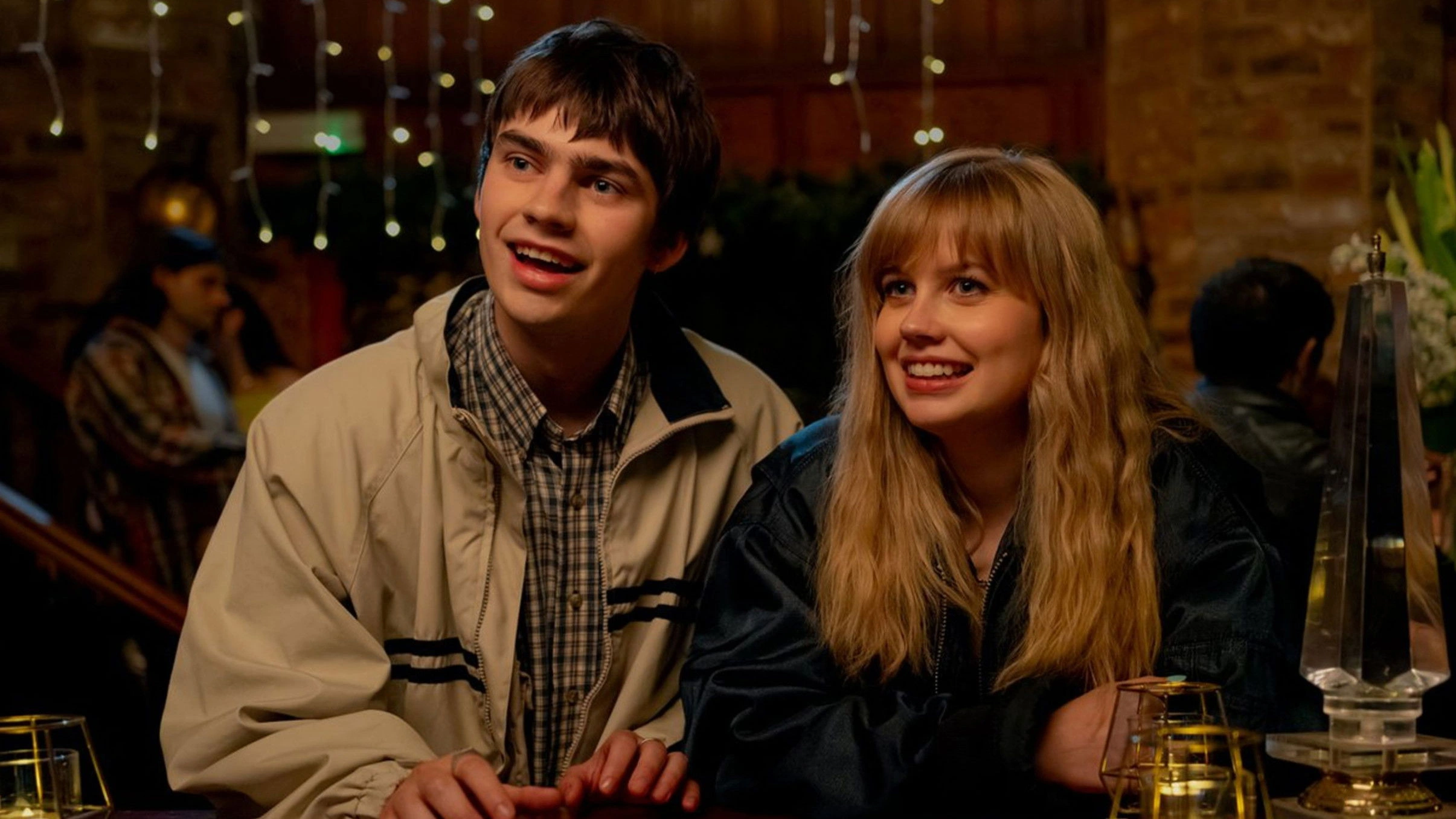
Spike Fearn delivers an exceptional performance as Owen, subverting the typical tropes of the cinematic romantic lead. He captures the physical swagger of a Northern indie frontman while incorporating an awkward, hyperactive clumsiness that manifests in a jittery physical presence. Fearn avoids making Owen’s obsessive campus hunt appear predatory or overbearing, infusing the character with a sincere, wide-eyed earnestness that makes his desperation feel deeply human.
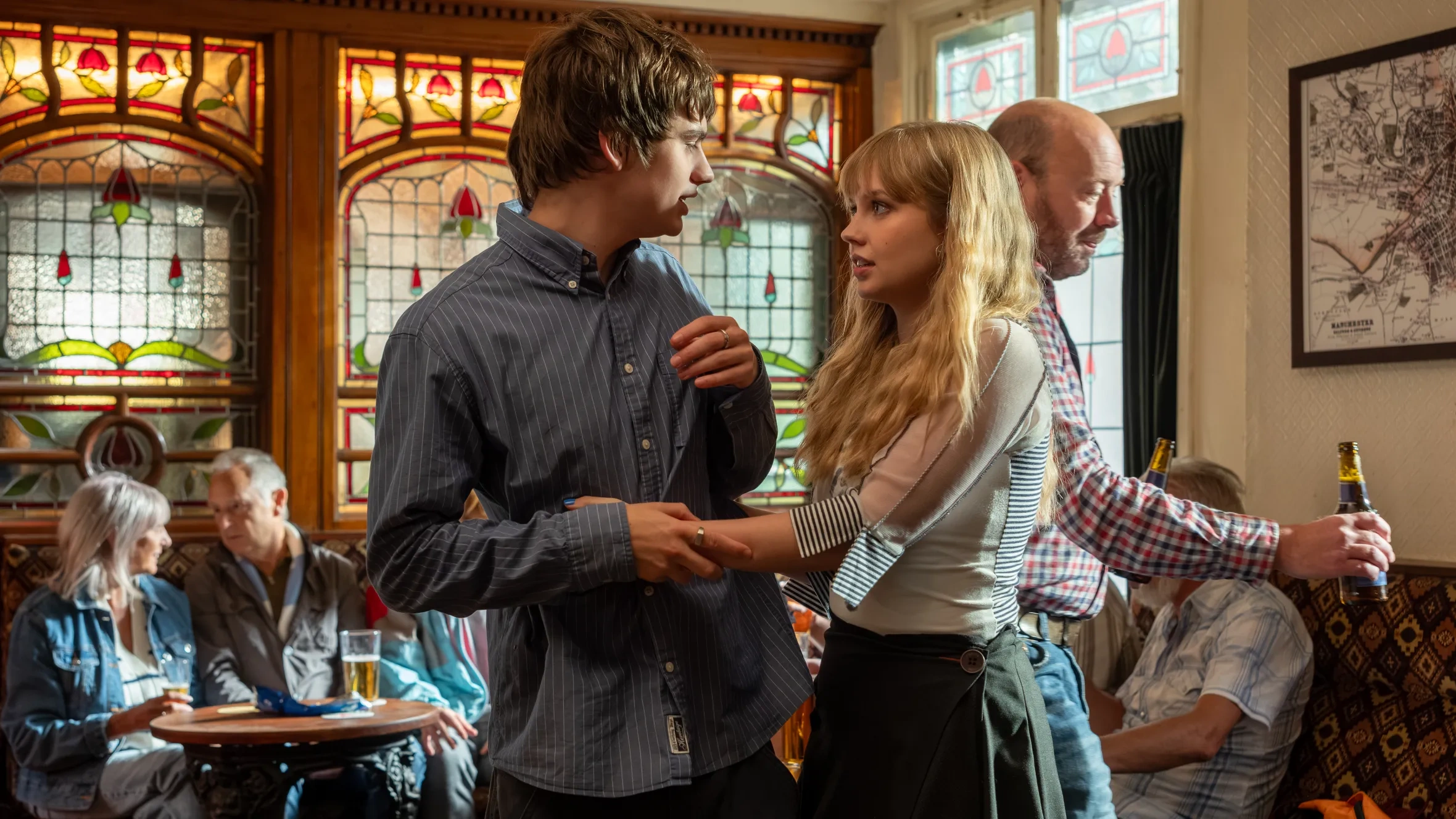
Angourie Rice delivers a flawless performance as the calculating American psychology student, playing the role with icy intellectual detachment, using precise vocal delivery and controlled body language to signal her character’s belief in her own scientific superiority. Her performance intensifies as her intricate web of lies begins to collapse, forcing her character to confront buried emotional needs.
The screen chemistry between the leads thrives entirely on the friction of their opposing philosophical viewpoints. Idealistic impulsivity constantly challenges detached skepticism, creating an engaging back-and-forth dynamic that services the rapid comedic timing of the lectures and the quieter, more intense dramatic confrontations. This interaction carries a distinct visual dimension tied to the specific casting.
Fearn bears a striking physical resemblance to a young Liam Gallagher, complete with a distinct haircut and prominent brows, while Rice frequently mirrors the styling of major contemporary pop icons. Watching this specific visual pairing engage in intense debates about psychological theories offers a slightly surreal layer of meta-commentary on modern celebrity archetypes.
The supporting players expand the campus environment, providing distinct tonal counterweights to the central dramatic tension. Minnie Driver stands out as the erratic university dean, delivering a performance packed with a sharp, unstructured energy that recalls the classic authority figures of vintage campus satires.
Prasanna Puwanarajah portrays the narcissistic celebrity psychology professor with a wonderful sense of vanity, perfectly capturing the self-absorbed nature of academic showmanship. Smaller roles, including a student podcaster hunting for campus scandals and social media commentators providing real-time feedback on Owen’s public actions, ensure that the surrounding community feels lived-in, chaotic, and completely reflective of a modern digital echo chamber.
Visual Nostalgia and the Sonic Landscape
Alicia MacDonald establishes a clear visual language by rejecting the sterile, hyper-bright digital aesthetic common in modern romantic comedies. The cinematography relies heavily on saturated, warm color palettes and vintage fashion choices, giving the contemporary Manchester campus an old-school, analog feel.
The production design emphasizes the cluttered, unpolished reality of student life, focusing on cramped flats, messy shared spaces, and iconic local landmarks like Canal Street. This physical texture creates a deliberate contrast with the invisible digital networks that drive the plot, grounding the narrative in a tangible, specific geographic reality.
The film’s soundtrack is essential to its identity, utilizing nostalgic musical selections to build mood and establish local context. The score moves from post-punk tracks to contemporary alternative covers, directly reflecting Owen’s personal life as a musician. This sound design functions as an active storytelling device.
A key sequence features Owen performing an original acoustic song on a campus YouTube channel, an event that instantly triggers a flood of onscreen comments, demonstrating how private creative expressions are instantly commodified by internet culture. The technical team integrates media devices directly into the physical environment, using public screens and outdoor university speakers to broadcast plot updates, blurring the line between private lives and public entertainment.
This commitment to Manchester’s musical heritage occasionally feels overly calculated, almost operating as a tourism advertisement for the city’s alternative scene. The technical execution maintains structural balance throughout. The film blends the cinematic warmth of late-20th-century filmmaking with the constant presence of modern technology. By framing smartphones and social media algorithms within an analog visual style, MacDonald highlights how traditional human desires persist against the shifting, isolating structures of modern digital communication.
The contemporary British romantic comedy Finding Emily premiered internationally on May 21, 2026, launching across major theatrical chains in Australia and the United Kingdom, with a scheduled theatrical release in the United States on August 28, 2026. Distributed by Focus Features, the movie currently enjoys an exclusive theatrical window, meaning you can experience its music-infused campus romance on the big screen at your local cinema. Following its traditional theatrical run, the feature is slated to become available for digital purchase, rental, and streaming on platforms such as Apple TV.
Where to Watch Finding Emily (2026) Online





Title: Finding Emily
Distributor: Focus Features, Universal Pictures
Release date: May 21, 2026
Rating: PG-13, M
Running time: 1 hour 51 minutes
Director: Alicia MacDonald
Writers: Rachel Hirons
Producers and Executive Producers: Tim Bevan, Eric Fellner, Olivier Kaempfer, Douglas Cox, Cecilia Frugiuele, Angela Moneke, Claire O’Neill, Evren Olgun
Cast: Angourie Rice, Spike Fearn, Minnie Driver, Sadie Soverall, Prasanna Puwanarajah, Kat Ronney, Yali Topol Margalith, Ella Maisy Purvis, Nadia Parkes, Anthony J. Abraham, Cora Kirk, Jack Riddiford
Director of Photography (Cinematographer): Rachel Clark
Editors: Phil Hignett
Composer: Morgan Kibby
The Review
Finding Emily
Finding Emily successfully updates classic British romantic comedy traditions for a digital generation. While its Manchester music showcase occasionally feels overly deliberate, the film thrives on the genuine friction between its lead performers and a sharp script that avoids easy cynicism. By wrapping modern campus anxiety in a warm, analog visual style, Alicia MacDonald creates a heartfelt look at the vulnerability required to find authentic connection in a hyper-connected world.
PROS
- Strong screen chemistry driven by the contrasting dynamics of Spike Fearn and Angourie Rice.
- Sharp, intelligent screenplay that authentically captures youth culture without relying on clichéd dialogue.
- Distinctive visual style using warm color palettes and unpolished production design to create a timeless feel.
- Creative integration of sound design and a nostalgic soundtrack that directly reinforces the protagonist's identity.
CONS
- The heavy reliance on Manchester musical history can feel like a deliberate promotional tool for the city.
- The psychology dissertation subplot requires a significant suspension of disbelief regarding academic realism.
- Certain plot devices, like broadcasting personal developments on public campus screens, feel mechanically forced.