


















Spanish cinema has often resembled a haunted house, its projector rattling with celluloid ghosts from a twentieth century spent scrubbing bloodstains from village squares. With The Black Ball, Los Javis, Javier Calvo and Javier Ambrossi, move from the episodic, neon-soaked television intimacy of Veneno toward a grand cinematic canvas with teeth. Pedro Almodóvar joins as associate producer, giving the project a thick current of classic Iberian melodrama.
The film builds itself around a bold premise: the imagined recovery and completion of a long-lost, unfinished manuscript by Federico García Lorca. Fascist Nationalist forces executed Lorca in 1936, cutting short a voice beginning to map queer desire with explicit force.
Los Javis treat that historical absence as a zone of radical repair. Their drama spans generations and attempts to resurrect an erased queer lineage. A huge wager, then. A glorious headache, too.
Chronopolitics and the Architecture of the Triptych
The screenplay runs on structural chronopolitics, a design in which separate eras collide, collapse, and speak to one another, exposing the persistent machinery of systemic oppression. This is vast, multi-tiered narrative engineering. It needs immense discipline to avoid implosion. For much of the film, the script handles that calculus with startling confidence.
The first movement begins in 1932, with a fictionalized and highly speculative expansion of Lorca’s surviving four-page manuscript fragment. Carlos, played by Milo Quifes with quiet, brittle intensity, comes from a thoroughly bourgeois, upper-class Granada family. He lives under the suffocating pressure of his father, who demands his acceptance into a prestigious local social casino to secure the family’s standing.
Inside those wood-paneled rooms, the title takes on literal historical cruelty. A selection committee votes with white balls for acceptance and black balls for rejection. Carlos is blackballed, expelled from polite society through venomous whispers about his hidden sexuality.
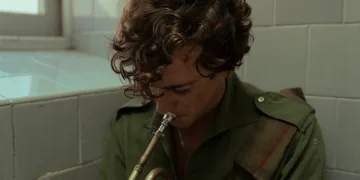
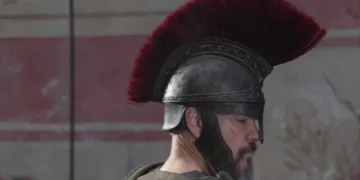
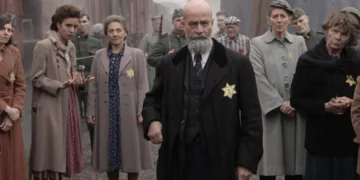
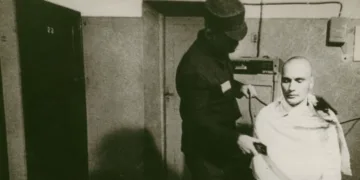
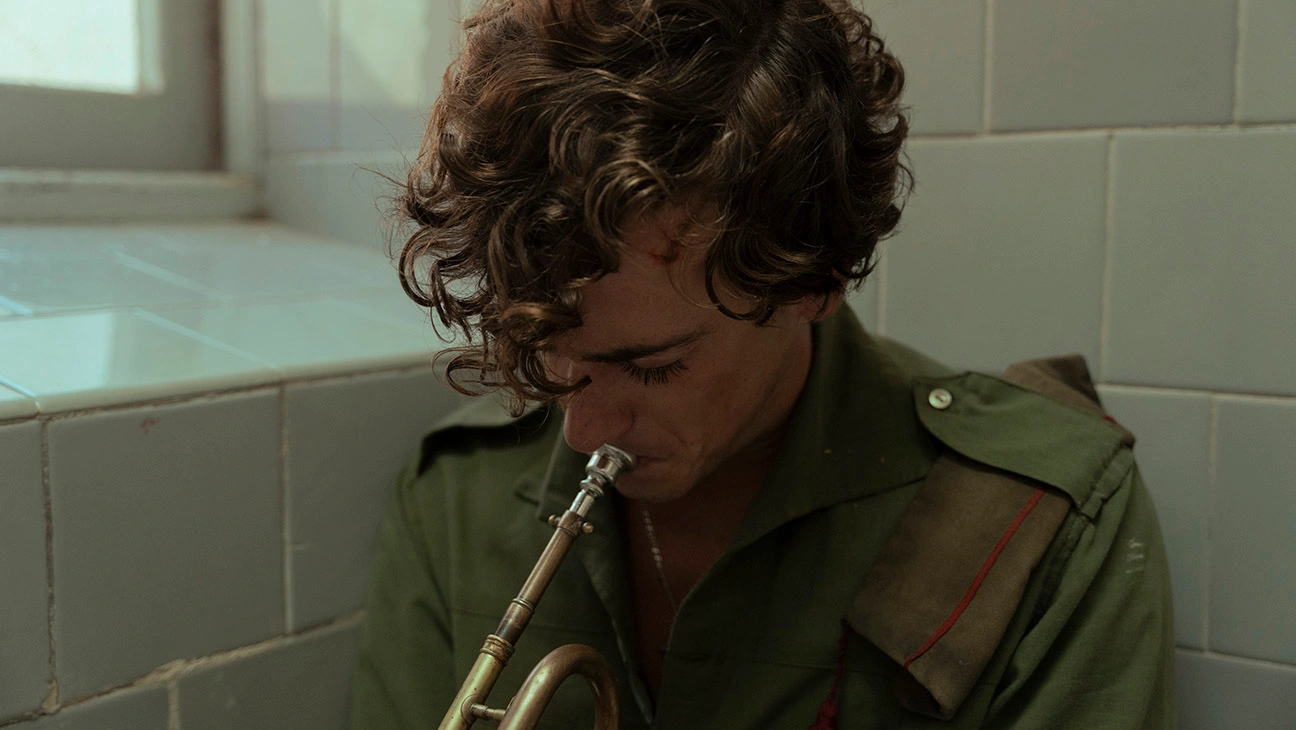
The story then jumps five years to 1937 and enters the flesh of the Spanish Civil War. Sebastián, a rural village trumpet player, loses his entire family after an aerial bombardment by fascist Italian allies destroys his home. Disoriented and desperate, he accepts a rifle placed in his hands and becomes conscripted into Franco’s Nationalist army. In a bleak military hospital, he must guard Rafael Rodríguez Rapún, played by Miguel Bernardeau, a wounded captured Republican lieutenant who was Lorca’s real-life lover and theater secretary.
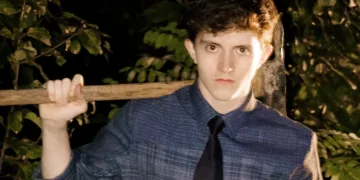
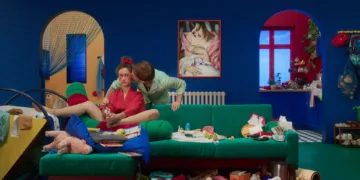
The 2017 timeline follows Alberto, played by Carlos González, a hyper-neurotic Madrid historian absorbed in researching queer music from 1920s Constantinople and managing a messy personal life. After the sudden death of a grandfather his mother had claimed was long dead, Alberto discovers a hidden queer lineage. This archival inheritance sends him, with understandable reluctance, to Cantabria to retrieve a brown envelope filled with scraps of paper carrying immense historical weight.
The narrative’s sharpest intelligence appears through internal rhymes and thematic echoes linking these lives across a century. Los Javis avoid lazy expository handoffs. One extraordinary audio-visual transition turns the metallic clack of casino black balls dropping into the 1932 ballot box into the heavy thud of a 1937 military transport vehicle carrying corpses through mud. History becomes a claustrophobic echo chamber of institutional malice. The closet emerges as a generational inheritance built by the state. Grim, yes. Also horribly efficient.
Sonic Heavy Metal and the Visuals of Ruin
Los Javis translate political erasure into sensory assault through fierce formalism. Cinematographer Gris Jordana gives each era a distinct visual identity, using stark, high-contrast black-and-white compositions when memory demands a harsher historical viewpoint. The wartime opening sequence is pure technical bravado. Jordana’s camera moves with fluid, athletic, almost somersaulting force beside Sebastián as he runs through rubble, dust, and whining bombs in his ruined village.
The mise-en-scène balances mud-stained political realism with surrealist flourishes that nearly tip into kitsch and still hold emotional gravity. One image lingers: Sebastián, terrified and disoriented, crawling up a huge mound of war debris topped by a fallen Grecian marble statue.
The image foreshadows his imminent encounter with Rafael’s sculpted classical features, merging classical aesthetics with modern devastation. Snow, drawn from Lorca’s 1918 poem “Autumn Song,” recurs as a metaphor for mortality and death in Carlos’s later sequences. Historical trauma becomes a mythic frozen afterlife. Memory can turn a soul into weather.
The soundscape presses with near-punishing intensity. Raül Refree’s old-school, maximalist orchestral score goes all-in, using barreling military brass and thunderous kettle drums to magnify every glance. This score rejects background manners. It batters the audience and demands emotional surrender Sound editors Alejandro Lopez and Anna Harington match that symphonic force with precise sonic engineering, forging bridges such as the casino-to-truck transition that keep the triptych from breaking into three isolated short films. The whole project moves like a single unbroken piece of music.
The Melodramatic Ensemble and Cameos of Conscience
The performances ground the lofty, hyper-stylized design in bruised human flesh. Spanish musician Guitarricadelafuente gives a remarkably promising acting debut as Sebastián, externalizing paralyzed anxiety and a frightening sexual awakening through furtive, heavy glances.
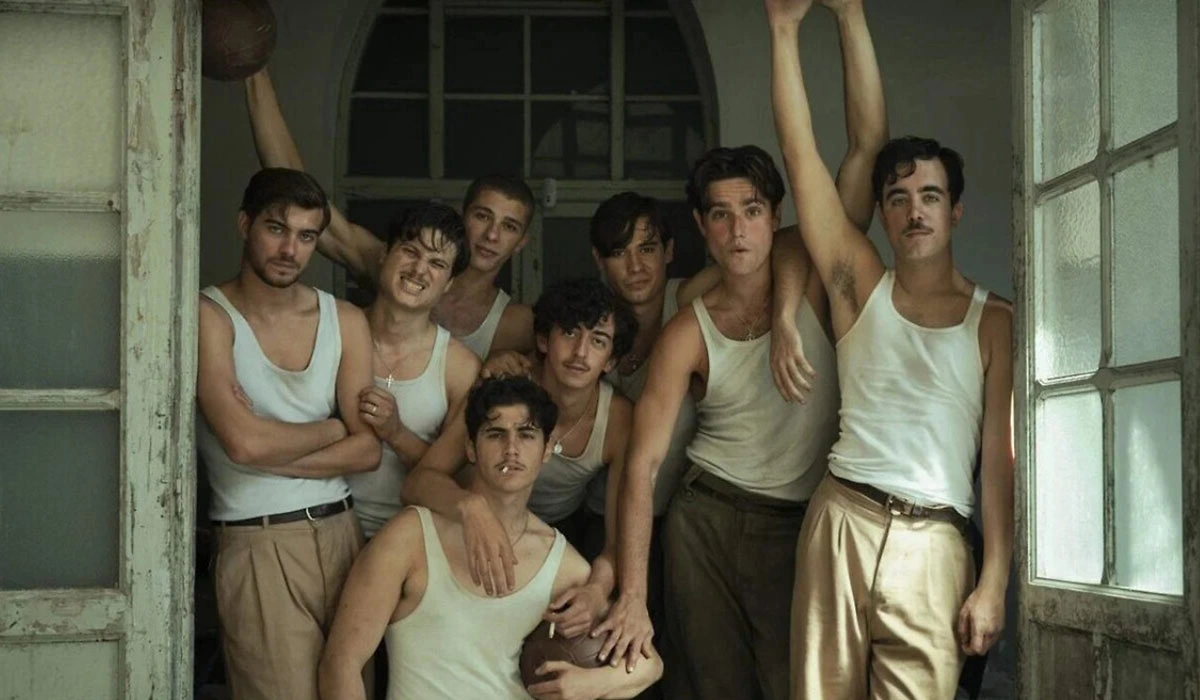
Miguel Bernardeau’s Rafael becomes his perfect foil. Bernardeau plays the doomed Republican soldier as an ideal romantic hero, using clean-cut masculinity, physical wounds, and moral courage to break Sebastián’s self-protective compliance. Carlos González supplies the contemporary counterweight as Alberto, showing how historical trauma mutates into modern anxiety and dependence on digital validation.
The supporting players add volatile charge. Lola Dueñas is terrifyingly magnetic as Alberto’s toxic, negligent mother, Teresa. In a restaurant scene, she erupts with dangerous, coked-out energy and throws a wine glass straight at her son’s head. Familial trauma can be as messy as geopolitical warfare. Sometimes messier, since nobody brings a map.
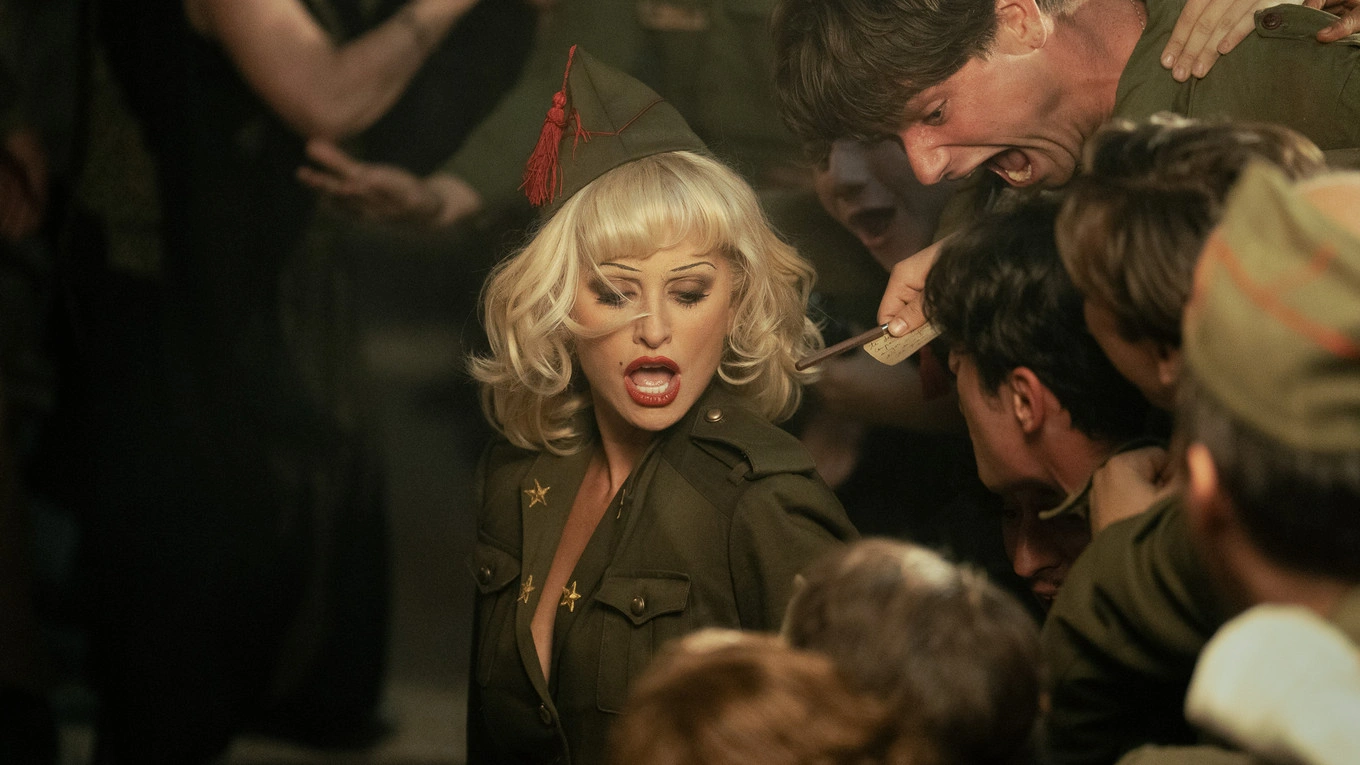
Then come the showstoppers, the gasping cameos. Penélope Cruz appears like a magnificent, feather-boa-wrapped fever dream as Nene, a platinum-blonde wartime cabaret singer who enters a room of roaring, bloodthirsty Nationalist soldiers while draped sexily over an actual military combat tank. Cruz channels bawdy drag-queen brilliance, hides Nene’s secret Republican loyalties, and gives Sebastián a quiet message about performance as fantasy and possibility. War, within that same logic, hardens into rigidity.
Decades later, Glenn Close appears as Isabelle Durand, an American Lorca scholar speaking fluent Spanish on a book tour. The cameo functions as a living monument to historical preservation, tying her academic work to a personal quest to avenge a past family tragedy.
The directors keep overblown melodrama and sharp contemporary humor in tense proximity. A modern Grindr joke cuts through a heavy wartime sequence, proving survival sometimes needs a rude little laugh. The film succeeds because it understands that honoring the dead requires room for suffering, mischief, desire, and the stubborn capacity for joy.
The Black Ball (La bola negra) is a Spanish historical drama directed by Javier Calvo and Javier Ambrossi. The film had its world premiere in the main competition at the Cannes Film Festival on May 21, 2026, where it competed for the prestigious Palme d’Or. Co-produced by Movistar Plus+, Suma Content, El Deseo, and Le Pacte, it is scheduled for a wide theatrical release in Spain on October 2, 2026, by Elastica Films. Audiences can look forward to its streaming debut on platforms like Movistar Plus+ following its theatrical window, while international streaming distribution rights are currently being contested.
Full Credits
Title: The Black Ball (La bola negra)
Distributor: Elastica Films, Le Pacte
Release date: May 21, 2026
Running time: 155 minutes
Director: Javier Calvo, Javier Ambrossi
Writers: Javier Calvo, Javier Ambrossi, Alberto Conejero
Producers and Executive Producers: Pedro Almodóvar, Agustín Almodóvar, Javier Calvo, Javier Ambrossi
Cast: Guitarricadelafuente, Miguel Bernardeau, Carlos González, Milo Quifes, Lola Dueñas, Penélope Cruz, Glenn Close, Julio Torres
Director of Photography (Cinematographer): Gris Jordana
Editors: Alberto Gutiérrez
Composer: Raül Refree
The Review
The Black Ball
The Black Ball is a towering, sensory-driven historical epic that successfully resurrects erased history through sheer cinematic ambition. While its massive running time occasionally sags under the weight of its own turgid melodrama and heavy-handed cameos, the film remains a deeply moving testament to queer endurance. Los Javis navigate the complex triptych structure with extraordinary technical bravado, resulting in a film that feels both historically reverent and vibrantly contemporary.
PROS
- Fluid, athletic cinematography by Gris Jordana and seamless, inventive sound design that bridges distinct eras beautifully.
- Compelling chemistry and expressive acting from newcomers and established talent alike, grounding the film's abstract concepts.
- A rich, maximalist atmosphere driven by a powerful orchestral score and striking visual motifs like the Lorca-inspired snowscapes.
CONS
- The massive length occasionally loses momentum, leaving certain storylines, like the 1932 segment, feeling slightly neglected.
- High-profile cameos and specific symbolic elements occasionally lean into overly sentimental, PSA-like territory.