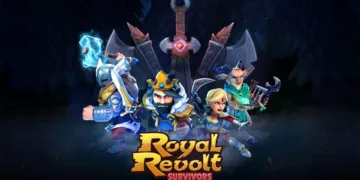































Royal Revolt Survivors, developed by Team Warriors and published by Headup, sends the Royal Revolt series into a sharp genre shift. The franchise leaves its tower defense background behind and enters the top-down action roguelite lane shaped by horde-survival games such as Vampire Survivors.
The setup is direct: pick a hero, defend a fantasy kingdom, and stay alive through waves of aggressive enemies for as long as possible. The game is available on modern platforms, including Xbox Series X/S and Nintendo Switch 2, and supports several play preferences through a full solo mode and cooperative multiplayer for up to four players locally or online. Its visual identity gives the genre formula a brighter face.
The cartoony, colorful art style creates a clean break from the dark pixel-art look often associated with horde-survival games. The crisp interface also helps keep the battlefield readable once enemy numbers begin filling the screen.
The Royal Roster and Tactile Feedback of Battle
The design leans heavily on character identity. Each hero comes with separate base stats for health, walking speed, and attack speed, which gives every pick a clear tactical shape. The starting roster makes that variety easy to read. The King plays as a sturdy front-line fighter, swinging his Royal Sword in frontal slashes and using a fast dash that stuns enemies and grants brief invincibility.
Mina shifts the rhythm toward collection and planning. Her boomerang gathers experience crystals and gold on its return path, and her backpack stores food for later use. Adissa, a desert wizard, brings area-control tools through fireballs for elemental damage and black holes that pull enemy packs together. Moe the monk fits especially well in co-op, damaging nearby targets by drinking a special brew and using a support skill that trades 25% of his health for a 25% damage boost to nearby allies.
Controls stay accessible. Basic attacks fire automatically, movement sits on the left analog stick, projectile direction is handled with the right stick, and active skills use individual button presses. That simple setup gives players room to focus on positioning and cooldown timing.
The combat feel has some early friction, though. Testing the different character kits is genuinely enjoyable, yet the immediate action loop can feel floaty. Hit registration lacks weight, and early weapons rarely communicate impact through strong physical feedback. The result is a combat system that leans heavily on stat growth before it delivers much tactile satisfaction.
Layered Progression and the Forge of Camp Meta
Run progression follows the genre’s familiar experience-crystal loop. Collect enough crystals, level up mid-run, then choose from randomized stat boosts, new weapons, or utility trinkets. Hyper Gears speed up ability recovery, and the Golden Compass expands pickup radius, giving builds practical ways to sharpen their efficiency.

The standout system is Enchanting Weapon, a mechanic that recalls item evolution in Grind Survivors. A maximum-level weapon can combine with a matching maximum-level accessory, creating a single empowered version with huge damage output and fresh visual effects.
Gold coins drive the permanent upgrade layer between runs. At the camp blacksmith, players can buy incremental improvements to universal attributes such as maximum health, passive regeneration, pickup range, and experience gain rates.
The system supports experimentation because spent gold can be refunded and reassigned freely. Progress is also tied to a structured quest map spread across environments such as the Royal Forest and the Red Canyon. Specific objectives, including surviving for ten minutes or defeating regional bosses, open later maps, characters, and stronger trinkets.
Rigid Caps and the Bottlenecks of the Late-Game
Royal Revolt Survivors has a sturdy mechanical base, yet its long-term structure creates problems for experienced horde-survival players. The biggest issue comes from strict progression caps that slow the late game. Weapons and accessories often reach maximum level around the twenty-minute point.
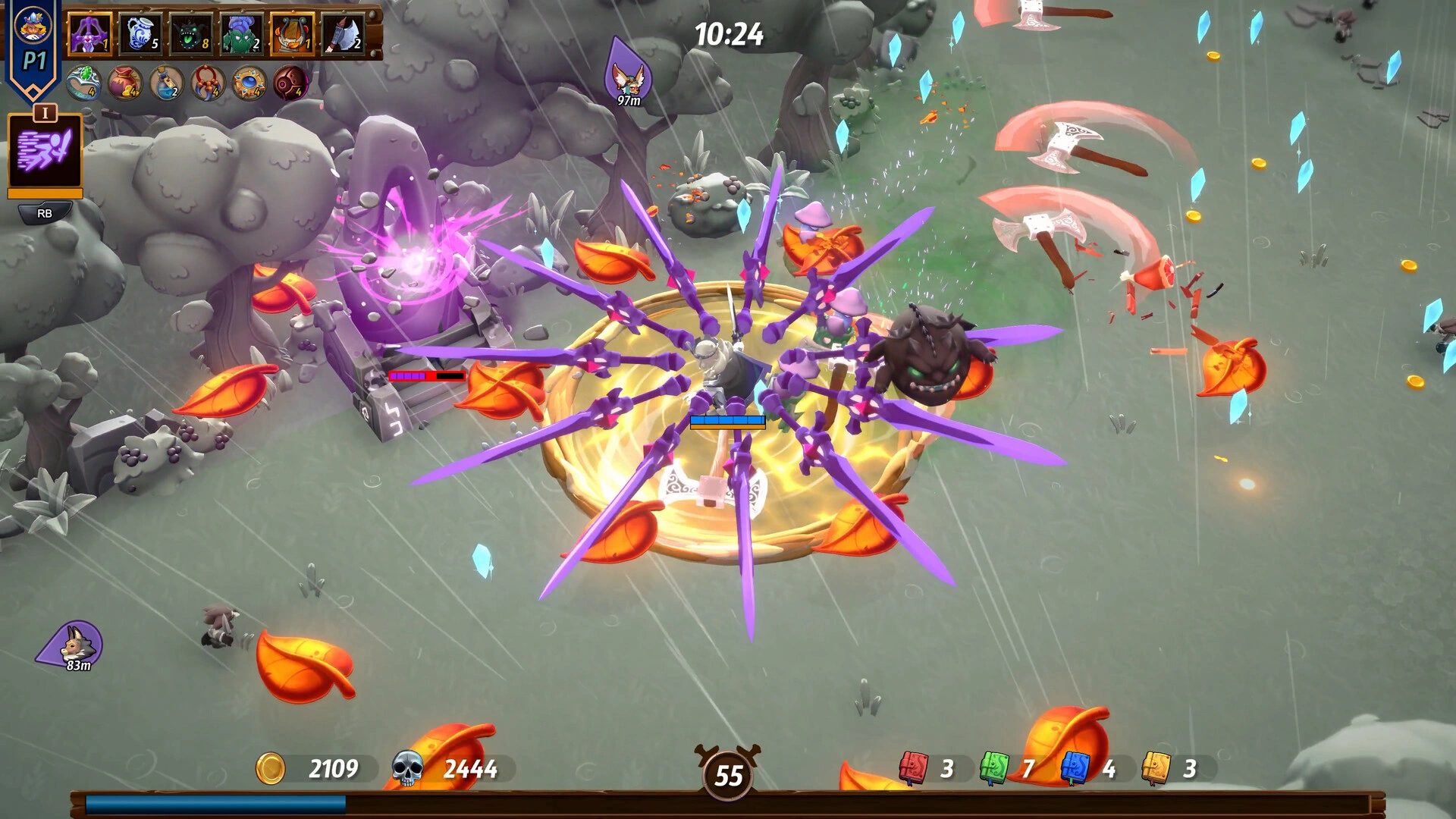
After that, level-ups lose much of their value, giving players small randomized 1% stat increases that rarely change the battle rhythm. This creates a resource bottleneck, since rare boss tomes lose all purpose once the first item enchantments are finished.
The fixed run timer also limits faster play. Bosses appear at strict five-minute intervals, regardless of how efficiently the player clears enemies. Optimized characters have to wait for the clock, with no way to speed up boss spawns through high minion kill counts. Pacing slows further through layered randomness in weapon evolution. Specific combinations are required, which pushes players to stay near upgrade NPCs instead of moving through the map with a stronger sense of flow.
Hard Mode brings balance problems of its own, raising difficulty by turning enemies into huge health sponges. That choice creates corner traps that feel impossible to escape and makes success depend heavily on favorable upgrade luck, with mechanical skill taking a smaller role.
Smaller technical problems add to the late-game frustration, including magnet upgrades that ignore off-screen experience orbs. The economy also feels unfinished once the blacksmith upgrades are fully maxed, since there is no late-game gold sink to keep coins meaningful.
The Review
Royal Revolt Survivors
Royal Revolt Survivors successfully adapts an established franchise into a vibrant, cartoony horde-survival experience. The diverse roster and engaging weapon enchantment system provide a highly entertaining cooperative foundation, especially for casual groups. However, the experience loses momentum during extended sessions due to rigid progression caps, sluggish time-gated pacing, and a frustrating late-game economy. It stands as a mechanically competent but structurally limited entry that prioritizes initial fun over long-term depth.
PROS
- Distinct, role-based hero roster
- Satisfying weapon enchantment mechanic
- Fluid four-player local and online cooperative play
- Clean, bright visual aesthetic with rock-solid performance
CONS
- Rigid late-game progression caps and repetitive level-ups
- Artificial, time-gated boss pacing
- Floaty early-game combat feedback
- Lack of a currency sink for accumulated gold







