






























Spellgarden Games has built a clear indie identity around warmth, empathy, community, and low-pressure play, with high-stress systems kept far from the main experience. Thrifty Business continues that design philosophy by taking the isometric point of view seen in Ritual of Raven and applying it to a cozy retail management simulator. Players inherit a physical secondhand shop in a quiet British town from Ingrid, the previous owner, who leaves the store behind to explore London.
The game has an instantly readable look, using a 1990s-inspired pixel art style built around maximalist, lived-in detail. Each corner of the screen feels packed with nostalgic objects, creating comfort before the first sale even happens. Aggressive financial optimization and razor-thin profit margins sit far from the main loop.
The experience gives its attention to community building and inclusivity, inviting players to sort through old treasures and become a familiar presence in a fictional neighborhood. Thrifty Business shows how games can offer psychological comfort through quiet, intentional interactive design.
Unpacking the Rhythms of Retail Comfort
The daily gameplay loop follows a structured, predictable cycle that divides the player’s work into clear phases. Each morning begins with an unlimited preparation period, giving players full freedom to arrange the shop without time pressure. Using an in-game smartphone application called “Messy-Ger,” you purchase mystery stock boxes from local residents. The game hides the exact contents of these boxes and gives vague, nostalgic categories such as Y2K nostalgia, witchy artifacts, old electronics, retro toys, and vintage clothing.
After purchase, the boxes arrive in a delivery area just outside the storefront. Dragging them inside starts a tactile unpacking sequence that plays like a reverse version of the indie game Unpacking. Moving items onto shelves, tables, and clothing racks becomes a satisfying spatial puzzle. The store’s physical limits demand careful placement, since heavy coats need clothing racks and mugs belong on flat shelving.
Opening the doors moves the game into its daytime phase. Customers wander through the aisles, and serving them carries minimal mechanical friction. You cash out patrons at the register with a single mouse click, managing a queue of endlessly patient buyers who never become angry about waiting.
The other active chore during business hours asks you to track customer footprints and manually click pieces of litter to keep the floors clean. The revenue from these smooth daily operations lets you buy up to six physical room expansions, changing a cramped single-room storefront into a sprawling neighborhood hub.
Narrative Empathy Through Secondhand Treasures
The management loop gains emotional weight through the way storytelling locks into the mechanics. Regular local customers push narrative progression forward, contacting you through the in-game messaging app or counter conversations to request specific secondhand items. Finding those objects asks players to target themed mystery boxes across several in-game days. That mechanical friction turns ordinary shopkeeping into a small act of care, changing random inventory hunting into a personal quest.
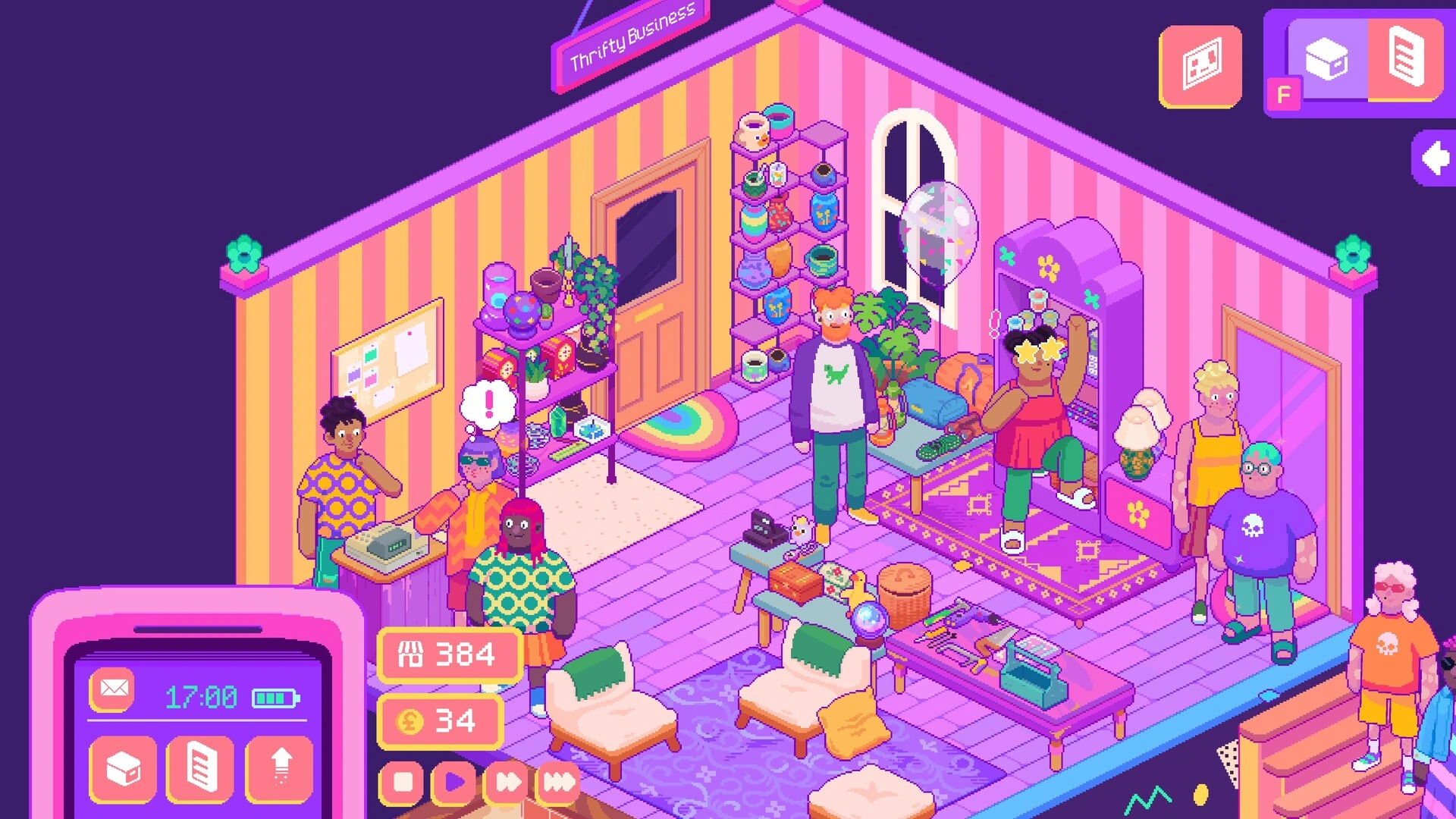
The narrative rewards land with quiet force, using human moments that feel emotionally sincere. Players witness intimate character arcs, such as guiding a transgender woman as she experiments with vintage clothing to discover her personal style, or helping a lonely father find comfort as he sorts through items to help his son pack for university. These individual stories later come together during neighborhood events.
The calendar system lets you schedule community gatherings inside expanded rooms, including book clubs, singles mixers, and queer dating nights. Your role stays focused on preparation during these gatherings, and that preparation directly shapes their success. A book club sharply raises demand and sale value for books and decorations, and a cooking club makes kitchenware highly profitable. This elegant design link makes your retail decisions feel tied to the town’s social life.
Aesthetic Rewards and the Limits of the Routine
The progression system rewards creative expression through Community Points, earned by maintaining the shop floor, collecting litter, and listening to the stories of regulars. Players spend these points on themed stamp cards, unlocking cosmetic sets that can fully change the store’s visual identity. You can decorate one room like a bright 1990s arcade and dedicate another corner to a dark, mysterious witchy aesthetic.
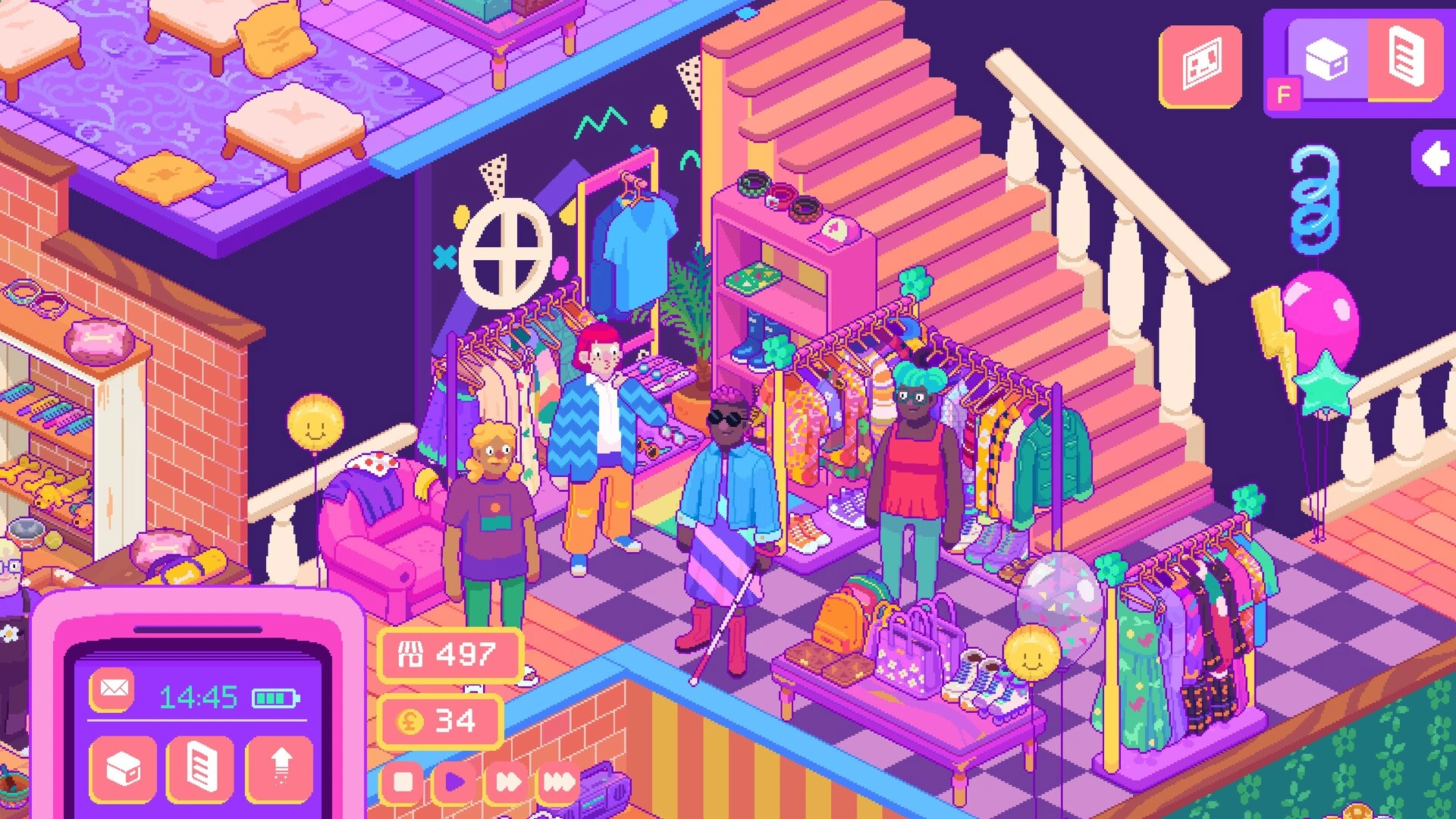
This creative freedom works because of a deliberate no-consequence design philosophy. Leaving the store messy with garbage carries zero financial penalties, and long lines at the cash register never damage your shop rating. The removal of retail stress creates an extraordinarily soothing environment, matched by a relaxing background soundtrack. The music shifts from soft melodies into smooth, jazzy rhythms that rest comfortably in the background without becoming distracting, even when individual tracks loop noticeably.
The total absence of mechanical friction also brings pacing issues in the late game. Once you exhaust the main character story arcs and collect photographs of favorite regulars, the daily routine loses its narrative drive. The absence of a financial challenge or story goal makes the loop feel slightly repetitive.
You keep buying boxes, clicking on garbage, and checking out quiet customers mainly to unlock extra wallpaper and tables. The loop may feel a bit shallow for players who crave deep strategic simulation. Its emotional pull and inclusive world still make Thrifty Business worth spending time with.
The Review
Thrifty Business
Thrifty Business is a heartwarming retail simulator that trades traditional financial stress for genuine emotional resonance. Its puzzle-like inventory sorting, comforting 1990s pixel art, and inclusive, human-centered storytelling create an incredibly soothing escape. While the mechanical loop loses its momentum once the narrative arcs conclude, the journey remains deeply rewarding for anyone seeking comfort over complex strategy. It is a beautiful testament to the power of community in interactive design.
PROS
- Heartfelt, inclusive character stories that drive progression.
- Satisfying, tactile unpacking and spatial arrangement mechanics.
- Relaxing soundtrack and cozy, maximalist pixel art.
- Low-stress, zero-consequence design that encourages creative freedom.
CONS
- Late-game loop becomes repetitive once narrative arcs finish.
- Lack of mechanical depth or financial strategy for simulation purists.
- Noticeable music looping during extended play sessions.