



















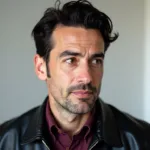
Space Cowboy studies Joe Jennings, a pioneering skydiving cinematographer, stunt coordinator, and aerial filmmaker who built a career around filming bodies and objects in freefall. Directed by Marah Strauch and Bryce Leavitt, the documentary carries the charge of an extreme-sports film, yet its deeper pull comes from Jennings himself, a soft-spoken technician whose wildest images are shaped by discipline, doubt, and private pain.
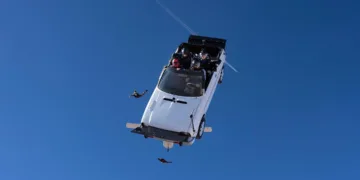
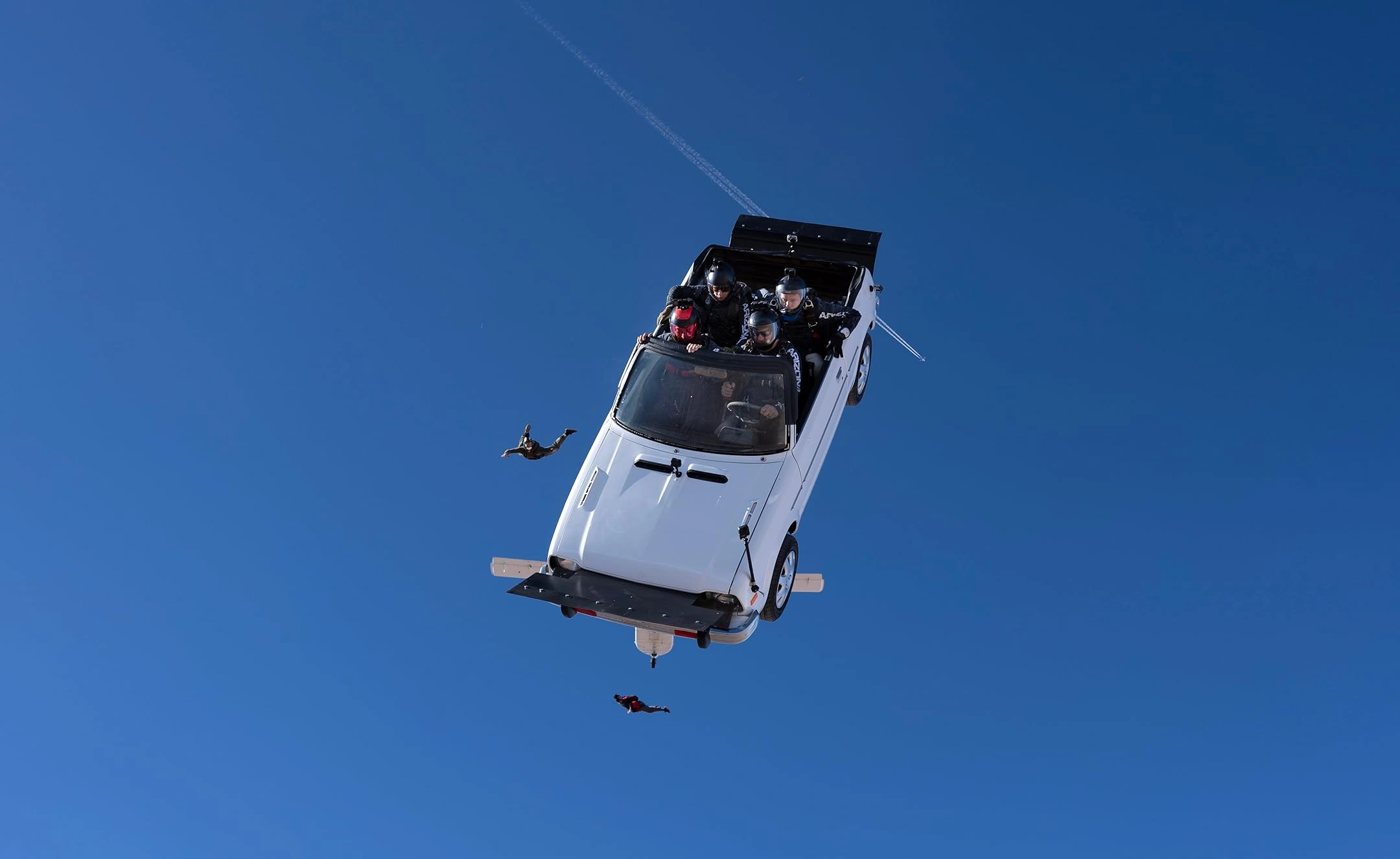
The film follows two threads: Jennings’ personal history and his latest project, an effort to drop a modified car from a plane with passengers inside and capture it safely on camera. The premise sounds absurd, almost like a dare from a late-night stunt show, yet the film treats it as a feat of engineering and visual imagination. There is danger here, of course, but Jennings never plays the reckless cowboy suggested by the title. His calm manner gives the film its tension. He dreams in impossible images, then tries to make them survivable.
Viewed through a global lens, Jennings’ work belongs to a particular American tradition of spectacle: big skies, big risks, and a faith that technology can turn danger into art.
The Outsider Who Learned to Film the Sky
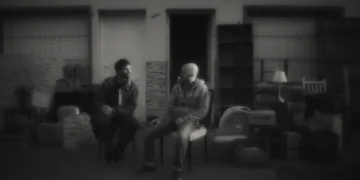
Jennings’ story begins far from the polished imagery of X Games broadcasts and Hollywood stunt units. The film traces his childhood in New Jersey, marked by ADHD, family instability, and the bruising label of “Joe Dirt.” After his parents’ separation, a period at a hippie commune and a rougher outdoor upbringing gave him a physical confidence that school never did. Those early years shaped a man who learned to understand the world through motion before he could comfortably explain himself within it.
His move to California becomes a key turning point. There he meets Sissy, whose presence gives the documentary much of its emotional grounding. A first skydiving experience opens a new path, then camera flying gives Jennings a way to turn obsession into craft. He begins filming other jumpers, then discovers that aerial cinematography can become a language of its own.
His partnership with Rob Harris gives the film one of its most vivid chapters. Harris’ skysurfing had the kinetic flair of street performance, dance, and sport folded into one airborne form. Jennings’ camera translated that movement for the emerging extreme-sports era, through the X Games, commercials, and later stunt work on films such as Charlie’s Angels and xXx.
The film is careful with the darker material. Jennings’ depression, imposter syndrome, and grief after Harris’ fatal accident are presented with restraint. He may look fearless in freefall, yet his candor on the ground reveals someone far more fragile and thoughtful.
Cars, Clouds, and the Mechanics of Wonder
The most immediately entertaining material in Space Cowboy comes from watching Jennings and his team treat freefall like a design problem. His aerial work merges choreography, engineering, camera placement, stunt coordination, and performance. People, furniture, living rooms, and cars tumble through the clouds in images that feel halfway between silent-film slapstick and practical-effects surrealism. It is ridiculous, beautiful, and oddly exact.
The car-drop project gives the film its clearest narrative engine. Jennings needs a junkyard vehicle that can fall without spinning out of control, tipping violently, or creating lethal conditions for the skydivers filming around it. The process involves welding, weight distribution, test drops, risk calculations, and the nerve-racking question of how passengers will exit before the car becomes a falling mass of metal with no forgiveness.
This is where the film’s visual storytelling works best. The archival footage gives Jennings’ career a historical texture, moving from skysurfing and early extreme-sports imagery to commercials, action cinema, and increasingly elaborate midair stunts. The new footage has a calmer rhythm, showing the labor behind images that might otherwise look like reckless improvisation.
The documentary could offer sharper context for the car stunt’s purpose beyond personal ambition and artistic curiosity. Still, that slight vagueness becomes part of its strange charm. Jennings treats the sky like a studio, and the film invites us to accept the madness of that idea.
The View from the Ground
For all its spectacular footage, Space Cowboy gains weight from the people who wait below. Sissy and Jennings’ sons keep the film from turning him into a daredevil myth. They remind us that every jump has an audience no camera can fully capture: the family living with the risks, moods, absences, and aftershocks of such a career.
The deaths of Rob Harris and Patrick de Gayardon give the documentary its sobering counterpoint. Their losses are not used as easy dramatic punctuation. They sit inside the film as reminders that the beauty of freefall is tied to real consequence. In global sports culture, extreme performance is often packaged as triumph, branding, and shareable spectacle. Space Cowboy quietly pushes against that packaging by showing the grief and psychological strain left outside the frame.
Jennings’ description of depression as a “shrinking world” gives the film its strongest metaphor. The sky offers space, motion, and purpose. Depression pulls inward, reducing possibility until even ordinary life feels too small. That tension shapes the portrait: Jennings is cautious yet daring, playful yet haunted, technically precise yet drawn to images that should not exist.
Space Cowboy works as a humane documentary about craft, survival, and the stubborn pursuit of wonder. It understands that the hardest fall may happen far from the clouds.
Space Cowboy is a documentary feature film that made its official world premiere at the Toronto International Film Festival on September 6, 2024, followed by a circuit run at various festivals through early 2025. The film follows the life and high-flying career of Joe Jennings, a visionary skydiving cinematographer known for executing some of the most complex aerial stunts in movie and television history. Audiences looking to experience this gravity-defying story can look for special event screenings or monitor independent streaming platforms for its upcoming digital home video rollout.
Where to Watch Space Cowboy (2024) Online
Full Credits
Title: Space Cowboy
Distributor: Submarine Entertainment, Scissor Kick Films
Release date: September 6, 2024
Running time: 98 minutes
Director: Bryce Leavitt, Marah Strauch
Writers: Bryce Leavitt, Marah Strauch
Producers and Executive Producers: Richard Valenzuela, Bryce Leavitt, Tyler Measom, Marah Strauch, Chance Wright, Lars Sylvest
Cast: Joe Jennings, Sissy Jennings, Rob Harris
Director of Photography (Cinematographer): Tony Johansson
Editors: Eric Bruggemann, J. Davis
Composer: Brooke Blair, Will Blair
The Review
Space Cowboy
Space Cowboy is an exhilarating and humane documentary that turns Joe Jennings’ airborne stunts into a study of craft, grief, risk, and survival. The film is strongest when it pairs jaw-dropping freefall footage with Jennings’ quiet honesty about depression and loss. Its car-drop storyline could use sharper context, yet the spectacle, archival material, and family perspective give it real emotional force.
PROS
- Stunning aerial footage
- Strong portrait of Joe Jennings
- Sensitive treatment of mental health
- Fascinating stunt logistics
- Excellent archival material
CONS
- Car stunt lacks deeper context
- Some career highlights feel too brief
- A few emotional threads could be explored further