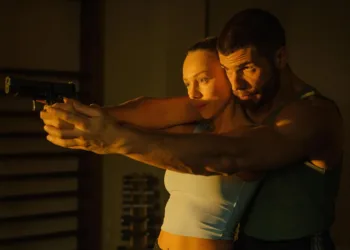









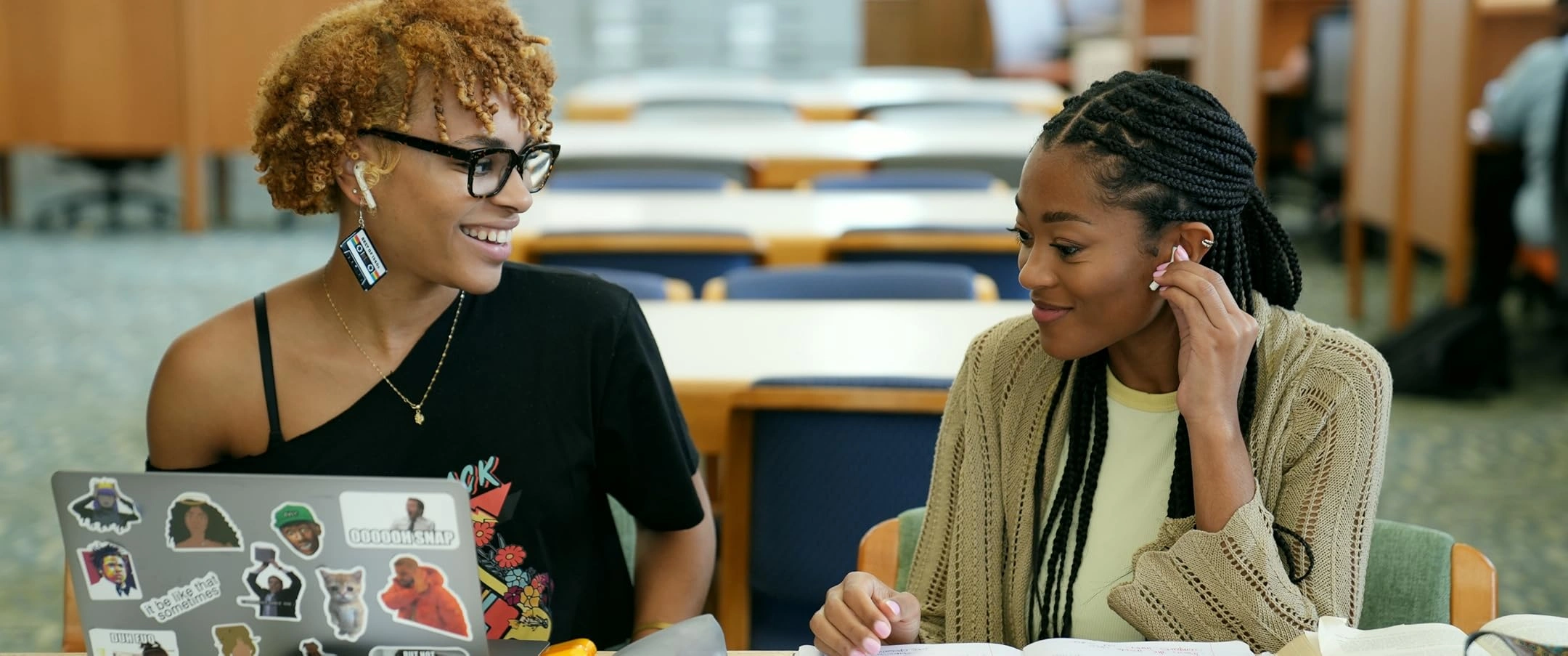
Noseeums is the kind of first feature that carries its ambition in plain sight, even when its ghosts prefer the shadows. Directed by Raven DeShay Carter, the film follows Ember, a college student nearing her 21st birthday, who chooses a Florida girls’ trip with Abigail, Tessa, and Lexi instead of spending the weekend with Jasmine, the one friend who seems to know her without asking for performance. That choice hangs over the film like bad weather.
The destination is Abigail’s family lake house in northern Florida, a place of humid beauty, buried violence, and inherited rot. Once there, Ember begins seeing visions tied to the land’s history, including the presence of Tilly, a figure whose grief seems older than the house itself.
The title’s biting midges become a blunt yet effective metaphor for wounds that appear invisible until the skin starts to swell. Carter’s film fuses ghost story, social horror, and folk-horror allegory, with ancestral pain, stolen land, racial microaggressions, and fractured identity pressing against one another. The premise is sharp enough to sting. The execution, less so.
Stolen Land, Borrowed Selves
Ember’s central conflict is moral before it becomes supernatural. She wants entry into Abigail’s world, with its money, lake house, casual status, and poisonous hospitality. Jasmine offers something warmer and less transactional, which makes Ember’s rejection of her feel like a quiet betrayal before the horror plot fully takes shape. The film understands that assimilation can have the texture of self-preservation, then watches as it curdles into self-abandonment.
The lake house history gives Ember’s visions their real charge. The revelation that the property was once owned by Black landowners after the Civil War, then stolen, turns the house into a crime scene wearing vacation clothes. That is one of the film’s strongest ideas. The past has not vanished. It has settled into the boards, the woods, the air-conditioning vents, and possibly the drinks Ember keeps being asked to fetch.
The “noseeums” work as metaphor with the delicacy of a brick through a window, yet horror has room for bricks. The film links these nearly invisible bites to microaggressions and inherited trauma, small harms that accumulate until the body can no longer pretend nothing is happening.
Abigail’s entitlement is immediate: Ember carries luggage, retrieves drinks, absorbs insults, and receives the smallest space. Lexi reinforces the hierarchy through passivity, while Tessa’s sympathy bends whenever comfort and social safety demand it.
The issue is timing. The script exposes Abigail’s function so early that suspense drains from the room. Noir often thrives on moral fog, those half-lit faces where guilt and innocence trade masks. Here, the masks are labeled. The ghost story involving Tilly and Lee has richer potential because it trusts image, silence, and unease for longer stretches.
By the final act, revenge and restoration arrive with force, yet the emotional accounting feels incomplete, especially in the casual handling of Jasmine’s well-being. The film wants catharsis. It sometimes mistakes punishment for moral clarity.
Ember, Jasmine, and the Cost of Looking Away
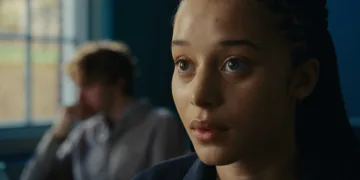
Aleigha Burt gives Noseeums its strongest pulse. As Ember, she carries fear, confusion, vanity, and longing in a performance that often supplies nuance the dialogue leaves stranded on the shore. Her face becomes the film’s most reliable frame, especially in moments where terror arrives as recognition rather than shock. She knows something is wrong before she can name it. That delay matters.

Ember is a difficult protagonist in ways the film uses well, then occasionally forgets to interrogate. Her hunger for acceptance leads her away from Jasmine and toward a group that treats her friendship as conditional. She is wounded, yet she wounds others. Her treatment of Jasmine and Earl exposes a selfish streak that could have made her character fascinatingly unstable, a noir figure caught between victimhood and complicity. The film edges toward that idea, then softens it.
Jasmine, played by Chase Johnson, is the film’s clearest moral presence. She has warmth, loyalty, and the alertness of someone who sees Ember without needing the supernatural assist. The film needs more of her. Her absence creates a vacuum, and her later treatment leaves a bitter aftertaste that the story does not fully confront.
Tyler Bibb’s Earl brings practical knowledge and grounded decency as the handyman who understands the property’s history. He helps connect Ember’s visions to the house’s buried crimes, though the role flirts with rescue-fantasy neatness.
Abigail, by design, is the most openly antagonistic figure, a portrait of privilege sharpened into casual cruelty. Tessa is more interesting for being less obvious, since her early empathy slowly reveals a talent for self-protection. Lexi remains the thinnest sketch, a follower with enough personality to fill a poolside cup and little beyond that.
Sunlit Swamps, Weak Swarms
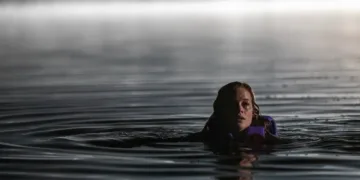
Carter’s direction shows promise in the film’s quieter passages, especially where daylight becomes its own kind of menace. Christopher Lee Fatt’s cinematography gives northern Florida a tactile richness: swamp water, green heat, still rooms, soft light across polished property. The lake house looks peaceful enough to rent and cursed enough to regret renting. A fine balance.
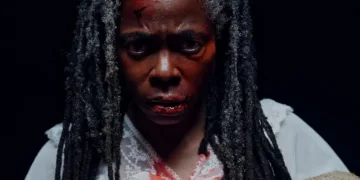
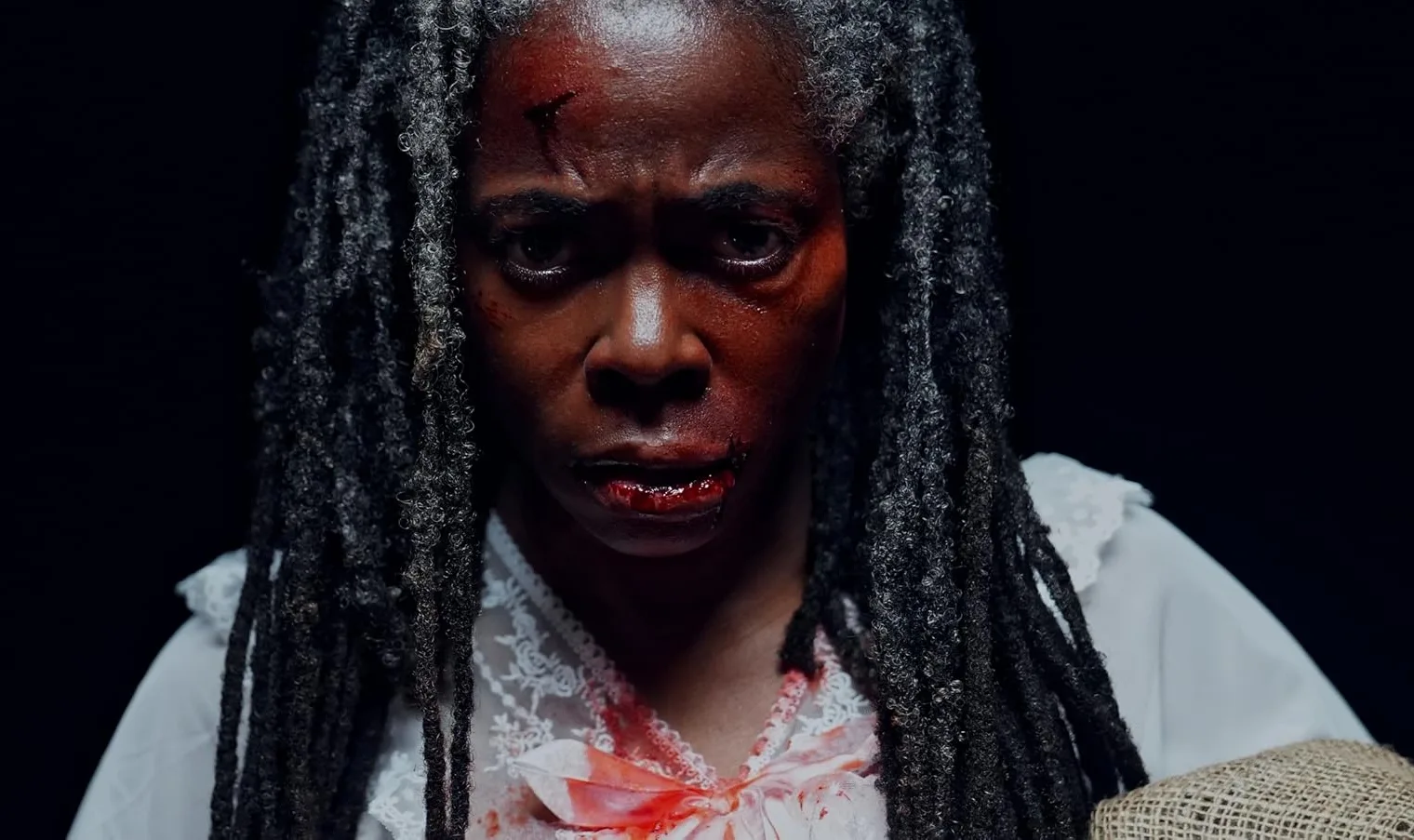
The visual language is strongest when it leans toward suggestion. Ember’s encounters with Tilly carry a spectral charge through posture, spacing, and the simple unease of a figure appearing where no one should be. These scenes understand the old grammar of horror: hold the frame, let the eye search, make the audience doubt its own perception.
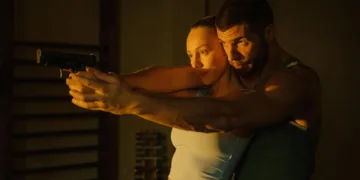
There are traces of chiaroscuro in the interior shadows, and some expressionistic framing in the way Ember is isolated against rooms that seem to have judged her before she enters. The film’s social horror would have benefited from even more of that noir discipline, more ambiguity in the light, more threat in the negative space.
The sound and pacing create a modest but effective psychological pressure, especially as Ember’s visions begin to break into ordinary scenes. Then the larger horror machinery arrives. The CGI insect swarms and climax effects lack texture, weakening the terror they are meant to intensify. A smaller, stranger approach may have served the film better. Sometimes the scariest thing in a room is a look across the sofa. Cheaper, too.
At around 75 minutes before credits, Noseeums moves with admirable speed, yet the brevity costs it emotional depth. The third act arrives before several relationships have gathered enough weight. The horror hits late, the metaphor lands early, and the film lives in the uneven space between them. Still, Carter’s first feature has real visual instinct, a capable lead, and a striking central image. The bite is there, even when the swarm looks shaky.
Noseeums is a Southern Gothic supernatural thriller that officially launched on digital video-on-demand platforms on February 27, 2026, after making an impression on the international film festival circuit. The narrative follows Ember, a college student recovering from a toxic relationship, who reluctantly joins her roommate and a group of wealthy friends for a weekend getaway at a secluded lake house deep in the Florida backwoods. The vacation quickly turns into a terrifying struggle for survival as the group awakens ancient, vengeful spirits connected to a dark history of historical land theft. Audiences can currently stream the horror feature on major digital storefronts, including Amazon Prime Video and Apple TV.
Where to Watch Noseeums (2025) Online






Full Credits
Title: Noseeums
Distributor: Quiver Distribution, Torchlight Studios
Release date: February 27, 2026
Running time: 80 minutes
Director: Raven DeShay Carter
Writers: Raven DeShay Carter, Jason-Michael Anthony, Hendreck Joseph
Producers and Executive Producers: Lisette Estrella Delgado, Kevin Ambler, Reb Braddock, Paul Cohen, Yalan Hu, Vicky Meyer
Cast: Aleigha Burt, Tabitha Getsy, Trisha Arozqueta, Jasmine Nguyen, Jessie Roddy, Connor Flynn, Steven Aaron
Director of Photography (Cinematographer): Cristopher Lee Fatt
Editors: Gege He, Ash Wilson
Composer: Justine De Saint Mars
The Review
Noseeums
Noseeums has a sharp supernatural premise, a strong lead performance from Aleigha Burt, and a thoughtful metaphor about invisible harm, inherited trauma, and stolen land. Raven DeShay Carter shows real visual instinct, especially in the film’s humid Florida atmosphere and dreamlike ghost imagery. The film stumbles through blunt dialogue, thin side characters, rushed emotional turns, and weak CGI, yet its ideas still leave a mark. It is uneven, sincere, and promising.
PROS
- Strong central premise
- Aleigha Burt’s committed lead performance
- Effective Florida atmosphere
- Striking metaphor for microaggressions and inherited pain
- Solid ghost imagery in quieter scenes
- Promising direction from Raven DeShay Carter
CONS
- Dialogue can feel too blunt
- CGI insect effects weaken the scares
- Supporting characters lack depth
- Suspense is reduced by early telegraphing
- Jasmine is underused
- Final act feels rushed