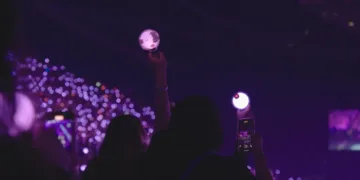































Most music documentaries follow a familiar path, charting the rise, fall, and resurrection of an artist. BTS ARMY: Forever We Are Young chooses a different route entirely. Its focus is not on the seven performers on stage but on the millions in the crowd.
The film’s title is a clear statement of intent: this is an exploration of the global cultural phenomenon known as ARMY, the dedicated admirers of the Korean pop group BTS. It wisely avoids a simple biographical retelling, instead investigating the intricate bonds that form a modern digital community.
We have seen the power of fan devotion in Indian cinema, where stars like Shah Rukh Khan or Rajinikanth command near-mythic loyalty, but this film shifts the camera around to document the worshippers themselves, revealing an organized and potent collective.
The Architecture of Devotion
The documentary meticulously maps out how this global community was built, portraying it as a highly effective and structured entity. The foundation is BTS’s compelling narrative as industry underdogs.
Originating from a smaller company outside of South Korea’s “big three” entertainment agencies, their journey mirrors the “angry young man” archetype of 1970s Bollywood, where an outsider figure captures the public imagination.
This relatability was amplified by their strategy of direct engagement. Instead of the polished, distant aura cultivated by many stars, BTS offered a stream of intimate online content, from cooking shows to rehearsal footage. This constant feed built a strong parasocial bond, one that feels more akin to friendship than distant admiration.
The film then details the stunning organizational capacity of ARMY. The campaign to secure BTS a Billboard award is presented not as a simple voting spree, but as a meticulously coordinated 24-hour global operation, with schedules passed between time zones to maintain momentum. This is grassroots mobilization for the digital age.
A particularly insightful sequence focuses on volunteer fan translators, who diligently work to break down language barriers. Their effort ensures the band’s message is received without dilution, building a unified global listenership in a way that recalls the efforts to subtitle Indian regional cinema for an international audience. This dedication transforms passive fans into active participants in the group’s success.
Mirrors to the Self
Where the documentary finds its emotional core is in the mosaic of individual stories that illustrate the fandom’s vast diversity. The film argues that these connections run deeper than musical taste; fans are finding reflections of themselves.

One of the most moving profiles is of a Hurricane Katrina survivor who explains how BTS, particularly through their song “Epiphany,” helped him embrace a more vulnerable and emotionally open form of masculinity, a powerful counterpoint to the rigid “macho” traditions so often depicted in mainstream media.
Similarly, the film introduces queer fans from Mexico who feel their own gender identities are validated by the band’s androgynous style and fluid self-presentation. This act of seeing oneself in an idol is a profound one.
The filmmakers use simple but effective visual cues, such as graphics that pop up when a fan declares their “bias” (favorite member), to create a warm, inclusive atmosphere. The film powerfully illustrates the concept of projection, where the artists become canvases upon which people map their aspirations and struggles.
This is akin to the way audiences find social commentary in the characters of parallel cinema. The fans here are not passive consumers; they are active co-creators of meaning, using the band’s journey as a source of personal strength and a model for self-acceptance. For an immigrant to the US, the band’s rise from obscurity becomes a potent symbol of hope for her own life.
The Chorus for Change
The film’s final act documents the fandom’s evolution from a cultural force into a vehicle for social action. This pivot is where Forever We Are Young presents its most compelling argument. The documentary highlights specific examples of this collective power, such as the #MatchAMillion campaign.
After BTS donated $1 million to Black Lives Matter, ARMY organized and matched the donation in just over a day, demonstrating a community guided by shared values. The film also recounts their organized effort to disrupt a political rally in the US by booking thousands of seats, a moment of playful yet potent subversion.
As a film made by members of ARMY, it is an unabashed love letter. This insider perspective explains its choice to only briefly touch on the immense pressure this adoration places on the band, a point poignantly referenced in a clip from an awards show where they confessed they had considered disbanding.
This is not an oversight but a conscious focus on the community’s positive impact. It acknowledges the cost of fame without letting it overshadow the celebratory narrative. The film makes a powerful case for viewing fandom not as a trivial pursuit, but as a significant cultural force capable of creating connection and enacting change in the real world.
BTS ARMY: Forever We Are Young premiered at the South by Southwest (SXSW) festival in 2025.
Full Credits
Director: Grace Lee, Patty Ahn
Producers and Executive Producers: Eurie Chung, Grace Lee, Nora Chute, Patty Ahn, Morgan Neville, Caitrin Rogers, James Shin
Cast: BTS, Minseong Kim, Steve Aoki
Director of Photography (Cinematographer): Jerry Henry
Editors: Oscar Vazquez, Aldo Velasco, Brett Jacobsen, Christina Kim
Composer: Andrew Orkin
The Review
BTS ARMY: Forever We Are Young
A compelling and often moving documentary, Forever We Are Young succeeds by turning its lens away from the stage and onto the audience. It presents a powerful case for fandom as a source of community, identity, and even social change. While its celebratory tone, born from the filmmakers' own fan perspective, largely bypasses the complexities and pressures of such intense adoration, the film is an essential portrait of a modern global movement. It validates the passion of millions and offers a fascinating look at the architecture of 21st-century connection.
PROS
- Centers on the fan community rather than the band, offering a fresh perspective on a cultural phenomenon.
- Features diverse and moving personal stories from fans around the world, highlighting themes of identity and belonging.
- Effectively documents the fandom's evolution into an organized force for social and political action.
- Presents its subject with warmth and empathy, making the world of fandom understandable to outsiders.
CONS
- As a film made by fans, it avoids a deeper examination of the negative aspects of fandom or the immense pressure placed on the artists.
- The celebratory focus means it only briefly touches upon more complex issues, leaving some questions unanswered.