











In an age of streaming content where global platforms mine history for new narratives, a series like Aema feels both inevitable and surprising. It arrives from South Korea with a premise that revisits the nation’s politically charged 1980s, a period of authoritarian rule and strict social control.
The series builds its story around the creation of Madame Aema, a real-life erotic film that became a box office sensation in 1982. The show imagines this moment through the eyes of two women on opposite ends of the industry ladder. Jeong Hee-ran is a top star famous for her daring roles, but she has decided she will no longer perform nude scenes.
Her defiance sets her against Shin Joo-ae, a hungry and talented newcomer who views the controversial lead part as her one shot at fame. Their story is a sharp examination of ambition, survival, and female solidarity against a backdrop of censorship and exploitation.
A Calculated Rebellion
The plot ignites with an act of professional rebellion, a move that is simultaneously a personal stand and a high-stakes career gamble. When veteran actress Jeong Hee-ran rejects the script’s required nudity, her decision is not a quiet refusal but a public declaration thrown like a gauntlet at the feet of the industry.
This is more than a simple dispute over a scene; it is a battle for control over her own body and image after a nine-year career built on being the woman willing to do anything for a role. This places her in direct opposition to Gu Jung-ho, the manipulative studio head who is also her ex-fiancé, a man who holds her career in his hands through a restrictive and legally binding contract. His reaction is swift and punitive. In a move meant to humiliate her and reassert his dominance, he demotes Hee-ran to the secondary, bitchy supporting role and launches a highly publicized open audition to find a new Aema.
This search brings him to Shin Joo-ae, a spirited unknown whose raw ambition is matched only by her initial naivete. Discovered smoking on the studio lot after missing the formal audition, she captures the rookie director’s attention with an impromptu tap dance, a flash of defiant energy he believes the role needs. An immediate and tense rivalry forms between the two women.
Joo-ae, who once idolized the star, now views Hee-ran with a mix of awe and bitter resentment, seeing her as a bitter gatekeeper. Hee-ran, in turn, initially sees the newcomer as a foolish pawn in the producer’s game, another young woman about to be chewed up by the studio machine. Their relationship deepens and complicates as Joo-ae confronts the predatory realities of filmmaking.
Crude remarks from the crew, unwanted advances, and the soul-crushing realization that talent means little without power chip away at her idealism. Animosity gives way to a guarded understanding. Hee-ran’s attempts to sabotage the film evolve into a prickly mentorship, as she imparts the hard-won lesson that in this world, “bitches survive.” They forge a fragile partnership to subvert the producer’s control, learning to manipulate the system from within to reshape the film into something they can claim as their own.
The Faces of a Flawed Industry
The series is anchored by four distinct performances that personify the complex power dynamics of its world. Lee Hanee portrays Jeong Hee-ran not as a simple diva, but as a brilliant and exhausted tactician. Her cold, elegant exterior is a shield perfected over years of navigating a hostile environment where any sign of weakness is an invitation for attack.

Lee’s performance skillfully reveals the sharp intellect and deep-seated weariness beneath the polished facade; her smiles rarely reach her eyes, and her moments of genuine vulnerability are fleeting and private. She presents a woman fighting a battle on two fronts: one for her career and another for her very soul, pushing back against a system that seeks to define her solely by her body. Her struggle becomes a microcosm of the larger fight for female autonomy.
Opposite her, Bang Hyo-rin makes a powerful debut as Shin Joo-ae. Her character is fiercely determined and talented, yet her romantic notions of stardom are systematically dismantled. Bang’s portrayal captures this painful education with a natural, unvarnished strength that is striking for a newcomer.
She embodies Joo-ae’s resilience without hiding her fear and confusion, making her journey from wide-eyed hopeful to disillusioned professional feel authentic. The performance is a significant event in itself, with a newcomer holding her own against a veteran, an dynamic that perfectly mirrors the show’s central narrative.
As the producer Gu Jung-ho, Jin Seon-kyu is a masterful antagonist. He begins as a comical sleaze, a one-dimensional figure whose creative input is limited to demanding more sex and nudity for commercial appeal. He is a walking caricature of patriarchal power. As the series progresses, his performance unmasks a far more sinister and calculating operator, a man who wields emotional and financial power with chilling precision.
He is the true puppet master of this world. Providing a strange, ineffective moral center is Cho Hyun-chul’s Kwak In-woo, the rookie director whose perpetually awkward and sweaty presence makes his discomfort palpable. His physical awkwardness is a metaphor for his moral and creative impotence, a portrait of the well-meaning man who enables a toxic system through his own weakness and inaction.
A Comedy of Discomfort
Aema operates as a dramedy, consistently using humor as a vehicle to approach its weighty and often grim subject matter. The comedy is rarely gentle; it is a sharp-edged satire aimed squarely at the vanities and absurdities of the film industry. Much of the humor is physical and rooted in discomfort, particularly in the scenes depicting the clumsy, awkward mechanics of filming erotic sequences.

The sight of actors simulating passion surrounded by a full crew, the over-the-top sound effects, and the ridiculous dialogue required by the script serve to demystify and critique the way female pleasure is often artificially manufactured for a presumed male gaze. This comedic approach creates an accessible entry point into the show’s darker corners.
A significant tonal shift occurs midway through the series, a deliberate narrative strategy that feels like a trap being sprung. The lighthearted satire and cringe comedy recede, replaced by a darker, more threatening atmosphere that confronts the ugly truths of misogyny, abuse, and exploitation head-on. This change is jarring, reflecting the disorienting experience of its characters.
The show lulls the audience into a sense of satirical distance before plunging them into the raw, uncomfortable reality of the women’s struggles, making the stakes feel suddenly and alarmingly real. This shift allows the series to comment on the machinery of filmmaking itself.
The government censors are a background threat, a specter of state control, but the series argues that the internal censorship—the producer’s edits for commercial appeal, the director’s compromises, the self-censorship of the actors—is just as damaging to art and the people who make it. The series adds another layer of commentary through the film-within-a-show, where a subtle queer tension between the female characters subverts the script’s heteronormative intentions, a small rebellion against the producer’s vision.
History’s Unsettling Echo
The show’s production design expertly summons the 1980s, using retro color palettes, boxy fashion silhouettes, and a disco-infused soundtrack to build a visually specific and immersive world. This stylistic flair is used to create a sharp, meaningful contrast between the vibrant, manufactured glamour of the film set and the grim, oppressive mood of life under an authoritarian government.
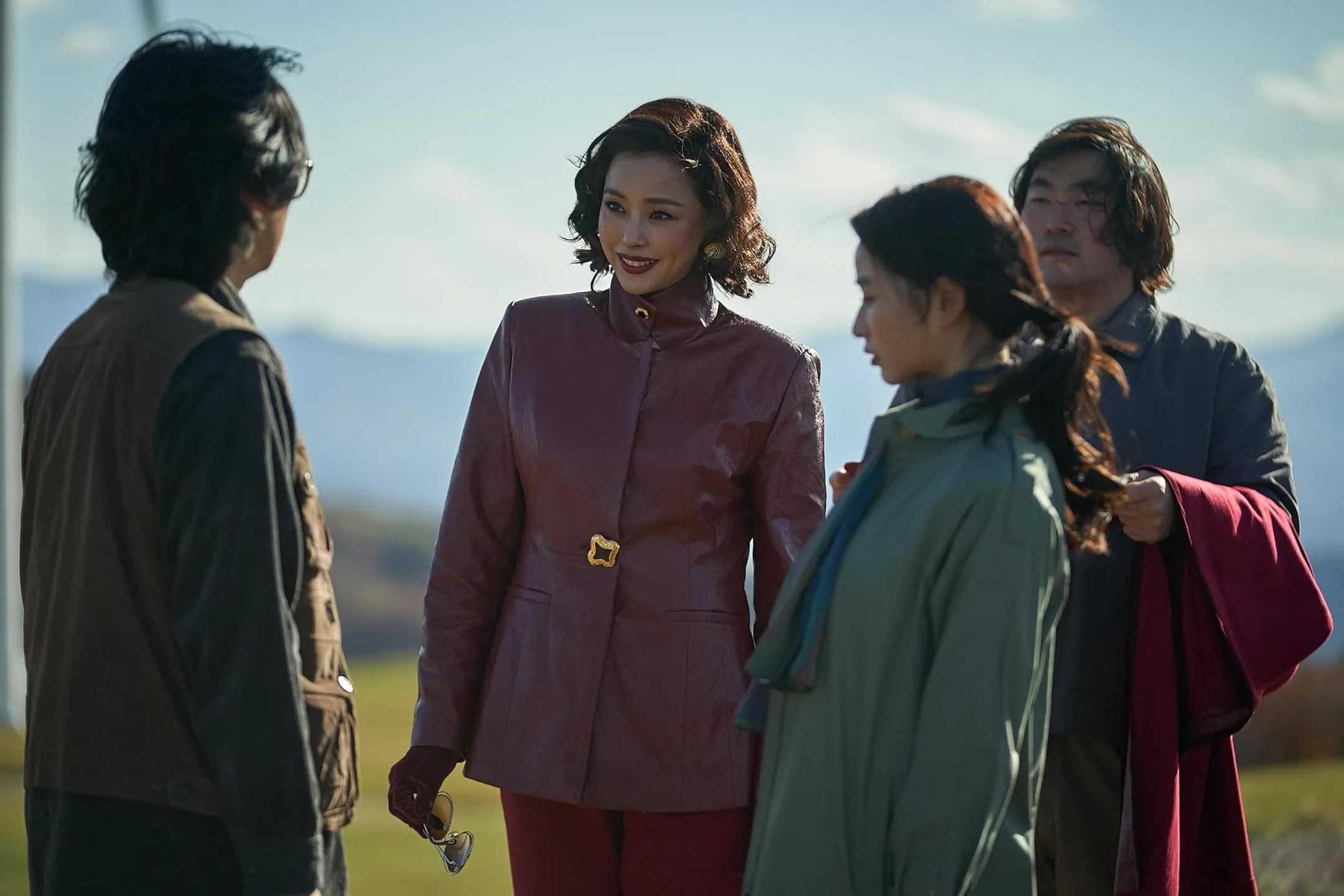
The visuals constantly reinforce the story’s central tensions, contrasting the neon-lit parties of the entertainment elite with the drab, cramped apartments of ordinary people. This visual language is not merely decorative; it is a key part of the show’s critique of class, power, and the escapism that the film industry offers.
Aema’s cheeky and satirical approach to this historical period sets it apart from more traditional, gritty portrayals of the era in Korean media. It uses comedy and style to make its political points without sacrificing entertainment value. This makes its modern relevance all the more potent. The series is a period piece that speaks directly to the present moment.
Its exploration of power imbalances, sexual harassment, and the fight for creative control resonates strongly with the #MeToo movement and ongoing conversations about workplace dynamics in Hollywood and other global industries.
The story of two women fighting for agency inside a predatory system feels deeply connected to contemporary struggles. Aema uses its historical setting to hold up a mirror to the present, suggesting that the structures of exploitation it depicts have proven remarkably durable, changing their superficial appearance but not their fundamental nature. The series looks to the past and finds an unsettling, and deeply recognizable, reflection of the present.
Aema is a 2025 South Korean historical comedy drama TV mini-series written and directed by Lee Hae-young. The six-episode series premiered exclusively on Netflix on August 22, 2025. It is available to stream on the Netflix platform.
Full Credits
Director: Lee Hae-young
Writers: Lee Hae-young
Cast: Lee Hanee, Bang Hyo-rin, Jin Sun-kyu, Cho Hyun-chul, Hyun Bong-sik, Woo Ji-hyeon, Lee Joo-young, Bae Hae-sun
Director of Photography: Ra-Byeong-Su
The Review
Aema
Aema is a brilliantly crafted series that uses its 1980s setting to dissect power dynamics that remain startlingly current. Anchored by phenomenal performances from Lee Hanee and Bang Hyo-rin, the show is a sharp, stylish, and unflinching look at female ambition and solidarity within a predatory system. Its deft blend of biting satire and serious drama makes for a vital and thought-provoking watch, confirming its place as one of the year's most intelligent and necessary shows.
PROS
- Exceptional and layered performances from the entire cast.
- A sharp, intelligent script that balances satirical humor with serious drama.
- Relevant social commentary on misogyny, exploitation, and power.
- Strong production design that effectively captures the 1980s aesthetic.
- A compelling story of female rivalry evolving into solidarity.
CONS
- The abrupt tonal shift from light comedy to dark drama may be jarring for some viewers.
- The raw depiction of industry exploitation can be uncomfortable and intense.
- Some plot points feel condensed within the short six-episode format.