






















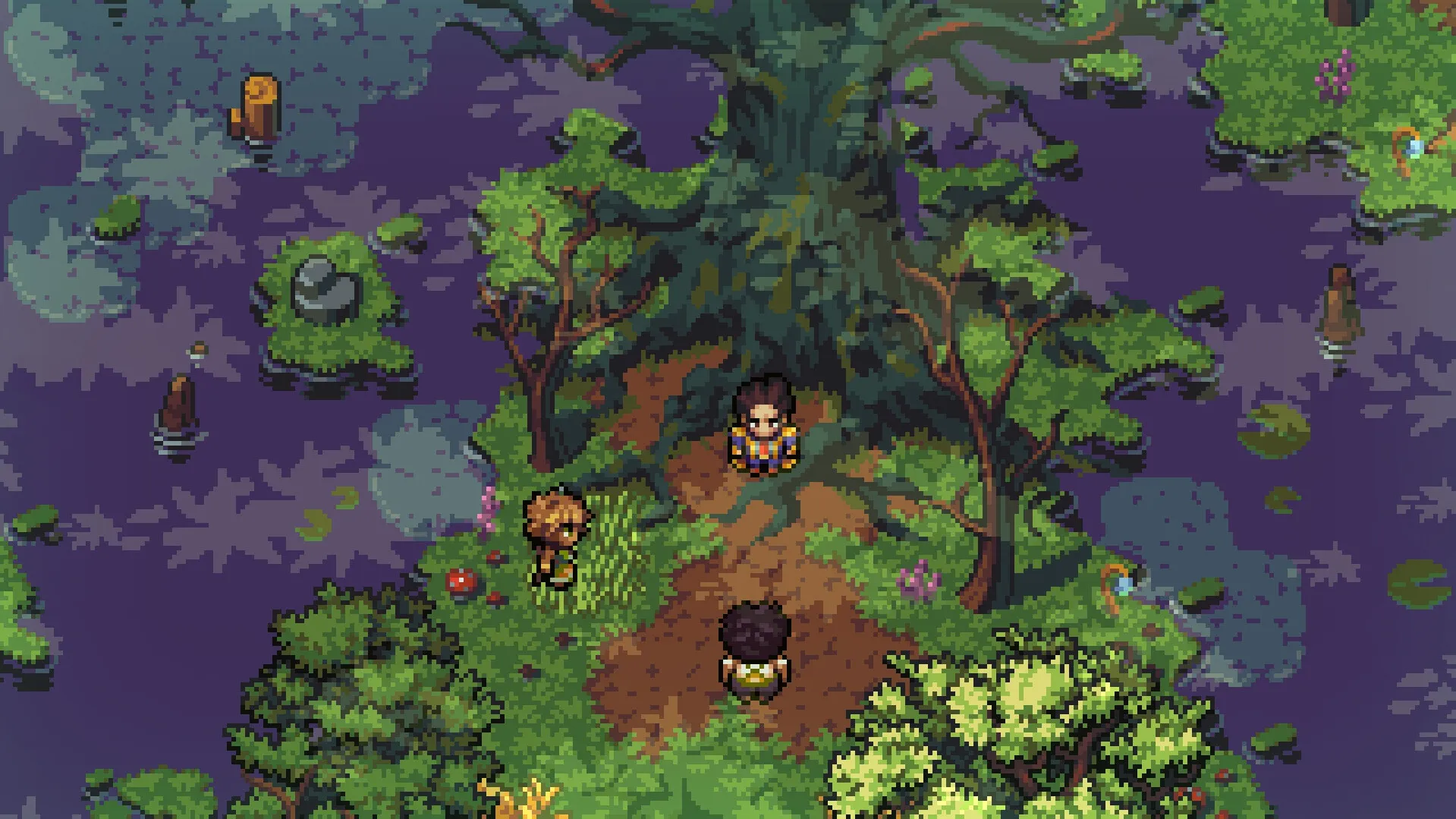

Some of the most memorable stories are the ones that take their time. Quartet is a turn-based role-playing game that understands this completely. It presents itself as a love letter to the 16-bit classics, complete with pixel art and a grand story of magic returning to the world. Its structure is what immediately sets it apart.
The game begins by asking you to walk in the shoes of four different people, scattered across its world, before their paths ever cross. This choice creates a patient, thoughtful adventure that builds its world piece by piece. The experience is a refreshing return to focused, character-driven storytelling, proving that old formulas can still feel new when handled with care.
A Tale of Four Beginnings
Quartet does not open with a cataclysm. It opens with a choice. The game presents you with four protagonists and asks you to live a piece of their lives before their grand adventure begins. This narrative structure is the game’s most defining feature, a bold decision that prioritizes character and world-building over immediate action. You might start as Ben Balani, a restaurant cook whose daily struggles revolve around rent and difficult customers.
His introduction to magic is not one of glorious destiny, but of a desperate opportunity found amid shady dealings. Or you could begin with Alexandra Hin, a teenager running a shop while caring for her comatose mother. Her story is one of quiet desperation, where the return of magic appears as a dangerous shortcut to solve impossible problems.
Then there are the other two, whose lives are already enmeshed in the world’s larger institutions. You can play as Nikolai Proch, a sergeant in what appears to be a totalitarian army. His chapters explore themes of duty, complicity, and the human cost of war from the perspective of a soldier who is beginning to question his orders. Finally, there is Cordelia Helmont, a brilliant law graduate and mage whose ambitions are thwarted by scandal, forcing her onto a frontier assignment.
Also Read






Her story examines the politics of magic and how society seeks to control power. Spending two to three hours with each character, learning their personal histories and immediate goals, creates a powerful sense of empathy. The game deliberately slows its own momentum.
After finishing one character’s chapter, you are returned to the selection screen to start anew with another level one hero. This feels unusual, but the effect is cumulative. You are not just learning about a single hero; you are building a panoramic view of the world and its problems from four distinct social and economic standpoints before the main plot even truly begins.
Classic Combat with a Modern Twist
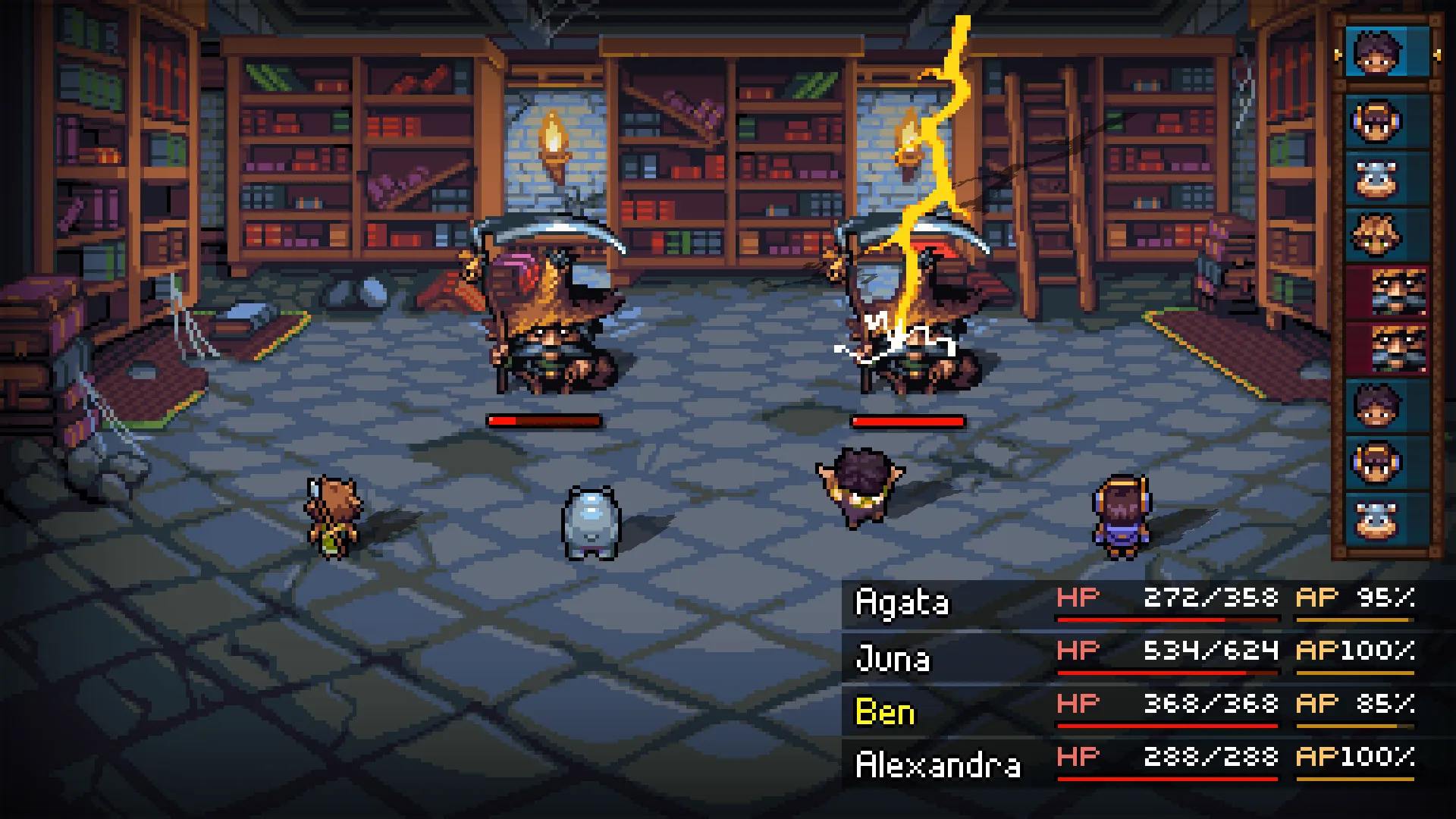
The combat system in Quartet feels like a direct extension of its narrative. The core is a traditional turn-based affair that will be instantly familiar to anyone with a history in the genre. You have attacks, special abilities that use Action Points, and elemental weaknesses to exploit. The true brilliance of the system lies in how it handles its full eight-person party.
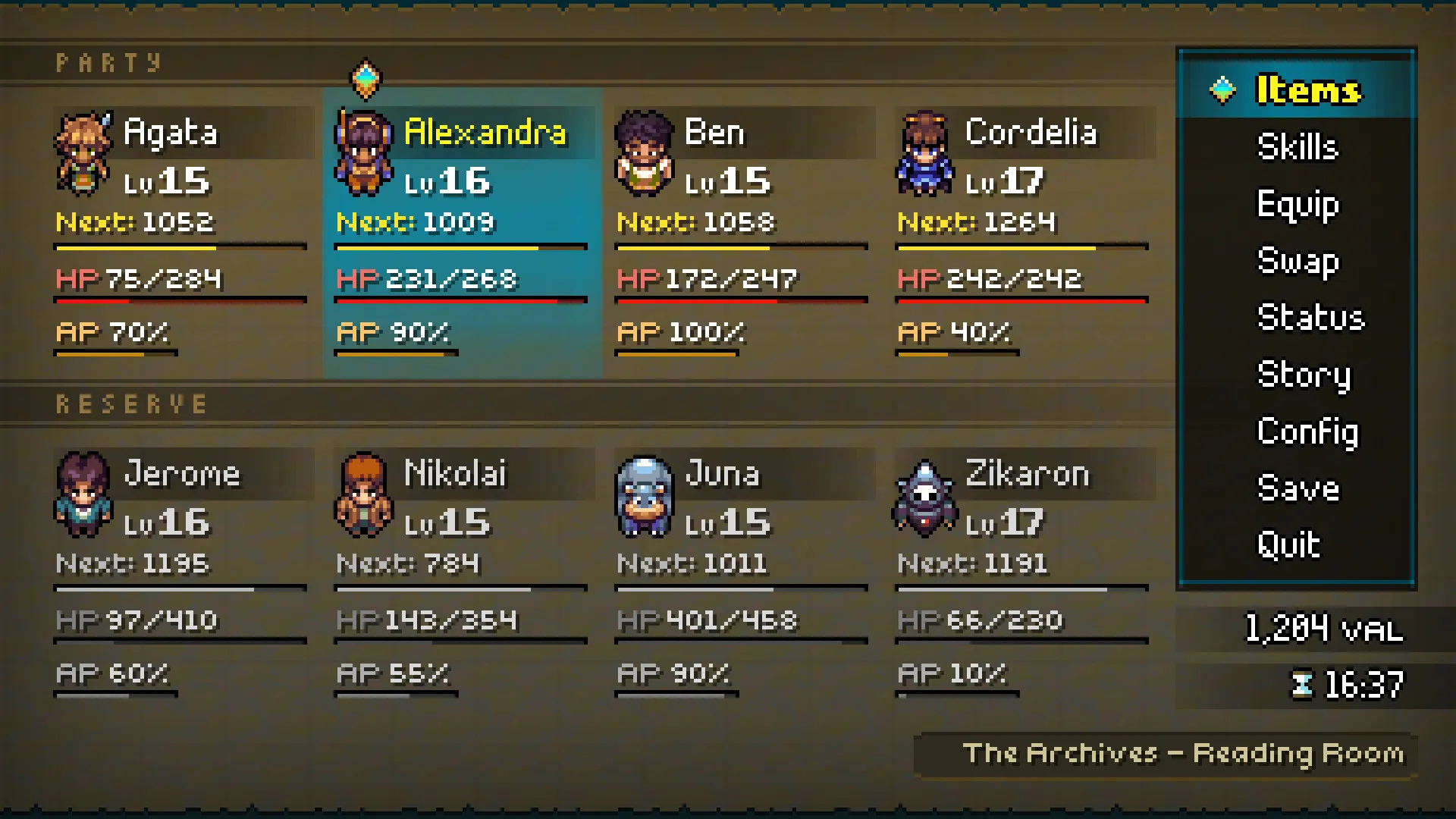
With four members active and four in reserve, the game introduces a seamless swapping mechanic. During any character’s turn, you can switch them with a reserve member without any penalty. The newly swapped-in character can act immediately. This transforms every turn into a complex tactical puzzle with an incredible number of solutions.
This system encourages you to think of your party not as four individuals, but as a single, adaptable eight-person unit. A character low on health or afflicted with a status effect can be instantly moved to the safety of the back line. A specialist with a key fire spell can be brought in for one turn to exploit a boss’s weakness and then swapped out again.
Reserve members also regenerate their Action Points more quickly, creating a satisfying rhythm of rotation that keeps your entire roster relevant. The design asks you to know every character’s strengths. The result is that no one feels like dead weight. The game’s approach to boss battles amplifies this tension. Bosses lack a visible health bar.
Instead, you must rely on visual cues, as their sprite becomes more damaged and weary the closer they are to defeat. This design choice strips away the mathematical certainty of a typical RPG boss fight, turning it into something more visceral. You are fighting an opponent, not just chipping away at a health meter. It forces you to read the battle’s flow and trust your instincts, a small but deeply effective way to heighten the emotional stakes of a major confrontation.
Exploring a World Reborn with Magic
The world of Quartet is not an open sandbox, and its design is stronger for it. The game guides you along a mostly linear path, a choice that allows for tight control over narrative pacing and focus. Dungeons are self-contained and sensibly designed; they are long enough to feel substantial but rarely overstay their welcome. A key feature that respects the player’s time is the use of visible, non-respawning encounters.
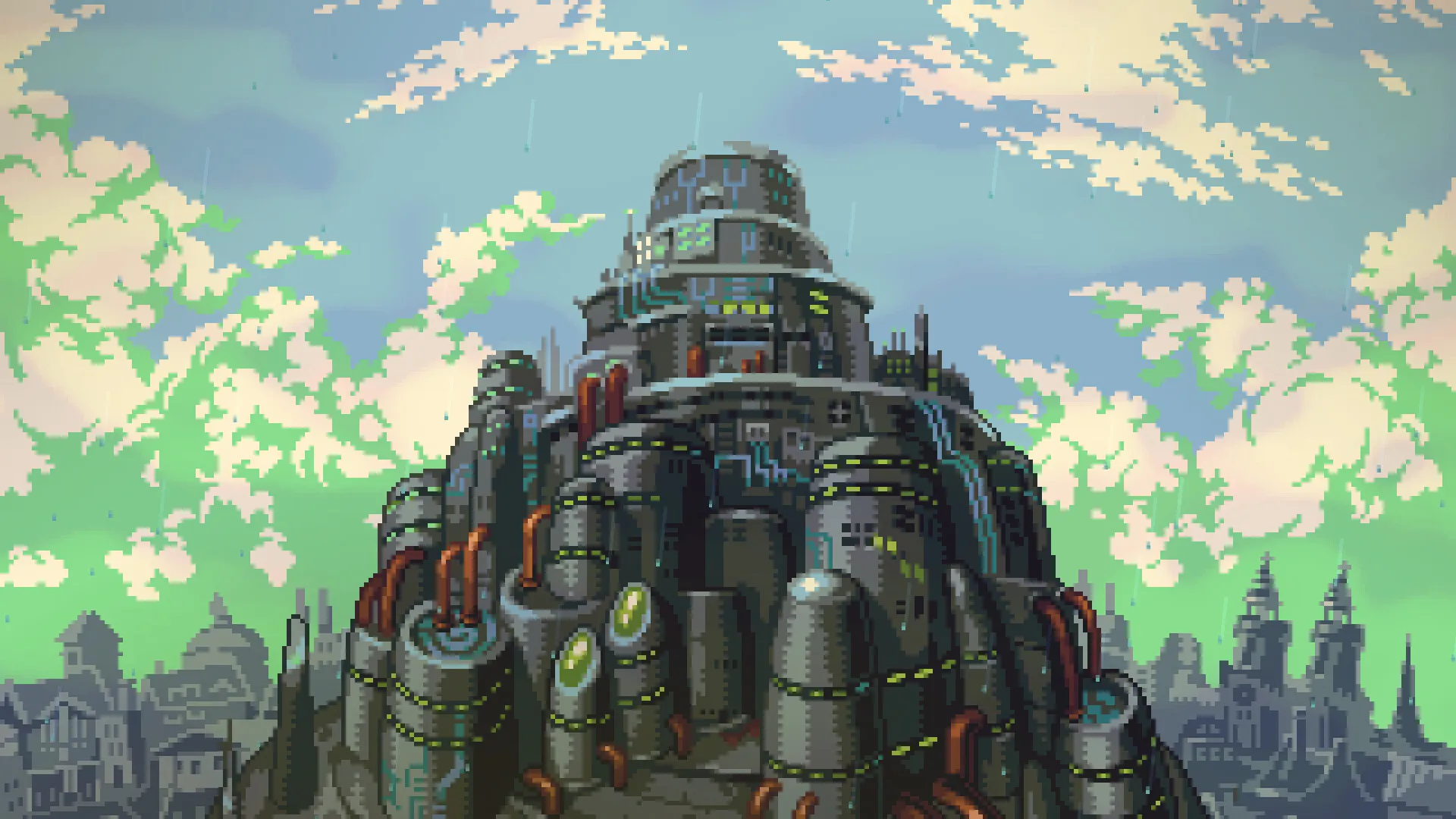
Every fight is a deliberate placement, a handcrafted challenge that serves a purpose. This eliminates the need for grinding entirely. You are always at the appropriate strength for the challenges ahead, provided you engage with the enemies in your path. This design has a direct impact on the game’s economy. With a finite number of battles, money becomes a precious resource.
You have to think carefully about every purchase, weighing whether a new sword is more important than stocking up on healing supplies. This economic pressure cleverly mirrors the personal struggles of characters like Ben and Alexandra, connecting the player’s strategic decisions to the game’s narrative themes.
To break up the rhythm of exploration and combat, dungeons sometimes feature light puzzles or unique mini-game sequences, such as a tense gauntlet where you must dash between cover points to avoid gunfire. These moments add welcome variety. The world also feels more lived-in thanks to the inclusion of a full-fledged card game called Oracle, which plays similarly to Final Fantasy VIII’s Triple Triad. Seeking out opponents provides a compelling distraction.
Most of the game’s optional content is loaded into its final act. These are not simple fetch quests. They are substantial side stories that provide closure for each of the eight main characters, resolving personal conflicts and relationships that were established in their introductory chapters. These quests feel essential, providing satisfying narrative payoffs that enrich the main story.
A 16-Bit Symphony
The aesthetic of Quartet is a masterful use of the 16-bit style. It uses the visual language of classic RPGs to create a world that feels both nostalgic and distinct. The choice to render the player characters as smaller, “chibi” style sprites while giving enemies large, detailed, and often intimidating forms is a powerful one. It visually frames every battle as a struggle against overwhelming odds, reinforcing an underdog theme.
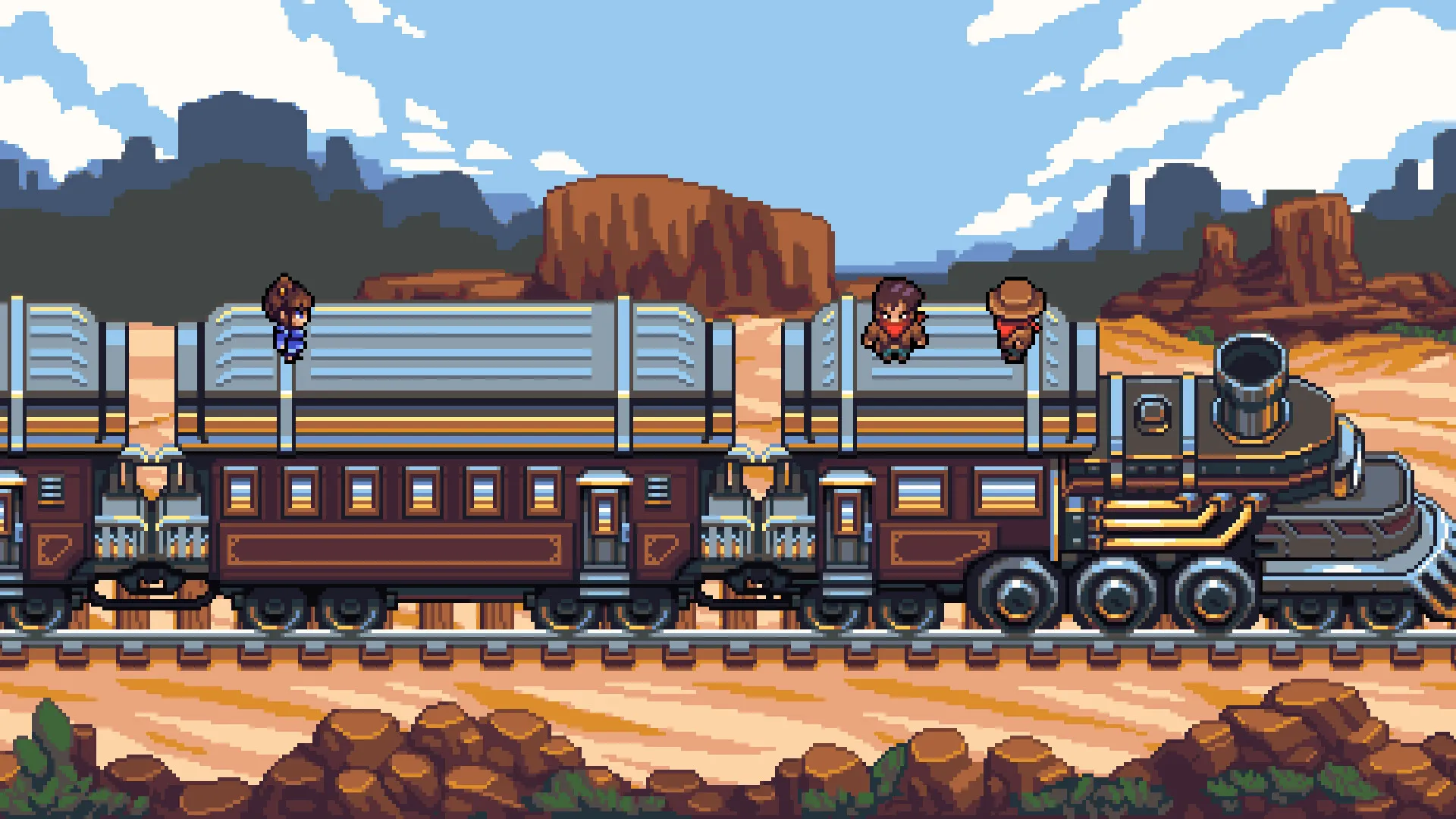
The artists show great care in the small details, from the expressive animations on character faces to the vivid, and sometimes animated, battle backgrounds. One fight atop a moving train is a particular standout, with the scenery rushing by as you battle. The game’s diverse locations are brought to life by this art, though some of the town layouts can feel a bit generic and visually similar at times.
The game’s soundtrack is perhaps its greatest artistic achievement. The score is wonderfully eclectic, giving each region of the world a unique auditory signature. The lively New Orleans-style jazz that greets you in one city is a world away from the somber, brassy Eastern European themes of another.
This music does a significant amount of world-building, conveying the culture and mood of a location before you speak to a single person. The presentation is unfortunately hampered by one major design oversight: there is no auto-save feature.
In a game with lengthy dungeons and challenging boss fights, the potential to lose a significant amount of progress because you forgot to save manually is a constant source of low-level stress. It is a design relic from a bygone era that feels strangely out of place in an otherwise modern and player-respecting game. It is a frustrating flaw in an experience that is otherwise so carefully and thoughtfully constructed.