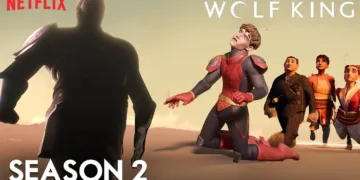











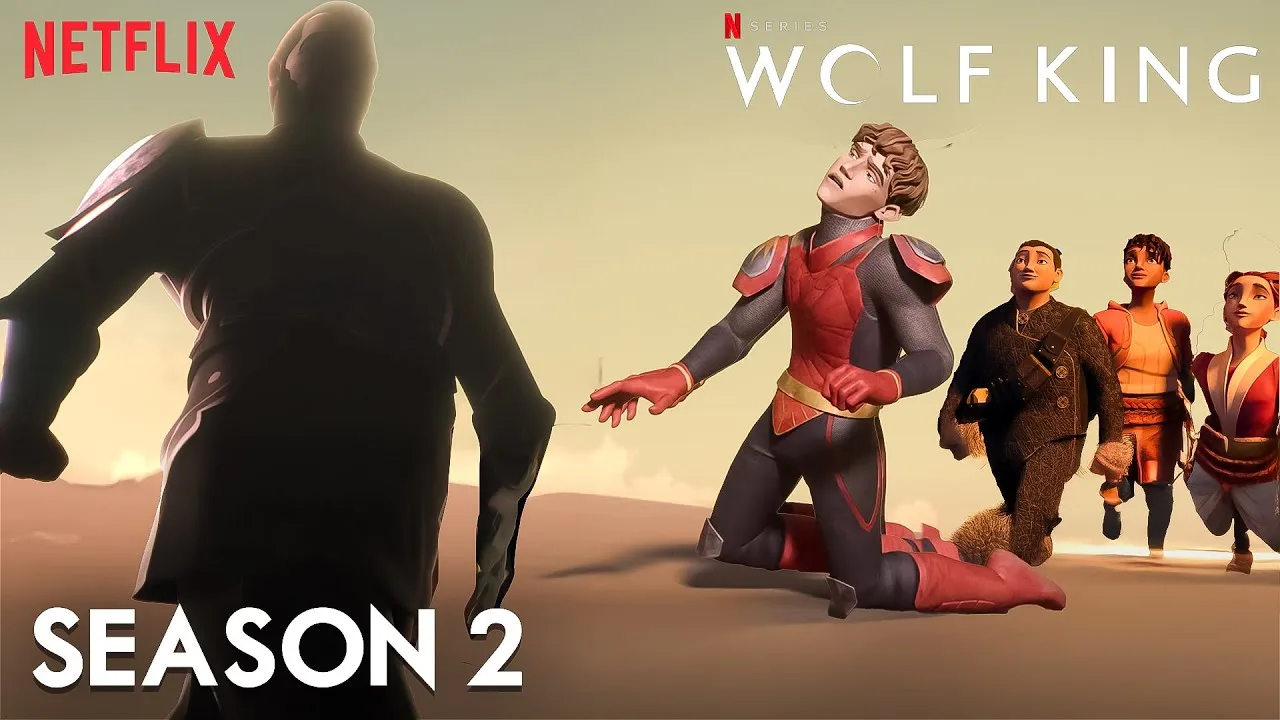

The second season of Wolf King finds Drew Ferran, the titular monarch, discovering a truth known to rulers throughout history: running a kingdom is mostly paperwork. Having secured the throne of Lyssia, Drew is an uneasy king, one who prefers chasing down petty thieves to attending council meetings.
He has the crown, but none of the patience for the administrative drudgery that comes with it. His ennui is palpable. Thankfully for him, and for the plot, his half-brother Prince Lucas provides the perfect out by kidnapping his friend Gretchen. This act of aggression launches Drew on a personal rescue mission, conveniently allowing him to ignore the protests of his advisors, like the ever-cautious Duke Bergan.
The season quickly establishes its central tension: a young leader must learn that being a king requires more than just a strong sword arm and the ability to transform into a wolf. It might even involve reading a treaty.
The Wolf, The Boy, and The Bureaucracy
Drew Ferran’s primary conflict is less with the armies of his enemies and more with himself. The show effectively externalizes his anxieties through sharp, menacing dream sequences. These are not simple nightmares; they are stylized visions where a shadowy wolf figure, a manifestation of his own power, taunts him with images of failure and ruin.
This constant psychological pressure informs his waking decisions, often pushing him toward reckless action as a way to avoid the quiet contemplation his royal duties demand. He is a boy king terrified that if he stops fighting, he will be exposed as an imposter.
This internal war is mirrored in his relationships, which are the season’s strongest asset. His quest to save Gretchen elevates Whitley from a simple ally to an indispensable partner in the field. She becomes the pragmatic anchor to his impulsiveness, the one who considers the path ahead while he is focused on the enemy in front of him.
Drew’s bond with Gretchen is complicated by a horribly fumbled marriage proposal, a moment of pure teenage awkwardness that gives his heroic rescue a deeply personal charge. Elsewhere, Hector, the newly appointed Lord Chancellor, is squeezed between his allegiance to Drew and his responsibility to the kingdom.
His subplot involving necromancy and ghostly visions opens a fascinating door into the darker, costlier side of magic. It hints at a potent moral quandary, yet the story never fully explores the consequences of his dabbling, leaving his arc feeling like a promising but unfinished thought.
A Feast for the Eyes, A Rumble in the Throat
Whatever its narrative stumbles, the production itself is a showcase of high-grade craftsmanship. The animation is a clear standout, with a fluid, crisp style that makes every action sequence pop with energy. This season escalates the conflict with ambitious, large-scale battles, chaotic sieges, and intricate magical duels, all choreographed with a clean precision that keeps the spectacle from becoming messy.
The direction cleverly contrasts the kinetic, sweeping shots of were-creatures clashing in the wild with the static, almost claustrophobic framing of the council chambers. This visual language constantly reinforces Drew’s desire to escape the confines of his station.
The visuals are supported by a superb voice cast. Ceallach Spellman gives Drew a perfect blend of youthful arrogance and gnawing insecurity, the cracks in his bravado showing in moments of quiet exhaustion. On the opposing side, Ralph Ineson’s performance as King Leopold is a masterclass in villainy. His voice is a low rumble of menace that gives the character a gravity and sense of genuine authority that the script sometimes lacks.
The series also continues to have fun with its world, expanding the lore with a creative menagerie of were-creatures. The existence of different factions like the Bearlords and Staglords hints at a complex feudal society full of ancient pacts and rivalries. It is a rich political landscape the show unfortunately lacks the time to fully investigate, but its presence gives the world a distinct and imaginative quality.
The Cancellation Cliff
The season barrels along at a breakneck speed, cramming multiple books’ worth of plot into a handful of episodes. This rushed pace is also erratic, creating a jarring sense of narrative whiplash. A minor subplot might occupy half an episode, while a significant betrayal is introduced and dispensed with in minutes. This inconsistency damages the story’s stakes, as major events are not given the space to land with appropriate weight.
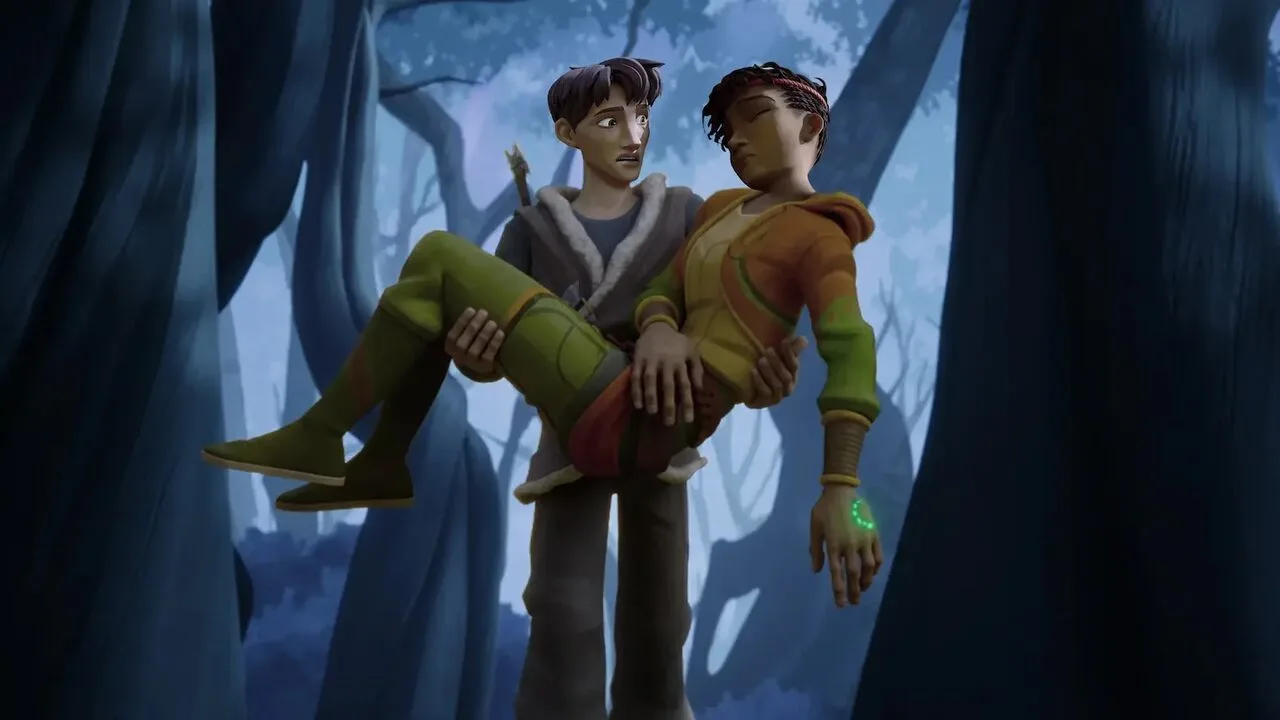
This frantic sprint is most detrimental to the villains. King Leopold and his son Lucas snarl and scheme but are given such thin motivations they feel more like narrative functions than genuine characters. The potential for a rich sibling rivalry between Drew and Lucas is reduced to simple antagonism because the story has no time for nuance.
All of this might be forgivable if it led somewhere satisfying. It does not. The story builds toward a massive, kingdom-altering confrontation and then simply stops. The finale is an abrupt cessation of action, leaving major plotlines, character fates, and the future of Lyssia completely unresolved.
This is not a cliffhanger; it is a narrative power outage that affects everything that came before it. The emotional investment the show carefully builds dissipates into acute annoyance. Lyssia’s throne is left in question, its heroes are scattered, and the audience is left staring at the credits.
The Wolf King TV series, based on Curtis Jobling’s Wereworld book series, is an animated fantasy-adventure. It follows a young commoner named Drew Ferran, who discovers he is the last of the werewolves and the rightful heir to the throne. The series premiered on Netflix on March 20, 2025, with Season 2 released on September 11, 2025. The show is produced by Lime Pictures and Jellyfish Pictures.
Full Credits
Director: Tom Brass, Jerry Forder
Writers: Curtis Jobling, Tim Compton, Julie Bower, Andrew Burrell, Celia Morgan
Producers: Angelo Abela, Tim Compton, Curtis Jobling, Barry Quinn
Cast: Cel Spellman, Peter Serafinowicz, Kate Fleetwood, Rob Rackstraw, Nina Barker-Francis, Paterson Joseph, Samuel Anderson, Tom Rhys Harries, Chris Lew Kum Hoi, Georgia Lock, Ralph Ineson, David Dawson, Louis Landau, Kim Adis
Director of Photography: [Information not available]
Editors: Darren Millstone
Composer: Thomas Haines
The Review
Wolf King Season 2
Wolf King Season 2 boasts impressive animation and committed voice performances, crafting a world that feels ripe for adventure. Yet, its breakneck pacing and a finale that simply stops instead of finishing leave the story in pieces. The technical skill on display is admirable, but the lack of a proper ending makes the entire season a hollow victory. It is a beautifully made show that builds to a sudden, unsatisfying void, making it a difficult series to recommend.
PROS
- Slick, fluid animation and well-choreographed action sequences.
- Strong voice performances that add weight to the characters.
- Inventive world-building with distinct creature factions.
- An interesting central character conflict for the young king.
CONS
- The story concludes on an abrupt, completely unresolved note.
- Rushed and erratic narrative pacing across the season.
- Several subplots and side characters are underdeveloped.
- Villains are presented with thin, one-note motivations.