













Iranian filmmakers Firouzeh Khosrovani and Morteza Ahmadvand shape a docu-fiction hybrid that reads like an inquiry into what it means to live with a hole where home used to be. Past Future Continuous looks at exile and nostalgia through the uneasy bond between a person and the place that formed her, then severed her. Its starting point is plain on the surface: Maryam, now unwelcome in her homeland and living in the United States, tries to narrow the physical and spiritual gap to her aging parents in Tehran by installing a web of surveillance cameras inside their house.
This digital tether does not provide comfort. It sharpens the sense of irreparable separation and the guilt that keeps returning like a tide. The film meets the viewer with the bleak irony of modern life: access through a screen can mimic intimacy while draining it of warmth. What follows is a study of memory pressed against a political present that blocks return, with Maryam’s liberal childhood before the revolution flickering beside the reality that made her departure permanent.
The Poetics of Fixed Distance
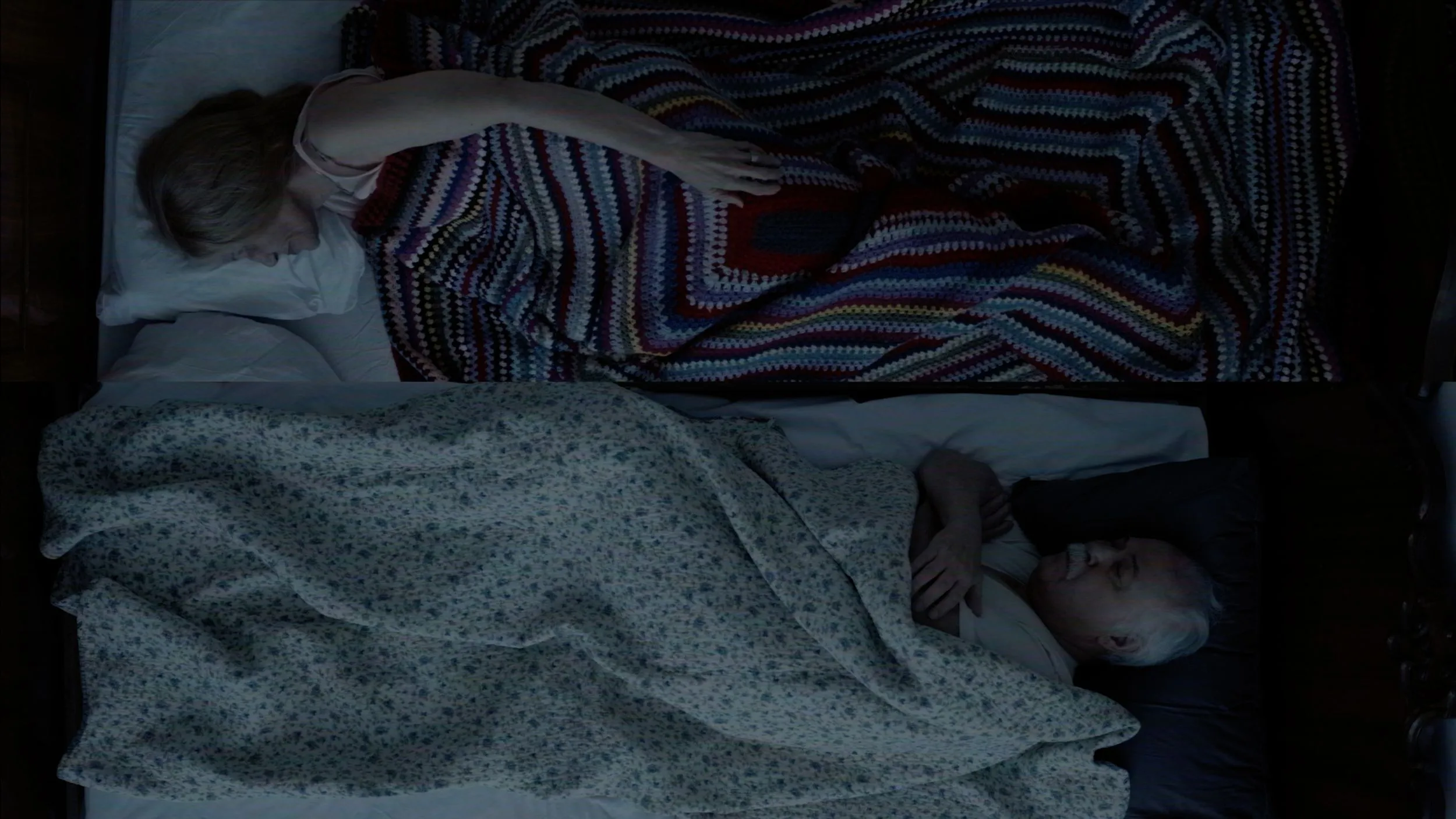
Form becomes the clearest language of separation here. Khosrovani and Ahmadvand build the film’s visual world from the “hyper-real” feed of eight fixed security cameras. Their unblinking angles impose a chilled, far-off gaze on the parents’ daily rhythms: the slow shuffle across a room, the repetition of household work, the modest gestures of staying alive. Early on, the parents seem to play toward this electronic eye, moving and even dancing in ways that feel meant for their daughter’s comfort. With time they stop performing, forget the lens, and turn into exposed figures living out their last season under silent observation.
The house itself grows into a witness, almost another character, storing the memory of Maryam’s birth and her past happiness. No on-camera dialogue arrives to guide us, so the smallest interior sounds rise to the surface: fabric sliding, a glass hitting a table, footsteps that echo through empty rooms. The ordinary becomes uncanny, as if each noise is an announcement that time is passing without mercy.
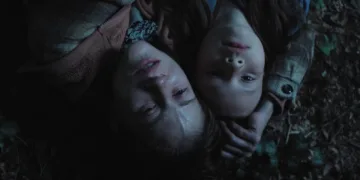
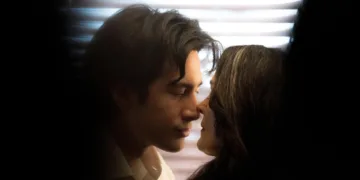
Fragments of other eras drift through this cold present. Super 8 home movies cast light on Maryam’s pre-revolutionary childhood, one marked by freedom and ease. Historical archive footage of the 1978 Revolution and the Iran-Iraq War sets down the political trauma that forced her flight. Symbolism steps in where plain speech could never reach.
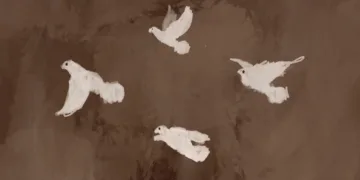
A small bird beating its wings inside a tank returns again and again, carrying the ache of confinement. Later, Maryam sends a parrot to break the household silence, a gesture that holds hope and sadness in the same palm. The film’s images are shot with striking beauty, yet the fixed-camera stance keeps tenderness at arm’s length. That distance mirrors the unreachable ideal of Mount Qaf, hovering like a mythic horizon that can be seen and never touched.
Guilt and the Fabricated Present
Maryam’s voice-over serves as the film’s single warm thread. Her tone is intimate, confessional, steeped in melancholy and a guilt that gathers weight as she speaks. She narrates her obsessive watching and the displacement that comes with living inside other people’s rooms through a screen. She calls herself the “present-absent one,” holding tight to digital scraps of family life while knowing that the bodily bond is cut. This tension between presence and absence becomes the film’s philosophical engine.

The work’s ambiguity about reality turns into a deliberate device. When the film reveals that the narrative is constructed through scriptwriters and reenactment cast, the moment lands as an ethical admission. Exile is bigger than one biography. The fabrication acknowledges a shared Iranian wound, a collective condition where separation is lived in countless homes, by countless sons and daughters who cannot cross back over the border of politics.
Within that blurred reality sit precise emotional blows. The parents sleep in separate beds, two islands in the same house. Maryam watches them dance and then realizes that their brief joy survives only because the cameras caught it.
The internet connection fails, and guilt erupts sharply, as if the world has cut the last nerve binding her to them. These scenes show the sorrow of an exiled soul facing a divided identity: loyalty to a host country pressed against love for a nation that has cast her out. Christophe Rezai’s wistful keyboard-and-strings score carries this ache, offering a lyrical counterpoint to images that remain distant and clinical.
The Recurrence of Loss
Past Future Continuous names a cycle in which history keeps circling back. The film suggests that the violence and instability that drove Maryam away do not fade into the past. They return, linking the Iran-Iraq War archives to present-day shots of Tehran under attack. Memory, here, is a fragile shelter, one that history keeps tearing open.

Maryam’s past is filtered through her longing for Mount Qaf, that faraway mythological place. Her constant watching tests the truth of that memory. The present she sees does not line up neatly with the remembered one, and the gap between them becomes another form of exile. She can feel her childhood as a kind of paradise, yet the cameras show a home shaped by age, fear, and political aftermath.
The film moves along two tracks at once. One is specific to Iran: a system that disowns its people and turns return into a dream with no door. The other extends outward, touching the universal burden of caring for aging parents from afar, a sorrow that crosses borders and regimes.
What remains is the stark finality of identity and loss. Maryam cannot come back, cannot hold her parents’ hands, cannot promise a farewell that takes place in the same room. The film leaves us inside that ache, asking if love can stretch across geography and power, and letting the question stay open, unresolved, like a room whose light has been left on for someone who will never walk through the door.
Past Future Continuous is a poignant documentary-fiction hybrid from Iranian filmmakers Firouzeh Khosrovani and Morteza Ahmadvand. The film centers on Maryam, an exiled woman living in the United States, who attempts to stay connected to her elderly parents in Tehran by installing surveillance cameras in their home. Using the camera feed, family home videos, and archival footage, the film explores the trauma of involuntary immigration, the crushing weight of separation and guilt, and how political history shapes personal memory. The film premiered at the Venice Film Festival’s Giornate degli Autori on September 2, 2025, and has since won the Best Film award in IDFA’s Envision competition. As of November 23, 2025, it is circulating through the international festival circuit and may be available soon on specialized theatrical programmers or streaming platforms.
Full Credits
Title: Past Future Continuous
Distributor: ZaLab, Taskovski Films (International Sales)
Release date: Premiered at Venice Film Festival’s Giornate degli Autori on September 2, 2025.
Running time: 76–80 minutes
Director: Firouzeh Khosrovani, Morteza Ahmadvand
Writers: Firouzeh Khosrovani, Morteza Ahmadvand, Naghmeh Samini
Producers and Executive Producers: Firouzeh Khosrovani, Fabien Greenberg, Bård Kjøge Rønning, Andrea Segre, Giulia Campagna (Producers), Majid Barzegar, Mehdi Barzegar (Executive Producers)
Director of Photography (Cinematographer): Mohamad Hadadi
Editors: Solmaz Eftekhari
Composer: Christophe Rezai
The Review
Past Future Continuous
This is a challenging, deeply affecting work of cinematic introspection. It transforms the cold mechanism of surveillance into a powerful, poetic study of displacement and familial bonds severed by political trauma. The film’s formal ambiguity—its blend of documentary intimacy and constructed narrative—yields a universal meditation on the pain of being the "present-absent one" and the enduring sorrow of exile. It is an essential, somber viewing experience that lingers in the mind.
PROS
- Offers a complex meditation on exile, memory, and political recurrence.
- Uses surveillance footage as a canvas for profound artistic expression.
- Features compelling symbolic motifs (the house, the bird, Mount Qaf) that enhance the thematic weight.
- Beautifully shot cinematography despite the limitations of the fixed camera lens.
CONS
- The blend of fiction and documentary may confuse some viewers.
- Deliberate narrative ambiguity can prevent a deep, easy connection to Maryam's personal story.
- A few dreamlike inserts feel less integrated or slightly clichéd.
- The film is geared toward niche audiences who favor contemplative cinema.