





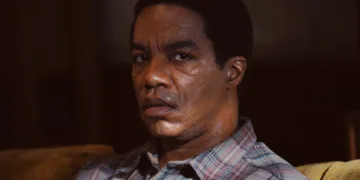
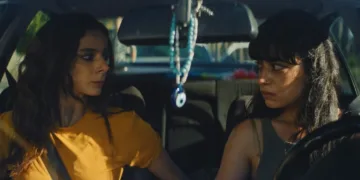
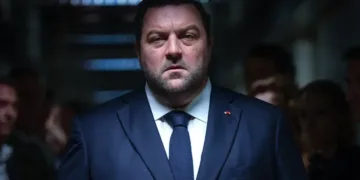
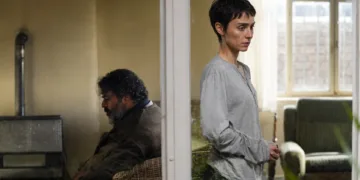










The conventional documentary often tries to compress messy reality into tidy narratives of heroism. Amanda McBaine and Jesse Moss (directors who previously focused on the architecture of political simulation) shift the emphasis toward a different kind of valor, one rooted in civic urgency, with professional mastery pushed to the margins.
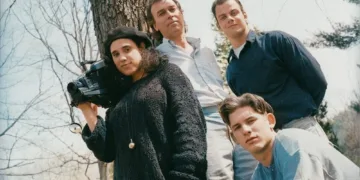
Teenage Wasteland, their latest feature, resists the impulse to launch with an immediate crisis. The film starts with the tentative energy of Gen X high school students in the early 1990s, hands wrapped around newly accessible video cameras. The camera becomes a symbol of technological democratization, a small-town reflection of wider cultural change during that period.
The film follows students from Middletown High School in Upstate New York and their unconventional English teacher, Fred Isseks. Their class, Electronic English, moves from local-flavor skits and amateur rap videos into a fully-fledged investigative journalism project. The work culminates in a documentary titled “Garbage, Gangsters, and Greed,” which exposes an environmental conspiracy centered on a toxic waste landfill, local political corruption, and the involvement of the Genovese crime family.
McBaine and Moss rely on a deep archive of the students’ original VHS tapes and outtakes, paired with candid contemporary reflections from the now-adult participants and from Isseks. Through this pairing, Teenage Wasteland operates less like a simple retrospective and more like a reflection on the long tail of early activism, on what happens after the credits of teenage rebellion would ordinarily roll.
The Socratic Teacher and the Active Citizen
The central relationship in the film links Isseks, nicknamed “Hippie Fred” and “Crazy Fred,” with his varied group of students. He functions as a modern Socratic teacher, nudging his class away from passive media consumption toward active creation. His mantra to “use your talent to make stuff, not consume stuff” cuts into the commercialized youth culture of the era and becomes a kind of ethical demand. That simple phrase sparks a civic awakening in the room. The pivot from playful, superficial video projects to a serious local environmental investigation becomes a threshold moment that permanently alters how these teenagers understand their community.
Across its running time, the film constructs a philosophical argument for what Isseks calls “civic courage.” The term carries specific expectations: citizens show up, stay engaged, and do the work of an informed populace even when powerful interests appear to have rigged the system from the start. For these students, Electronic English turns into a formative experiment in political praxis (a kind of home-video civics). The project operates less as an academic assignment and more as an unfiltered introduction to the workings of local power.
Through the investigation they come to understand zoning laws, toxic runoff, and the calculated indifference of local government, lessons that outstrip anything a conventional syllabus could hope to deliver. The documentary becomes a vigorous defense of activist pedagogy, insisting that the lessons with real longevity are the ones that enable students to act as authors of their community’s history as active participants, no longer passive recipients of it. That these teenagers hold their ground in the face of institutional inertia stands as a striking affirmation of youthful agency, unpredictable and stubbornly persistent.
The collective experience inside Isseks’ classroom, with its blend of punk, academic, and jock identities sharing space, recalls the teen ensembles of the period, a real-world “Breakfast Club” organized around politics and civic inquiry, not detention. The film presents the binding force in this group as teacher-ignited moral indignation, with loose adolescent angst present but secondary.
The project alters lives outside the classroom walls. Adult perspectives and careers carry the imprint of those years with the cameras. The documentary frames those early mornings spent hauling clunky camcorders around Middletown as a formative education in truth-seeking. Teenage Wasteland turns into an extended case study for the cultural power of inspired teaching.
Aesthetics of the Amateur Archive
The documentary method chosen by McBaine and Moss ties their stylistic decisions to the film’s philosophical concerns. The structure steps away from strict linear chronology and adopts a hybrid design that alternates between period footage and contemporary interviews, producing the cadence of a journalism thriller run through a memory machine (a newsroom replaying its own origin story). Working with editor Christopher Passig, the filmmakers shape 400-plus hours of 1990s VHS material, including outtakes and behind-the-scenes fragments, into a view of amateur investigative work from the inside.
The aesthetics of the amateur supply both texture and argument. Shaky camerawork, harsh lighting, and the slightly self-conscious presence of teenage reporters lend the investigation a raw credibility. Low-fidelity video stands beside the slick polish associated with official narratives. McBaine and Moss intensify this temporal pairing by carefully recreating the original high school TV studio for the present-day interviews. The choice of setting functions as an inspired formal gesture.
The now-adult subjects sit in the familiar studio, often watching their younger selves on monitors within the frame. The sight produces nostalgia and compresses time, suggesting that the emotional charge of their youthful commitment still flickers close to the surface. This staging carries the viewer through occasional slow patches during dense legal explanations. The archival sequences show the students’ determined amateurism in motion: trespassing on toxic sites, pressing evasive public officials with direct questions, and absorbing the condescension of seasoned local media figures. The images highlight the gap between an earnest search for truth and the polished resistance of institutional dishonesty. The film’s surface becomes its thesis.
The Toxicity of Systemic Failure
The Middletown students’ investigation uncovers a layered conspiracy. Local political figures, corporate players such as Ford Motor Co., and organized crime, specifically the Genovese crime family, appear within an interlocking story of toxic waste dumping and cover-up. The film carefully follows the students as they work through this knot of corruption and environmental damage.
The obstacles they encounter reveal how deeply the problem runs. Officials respond with obstruction, the local press projects studied indifference, and the scope of the case threatens to swamp the teenagers’ attention and energy. Persistence brings turning points. The students collaborate with a wildlife pathologist and receive key anonymous tips, including one from a figure known simply as Mr. B, that help to connect the dumping operation to organized crime. Their findings carry concrete consequences. The investigation leads to arrests and measurable shifts in the town’s environmental standards.
The documentary links that success to the decision to focus on a problem that touched their own community. The narrative steps beyond Middletown and functions as a parable about accountability in any place where power prefers secrecy. The film suggests that the effort to confront entrenched interests grows from moral tenacity and a willingness to question authority, with professional experience and specialized training receding into the background.
Teenage Wasteland closes as a deeply inspirational account of persistent, collective action. An English class armed with clunky camcorders manages to press against forces engineered to feel immovable, and the record of their work argues that such pressure can actually reshape the ground.
Teenage Wasteland is a documentary that chronicles a remarkable true story from the early 1990s, where students in a high school video journalism class in Upstate New York launched an investigation that exposed a massive environmental and organized crime conspiracy in their town. The film revisits these now-adult students and their teacher, Fred Isseks, weaving together new interviews with hundreds of hours of their original, often raw, VHS footage. It premiered at the Sundance Film Festival in January 2025 under its original title, Middletown, and has a reported running time of 112 minutes. As of today, November 26, 2025, the documentary is playing at select theaters and film festivals, but its wider distribution and content rating are still being determined.
Full Credits
Title: Teenage Wasteland
Release date: Premiered January 2025 (Sundance Film Festival)
Running time: 112 minutes
Director: Amanda McBaine, Jesse Moss
Writers: Danny Breen, Amanda McBaine, Jesse Moss
Producers and Executive Producers: Danny Breen, William Horberg, Teddy Leifer, Amanda McBaine, Jesse Moss, Dan O’Meara, Florrie Priest, Courtney Sexton, Jeff Skoll, Zhang Xin, Mark DiCristofaro, Leah Culton, Joey Marra, Guy Horlock, Sam Stanley, Trish Ward-Torres
Cast: Fred Isseks, Jeffrey Dutemple, Rachel Raimist, David Birmingham, Mike Regan, Isaac Levi Anthony, Varda Appleton, Grant S. Johnson, Seychelles Mizel
Editors: Christopher Passig, Sam Stanley
The Review
Teenage Wasteland
Teenage Wasteland is a potent case study in the efficacy of localized, youth-driven action, elevated by expert archival work. It successfully functions as both a nostalgic time capsule and a timely treatise on the enduring need for ethical journalism and engaged citizenship. The film’s narrative occasionally slows under the weight of political complexity, yet it remains an essential, inspiring reminder that the fight for accountability begins at the community level.
PROS
- The extensive 90s VHS footage is expertly edited to create immediacy and emotional depth.
- Offers a powerful, clear message on "civic courage" and pedagogical activism.
- The use of the recreated TV studio set is a clever device that bridges past and present.
- Demonstrates tangible success against institutional corruption, making the film highly resonant today.
CONS
- The focus on the complex legal and political follow-up occasionally drags the narrative pace.
- While the former students are engaging, the sheer scope of the investigation sometimes limits deeper individual portraits.
- The film's deep dive into local government procedures may be dry for viewers seeking straightforward action.
- The film is true to reality, meaning the resolution is complicated and imperfect.