





![Kingdom Hearts Collection [I-III] Review](https://gazettely.com/wp-content/uploads/2026/10/Kingdom-Hearts-Collection-I-III-1-360x180.webp "Kingdom Hearts Collection [I-III] Review: KHII Holds Steady as Newer Entries Fluctuate 33")






Apple TV’s thriller returns five years after the initial disappearance of Owen Michaels. Hannah Hall and her stepdaughter Bailey have built a fragile version of normal life in Los Angeles. Hannah keeps working, yet her days run on quiet vigilance that shapes routines, decisions, and even small domestic movements. That uneasy stability collapses after a violent break-in makes one point unmistakable: the past still has teeth, and it still knows where to find them.
Owen remains off the grid, operating as an undercover asset for U.S. Marshal Grady Bradford while trying to dismantle the Campano crime family. Bailey’s link to her late mother becomes a practical pathway for old threats to return, pulling the story back toward unfinished business that never stayed buried for long.
The season steps away from the fixed puzzle-box energy of the houseboat and turns toward a chase that crosses borders. The action moves from the relative shelter of California to the streets of Paris, with survival tied to the kind of family history that keeps demanding an answer. This follow-up widens the story’s scope by placing its central figures face-to-face with the forces they once tried to outlast.
From Passive Mystery to Active Survival
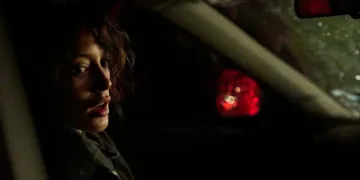
The series pivots from a homebound search for truth to a forward-driving fight for survival, and that change registers immediately in the season’s opening. Hannah Hall neutralizes an intruder in her own home with competence that reads as practiced, rehearsed, and grimly routine. Five years of self-defense training and contingency planning have turned her into someone who treats domestic space like terrain to secure.
The show frames that transformation as a reflection of contemporary anxiety, where safety feels conditional and preparedness becomes a daily posture. Hannah stands as a modern woman shaped by a world that trains people to expect the worst and to plan for it. The nod to prepper culture filtering into suburban life lands as social observation, not decoration, and it gives the new tone a recognizable cultural pulse.
Owen’s presence as a rooftop observer introduces a watchful layer that changes how the series carries tension. He functions as a set of eyes that cannot fully join the family he is trying to protect, and his work places him inside the Campanos’ orbit in ways that keep danger close. His role points to the invisible labor involved in keeping a family intact under threat, where protection becomes work measured in risk, distance, and secrecy. The narrative turns sharply after a death inside the criminal family wipes away prior agreements and resets the terms of survival. That choice pushes the characters out of their established patterns and into an international arena.
Shifting from the fog-soaked houseboat in Sausalito to the density of Paris signals the show’s desire for a larger stage. The expansion carries a thematic claim: personal secrets cannot stay sealed inside a single household forever. They spill outward, demand movement, and force a reckoning beyond familiar borders. The genre mechanics grow louder as the scope widens, yet the season keeps reaching for the emotional anchor that defined the first run, using family bonds as the thing that gives each chase and confrontation weight.
The Weight of Shared History and Hyper-Awareness
Jennifer Garner brings a physical authority that fits the season’s sharper tempo, and she shapes Hannah Hall around fatigue, responsibility, and constant awareness. The performance leans into parental exhaustion, the kind that comes from holding a household together while scanning every room for exits.

Hannah’s newer physical capability plays as earned through years of discipline, and that emphasis matters, since it ties her competence to time, practice, and the slow reshaping of a life under threat. Garner’s strongest work arrives in quieter beats, where the character’s calculations play across her face: the glance toward a door, the pause before a decision, the sense that danger has trained her to think in contingency.
Angourie Rice plays Bailey Michaels as a necessary counterforce to Hannah’s survival-first mindset. Bailey, now a college student and aspiring playwright, looks for agency beyond her father’s shadow while carrying an obsessive pull toward her mother’s history. The conflict presents a generational split in how trauma gets handled. Bailey moves toward investigation and meaning-making.
Hannah operates in the immediate tense of staying alive. Their relationship has shifted from the prickly strain of the first season into a unified front that still shows stress fractures under pressure. They share a home, a history, and the ongoing task of living after catastrophe, and the season treats that bond as a working partnership shaped by damage.
Nikolaj Coster-Waldau’s larger presence as Owen presses on that family unit from the outside. He plays Owen as a man who stays several moves ahead of his enemies while remaining emotionally stuck, separated from the people he wants to protect. His urgency to reunite with Hannah and Bailey feels grounded, and it gives the espionage stakes a tragic edge. Through him, the series keeps circling the cost of secrets and the weight attached to the protector role inside a modern family, where safeguarding others can harden into isolation.
The Moral Ambiguity of the Campano Dynasty
The Campano family reshapes the season’s moral terrain by making threat feel organized, familial, and intimate. Judy Greer arrives as Quinn, the eldest daughter of the syndicate, and she plays the role with controlled precision. Quinn’s surface warmth carries an unmistakable edge, creating a charged dynamic with Hannah that runs on mutual recognition. Each woman understands what it means to carry responsibility for a family, and that shared awareness fuels scenes filled with restraint, calculation, and distrust that never fully lifts.
The Campano structure gains definition through Frank and Teddy. John Noble gives Frank a cold, watchful authority that suggests long practice and long reach, without leaning on exaggerated mob-boss theatrics. His presence points to criminality that feels institutional, stable, and embedded. Luke Kirby’s Teddy brings volatility into that hierarchy, with erratic impulses that threaten to explode plans from within. The contrast between steady control and reckless unpredictability keeps the antagonists from feeling like a single-note machine.
The series takes a risky stance by granting these figures a level of nuance that comes close to sympathy, and it uses that ambiguity to sharpen character dilemmas. Hannah and Bailey find themselves weighing which criminals can be relied on, and the tension echoes real-world conversations about power structures, complicity, and personal morality.
Rita Wilson appears as Hannah’s mother, Carole, adding a separate family line that deepens the season’s interest in inheritance and estrangement. Wilson plays Carole without smoothing the character for easy audience comfort, and that firmness highlights the cyclical patterns of distance inside families. It also frames Hannah’s guarded nature as something shaped by history, not simply by the current crisis.
Pacing and the Pressure-Cooker Environment
The season’s shift from slow-burn mystery to pressure-cooker momentum stands as its sharpest technical achievement. The pacing tightens, and the writing moves with a directness that keeps scenes pointed and forward-moving. Action sequences fit cleanly into the narrative flow, with violence treated as an extension of emotional stakes instead of a break for spectacle. Car chases and confrontations function as a measure of how close the past has crept back toward the protagonists, turning physical distance into a storytelling tool.
Suspense grows out of character choices more than delayed clue reveals. The danger comes from decisions made under strain, including the need to trust people who operate in moral gray zones. That approach gives the season a noir-like charge, where each step carries a price and every alliance feels provisional. Paris amplifies the tone, using unfamiliar geography to stress vulnerability and to keep the characters off balance in a setting that offers fewer safe defaults.
The script stays clear even while carrying a complicated plot. Some passages slow for necessary explanation, and those moments function like maintenance work that keeps the story legible as it accelerates. The direction still keeps the narrative moving with purpose, signaling confidence in escalation and scale. The season’s willingness to expand its foundation points to a streaming-era pattern: follow-ups that chase bigger terrain, shift genre gears, and test how far a series can stretch while keeping its emotional core intact.
The Last Thing He Told Me is a gripping mystery thriller series developed by Laura Dave and Josh Singer, based on Dave’s bestselling novel. The second season, which adapts the 2026 sequel The First Time I Saw Him, premiered on February 20, 2026. Picking up five years after the events of the first season, the story follows Hannah Hall and her stepdaughter Bailey as they are thrust back into danger when Owen Michaels suddenly resurfaces. You can stream the entire series exclusively on Apple TV+, with new episodes of the second season released every Friday.
Where to Watch The Last Thing He Told Me Season 2 Online


Full Credits
Title: The Last Thing He Told Me
Distributor: Apple TV+
Release date: February 20, 2026 (Season 2), April 14, 2023 (Season 1)
Rating: TV-MA
Running time: 36–45 minutes
Director: Daisy von Scherler Mayer, Olivia Newman, Deniz Gamze Ergüven, Lila Neugebauer
Writers: Laura Dave, Josh Singer, Aaron Zelman, Adam Stein, Isaac Gomez, Erica Tavera
Producers and Executive Producers: Reese Witherspoon, Lauren Neustadter, Jennifer Garner, Josh Singer, Laura Dave, Merri D. Howard, Daisy von Scherler Mayer, Aaron Zelman
Cast: Jennifer Garner, Angourie Rice, Nikolaj Coster-Waldau, Judy Greer, Rita Wilson, David Morse, Augusto Aguilera, Aisha Tyler, Luke Kirby, John Noble
Director of Photography (Cinematographer): Michael McDonough, Daryn Okada, Evans Brown
Editors: Trevor Baker, Tamara Meem, Nathan Easterling, Connor Davis, Byron Smith
Composer: Danny Bensi, Saunder Jurriaans
The Review
The Last Thing He Told Me Season 2
The second season successfully sheds its slow-burn skin to become a propulsive, global thriller. It swaps passive mystery for active survival, allowing Jennifer Garner to finally utilize her physical capabilities. While the show sometimes asks for an extreme suspension of disbelief regarding its "good" criminals, the improved pacing and deepened family dynamics make for a far more engaging experience. It proves that a sequel can surpass its predecessor by embracing higher stakes and more confident character work.
PROS
- Jennifer Garner delivers a grounded and physically capable performance.
- The faster pacing removes the filler that occasionally slowed the first season.
- Judy Greer and John Noble add significant weight and menace as new antagonists.
- The shift to international locations expands the scale and visual variety.
CONS
- The narrative sometimes leans too heavily on convenient coincidences.
- Some viewers might struggle with the sympathetic portrayal of organized crime figures.
- Occasional dialogue-heavy "housekeeping" scenes briefly stall the momentum.