











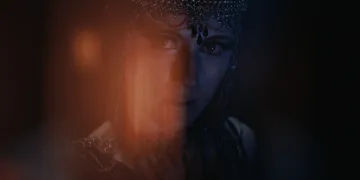

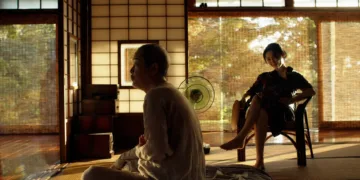


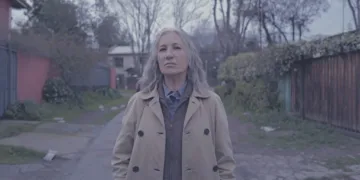

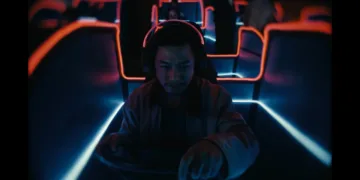










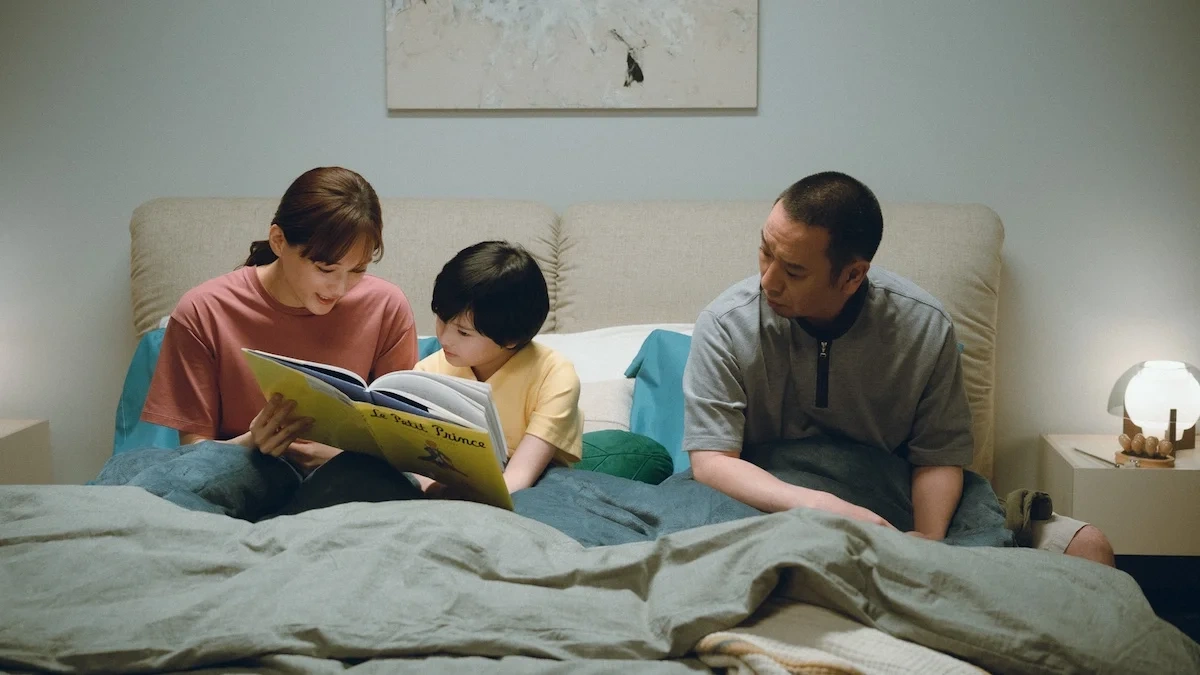

In a near-future Japan, automated convenience slips quietly into daily life through delivery drones and smart appliances. Hirokazu Koreeda presents a society trying to manage loss with technical assistance, a premise that feels painfully close to our own age of algorithmic comfort.
The REBirth corporation turns grief into a rental service, leasing lifelike artificial intelligence child replicas to families living with bereavement. That service enters the fragile home of Otone Komoto and her husband Kensuke. Two years earlier, a sudden accident killed their seven-year-old son, Kakeru. Their home has settled into a hushed pattern of survival, then a package from the company arrives.
From it emerges a mechanical surrogate, played by Rimu Kuwaki, wearing the exact clothes of the boy they lost. It is a clean, devastating image, the kind that makes science fiction feel domestic before it feels futuristic. The story begins with an altered household forced to face a synthetic presence built from its most painful memories. Koreeda uses that setup to examine tech-driven healing as both comfort and emotional provocation.
The Artisan and the Architect
The replica’s arrival creates instant ideological friction between the parents, echoing the way different generations respond to sudden technological change. Otone, an architect who builds precise analog home models, meets the android with swift emotional openness. She looks for a living spirit beneath the synthetic surface and treats the boy as a possible vessel for real connection.
I thought of my grandfather, a traditional watchmaker, who used to say that any complex mechanism carries some trace of its maker’s soul. That belief sits beautifully beside Otone’s response. Kensuke, an artisan woodworker, approaches the device with deep suspicion. He sees the child as an advanced appliance, a digital pet, even calling it a Roomba. He creates strict distance,
keeps physical separation, and orders the android to address him as a stranger. Haruka Ayase and Daigo Yamamoto make this conflict legible through precise physical choices. Ayase gives Otone wide-eyed, delicate movements, capturing a mother ready to believe. Yamamoto gives Kensuke a slouched, weighted presence that turns doubt into posture.
The script follows Kensuke’s resistance as it slowly softens, tracing an unusual path toward paternal attachment when old family rituals return through the machine. This is where the film gently resists familiar studio science fiction habits. The threat does not come from rebellion or circuitry run wild. The tension grows from longing, habit, and the human need to give shape to absence.
Rules of Engagement and Narrative Detours
The story grounds its science fiction idea by giving the android child clear operational rules. The replica lacks the capacity to eat, drink, or endure water. A tracking system functions as a literal tether, sending the machine into automated sleep whenever it moves beyond thirty meters from the parents. That restriction gives the first stretch of the film a tight domestic frame, with parental guilt pressing against the walls of the home.
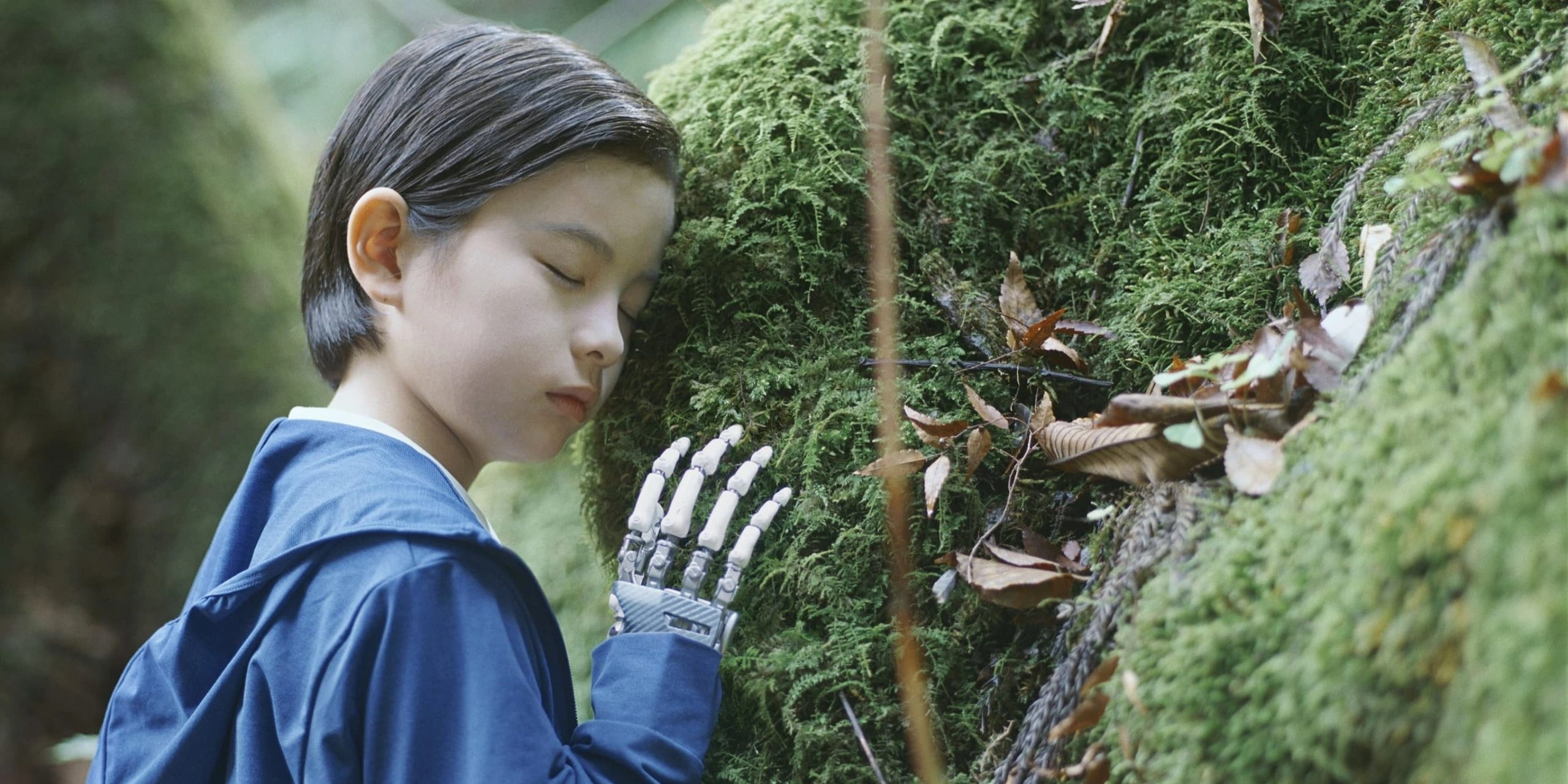
The second half widens the structure in a startling way. A separate thread appears, following independent artificial children who live hidden in the nearby woods. This turn changes the shape of the entire feature. The contained indie drama of the early sections opens into a wide allegorical fable about technological coexistence.
The storytelling bends away from conventional linear movement, using its shift in scale to reflect modern unease about surrendering human agency to automated systems. These wandering androids bring a strange fairytale mood into the film, moving it closer to independent cinema’s taste for thematic pressure and unresolved emotional texture. The plot refuses tidy genre mechanics and asks what kind of digital future we are building, especially once machines begin to carry our grief, our routines, and our fantasies of repair.
The Canvas of Sunlight and Shadows
The film’s technical choices shape how we receive this quiet digital future. Director of photography Ryûto Kondô builds a clear visual grammar from harsh summer light. Sunshine floods the frame, flattening faces and washing across modernist surfaces until the world takes on a slightly alien quality. That brightness makes the grieving home feel exposed, stripped of shadows where sorrow might hide.
Yuta Bandoh’s melodic, string-heavy score adds another formal layer. Wind instruments enter during key scenes, steering emotion with such insistence that the natural dramatic tension sometimes feels pressed too firmly. These choices connect closely to the film’s literary and natural metaphors. In quiet evening scenes, Otone reads Antoine de Saint-Exupéry’s classic text, with attention placed on the famous drawing of a hidden animal inside a container.
The reference becomes a metaphor for the invisible human spirit, and it gives the film one of its clearest cultural anxieties: a literal future may leave too little room for imagination. The visual design sharpens that concern by placing the cold geometry of Otone’s modern housing blueprints beside the organic, subterranean root systems of nearby trees.
Koreeda’s cinematic language treats the natural world as a necessary counterweight to a frictionless automated life. The effect is accessible and quietly rich, linking architecture, sunlight, music, and memory into a study of grief that technology can imitate, contain, and provoke, while never fully measuring its strange human weight.
Sheep in the Box premiered at the Cannes Film Festival on May 17, 2026, competing for the top prize. Audiences can view the feature during upcoming festival screenings, including the Sydney Film Festival in June 2026, ahead of its wider theatrical rollouts. NEON handles the theatrical release for viewers in the United States, United Kingdom, and Australia, while GKIDS manages distribution across North America. Domestic viewers in Japan can catch the theatrical release in cinemas starting this May.
Where to Watch Sheep In The Box (2026) Online






Title: Sheep in the Box
Distributor: NEON, GAGA Corporation, GKIDS, Madman Entertainment
Release date: May 17, 2026
Rating: Unclassified 15+
Running time: 127 minutes
Director: Hirokazu Kore-eda
Writers: Hirokazu Kore-eda
Producers and Executive Producers: Kaoru Matsuzaki, Moe Banse, Hiroki Wakamatsu, Tatsumi Yoda, Minami Ichikawa, Yusaku Tanaka, Satomi Kotake
Cast: Haruka Ayase, Daigo Yamamoto, Rimu Kuwaki, Nana Seino, Kan’ichiro Sato, Yota Hiiragi, Akihiro Tsunoda, Kayo Noro, Mari Hoshino, Ayumu Nakajima, Kimiko Yo, Min Tanaka
Director of Photography (Cinematographer): Ryuto Kondo
Editors: Hirokazu Kore-eda
Composer: Yuta Bandoh
The Review
Sheep In The Box
This film offers a serene fairytale that replaces typical science fiction terror with a quiet study of parental grief. While the structural shifts in the second half introduce an uneven narrative focus, the strong central performances and striking cinematography maintain engagement. The piece succeeds as an intimate domestic examination rather than a sprawling philosophical epic.
PROS
- Strong physical performances from Haruka Ayase and Daigo Yamamoto that clearly ground the parental conflict.
- Stunning, intentional cinematography by Ryûto Kondô that uses intense summer light to build a distinct aesthetic atmosphere.
- An original subversion of traditional dystopian artificial intelligence storytelling tropes.
CONS
- A sudden plot shift in the second half that introduces an under-developed collective of woodland androids.
- An intrusive musical score that occasionally overpowers the delicate dramatic tension of the household scenes.
- A script that introduces multiple thematic threads without fully exploring their implications.