





















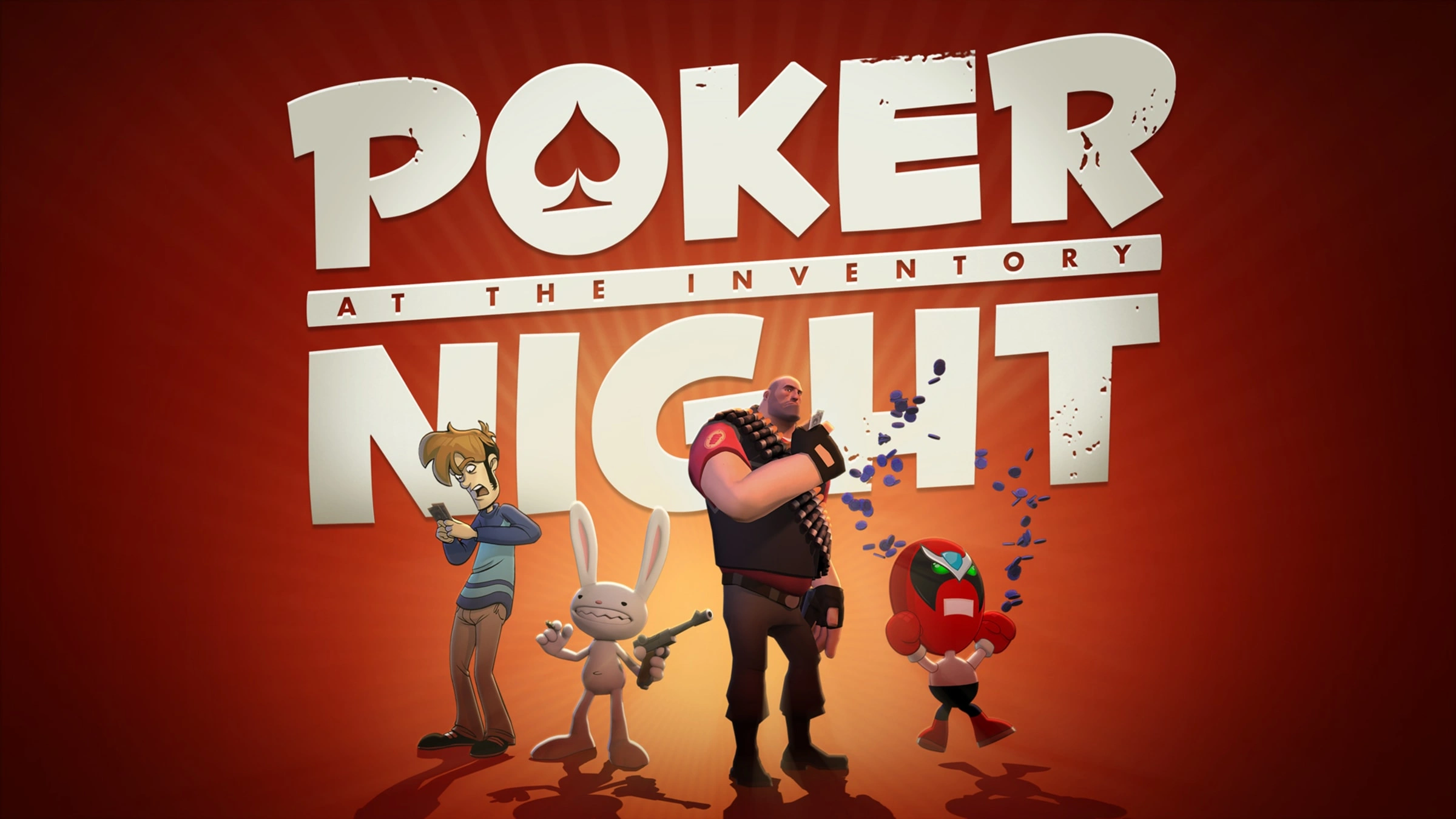

Deep under an ordinary warehouse sits a secret fictional club founded in 1919. The venue, called The Inventory, was created from a historical fear that federal prohibition might spread to games and general entertainment. That fear never became law, yet the club endured as an underground refuge where video game and internet culture figures gather after hours for high-stakes cards. The strange crossover concept first appeared over a decade ago, and Skunkape Games has brought it back, restoring a title that had slipped out of digital availability.
The setup places the player in an unnamed first-person seat at one green felt table, facing a four-player lineup with sharply defined personalities. The core loop stays fixed on plain tournament-style card play. There are no deck-building hooks, supernatural modifiers, or rule mutations changing the math. The game works as a comedic digital parlor piece, with its mechanical design providing a stable framework for a theatrical crossover event.
Characters and Conversational Systems
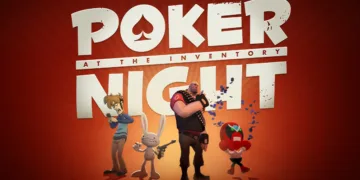
The narrative system lives at the table, driven by four personalities drawn from separate fictional universes. The Heavy from Team Fortress 2 is a massive presence who pairs polite, innocent questions with intimidating military stories. Max from the Sam & Max series brings cartoon chaos, absurd interruptions, and unstable comic energy.
Strong Bad, the self-important web figure from Homestar Runner, fills the table with sarcastic insults, random verbal bursts, and constant trash talk. Tycho Brahe from the Penny Arcade webcomic serves as the cynical, articulate, intensely profane commentator, often launching into dry nerd monologues.
The banter engine connects these intellectual properties through a steady stream of table talk. The script lets the characters insult one another, tell long stories, and react to wins and losses. The result is a casual group dynamic where narrative consequence arrives through verbal sparring. Player choice works on a smaller scale than traditional narrative games. Decisions at the table shape the timing and texture of the comedy, triggering different reactions from the cast.
Skunkape Games adds several configuration options that help tune the rhythm of the audio. A frequency slider adjusts how often opponents speak, which reduces repetition during longer sessions. A skip button lets players cut active voice lines and speed up play. Language censors can also toggle explicit bleeps, turning Tycho’s elaborate profanity into asterisks in the captions and giving the exchange an old-school internet comedy flavor.
Also Read




Card Simulation and Behavioral Intelligence
The simulation rests on standard No Limit Texas Hold ’em. Each tournament begins with small and big blinds, a $10,000 starting stack for every player, and two hidden hole cards dealt to each seat. Play then moves through the familiar flop, turn, and river structure. Between deals, players check, call, raise, fold, or push their full stack all-in. For newcomers, the game includes a basic tutorial and an on-screen hand ranking guide that functions as a live reference sheet.
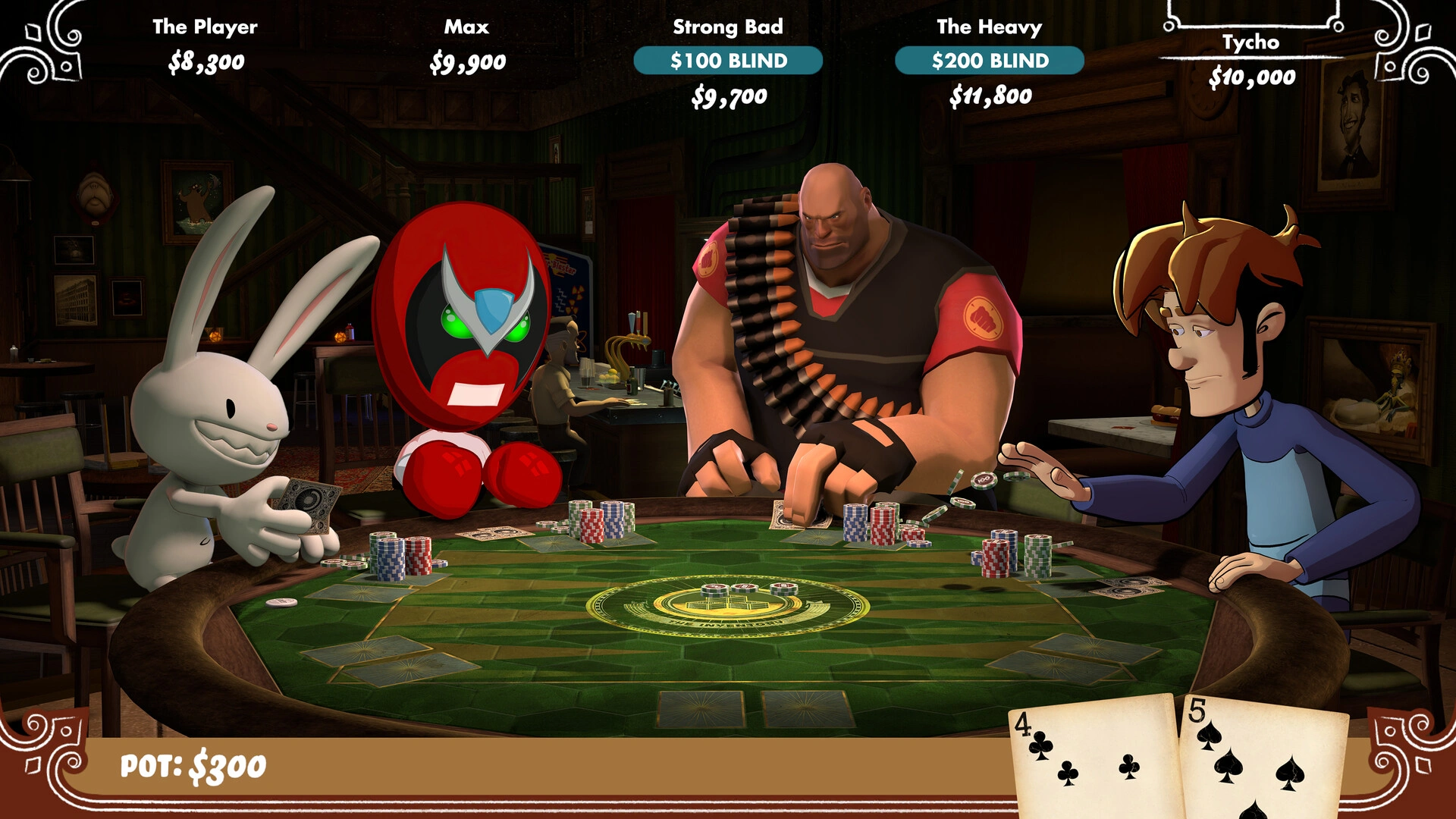
The artificial intelligence ties character identity to betting logic. Each opponent follows a distinct style shaped by their lore. Some characters bluff aggressively and unpredictably, reflecting their chaotic personalities. Others play cautiously and back away when the numbers look poor. This gives the table a readable personality layer that connects roleplaying flavor to card strategy.
The developers also build visual and behavioral tells into the animations. An opponent may twitch, sigh, or shift posture depending on hand strength. The interface never highlights these clues for the player, so reading the table depends on observation.
This link between character animation and strategy gives attentive players something to study beyond probability. Players can also adjust difficulty and change tournament buy-in amounts, tailoring session length and pressure.
Visual Overhauls and Presentation
The remaster gives the 2010 original a full graphical update. Skunkape Games adds higher-resolution assets, rebuilt 3D character models, and a modern ambient lighting system that strengthens the smoky private-club atmosphere.
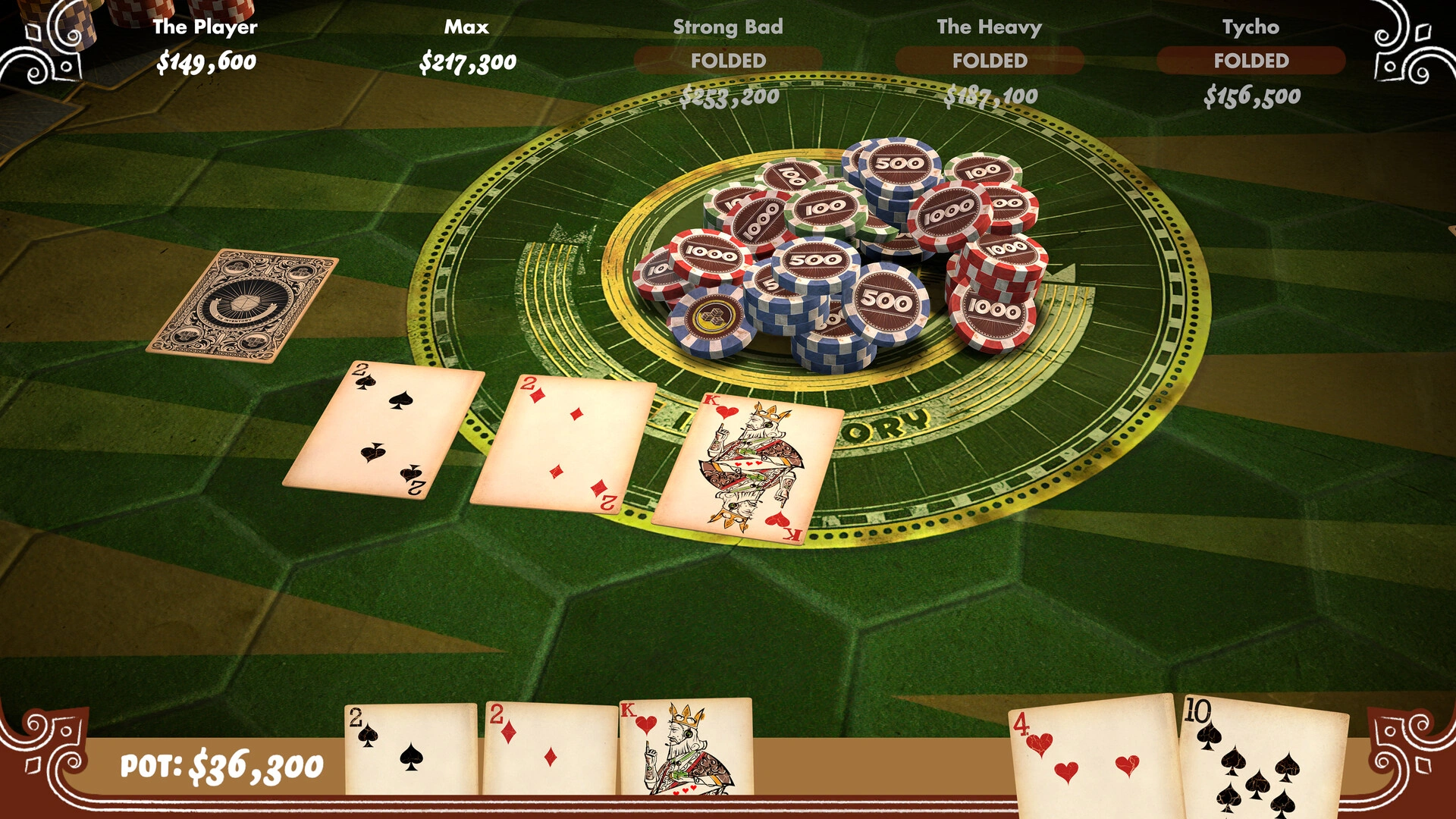
The update keeps the clay-like visual style and expressive animation associated with the original studio’s work. The presentation also manages its crossover cast smoothly, allowing a cartoon rabbit and a stylized military giant to share the same table without visual friction.
Performance stays stable, with a fluid framerate during dramatic camera movement. High-stakes showdowns trigger cinematic angles that heighten the reveal of each hand. Players can toggle post-processing effects such as motion blur and film grain, giving some control over the visual texture.
The room itself gains life through small background behaviors. Eliminated opponents remain present after losing all their chips. Their models wander around the room, buy drinks, or interact with arcade cabinets, keeping the club reactive after they leave active play.
Progression and Cosmetics
The main progression loop uses a collateral system. During some tournament openings, an opponent short on cash offers a prized personal artifact to cover the buy-in. Claiming that reward requires the player to outplay and eliminate that specific character. On select platforms, these items connect to external player profiles and unlock reissued weapon cosmetics and clothing accessories in Team Fortress 2, including the Heavy’s minigun and Strong Bad’s glasses.
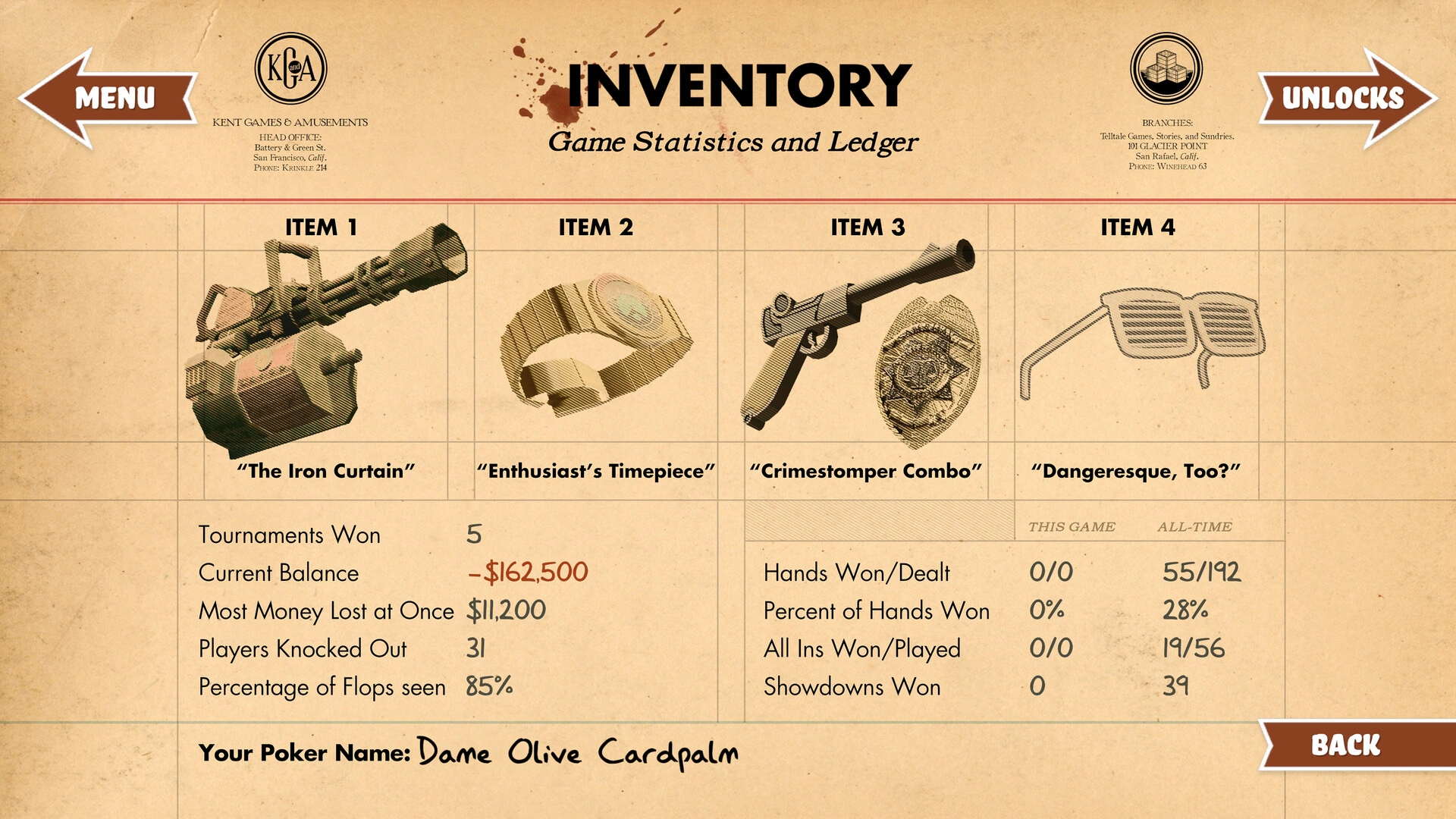
Long-term goals track player statistics and milestones, such as total wins or specific card combinations. Completing these goals unlocks themed card decks and table designs based on the represented franchises. Some unlocked tables alter the environment and trigger small cosmetic changes to character models during play, such as making a character wear a special hat.
The content scope stays limited by the premise. Balatro and Dicey Dungeons build their appeal through deeper progression systems and mechanical subversion, while this title remains a direct poker simulator built around personality, timing, and table presence.
After the dialogue pool runs thin and the visual novel flavor loses freshness, the repeated card loop becomes easy to feel. The grind for completionists is modest, and the game works best in short sessions where its comedy, character tells, and low-pressure strategy can carry the table.
The Review
Poker Night at the Inventory
Skunkape Games delivers a polished, preservation-focused package that honors its roots. The mechanical card simulation remains straightforward, yet the upgraded artificial intelligence ensures a more accurate, personality-driven experience at the felt. The genuine appeal resides entirely in the razor-sharp crossover script, blending distinct internet-era personalities seamlessly. While the narrow scope provides limited mechanical depth for hardcore card players once the dialogue pool empties, the presentation upgrades and stable performance make it a charming time capsule. It is a delightfully weird digital parlor experience that succeeds through pure character chemistry.
PROS
- The banter system blends four highly contrasting fictional properties seamlessly, creating a genuinely funny, unique crossover environment.
- Opponents make logically sound card decisions that directly reflect their specific lore personalities and playstyles.
- The incorporation of non-verbal, behavioral animations gives players subtle tells to decode bluffs without interface assistance.
- Modern lighting, high-resolution textures, and fluid cinematic camera angles elevate the overall visual quality of the digital club.
- The inclusion of reissued, unlockable cosmetic equipment for external profiles adds a tangible pursuit for legacy players.
CONS
- The simulation offers zero rule-bending mechanics or deck-building twists, sticking exclusively to vanilla tournament structures.
- Extended play sessions naturally reveal the limits of the voice-line pool, causing comedic stories to loop during long grinds.
- A massive portion of the entertainment value rests entirely on a player's pre-existing familiarity with specific 2010-era internet properties.
- The reliance on complex verbal humor and a lack of multilingual translation options restricts accessibility for international audiences.