





















Echo Generation 2 arrives as a strange, stylish prequel that trades the small-town mystery of Echo Generation for a wider sci-fi setup built across multiple dimensions. Cococucumber keeps the retro charm of the first game, yet the sequel feels bigger in shape, stranger in tone, and sharper in its combat identity. It is a turn-based deck-building RPG where separate character chapters slowly gather into one cosmic threat.
The opening makes that ambition clear. Instead of placing the player into one linear story, the game begins through several playable paths. Sister M is a psychic girl raised inside a testing facility. Jack is a father thrown into an alternate reality filled with zombies. Annata Z is a zombie mother searching for her missing child in a bleak wasteland. Noliva is a bounty hunter working through a neon cyberpunk city with her companion Strix.
That setup gives Echo Generation 2 the feel of a playable sci-fi anthology. It has echoes of Stranger Things, EarthBound, and deck-based RPGs like Slay the Spire, yet its tone remains tied to Cococucumber’s own colorful, voxel-driven style. The result is messy at points, but rarely dull.
Small Stories Feeding a Larger Cosmic Mystery
The smartest part of Echo Generation 2 is the way it breaks its plot into short character-led chapters. Each one plays like a compact episode with its own mood, location, and emotional hook. Sister M’s laboratory chapter leans into psychic experimentation and institutional unease.
Jack’s story pulls family stakes into a zombie scenario. Annata Z’s chapter uses its black-and-white wasteland to give grief and identity a rougher texture. Noliva’s section shifts the energy toward bounty hunting, cyberpunk flash, and companion-driven adventure.
This structure gives the game a strong sense of variety. The player is always moving into a new pocket of the universe, and each pocket suggests a bigger history than the game has time to show in full. Dialogue, abandoned spaces, documents, objects, and short NPC exchanges help fill in the margins. The writing rarely buries the player under lore. It lets the setting speak through small details, which suits a game built around compact chapters.
The mystery works because the game withholds enough information to keep the player asking how these worlds connect. Alternate dimensions, strange experiments, cosmic beings, and reality-ending threats begin as scattered pieces, then start forming a clearer pattern. That slow connection is one of the game’s stronger narrative pleasures.
The tradeoff is speed. Some chapters feel like they could support a full game on their own, yet Echo Generation 2 often moves on right as a world starts opening up. Emotional beats can pass with surprising quickness. Characters sometimes accept shocking events with too little resistance, which weakens scenes that should carry heavier dramatic weight.
The final convergence is the roughest piece of the structure. After the game spends so much time defining its heroes through separate worlds, their meeting point feels thin. Instead of giving the cast enough room to clash, bond, or process what has happened, the game shifts into a combat-heavy closing stretch. That choice keeps momentum high, but it leaves the story feeling like it skipped a needed middle act.
Decks, Status Effects, and the Joy of Finding the Right Build
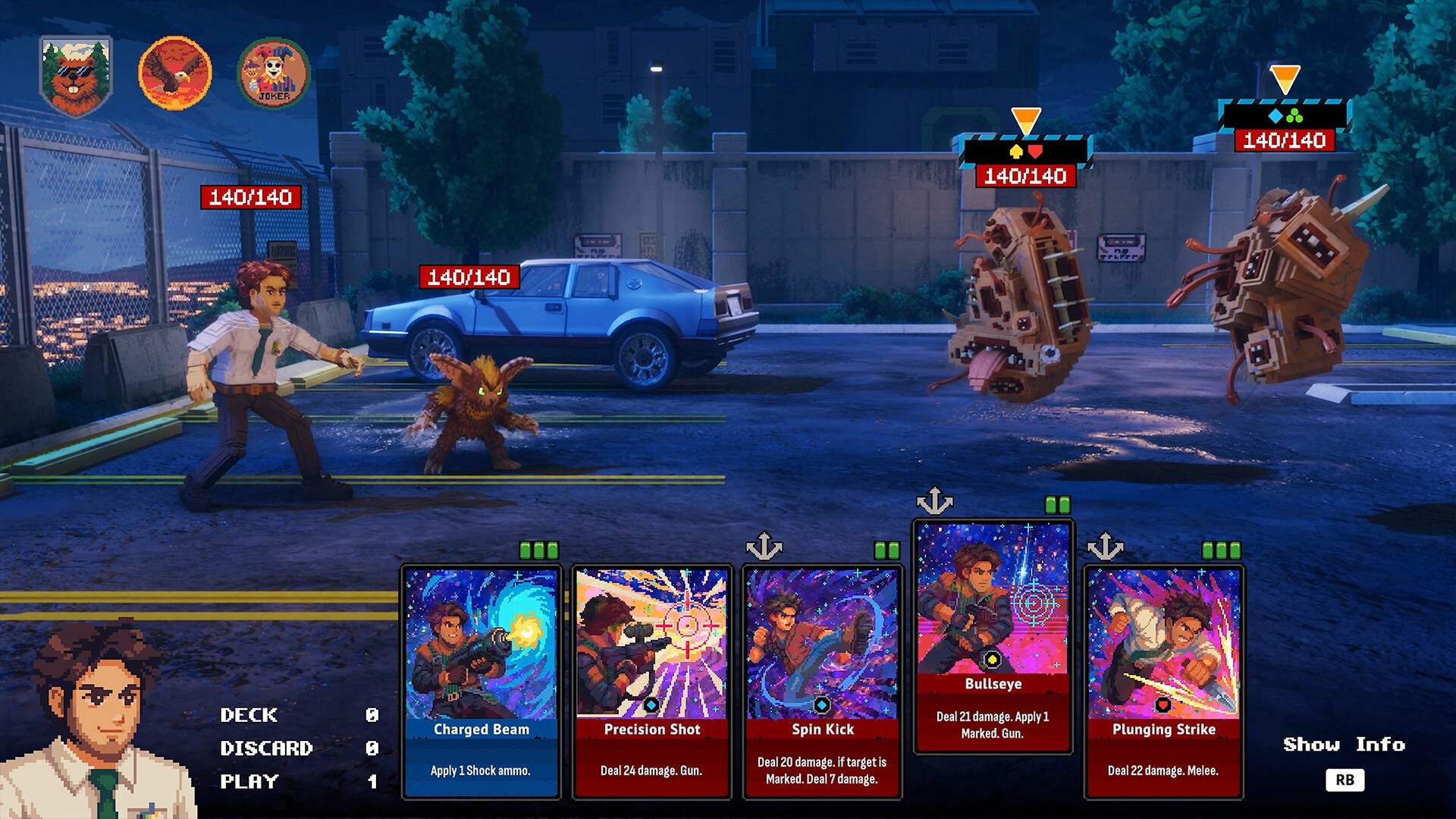
Combat is where Echo Generation 2 makes its clearest improvement over the original. The first game used a more traditional turn-based setup, while this sequel builds its encounters around cards, status effects, and character-specific deck identities.
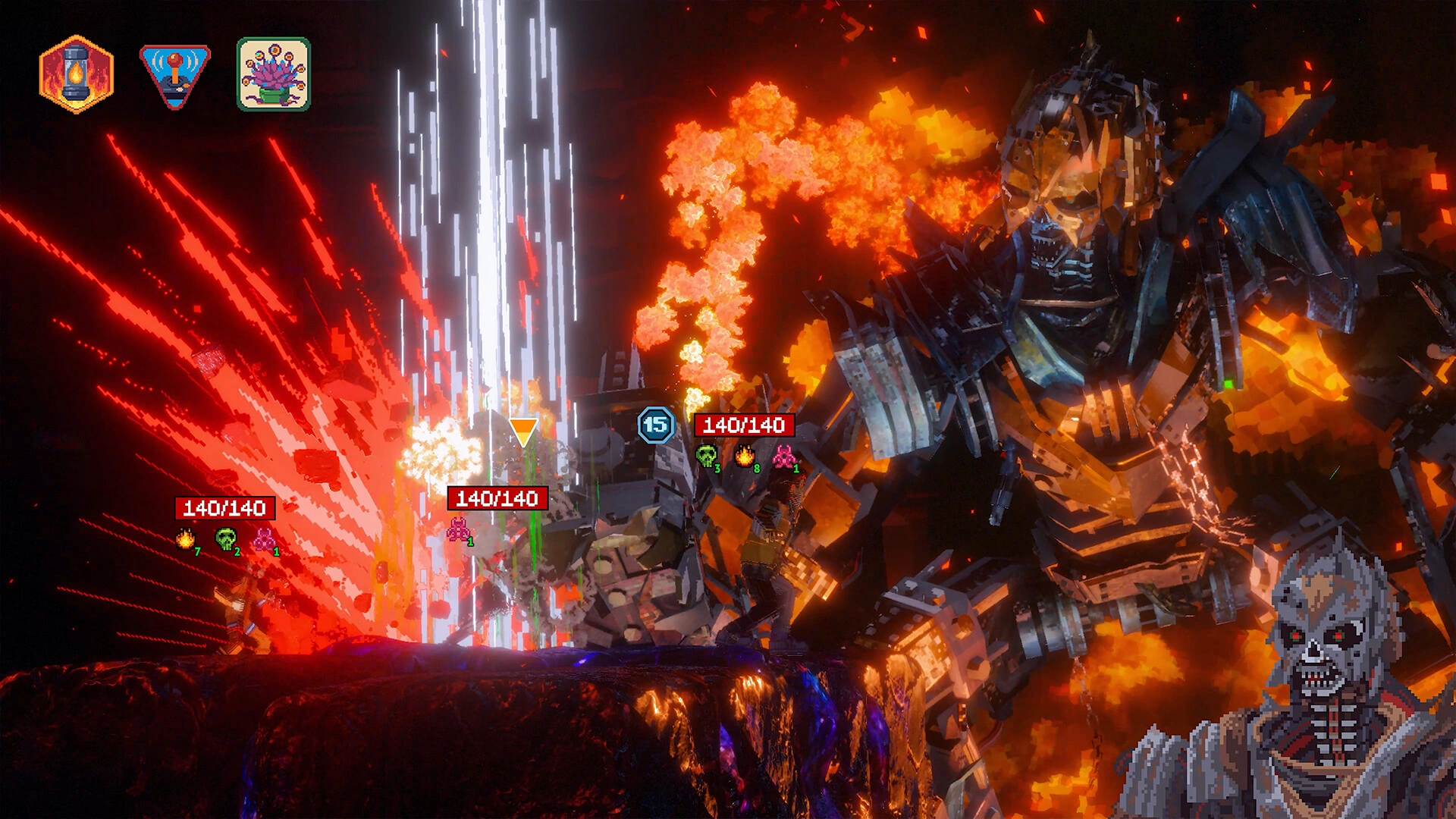
Each turn gives the player a hand of cards, then limits how many can be played through action points. Early fights are simple, but the system gains texture as characters level up and earn the ability to play extra cards per turn.
The best idea here is that each hero feels mechanically distinct. Jack’s deck uses marks to prepare enemies for stronger attacks and bonus effects. Bulder plays with low-health risk, turning self-endangerment into higher damage or extra effects. Other decks lean on poison, burn, shields, healing, stuns, guards, area attacks, ranged strikes, melee hits, and companion combos. It gives the cast identities that exist in play rather than dialogue alone.
That matters because the game does not reward lazy deck construction for long. Loading a deck with high-damage cards might work at first, then collapse against bosses or multi-wave fights. The stronger approach is to build around synergy: mark before attacking, stack poison on high-health enemies, use shields before incoming damage, stun at the right moment, and save certain cards for later waves. There is a satisfying shift when combat stops feeling like card dumping and starts feeling like planning.
The defensive timing mechanic keeps enemy turns from becoming passive waiting. Pressing the button before an attack lands reduces damage, though it does not erase the threat. Late-game enemies can break through shields, and bosses can punish careless play quickly. This gives fights a rhythm closer to Paper Mario or Super Mario RPG, where timing keeps the player physically involved during turn-based exchanges.
Progression adds another layer of preparation. Skill trees improve health, damage, shields, and core stats. Badges provide passive bonuses, and cards can come from battles, shops, exploration, and side quests. Forgetting to use these tools can make the difficulty spike feel harsher than intended. The game does heal players after fights, which softens some frustration, but tough bosses still demand experimentation.
The final gauntlet pushes this system hard. It asks the player to understand solo, duo, and full-party combinations, then punishes failure with repetition. That can create real tension, especially once stuns, shields, poison, and passive bonuses start carrying entire fights. It can also feel exhausting, since the closing stretch leans so heavily on battle after battle. The lack of difficulty options makes that design choice sharper. For players who enjoy tuning decks until a boss finally cracks, it can be rewarding. For players seeking a lighter RPG ride, it may feel like the game tightens its grip too late.
Compact Exploration and a Striking Sense of Place
Exploration in Echo Generation 2 is light, but it fits the game’s pace. The areas are compact, and the lack of a map rarely becomes a problem because spaces are easy to read. Players search for coins, cards, badges, key items, lore details, and small environmental clues. The rewards are modest, yet they give each chapter a reason to be inspected rather than walked through in a straight line.
This is not a deep exploration RPG in the style of larger genre entries. It is closer to a carefully staged adventure game, where moving through each scene builds mood and gives context to the next fight. Items open paths, objects hint at past events, and small conversations add texture without slowing the game down.
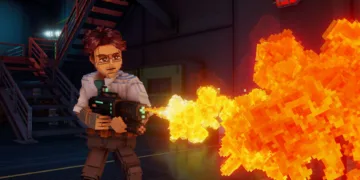
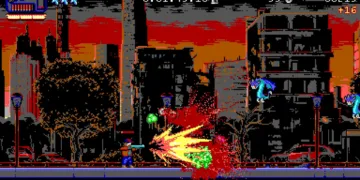
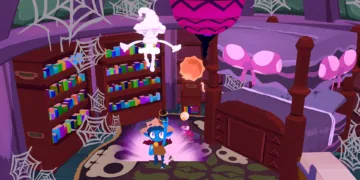
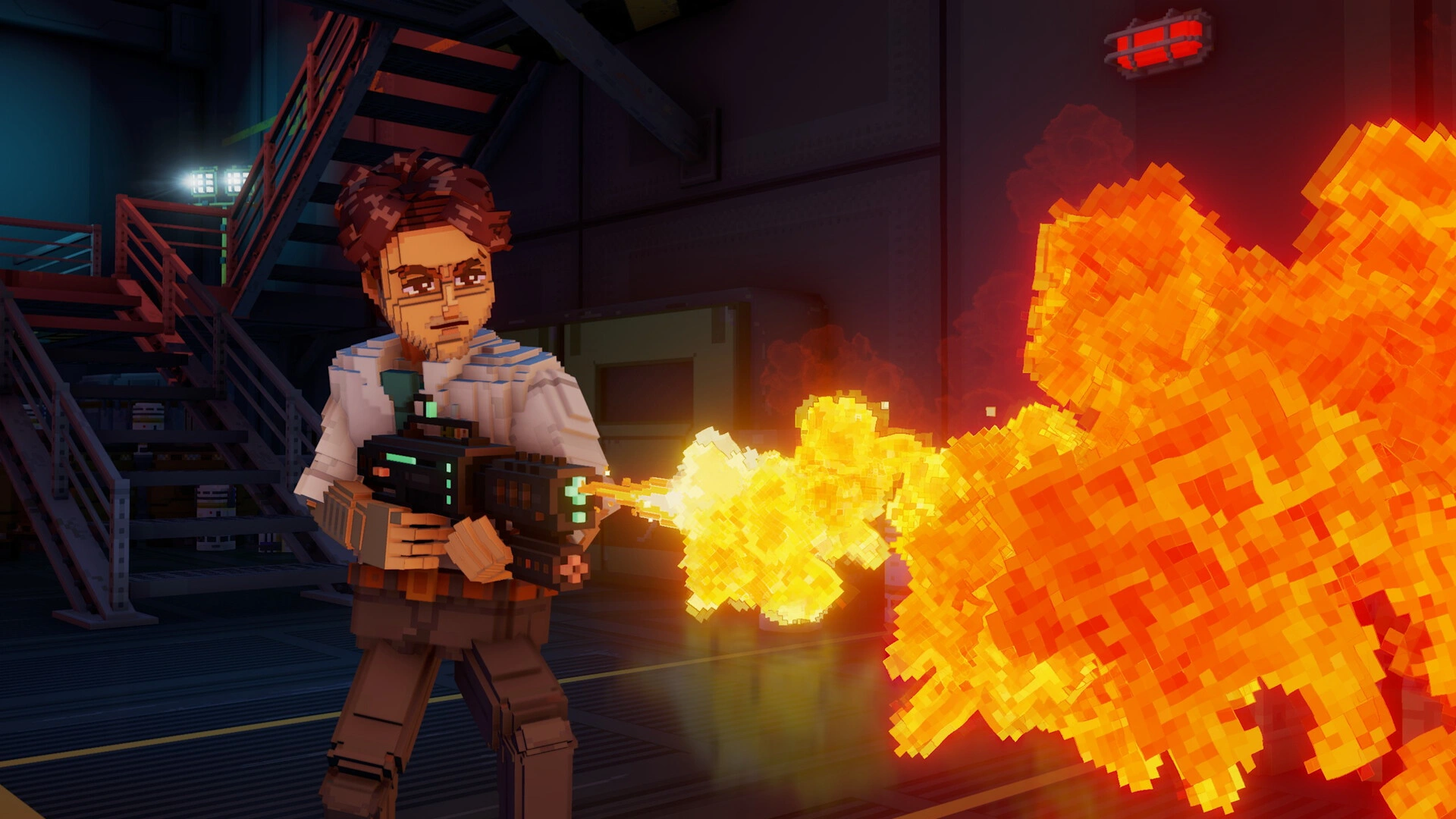
The presentation does a great deal of heavy lifting. Cococucumber’s voxel-pixel look remains instantly recognizable, and Echo Generation 2 uses it with confidence. The game jumps from glowing laboratories to forest retreats, from ruined zombie spaces to neon city streets, from late-80s homes to stranger cosmic locations. Each chapter has its own color language and visual rhythm. The character models are simple, but the lighting, backdrops, and staging make the worlds feel dense and carefully arranged.
The soundtrack is equally important. Exploration themes help each location settle into its own mood, while combat music brings enough energy to survive repeated encounters. The synth-heavy cyberpunk sections stand out, especially when paired with bright city lighting and Noliva’s bounty-hunter setup. The score supports both the retro flavor and the larger sci-fi scale.
The game’s short length helps and hurts it. At roughly eight hours, it moves quickly and rarely wastes time. That same pace limits how long players can live with each deck, each world, and each character arc before the next chapter takes over. Technical performance appears clean on Xbox Series X, with a smooth play experience. The Xbox PC version has an odd closing issue that may require Alt-F4 or using the taskbar, which sounds minor but still worth noting.
Echo Generation 2 is a stylish and imaginative sequel that improves the franchise’s combat language while expanding its universe in bold directions. Its final act rushes the emotional payoff, but its deck-building systems, visual identity, and chapter-to-chapter variety give it a strong personality in a crowded RPG space.
The Review
Echo Generation 2
Echo Generation 2 is a stylish, imaginative sequel with stronger combat, sharper deck-building, and a much larger sci-fi canvas than the first game. Its character chapters create a lively multiverse full of striking locations and smart card synergies, while the voxel art and soundtrack give each world a clear identity. The rushed final act weakens the story payoff, and the last gauntlet can feel repetitive, but the game’s tactical depth and visual charm make it an easy recommendation for deck-building RPG fans.
PROS
- Strong deck-building combat
- Distinct character abilities
- Excellent voxel-pixel visuals
- Memorable soundtrack
- Creative multiverse setup
- Rewarding boss strategy
CONS
- Rushed final act
- Limited character interaction near the end
- Some emotional beats move too quickly
- Final gauntlet can feel repetitive
- Light exploration may disappoint some RPG fans