














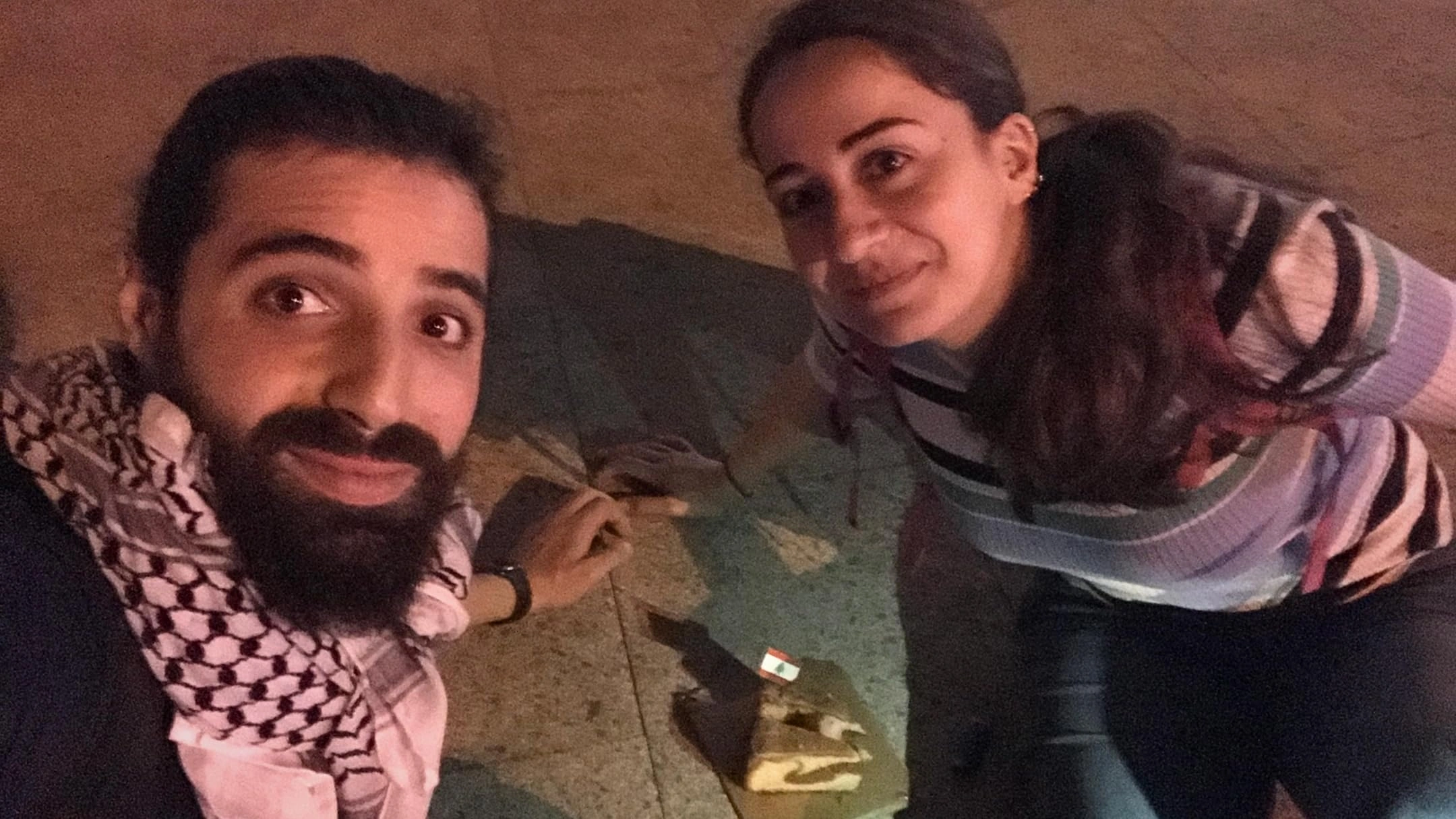

Birds of War turns the private archive into a battleground of feeling, memory, and moral exposure. Built from war footage, messages, voice notes, video calls, and years of personal recording, Janay Boulos and Abd Alkader Habak’s documentary follows a relationship formed under conditions that would flatten romance into cliché if fiction had invented them. Here, reality gives the material its sharp edge.
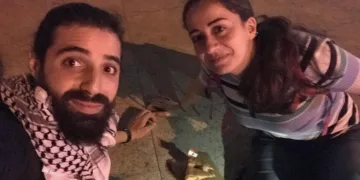
Boulos, a Lebanese journalist working from London for BBC Arabic, first connects with Habak, a Syrian activist-cinematographer filming from inside Aleppo. Their exchange begins as professional necessity. She needs images from a country where international reporters cannot freely work. He needs the world to see what is being done to his city. Between them lies the film’s central moral geometry: one person shapes the report from institutional distance, while the other risks his life inside the frame.
Across roughly 13 years, Birds of War moves through revolution, bombardment, exile, marriage, and displacement. Lebanon and Syria remain unstable presences, never reduced to mere background. The film becomes a personal archive of love under pressure, where journalism, fear, guilt, and longing occupy the same screen.
The Camera as Witness, Weapon, and Burden
Habak’s footage carries the documentary’s harshest force. His camera moves with the instability of a body trying to survive: handheld, breathless, often poorly lit, rarely composed in the polished sense. That lack of polish becomes its own grammar. The image is not arranged for aesthetic pleasure; it is seized from danger.
Civilians shelter underground. Hospitals are bombed. Families are displaced. Children appear in moments no child should ever occupy. People grow vegetables on rooftops because ordinary life, like cinema, sometimes has to improvise.
The visual field often resembles documentary noir, stripped of glamour and soaked in practical darkness. Night footage turns Aleppo into a zone of partial perception, where shadows, gunfire, and ragged breathing carry the dread that chiaroscuro once gave to alleyways and interrogation rooms. Except here, the fatalism is not stylized. It is civic collapse recorded in real time. Noir’s old question, “How trapped is this person?” becomes brutally literal.
Also Read






Boulos’s side of the film is shaped by a different architecture: newsroom screens, editorial filters, deadlines, institutional caution, and the appetite for usable images. The ethical tension is never simple. She is not a distant opportunist. She is a journalist learning the limits of mediated sympathy, aware that the war is her workday while Habak inhabits its blast radius.
That tension reaches a painful clarity after Habak rescues an injured child following an attack on an evacuation convoy. The image turns him into a global emblem of heroism and makes him newly vulnerable. His discomfort with the label matters.
A “hero” is easy to circulate. A man who keeps returning to danger is harder to process. The film asks what happens when suffering becomes news, then asks what news cannot carry. No newsroom memo can quite solve that one.
A Romance Written in Signal Loss
The love story gives Birds of War its pulse. Boulos and Habak’s relationship develops through fragments: safety checks, voice notes, video calls, cat photos, professional updates that soften into confession, and pet names that would sound too delicate in another film. “My bird” and “little bird” become private language against public ruin.
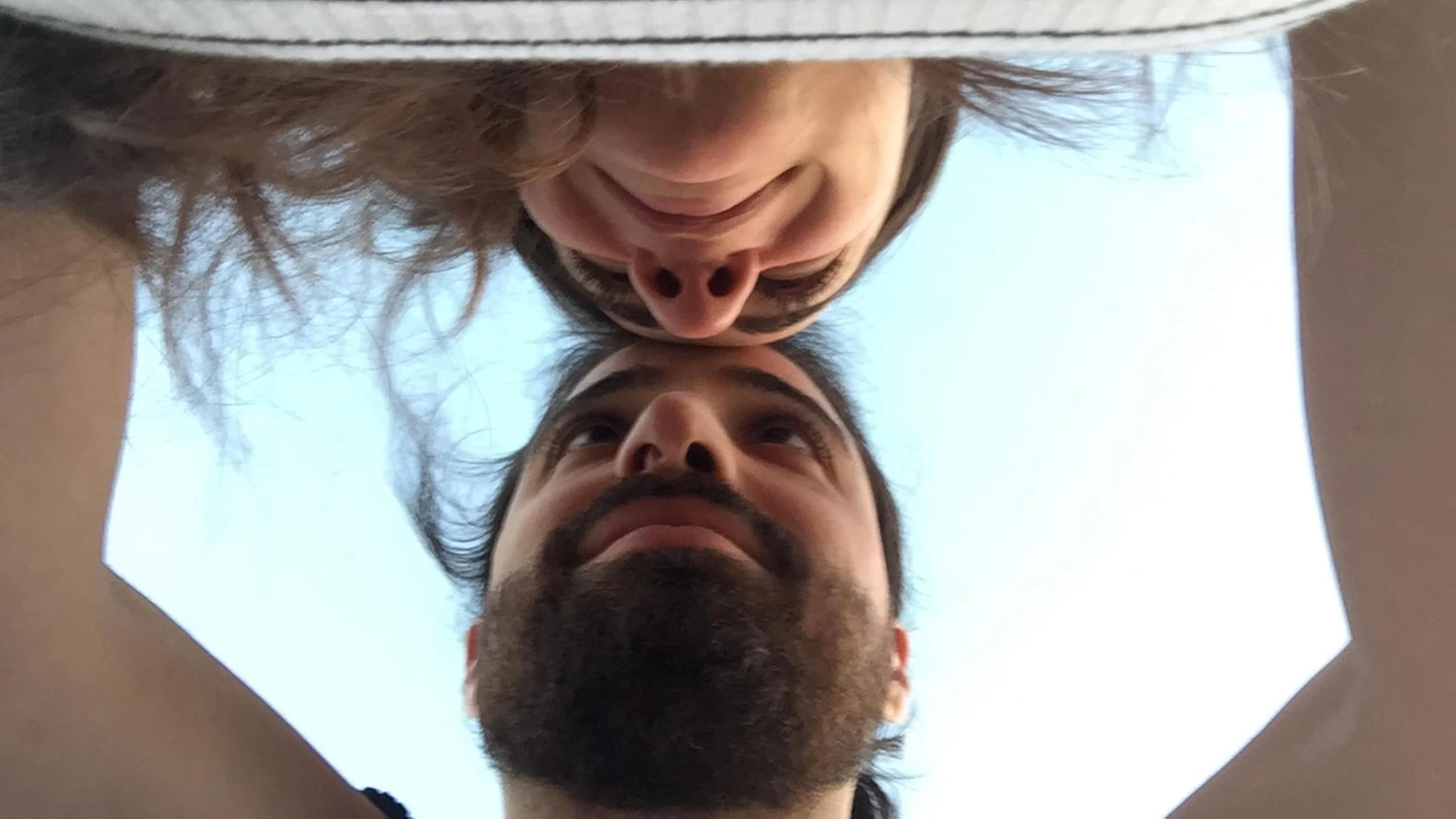
The symbol is almost too perfect, which is to say, life occasionally has no respect for subtlety. Birds suggest escape, fragility, distance, and the dream of flight beyond political cages. The title holds tenderness and threat in the same breath, caught between lovebirds and warbirds. That tension suits a film where intimacy often arrives through screens, and screens are both sanctuary and evidence.
There is a quiet intelligence in how the documentary lets romance emerge through media rather than against it. Their bond is not presented as escape from history. It is built through history’s interruptions. A dropped call, an unanswered message, a shaky frame in darkness: these become emotional beats with the precision of thriller editing. The viewer is trained to fear silence.
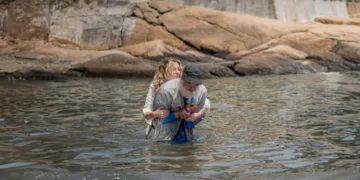
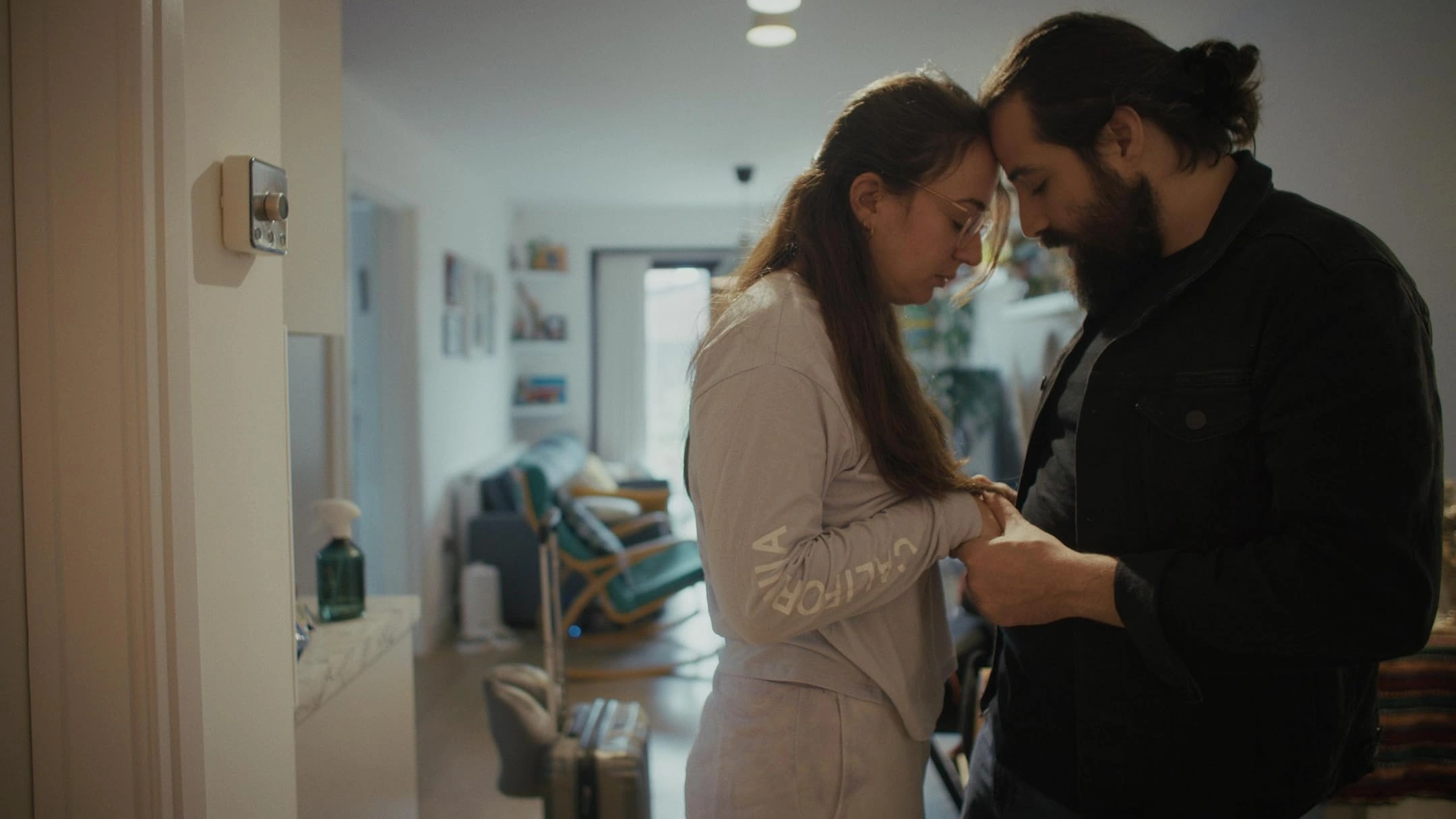
When the film later shifts toward Turkey and London, the visual register changes. Dust and debris give way to water, sky, domestic rooms, and the surreal brightness of paragliding above a blue coast. Relief arrives, then curdles. Habak’s exile, Boulos’s Lebanese displacement, their interfaith marriage, and the pull of family and homeland all complicate any easy notion of rescue. They find belonging in each other, yet peace remains provisional. War has a nasty habit of forwarding its mail.
Archive, Form, and the Pressure of Memory
Formally, Birds of War trusts the archive. The film avoids conventional talking-head scaffolding, preferring phone footage, news material, message exchanges, calls, narration, and private recordings. That choice keeps the viewer inside lived experience rather than safely outside it. The structure is linear enough to follow, fragmented enough to feel true.
The opening is especially effective: darkness, gunfire, anxious breathing, urgent texts. It throws the audience into uncertainty before offering context, a tactic closer to psychological thriller grammar than standard historical documentary. Perception comes before explanation. Fear arrives before facts. The sound design does much of the work, tightening attention around breath, distance, and the dreadful possibility of no reply.
Editing is the film’s main act of authorship. It moves between London and Syria, public catastrophe and private tenderness, professional exchange and romantic disclosure. The cross-cutting gives the documentary a moral rhythm: every image from the ground seems to ask what the viewer can bear, while every message between Boulos and Habak asks what connection can survive.
There are limits. The score sometimes presses too firmly on emotions already present in the footage. The later years can feel compressed, especially the couple’s adjustment to marriage, London life, renewed separations, and the continuing instability of their homelands. The political timeline may leave some viewers wanting deeper orientation.
Still, the film’s plainspoken force comes from its belief that love and journalism can both become forms of witness, each carrying beauty, compromise, and risk inside the same fragile frame.
Birds of War is a multinational independent documentary feature film that celebrated its world premiere at the Sundance Film Festival on January 24, 2026, where it won the World Cinema Documentary Special Jury Award for Journalistic Impact. Chronicled by co-directors and subjects Janay Boulos and Abd Alkader Habak, the project draws on a massive 13-year personal archive of raw texts, video fragments, and intimate voice notes to trace a romantic relationship between a London-based Lebanese BBC journalist and a frontline Syrian cameraman navigating the horrors of the battle for Aleppo. Cinema enthusiasts can track the award-winning feature across the global independent film festival circuit, including major screenings at Hot Docs, Visions du Réel, and the Sydney Film Festival, while commercial theatrical rollout and streaming distribution rights are managed internationally by Dogwoof.
Full Credits
Title: Birds of War
Distributor: Dogwoof, Madman Entertainment
Release date: January 24, 2026
Running time: 85 minutes
Director: Janay Boulos, Abd Alkader Habak
Writers: Janay Boulos, Abd Alkader Habak
Producers and Executive Producers: Sonja Henrici, Janay Boulos, Abd Alkader Habak, Claire Ferguson
Cast: Janay Boulos, Abd Alkader Habak
Director of Photography (Cinematographer): Janay Boulos, Abd Alkader Habak
Editors: Claire Ferguson, Will Hewitt, Tanya Singh
Composer: Harpal Mudhar, Darren Sng
The Review
Birds of War
Birds of War is a raw, intimate documentary that finds its power in the collision between witness and longing. Its archive-driven form gives the film urgency, while Janay Boulos and Abd Alkader Habak’s relationship brings warmth to material shaped by fear, exile, and moral strain. The score occasionally overstates what the footage already says, and the later years feel compressed, yet the film remains deeply affecting.
PROS
- Powerful personal archive footage
- Moving central relationship
- Strong focus on war journalism and ethical tension
- Urgent editing and immersive sound design
- Thoughtful handling of exile, guilt, and belonging
CONS
- Score can feel too forceful
- Some political details may need fuller context
- Later chapters feel rushed
- Visual style relies heavily on raw footage rather than formal invention