


























The ship never sounds empty, which is part of the trap. Metal groans, wind presses against the hull, ice snaps under the vessel, and every corridor seems to carry a secret from one cabin to the next. Rodrigue Jean’s Labrador: Autopsy Of Silence takes a murder at sea and strips away the usual satisfactions of the whodunit. The body matters. The killer matters. What matters most is the pressure placed on the person least protected by the world around him.
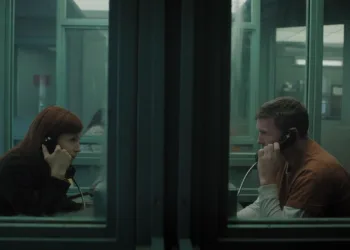
That person is Alupa Tulugak, an Inuk mechanic played by first-time actor Christopher Angatookalook. He works aboard the Adeawiktak, a cargo freighter making its final supply run through the icy waters of northern Canada. His lover, Alex, is the ship’s cook, and their relationship exists in the narrow private spaces that the ship allows. A cabin. A shower. A bed. Then Alex is found murdered, and Alupa’s silence becomes evidence in a system already prepared to mistrust him.
A Mystery That Refuses the Usual Shape
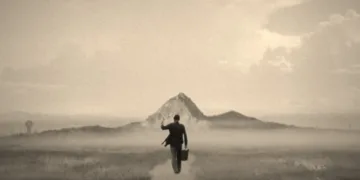
The film’s structure is deliberately fractured, and this is where Jean’s patience becomes both an asset and, at times, a risk. We do not begin with the murder. We begin on the ice, where Alupa and Alex hunt seal in a white expanse that feels almost outside time. When police later wait for Alupa, Alex tells him to explain what happened. Alupa’s answer, that speaking would only cause trouble, becomes the film’s quiet thesis.
Caleb Anderson mode fully activates here, because the editing is doing something useful rather than decorative. Nonlinear storytelling can often feel like a prestige-film habit, the sort of shuffled timeline meant to make a simple story look heavier. Here, the broken chronology reflects Alupa’s position. He knows pieces of the truth, fears the cost of each one, and has learned that truth does not always travel cleanly through official rooms.
The shipboard scenes are the film’s strongest narrative material. Alupa works in the engine room, physically close to the machine and socially distant from the crew. Alex’s kitchen has warmth and routine, making his cabin feel like an even smaller sanctuary once the two men are alone. Michelle, the first officer, enters Alex’s room with the authority of rank and the cold expectation that Alex will comply. Those scenes have no romance in them. They are built from power, fatigue, and resentment.
Also Read






The investigation that follows exposes the limits of the murder-mystery frame. The questioning, the medical evidence, and the hearing on land create a procedural spine, yet the film loses some of its charge away from the freighter. The courtroom material is clearer than it is alive. Jean is far better at showing how suspicion gathers around Alupa in a hallway than at making legal testimony carry the same dread.
Christopher Angatookalook and the Work of Stillness
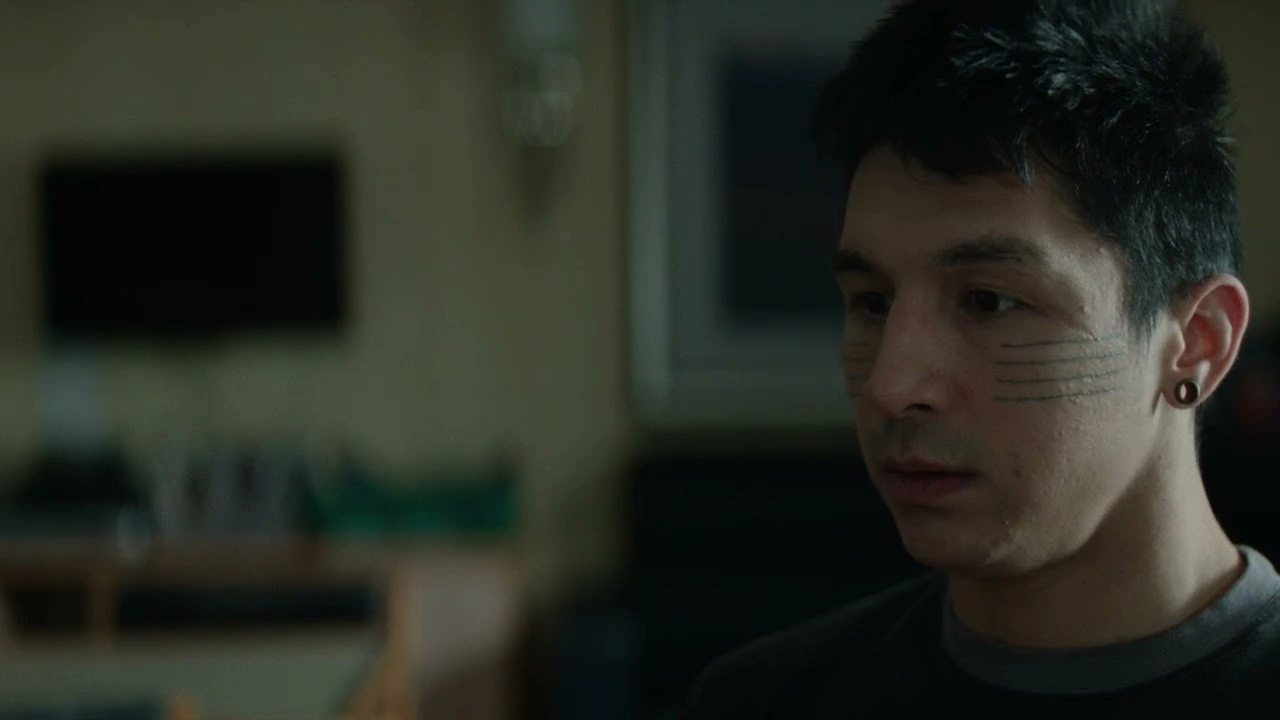
Angatookalook gives the film its center through restraint so controlled that it can take a minute to notice how much he is doing. Alupa rarely explains himself, and the performance refuses the obvious release of a breakdown. Watch his eyes when white crew members mispronounce his name. Watch the slight tightening in his body during questioning. Watch the evidentiary hearing, where his face stays composed, yet the eyes look like they are searching for a door that is no longer there.
The film understands that silence is not emptiness. For Alupa, silence carries grief, desire, fear, anger, and calculation. If he tells the full truth about his relationship with Alex, he risks exposing his sexuality to investigators, crew members, and a community where that revelation may carry its own punishment. If he withholds it, his silence looks like guilt. That bind gives the performance its ache.
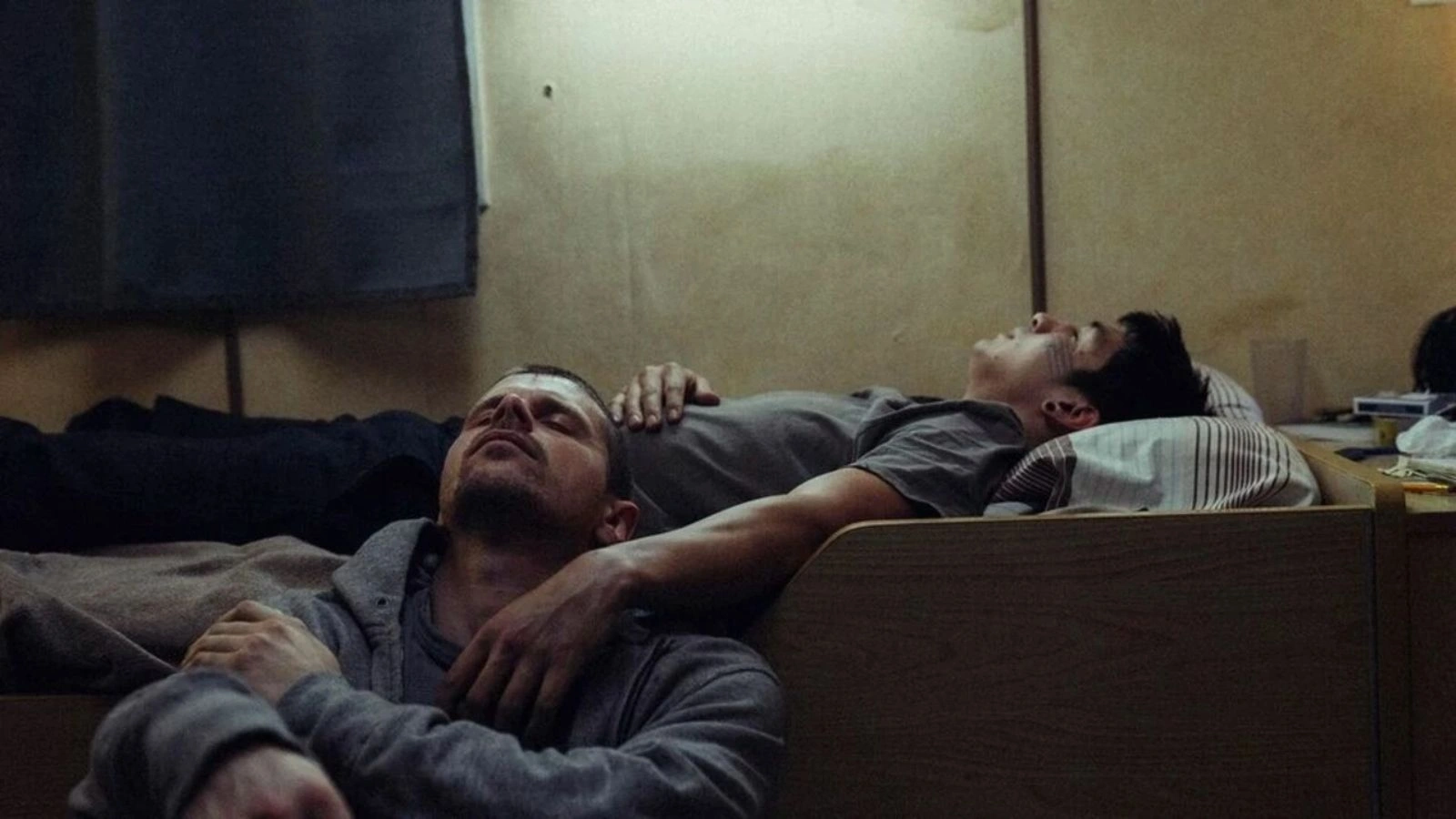
The scenes with Alex let Angatookalook loosen his face and posture in small increments. The shower scene and the moments in bed matter because they are among the few spaces where Alupa is not bracing for impact. Alexandre Landry gives Alex a warmth that helps explain the pull between them, though the character is often shaped by what others need from him. Michelle, played by Gabrielle Poulin B., has a colder function. Her authority cuts through the ship’s fragile privacy, and the film uses her presence to make clear that intimacy aboard this vessel is never free from hierarchy.
A subplot involving Alupa’s cousin Donna widens the film’s sense of exile. She lives under a bridge after leaving her Indigenous village, and her scenes complicate any easy idea of home as refuge. The ship is hostile, the legal system is hostile, and land offers no clean rescue.
Cold Images, Warm Rooms
Mathieu Laverdière’s cinematography gives the film its most immediate language. The exterior world is drained into blues, greys, white ice, and industrial steel. The Adeawiktak is filmed through narrow corridors, engine spaces, and cramped cabins, so the ship feels less like a setting than a social order made of metal. Everyone is close. Almost nobody is reachable.
I kept noticing how the camera treats Alex’s cabin differently before and after the murder. Before, it is small but warm, a private pocket where two men can stop performing for the crew. After, that same space becomes contaminated by violence and evidence. The shift is simple, and it hurts because the film has already taught us what the room meant.
Sound design carries much of the emotional weight. Radwan Ghazi Moumneh’s sparse score enters carefully, leaving room for the ship’s creaks, the storm, the ice, and the low mechanical hum. The result is a film that often feels suspended between a thriller and a ghost story. Alex remains with Alupa after death as memory, imagined companion, and lost future. In the film’s most lyrical passages, the dream of going north together becomes less an escape than the only language Alupa has left for love.
Labrador: Autopsy Of Silence can be too stiff when it moves into formal procedure, and some supporting characters are drawn with less complexity than Alupa receives. Yet its best scenes understand something profound about cinematic quiet. Silence can protect. Silence can accuse. Silence can become the room where injustice waits, calmly, for someone else to speak first.
The atmospheric Canadian psychological thriller Labrador – Autopsy of Silence made its global debut at the Tribeca Festival on June 6, 2026, where it secured major awards in the international narrative competition, including best film. The story unfolds in reverse chronology following the mysterious murder of a cargo ship’s cook during a fierce storm off the coast of Labrador, forcing an Inuit mechanic to confront a wall of suspicion, isolation, and rigid social hierarchies. Audiences can catch the award-winning feature as it continues its summer 2026 festival run across specialized venues like the Frameline Film Festival, with regional digital and theatrical distribution managed by h264 distribution.
Full Credits
Title: Labrador – Autopsy of Silence (Labrador — Autopsie du silence)
Distributor: h264 distribution
Release date: June 6, 2026
Running time: 121 minutes
Director: Rodrigue Jean
Writers: Rodrigue Jean
Producers and Executive Producers: Patricia Bergeron, Cédric Bourdeau, Rodrigue Jean
Cast: Christopher Angatookalook, Alexandre Landry, Gabrielle Poulin B., Jassinth Thiagarajah, Arsaniq Deer
Director of Photography (Cinematographer): Mathieu Laverdière
Editors: Paul Chotel, Omar Elhamy
Composer: Radwan Ghazi Moumneh
The Review
Labrador: Autopsy Of Silence
Labrador: Autopsy Of Silence is at its best when it lets image, sound, and performance carry what Alupa cannot safely say. Rodrigue Jean’s film loses some force in its courtroom passages, where procedure stiffens the drama, but Christopher Angatookalook’s controlled, wounded performance keeps the emotional line intact. The murder mystery is secondary to the film’s sharper achievement: showing how silence can become both refuge and prison for a man denied trust before he speaks.
PROS
- Christopher Angatookalook’s restrained lead performance
- Haunting shipboard atmosphere
- Precise sound design
- Tender Alex and Alupa scenes
- Strong use of icy visual space
CONS
- Courtroom scenes feel stiff
- Michelle is narrowly drawn
- Alex remains partly symbolic
- Slow pace may test some viewers