
























Vinko Kodzoman gives himself almost no machinery: a widower, an infant, a route back to the widower’s father, and a chain of memories that refuse to stay buried. Kinsfolk is a small narrative adventure built from walking, listening, and occasional interaction, closer to Dear Esther or Everybody’s Gone to the Rapture than to puzzle-heavy first-person storytelling.
It can be finished in roughly 40 minutes to an hour, which matters because the game asks for a very specific bargain. It wants the emotional concentration of a short story, then offers the mechanical body of a walking simulator.
That bargain works better than it should in some places. The father’s grief after his wife’s death gives the journey a clean emotional line, and the trip to visit his own father gives the premise a useful generational shape. This is a game about fatherhood looking backward and forward at the same time: one man carrying his child while measuring himself against the parent who shaped him.
Fathers, Sons, and the Shape of Memory
The unnamed protagonist is written as an archetype, which is both the point and the limitation. Leaving him nameless lets the game treat grief as something broad, almost fable-like. He is a husband who has lost his wife, a father afraid of failing his baby, and a son still carrying damage from childhood. That makes his emotional path easy to read, but it also means the writing has very little time to give him texture outside pain, worry, and reflection.
The strongest parts arrive when Kinsfolk lets memory change the player’s relationship to the scene. The childhood chicken-catching sequence seems plain at first: a brief first-person recollection where the player gathers chickens and returns them to the coop.
Its real function appears later, during the deer-hunting memory. The game trains us to assume first person means the father’s point of view. Then the bow fires, the camera drops, and the player realizes the scene was seen through the deer’s eyes.
That is the game’s best design idea by a clear margin. The shock comes from the player’s assumption, not from a cutscene telling us what to feel. It is the kind of trick walking simulators need if they want to justify their format. The perspective shift turns a simple memory into a moment only a game could deliver. The weaker symbolic beats, including the baby deer material, do not carry the same force. They resolve too neatly, with a softness that makes the grief feel tidier than the father’s situation deserves.
Walking, Running, and One Bad Climb
As a game, Kinsfolk is mostly movement. You travel through snowy paths, fields, forests, and mountain spaces, with light object interactions placed near the main route. The protagonist comments on certain items, but there is little hidden off the path, and exploration rarely pays back curiosity with discovery. Players who enjoy walking sims for environmental detail may wish the world had a few buried conversations, optional memories, or quieter objects that say something new about the family.
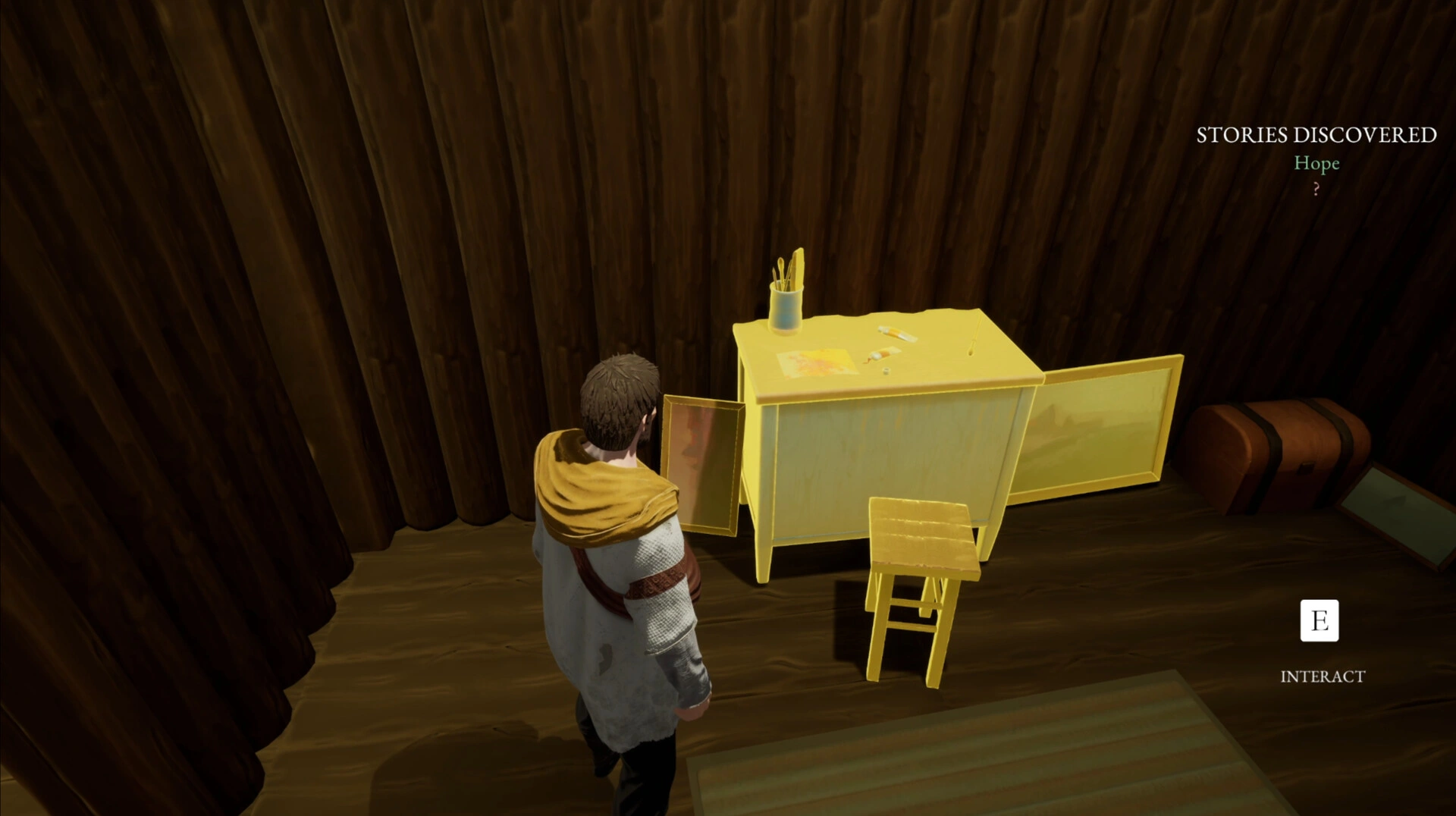
One smart pacing choice is that the father runs by default. Many games in this genre force a slow walk in the name of mood, which can make curiosity feel punished. Here, crossing open stretches has a cleaner rhythm, and the game slows the player during story beats or when the baby needs comfort. That small control decision respects the player’s time in a game that has very little of it to waste.
The mountain platforming is the opposite case. Jumping across pillars, rocks, and ladders is meant to externalize the father’s struggle, but the ledge-grab timing makes the sequence fussy rather than expressive. Falling does not cost much, yet repeating jumps while the baby cries turns metaphor into friction. A walking simulator can use awkward movement deliberately, but here the annoyance comes from execution. The section feels borrowed from a different game, then left in without the handling to support it.
Landscapes That Carry the Feeling
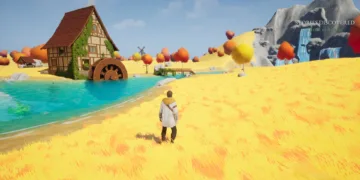
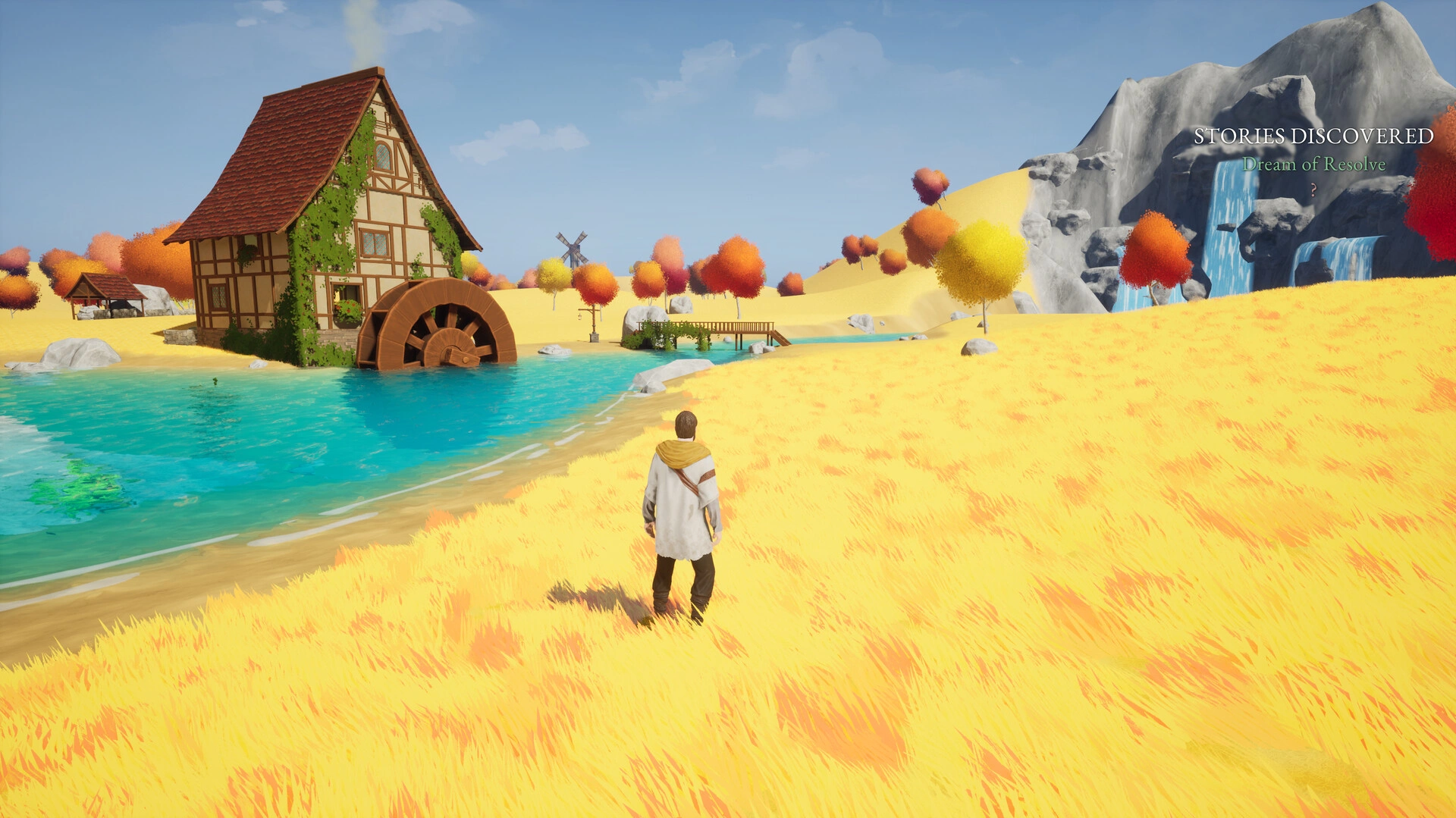
The low-poly visual style suits the material best when the camera keeps some distance. Snowy routes around the father’s home, golden fields in the middle stretch, forest passages, and later fields of purple flowers give the journey a clear seasonal progression. The colors do a lot of emotional work. They suggest movement through grief without forcing each location to become a lecture about healing.
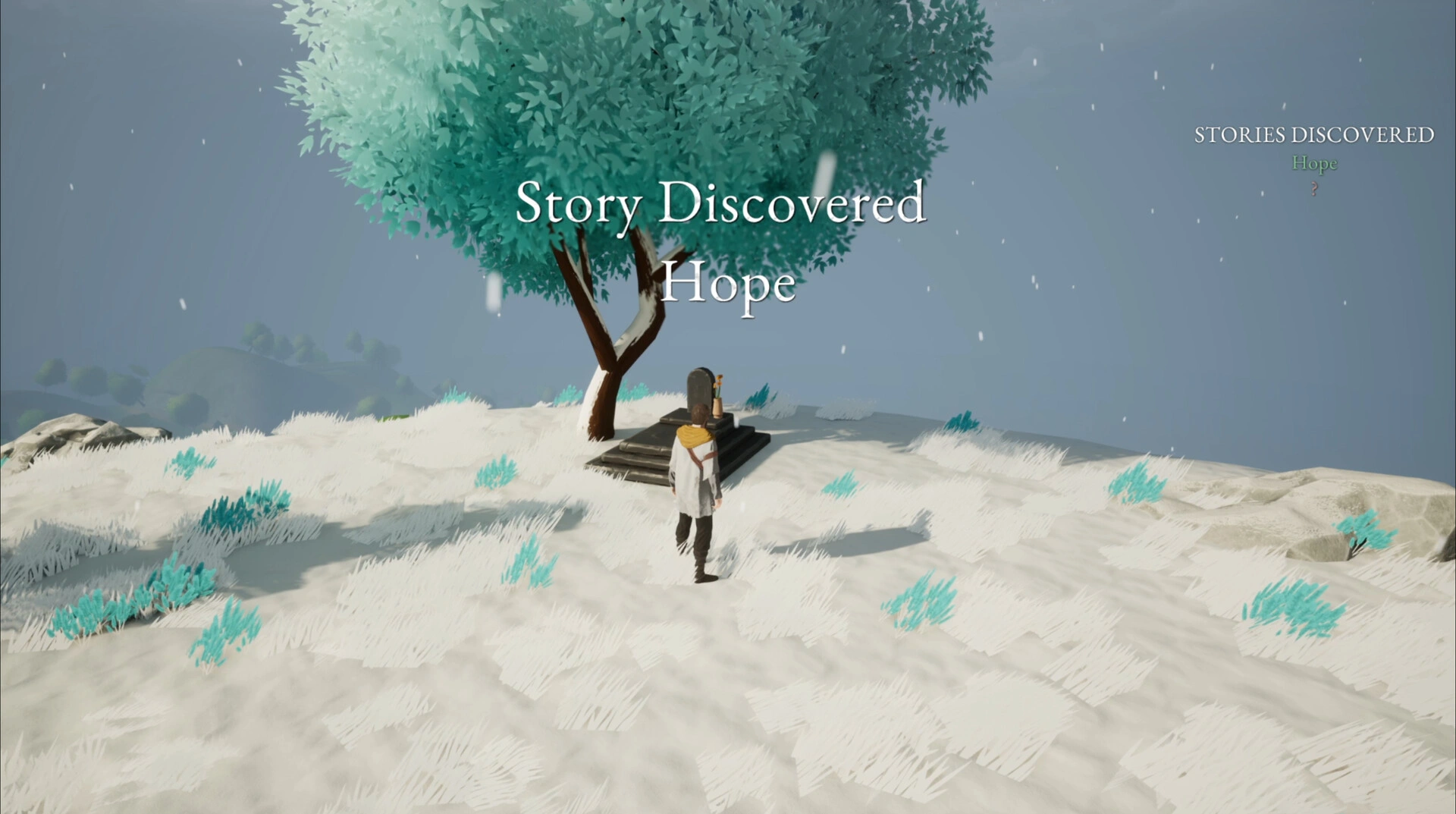
Up close, the illusion weakens. Some textures look rough, water reacts with little physical presence beyond a blue tint, and the world can feel underpopulated. The baby is also a strange absence inside the image. The father carries the child in a sash, but the sash often reads flat against his body, which makes the most important relationship in the game visually less convincing than it should be. Smaller details also pull at the setting: fresh fruit and flower pots in an isolated winter home raise questions the game has no interest in answering.
The voice performance does a lot to hold the piece together. The father’s actor finds the right shifts between exhaustion, wonder, and soft reassurance when speaking to the baby. Since the game has so few active characters, that vocal control becomes its main character work.
The repeated baby cries are less successful, especially during the climb, where the loop draws attention to itself. The soundtrack is restrained and reflective, giving scenes space rather than smothering them. The subtitles need polish, with punctuation issues and occasional mismatches that distract from otherwise sincere delivery.
A Small Game Beside Bigger Relatives
Kinsfolk sits in a difficult part of the walking-sim family tree. The best games in this space use limited interaction to sharpen attention: a house becomes an argument, a path becomes a confession, a repeated action becomes dread. Kodzoman’s debut understands that principle in flashes. The deer memory proves it. The default running speed helps it. The father’s voice often reaches the feeling the script is chasing.
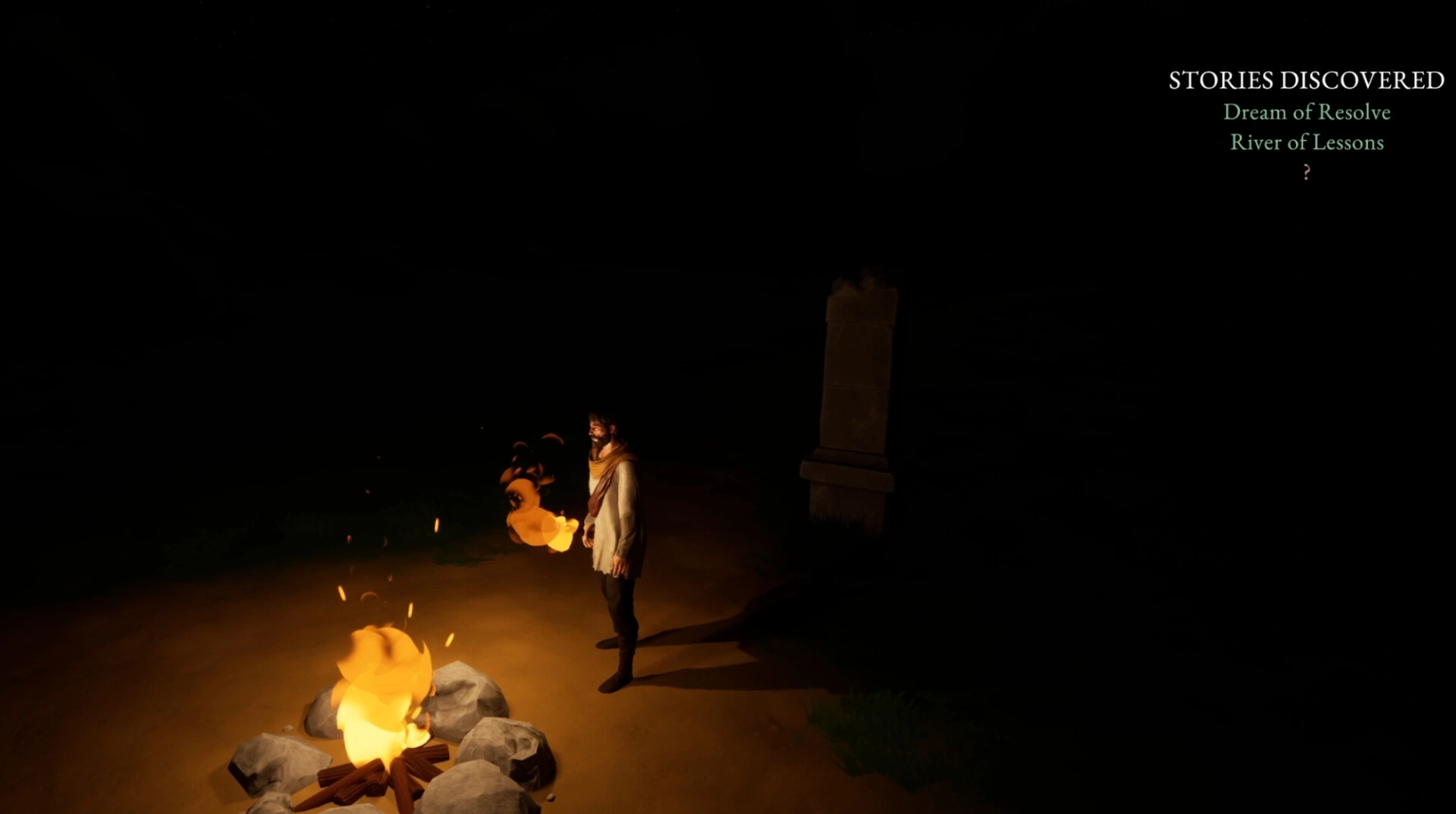
The thin exploration, rough platforming, and short runtime keep it from standing beside the genre’s stronger examples. There is no reason to replay it, no alternate path to test, and little mechanical depth beyond movement and memory triggers.
Still, as a compact story about grief, fatherhood, and inherited fear, it has enough sincerity to matter for the right player. It is slight, sometimes too clean in its symbolism, and visibly made at a modest scale. Then the deer falls, and for a few seconds, the whole design knows exactly why it had to be a game.
The Review
Kinsfolk
Kinsfolk works best as a brief emotional vignette, less as a fully satisfying game. Its fatherhood story has sincerity, the deer memory uses perspective with real design intelligence, and the low-poly landscapes often carry the feeling better than the writing does. The weak platforming, repeated audio, rough subtitles, and short runtime keep it from fully matching the stronger walking simulators it clearly sits beside. Still, for players open to a compact grief story, it leaves a mark.
PROS
- Clever deer memory sequence
- Strong voice performance
- Striking low-poly landscapes
- Focused fatherhood theme
CONS
- Very short runtime
- Thin exploration rewards
- Awkward mountain platforming
- Repetitive baby audio
- Rough subtitle punctuation