
























The most interesting thing Iko Uwais does in Timur has surprisingly little to do with throwing punches. His directorial debut takes the machinery of a military rescue thriller and jams a wounded family drama inside it, forcing commandos and kidnappers to share space with memories of three boys who once considered themselves brothers.
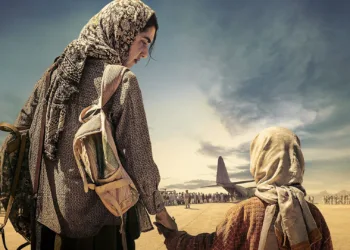
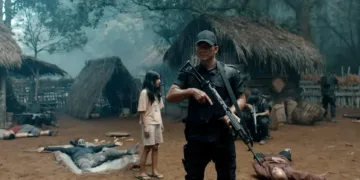
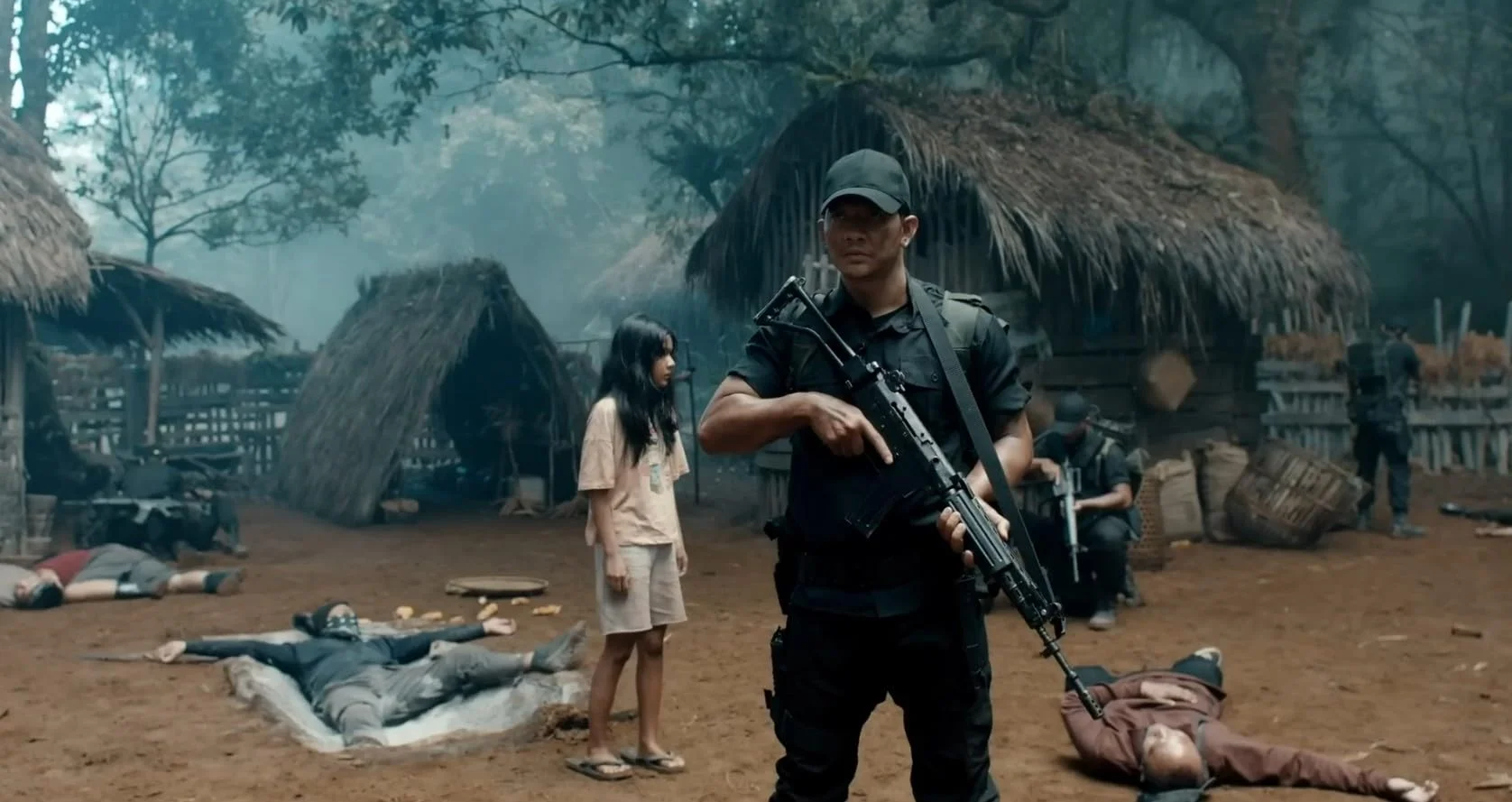
Loosely inspired by the 1996 Mapenduma hostage crisis, the film sends six researchers into the Indonesian wilderness before armed men storm their camp. Commander Tobias’s group murders the village head, captures the researchers, and reveals that local guides Apolo and Yoseph have been working with the kidnappers. The government responds by deploying an elite Special Forces unit that includes Timur, played by Uwais, and Sila, played by Jimmy Kobogau.
Their mission becomes personal once Apolo enters the picture. Timur, Sila, and Apolo grew up together under the care of the same foster family. Timur eventually left their village, and Apolo interpreted that departure as abandonment. Years later, one brother wears a military uniform while another stands among the people that uniform has been sent to fight. It is a strong dramatic setup. The difficulty lies in how aggressively the film explains it.
Memories Against Momentum
Timur repeatedly cuts away from the rescue operation to scenes of the three boys growing up together. Flashbacks are simply scenes placed outside the present timeline, and filmmakers often use them to reveal information at the moment it carries maximum emotional weight. Here, their purpose is clear. Each childhood passage makes Apolo harder to dismiss as another armed obstacle waiting for Timur’s fists.
Aufa Assagaf benefits greatly from that structure. His Apolo carries resentment that has been accumulating since Timur left, and the flashbacks give his later decisions an identifiable source. There is sadness behind his anger, which makes the eventual confrontation between the brothers stronger than a straightforward hero-versus-terrorist showdown.
The problem is placement. A rescue thriller depends heavily on sustained pressure. Soldiers enter hostile territory, information narrows their options, danger closes around them, and each decision should make the next one harder. Timur regularly builds that pressure, then leaves the operation for another childhood memory.
Also Read






The first half suffers most. Uwais clearly wants viewers to care about the brothers before the violence accelerates, yet the hostage storyline receives comparatively little attention. The researchers begin the movie as the reason everyone is entering the jungle, then spend long stretches functioning mostly as objectives on a tactical map.
Some military decisions create another issue. The film establishes Timur’s unit as highly trained, then occasionally has soldiers expose themselves or make questionable tactical choices so another casualty can occur. Training montages promise precision. The mission does not always deliver it.
Let the Fighters Fight
Once Uwais gives his stunt team room to work, you can see exactly why his name still carries such weight in action cinema. The rescue operation moves through firefights, quiet guard takedowns, machete clashes, and close-range brawls without relying on a single combat rhythm.
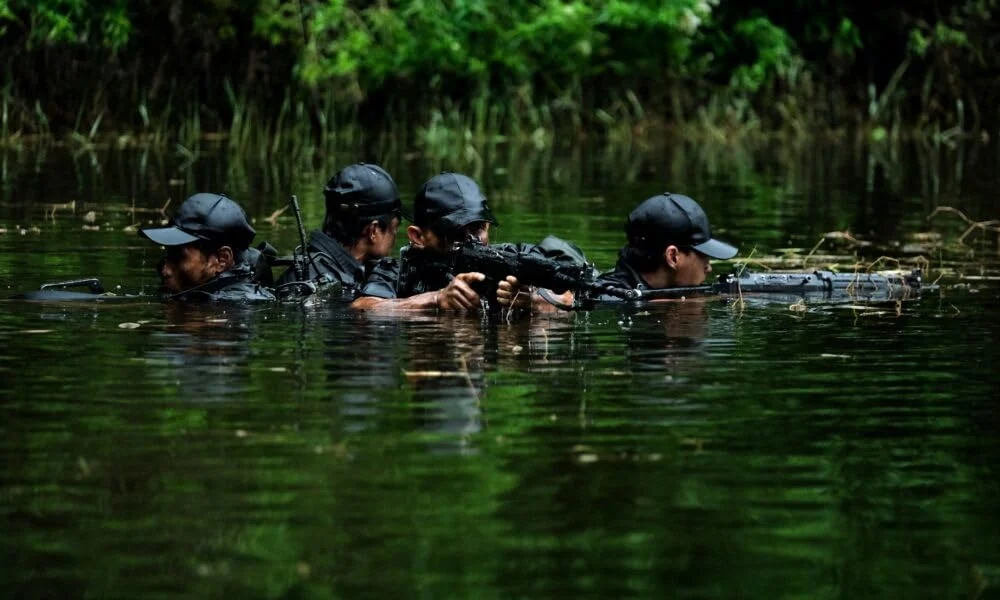
One recurring idea is especially fun: soldiers use their rifles almost like staffs, catching or deflecting blades with the barrels before counterattacking. It creates an unusual visual vocabulary for gunmen trapped at knife range. I enjoyed watching the stunt team develop variations on it, even if part of my brain kept asking why an armed soldier would keep trading blows instead of creating enough distance to fire.
The choreography has plenty of physical conviction. Macho Hungan’s Frans stands out whenever the film gives him room to use his kicks, while Uwais remains an extraordinarily readable performer when his whole body is visible. That last qualification matters.
Uwais relies heavily on handheld camerawork during combat. Handheld simply means the camera operator is physically carrying the camera rather than locking it onto a tripod or another stabilizing system. Used carefully, it can make a fight feel immediate because the camera seems to move inside the danger. Here, it often moves too much.
Several fights are photographed from restless medium distances, with the frame shaking while bodies cross one another. The technique should increase urgency, yet it sometimes hides the choreography. During the busier clashes, I found myself identifying motion before I could identify who was hitting whom.
That is especially frustrating because the Uwais Team has already done the hard part. The performers know how to sell impact, maintain rhythm, and move through complicated exchanges. A steadier frame would let us appreciate the work. Weak digital blood effects occasionally make matters worse, placing artificial-looking splashes beside very real physical exertion.
A Director Learning Scale
Where Uwais looks immediately comfortable is with size. Dimas Imam Subhono’s cinematography turns misty treetops, streams, highlands, and scattered villages into a convincing operational environment. Helicopters moving above the jungle give the rescue mission a scale that separates Timur from the claustrophobic action spaces that helped define Uwais’s earlier career.
That environment presents difficult filmmaking problems. Outdoor productions have to control weather, terrain, crowds, vehicles, performers, explosions, and camera positions across spaces that refuse to behave like sets. Timur handles those logistics with surprising confidence for a first feature.
Army support helps. The helicopters, rifles, uniforms, vehicles, and evacuation sequences give the military side of the production convincing weight. Some antagonist costumes look suspiciously clean for people living deep in hostile terrain, and the conservative color grading rarely turns the jungle into anything stranger than attractive scenery. Still, the physical scale rarely feels cheap. Sound is less dependable. Certain stretches of dialogue become muddy enough that subtitles carry information the mix should communicate on its own.
I came away less interested in comparing Uwais’s directing to his acting than in seeing what happens once he learns to separate the two instincts. The performer in him loves proximity, velocity, and impact. The director needs to decide when the best way to capture those qualities is simply to hold the camera still and let the people in front of it do what they already know how to do.
Timur premiered in Indonesian theaters on December 18, 2025, produced by Uwais Pictures with theatrical release via Cinema XXI, and is available to stream internationally on selective digital VOD services. Inspired by real events surrounding the 1996 Mapenduma hostage crisis, the military action thriller marks the directorial debut of action star Iko Uwais, who plays an elite soldier leading a high-stakes rescue operation into the dense Indonesian jungle to free kidnapped researchers.
Where to Watch Timur (2025) Online








Full Credits
Title: Timur
Distributor: Uwais Pictures, Cinema XXI
Release date: December 18, 2025
Running time: 1 hour 41 minutes
Director: Iko Uwais
Writers: Titien Wattimena, Samuel Rustandi
Producers and Executive Producers: Iko Uwais, Ryan Santoso
Cast: Iko Uwais, Aufa Assagaf, Jimmy Kobogau, Yasamin Jasem, Macho Hungan, Yusuf Mahardika, Bizael Tanasale, Stefan William, Fanny Ghassani
Director of Photography (Cinematographer): Dimas Imam Subhono
The Review
Timur
Timur shows that Iko Uwais already understands the scale and physical demands of action filmmaking, especially when helicopters, jungle terrain, gunfire, and close combat collide. His strongest sequences reveal real confidence with bodies in motion, yet the restless handheld camera often hides choreography that deserves clearer framing. The repeated childhood flashbacks also keep interrupting a rescue mission that needs momentum. There is a capable director emerging here, particularly in the film’s outdoor staging and visual ambition. He simply needs to trust the action, and the audience, a little longer.
PROS
- Strong jungle cinematography
- Impressive production scale
- Skilled physical choreography
- Effective Apolo backstory
- Convincing military hardware
CONS
- Excessive shaky camerawork
- Disruptive flashbacks
- Underdeveloped hostages
- Repetitive extended fights
- Uneven dramatic pacing