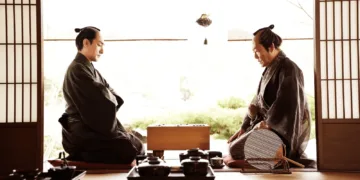


























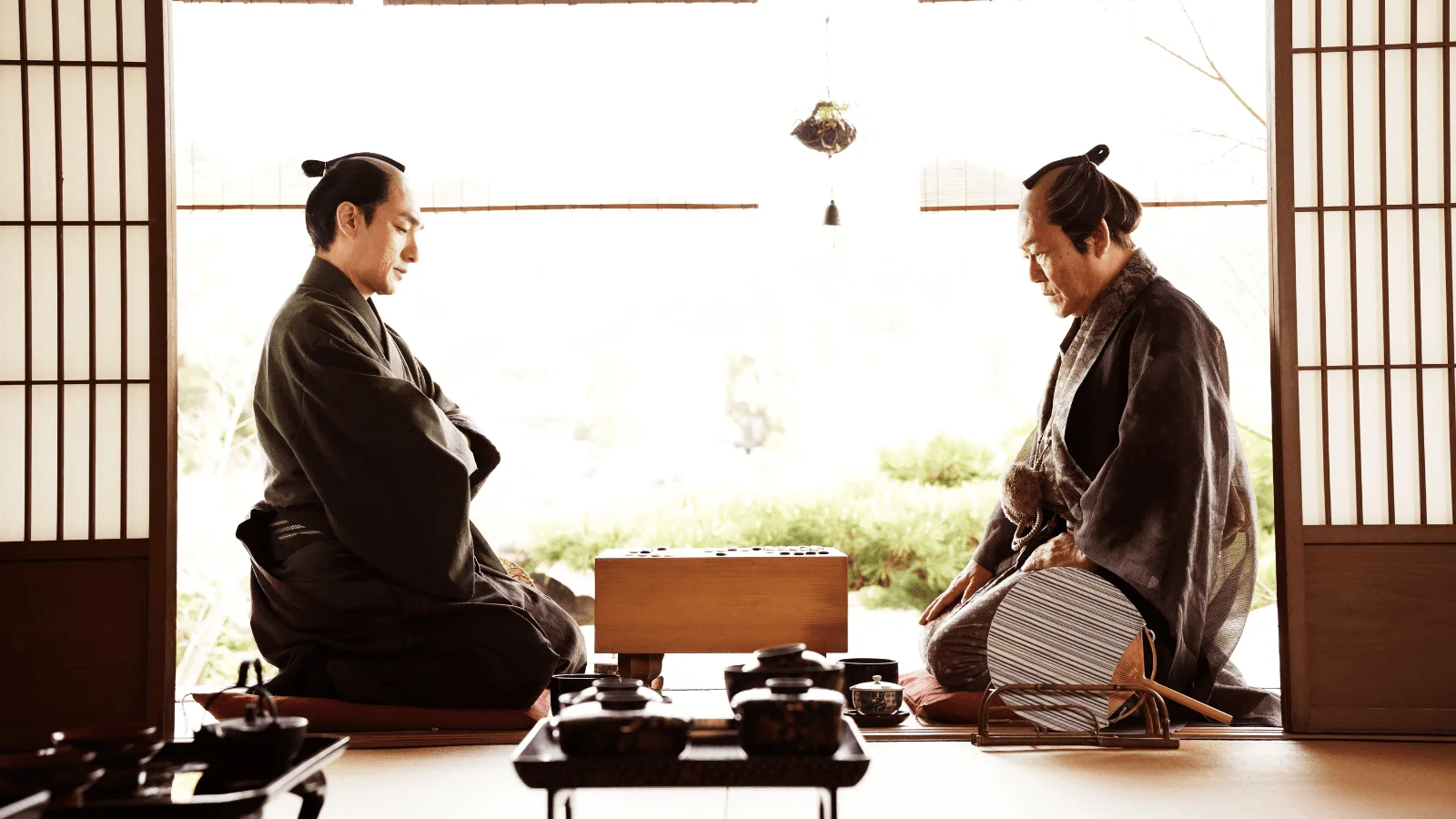

Kakunoshin Yanagida knows how to surrender a Go match without looking defeated. Across the board from Genbei Yorozuya, he gives up stones, absorbs pressure, and refuses to answer aggression with aggression. The gesture looks courteous. It is also tactical. Kazuya Shiraishi builds Bushido around that distinction, asking what happens when a man trained to accept sacrifice discovers that life keeps taking pieces long after the game should have ended.
Kakunoshin, played with severe restraint by Tsuyoshi Kusanagi, lives in Edo with his daughter Okinu after disgrace drove them from his former clan. He carves seals, owes rent, and carries himself with the composure of someone who has learned to make poverty invisible. Years earlier, fellow samurai Hyogo Shibata framed him for stealing a valuable scroll. Shibata later assaulted Kakunoshin’s wife, whose death left the accusation fused permanently to grief. Go becomes the one place where order still exists. Black stones. White stones. Rules both players accept. Life has been less courteous.
A Board Where Everyone Knows the Rules
Genbei, played by Jun Kunimura, initially approaches Go much like he conducts business. He presses hard, dislikes yielding, and treats victory as proof of superiority. Kakunoshin’s style unsettles that philosophy. He can see several moves ahead, yet he has little interest in humiliating the man sitting opposite him.
Their friendship develops through small alterations rather than speeches. Genbei begins treating townspeople with greater fairness. Kakunoshin tutors him without condescension. When Yakichi, Genbei’s clerk, hears that learning Go might bring him closer to Okinu, his sudden enthusiasm gives the film one of its few gentle comic beats. Around them, Shiraishi constructs a community whose relationships emerge through transactions, lessons, rent, games, and favors.
Kusanagi rarely breaks Kakunoshin’s stillness during these passages. His posture at the board remains controlled. His voice stays measured when money is scarce. Even triumph barely changes his expression. The performance depends on accumulation, which makes the later rupture frightening. Violence is present early in Bushido. It simply has very good manners.
The Second Accusation
When 50 ryō disappears from Genbei’s household and suspicion falls on Kakunoshin, the past stops being memory and becomes repetition. One false accusation already cost him his position and wife. Faced with another, his first answer is seppuku.
Also Read





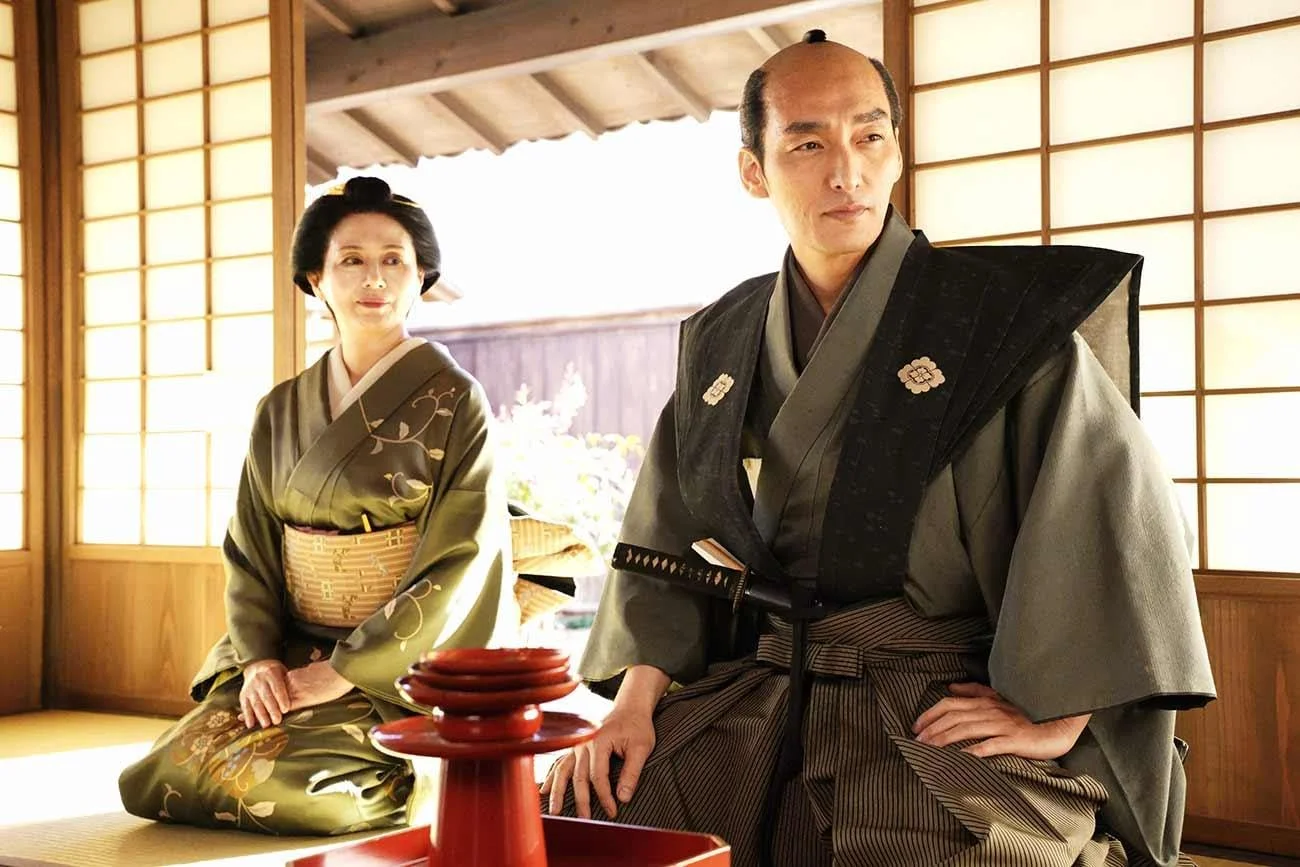
Okinu refuses to let her father’s idea of honor consume him so easily. Kaya Kiyohara gives the character quiet resolve as she secures the money by placing her own future in the hands of Madame Okou. The arrangement carries a deadline: if Kakunoshin cannot repay the sum, Okinu will remain bound to the brothel. Her sacrifice exposes the cruelty inside her father’s moral certainty. His reputation is restored through a price someone else must pay. The film’s darkest thought sits there.
Bushido gives Kakunoshin dignity, yet Shiraishi refuses to pretend dignity is harmless. The samurai code offers him a language for justice while narrowing his choices until death begins to resemble procedure. Okinu’s intervention saves him from the blade, then leaves her trapped by another institution with its own rules and debts.
News of Shibata’s whereabouts sends Kakunoshin away from Edo. Kusanagi changes without turning the character into another man. The calm remains, but its purpose changes. What once restrained anger now concentrates it.
Under the Stones
Jun Fukumoto’s cinematography follows that transformation. The earlier Edo passages carry bright, clean digital textures and softer light, while Kakunoshin’s pursuit grows darker and increasingly severe. Memories of his disgrace arrive through grainier, rougher imagery, as though the past has deteriorated physically while remaining perfectly intact inside him.
Shiraishi waits for swordplay. For much of the 129-minute runtime, tension comes from missing money, whispered accusations, financial deadlines, and hands placing stones on wood. When combat finally arrives, Kakunoshin fights according to the same logic he uses in Go. He gives ground. He avoids Shibata’s attacks. He lets his opponent spend strength believing pressure equals control.
The strategy resembles the Go tactic known as “Under the Stones,” where apparent loss prepares a later reversal. Shiraishi has spent the film teaching the audience to recognize that rhythm before blood enters the frame.
This makes the climactic Go material as dangerous as the sword fights surrounding it. Every placed stone carries history. Kakunoshin has spent years believing discipline could preserve what disgrace took from him. Across the board, sacrifice still has rules. Outside it, Okinu waits beneath a debt her father cannot solve with patience alone.
Bushido (originally titled Gobangiri) was released in theaters in Japan on May 17, 2024, and expanded to international territories such as Finland in April 2026. The period drama follows a masterless samurai living in poverty who forms an unlikely bond with an unscrupulous pawnbroker through the game of Go before a vengeful confrontation upends his life.
Full Credits
Title: Bushido
Distributor: Kinoshita Group, Culen
Release date: May 17, 2024 (Japan)
Rating: Not Rated
Running time: 2 hours 9 minutes
Director: Kazuya Shiraishi
Writers: Masato Kato
Producers and Executive Producers: Naoya Kinoshita, Michi Iijima, Yumiko Takebe, Satoshi Akagi, Yukiko Tanigawa
Cast: Tsuyoshi Kusanagi, Kaya Kiyohara, Jun Kunimura, Taishi Nakagawa, Takumi Saitoh, Kyôko Koizumi, Eita Okuno, Takuma Otoo
Director of Photography (Cinematographer): Jun Fukumoto
Editors: Hitomi Kato
Composer: Umitaro Abe
The Review
Bushido
Bushido turns honor into both shelter and wound. Kakunoshin’s calm at the Go board gives Tsuyoshi Kusanagi a beautifully controlled register, then the second accusation fractures that composure and exposes the violence waiting beneath it. Kazuya Shiraishi earns the late swordplay by spending so much time on silence, debt, shame, and sacrifice. Some supporting relationships accelerate near the end, yet the central tragedy remains sharp: a code designed to preserve dignity can demand terrible payment from the people standing nearby.
PROS
- Kusanagi’s restrained central performance
- Go woven tightly into character and conflict
- Patient escalation toward violence
- Strong visual shift during the revenge passage
- Thoughtful treatment of honor and sacrifice
CONS
- Supporting relationships feel rushed late on
- Slow pacing may test some viewers
- Okinu occasionally serves Kakunoshin’s arc too heavily