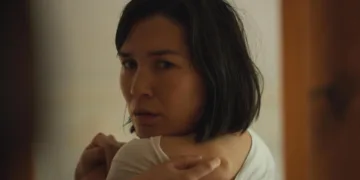


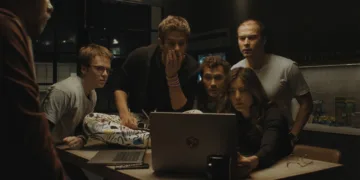


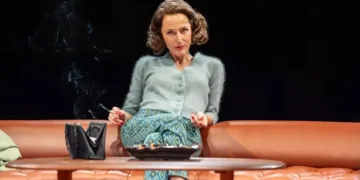





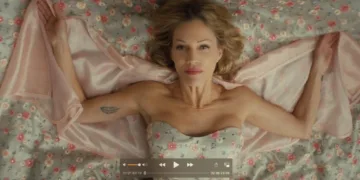












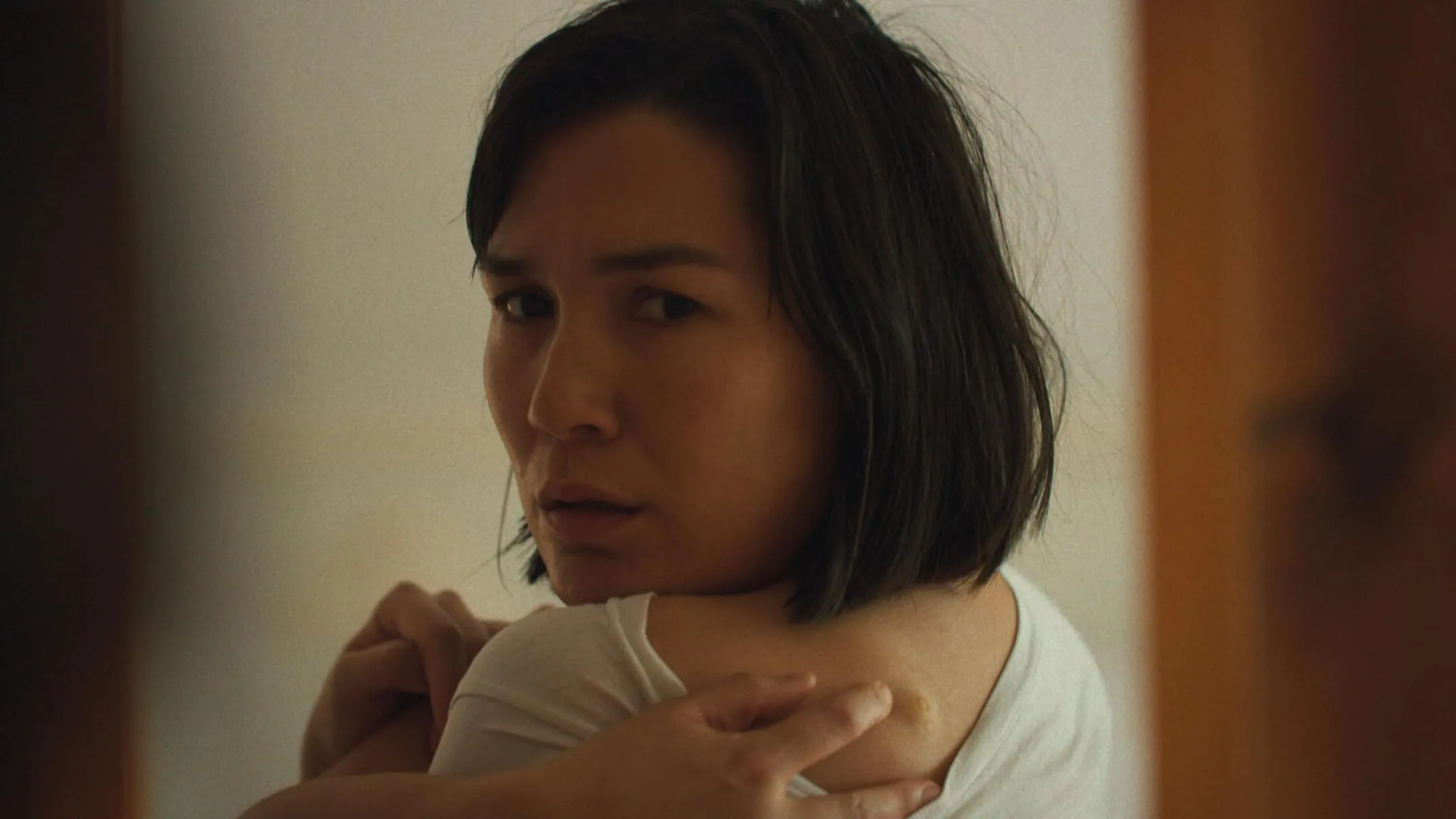

Yvonne, freshly fractured by tragedy, flees the neon haze of urban life for Camille’s rustic retreat. Her arrival promises reprieve: pale linens, dew‑washed fields, whispered assurances of calm. Yet the cottage’s hush carries a weight, as if every silence conspires to tighten her chest.
This film moves in breath and pause, its tempo shaped by improvised dialogue that drifts like smoke through candlelit rooms. At first, the gentle murmur of forest winds and distant birdcalls beckon her toward ease. Then Isaac and A.J. appear—gracious hosts whose suggestions bloom into quiet demands. Each polite offer of kinship echoes like a command, their cultivated charm warping into subtle coercion.
A single tick bite becomes a dark talisman: a bruise beneath skin that pulses with creeping dread. As Yvonne scratches, her body and spirit distort in tandem, fracturing her sense of self.
Here, self‑care is ritualised into doctrine; its ceremonies ascend into trials of endurance. The film asks: when does healing mutate into control? It probes the fissure between intention and imposition, revealing how trauma can be balm or blade. It lingers in the gap between intention and compulsion, asking what cost hides beneath curated serenity. Trauma emerges not as a pathway forward but as an agent of reckoning.
Echoes Beneath the Surface
Yvonne’s arrival carries the weight of unspoken loss. A tragedy hinted at over a tremulous phone call pulses like a hidden current, powering each scene. The metropolis she left is a cacophony of anonymity; the cottage becomes a stage where every glance and gesture is magnified. Sanctuary warps into confinement as forced intimacy wraps around her like mist.
Social rituals transform into gauntlets. She joins morning games with polite reluctance; each laugh feels edged with obligation. Farm‑fresh meals arrive like trials—ceramic bowls heaped with produce whose texture clashes with her appetite. The well‑meaning hosts press their routines onto her, and what should soothe tastes of constraint.
This is a study in how self‑care can mutate into subtle tyranny. Sunrise salutations and macrobiotic feasts shift from gentle routines into dictates spoken in soft tones. The aesthetic of wellness—pristine linens, minimal design—unfolds as a carefully scripted performance. Under its glossy veneer lies a critique of how cultural trends can shape and command behavior.
The tick bite stands as a living symbol. A wound that balks at closure. Each frantic scratch blurs lines between repair and injury, turning self‑attention into an act of compulsion.
Holes in the wooden floorboards act as watchful eyes, capturing private moments through crude apertures. Mirror sequences trap her in doubled reflections, a confrontation with her fractured self‑image. Here, every glance becomes an indictment, every ritual an experiment in control.
Faces of Complicity
Yvonne arrives as a wounded vessel, each step echoing with the tension of her unspoken grief. In Zoë Chao’s measured performance, vulnerability and resolve entwine—her eyes flicker between retreat and rebellion. She accepts help with polite resignation, then asserts herself in moments that reverberate with quiet revolt: a hand pressed firmly against a sliding door, a refusal to sip the herbal infusion.
Callie Hernandez’s Camille is warmth and fog in equal measure. She ushers Yvonne forward with earnest smiles, yet those same smiles feel rehearsed, as though kindness has been practiced to the point of obliviousness. Are her intentions born of concern or of a need to prove normalcy? That question lingers like a shadow in every soft‑lit frame.
Jeremy O. Harris’s Isaac prowls the boundaries of comfort. His conversational jabs arrive as calm inquiries—“How are you, really?”—that snap closed on her defenses. Close‑ups on his face become stares that weigh heavily, pressing her into confession or capitulation.
James Cusati‑Moyer’s A.J. presents food as a gesture of care, yet each bite unfurls in unsettling textures. His culinary creations hover between nourishment and test, their odd combinations offering both delight and disquiet.
Underpinning these interactions is a fluid intimacy that transcends labels. The interplay of glances and shared spaces hints at bonds forged in quiet solidarity and silent judgment. When laughter flows, it carries an undertow of expectation; when faces turn grave, it speaks to collective anxiety.
Improvised exchanges ripple through each scene with unpredictable cadence. Dialogue feels alive—breathing in the pauses, pulsing in spontaneous asides—so that performance and narration merge into a single, breath‑held moment.
The Lens as a Living Witness
Pete Ohs employs a restless handheld camera to trace Yvonne’s every shiver and sigh. Frames tremble with her uncertainty, drawing us so close that we can almost count the sweat beads clinging to her skin. Sunlight that floods the windows turns heavy indoors, each ray a silent interrogator probing hidden fears.
This film was shaped in nightly rewrites by its four leads, a collaborative script that allows dialogue to shift like wind. Improvisation seeps into each beat, so that conversations waver between genuine warmth and sudden disquiet. Story arcs breathe with organic irregularity, resisting tidy structure in favor of instinctual rhythm.
Visually, Ohs contrasts tight interiors with vast landscape vistas. Close‑ups linger on pores and quivering lips; then a static wide shot unfolds golden fields under an indifferent sky. These juxtapositions unsettle our sense of scale—intimacy feels vast, and openness feels trapping.
Pacing unfolds with deliberate calm before snapping into jagged cuts as tension mounts. A long take of Yvonne at dawn gives way to staccato editing when the tick’s horror begins to blossom. Scene changes arrive on abrupt sound cues—branches cracking, utensils clattering—so that silence itself feels suspect.
Editing dances between serenity and grotesquerie. Bucolic imagery dissolves into harsh foley: a relaxed gaze over hills is matched with amplified chewing and buzzing that morphs nature into a chorus of threat. Temporal leaps around the bite’s evolution blur chronology, pulling viewers into the same disorientation that grips Yvonne’s mind. Here, camera and cut become instruments of existential unease, witnessing her unraveling in real time.
The Chorus of Unease
Sounds meant to soothe here fracture into instruments of dread. Foley becomes the film’s unspoken score: every crackle of lettuce and amplified slurp morphs communal comfort into a register of hostility. Beneath it all, the tick’s persistent buzz weaves through rustling leaves and distant birdcalls, anchoring Yvonne’s terror in an ever‑present hum.
The mixing plays with absence as much as presence. Sudden audio spikes—an off‑beat chirp, a snapped twig—jolt the calm, while stretches of silence widen into voids where anticipation gnaws at the mind. In those pauses, the absence of reassurance carries weight, inviting us to inhabit Yvonne’s tightening solitude.
Visually, the setting channels a sanitized wellness aesthetic. White linens drape furniture like blank declarations of purity. Neutral palettes extend to ritual objects—granola bowls stacked like silent offerings—each prop a subtle signpost of ceremony turned coercion.
Costume and makeup further blur the boundary between natural and uncanny. Earth‑toned garments shift under close scrutiny; what feels rustic by daylight gains ominous texture in shadow. As Yvonne’s bite swells, makeup transforms her skin into a canvas of distress, each reddened ring a testament to the body’s revolt. In this layered soundscape and design, the film stages its exploration of how care can fracture into compulsion, every aesthetic choice resonating with existential tension.
Rituals of Disquiet
The film drapes domestic spaces in tension, where routine becomes ritualistic torment. It borrows the structure of a home invasion tale—yet here the intruders wear familiar faces. Violence seeps in through polite invitations, shaping a thriller that relies on what’s unspoken rather than on bloodshed.
Everyday objects acquire grotesque potential: a dinner table turns into a gauntlet, friendly chatter a form of cage. Dialogue floats between warmth and menace, guided by improvisation that keeps us off balance. That rhythmic give‑and‑take between speech and silence echoes the slow spread of an infection.
It nods to cult‑house stories without invoking eerie ceremonies. There are no robes or chants—just the veneer of wellness rituals gone awry. In place of influencer polish, the film offers raw textures: chipped paint, hollow laughs, half‑heard whispers among sunlit beams.
The countryside home itself feels alive, its walls watching. Woods at dusk loom like subconscious realms, where Yvonne’s reflection in a mirror fractures into doubt. Through these portals, the landscape becomes a map of inner turmoil. Here, isolation isn’t refuge; it’s a crucible that forges dread from the familiar.
Ripples Beyond the Bite
The film lodges itself in the mind like a persistent whisper. Yvonne’s tightening breaths become ours, ushering us into her claustrophobia and mistrust. We empathize with her longing for solace even as the hosts’ kindness morphs into subtle coercion. That tension between compassion and suspicion fuels an emotional undercurrent that refuses easy release.
At its heart lies a meditation on our generation’s rites of wellness. We’ve learned to package self‑care in filtered frames—morning rituals and curated retreats—but here those gestures feel like performances we’re compelled to enact. Beneath the veneer of mindfulness lurks the dread of unmoored responsibility, a fear that true rest may demand more surrender than we’re prepared to give.
Ambiguity anchors the film’s final notes. Are these hosts villains or flawed pilgrims seeking connection? The tick’s echo lingers—a small wound that outgrows its origin, a question that resists closure.
For a full review, each layer of this tapestry can be unraveled through key scenes: the waking‑up‑at‑dawn sequence, the mirror’s fractured reflection, the crescendo of rustling leaves and buzzing insects. Highlight how each performance crystallizes these themes, blending visceral moments with philosophical inquiry, so that atmospheric texture and existential reflection stand in equal measure.
Full Credits
Director: Pete Ohs
Writers: Pete Ohs, Zoë Chao, Callie Hernandez, James Cusati-Moyer, Jeremy O. Harris
Producers: Pete Ohs, Callie Hernandez, Jeremy O. Harris, Josh Godfrey
Cast: Zoë Chao (Yvonne), Callie Hernandez (Camille), James Cusati-Moyer (A.J.), Jeremy O. Harris (Isaac)
Director of Photography (Cinematographer): Pete Ohs
Editor: Pete Ohs
Composer: Isabella Summers
The Review
The True Beauty of Being Bitten by a Tick
Pete Ohs’s film interlaces everyday ritual into claustrophobic tension, guiding us through grief’s uncertain eddies and a wellness creed turned oppressive. Zoë Chao anchors the tale with mesmerizing subtlety, her gradual unravelling reflecting the film’s hypnotic pull. With its unsettling soundscape and open‑ended finale, it refuses easy comfort and lodges in the mind like a persistent hum. A deliberate pace rewards immersion in its dark pulse.
PROS
- Intense atmospheric tension
- Zoë Chao’s mesmerizing subtlety
- Innovative soundscape amplifies dread
- Thought‑provoking meditation on grief
- Visual contrasts heighten psychological unease
CONS
- Deliberate pacing can feel sluggish
- Ambiguities may frustrate those seeking clarity
- Limited plot resolution
- Small‑scale production feels uneven at times