
























![Kingdom Hearts Collection [I-III] Review](https://gazettely.com/wp-content/uploads/2026/10/Kingdom-Hearts-Collection-I-III-1-360x180.webp "Kingdom Hearts Collection [I-III] Review: KHII Holds Steady as Newer Entries Fluctuate 37")




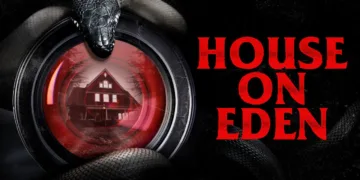
The film’s architecture is built on a well-trodden foundation, a blueprint whose ghost haunts every frame. We are introduced to three paranormal investigators: Kris, the ambitious leader whose drive for novelty curdles into recklessness; Celina, whose jocular skepticism serves as a fragile ballast; and Jay, the technician dutifully documenting their collective folly.
The project is the directorial debut of its star, Kris Collins, a move that folds a layer of meta-commentary into the proceedings, with the cast portraying heightened, perhaps unflattering, versions of their public selves. This setup provides a tidy diegetic justification for the omnipresent camera, solving the genre’s classic logic problem with cynical ease: of course they keep filming.
Their careers, their very identities, depend on it. Yet, this initial cleverness is fleeting. The narrative friction promised by Kris’s unilateral decision to detour to the uncharted “Eden” house is never explored with genuine rigor. Instead, the film quickly settles into a dutiful recitation of the found-footage formula, its structure a direct echo of its predecessors. A long drive, a remote house, an escalation of strange phenomena—the beats are so familiar they feel less like a narrative unfolding and more like a ritual being numbly reenacted.
Portraits in White Noise
There is an undeniable, almost feral chemistry between the central trio, a chaotic energy born from what appears to be largely improvised dialogue. In the film’s opening act, this rapport feels authentic, a lived-in dynamic of inside jokes, overlapping chatter, and shared history that provides a fleeting sense of verisimilitude. Kris embodies the obsessive artist, a captain steering her crew toward the rocks in pursuit of a singular vision.
Celina’s humor, exemplified by a protracted bit about a portable toilet, is a grounding force that simultaneously stalls the film’s momentum with its sheer pointlessness. They are believable. They are also, profoundly, insufferable. The ceaseless banter creates a wall of sound, a cacophony that smothers any chance for quiet introspection or the development of genuine dramatic stakes.
The script gestures toward a conflict rooted in Kris’s questionable leadership—a classic ethical dilemma—but this moral quandary is never properly interrogated, dissolving into the general noise. Their astonishing lack of self-preservation, a headlong dive into danger for the sake of a few more views, is presented without a hint of satire or psychological depth. They are simply fools in a self-made trap, and the film offers no reason to invest in their fate.
A Glitch in the Catharsis
Visually, the film is a fractured artifact, a collage of competing textures whose assemblage feels more accidental than intentional. Director Kris Collins toggles between the sterile hyper-reality of modern 4K, the liminal dread of grainy 8mm, and the nostalgic smear of ’90s camcorder footage.

This textural schizophrenia holds potential; the analog formats possess an inherent spectral quality, their degraded images suggesting a world less solid, more permeable to unseen forces. The execution, however, is erratic, creating a diegetic dissonance that pulls the viewer out of the experience. The shifts feel arbitrary, a stylistic tic rather than a coherent visual language designed to underscore theme.
This incoherence is amplified by a dependence on nauseating shaky-cam, a technique that obliterates any sense of spatial geography. The house itself, a potential character rich with expressionistic possibility, remains an abstraction.
Worse, the film violates its own formal constraints. Shots appear from angles impossible for the characters to have captured, a cardinal sin in found-footage that shatters the fragile pact of authenticity with the viewer. The sluggish pacing mirrors this visual confusion, a long, meandering setup that mistakes inactivity for the slow-burn tension of a true psychological thriller.
Shadows Without Substance
The film’s approach to horror is less about crafting scares than assembling a catalog of borrowed iconography, a cinematic language spoken without comprehension. We are presented with a procession of genre staples: vacant-eyed dolls, hastily sketched satanic symbols, fleeting glimpses of spooky elders in the periphery, and the requisite noises in the dark.

The film’s structure feels like a direct homage, with entire beats seemingly lifted from more accomplished works, but the transplant fails. The visceral dread of its influences is lost, leaving only the empty gesture. This is horror by rote. Any opportunity for the slow-burn psychological tension that defines superior thrillers is traded for a barrage of cheap, percussive jump scares and tired “what was that?” fakeouts.
Even the paranormal investigation itself, a chance for procedural dread, feels mechanical; the spirit box crackles with generic malevolence, leading to encounters that are entirely predictable. The narrative spends most of its brief runtime in a state of inertia, saving its dramatic fireworks for a finale that feels both abrupt and unearned. This last-ditch effort at intensity, full of evocative but empty imagery, cannot compensate for the preceding vacuum.
The Unexamined Feed
Within this film’s DNA lies the potential for a trenchant critique of digital-age existence, a neo-noir tragedy for the influencer era. The premise—people willingly sacrificing their safety for online validation—is a ripe field for exploring the commodification of the self, a dark satire on the nature of ambition in a world mediated by screens.

House on Eden observes this behavior but refuses to engage with it. It presents the symptom without diagnosing the illness. The characters’ pathological need for content is the engine of the plot, yet the film has nothing insightful to say about it, no wit or self-awareness to elevate the material beyond a simple cautionary tale.
The narrative is littered with thematic debris—whispers of disappearances, hints of a cult, the mechanics of ghost hunting—but these threads are never woven into a meaningful pattern. They are disparate signifiers in search of a signified.
The project ultimately serves as a stark illustration that a command of social media does not translate to a command of cinematic storytelling. It feels less like a film and more like a fan film, one built with an enthusiast’s affection for the genre but lacking the artist’s critical eye.
Full Credits
Director: Kris Collins
Writers: Kris Collins
Producers and Executive Producers: Kris Collins, Celina Myers, Jason-Christopher Mayer
Cast: Kris Collins, Celina Myers, Jason-Christopher Mayer, Barb Thomas, Carrie Kidd
Director of Photography (Cinematographer): Jason-Christopher Mayer, Adam Myers
Editors: Jason-Christopher Mayer
The Review
House on Eden
House on Eden presents a modern premise—paranormal investigation as influencer content—but executes it with a slavish devotion to exhausted found-footage tropes. Despite moments of authentic chemistry from its cast, the film is a tedious exercise in unfulfilled potential. Its refusal to engage with its own satirical possibilities, coupled with a complete failure to generate tension or scares, leaves a hollow cinematic echo. It is a film built from the spare parts of better movies, a ghost story with no spirit of its own.
PROS
- The premise provides a modern, logical justification for the characters' constant filming.
- The central cast exhibits moments of believable, authentic chemistry.
- The experimental use of multiple film formats (8mm, digital video) is visually interesting in concept.
CONS
- A highly derivative plot that fails to innovate on the found-footage genre.
- The characters are largely grating and difficult to root for due to obnoxious, improvised dialogue.
- Lacks genuine scares or sustained suspense, relying on ineffective clichés.
- Completely squanders its potential for sharp satire on social media and influencer culture.
- Inconsistent direction breaks the established rules of its own format.
- Excruciatingly slow pacing leads to an abrupt and unsatisfying conclusion.







