

























In the world of Azuma, nature is not a peaceful backdrop; it is an overwhelming and hostile force. This land, styled after a mythic feudal Japan, is ravaged by Kemono, colossal beasts that have fused with the elements to embody nature’s untamed fury.
A towering boar grows bark for armor, a wolf skates on self-made ice. Into this chaos steps the player, a lone hunter armed with a unique gift: the power to wield Karakuri. This ancient technology is the game’s heart, a system that lets you construct intricate wooden contraptions in the blink of an eye.
Wild Hearts S is not simply an adventure about slaying monsters with a sword. It is an exercise in tactical engineering, where mastering the environment and bending it to your will is the only true path to survival. Success is measured as much by your ingenuity as by your reflexes.
The Hunter as Architect
The combat in Wild Hearts S moves at a brisk pace, demanding both aggression and precision. Its foundation rests on eight distinct weapon types, each feeling like a separate class with its own deep mechanics to learn.
The Karakuri Staff, for example, is a versatile tool that fluidly morphs between four different forms mid-combo, each with its own moveset. The Bladed Wagasa, a seemingly delicate umbrella, transforms into a lethal shield that rewards perfectly timed parries with devastating counterattacks.
Other tools are more direct, like the Claw Blade, which embeds a hook into a beast’s hide, allowing you to swing around it like a wild acrobat, launching into flurries of airborne attacks. Mastering any one of these weapons is a significant time investment that rewards dedication.
However, the weapons are only half of the equation. The Karakuri system elevates every encounter from a simple duel to a dynamic construction project. These are not mere consumable items; they are core to your moveset. You can instantly build a crate to launch yourself into a plunging attack, a spring to evade a deadly charge, or a torch to set your weapon ablaze.
Chaining these basic constructs together reveals Fusion Karakuri, larger contraptions the game encourages you to discover through experimentation. Six crates stacked just so become a bulwark to stop a charging beast cold; three torches form a firework to knock a flying enemy from the sky. This system turns every battlefield into a reactive puzzle.
Yet, the execution is not always flawless. The camera often struggles to keep both the player and a city-sized beast in frame, getting caught on terrain and obscuring a monster’s attack wind-ups. Furthermore, the deliberate omission of an enemy health bar—a choice meant to force players to read visual cues of fatigue and damage—can make marathon fights feel like a war of attrition where progress is frustratingly opaque.
A World Forged from Beasts
The land of Azuma is rendered with a powerful artistic vision, its large hunting grounds each representing a different season. You will pursue beasts through spring groves thick with cherry blossoms, across sun-drenched summer isles, and into the decaying grandeur of an autumnal canyon.
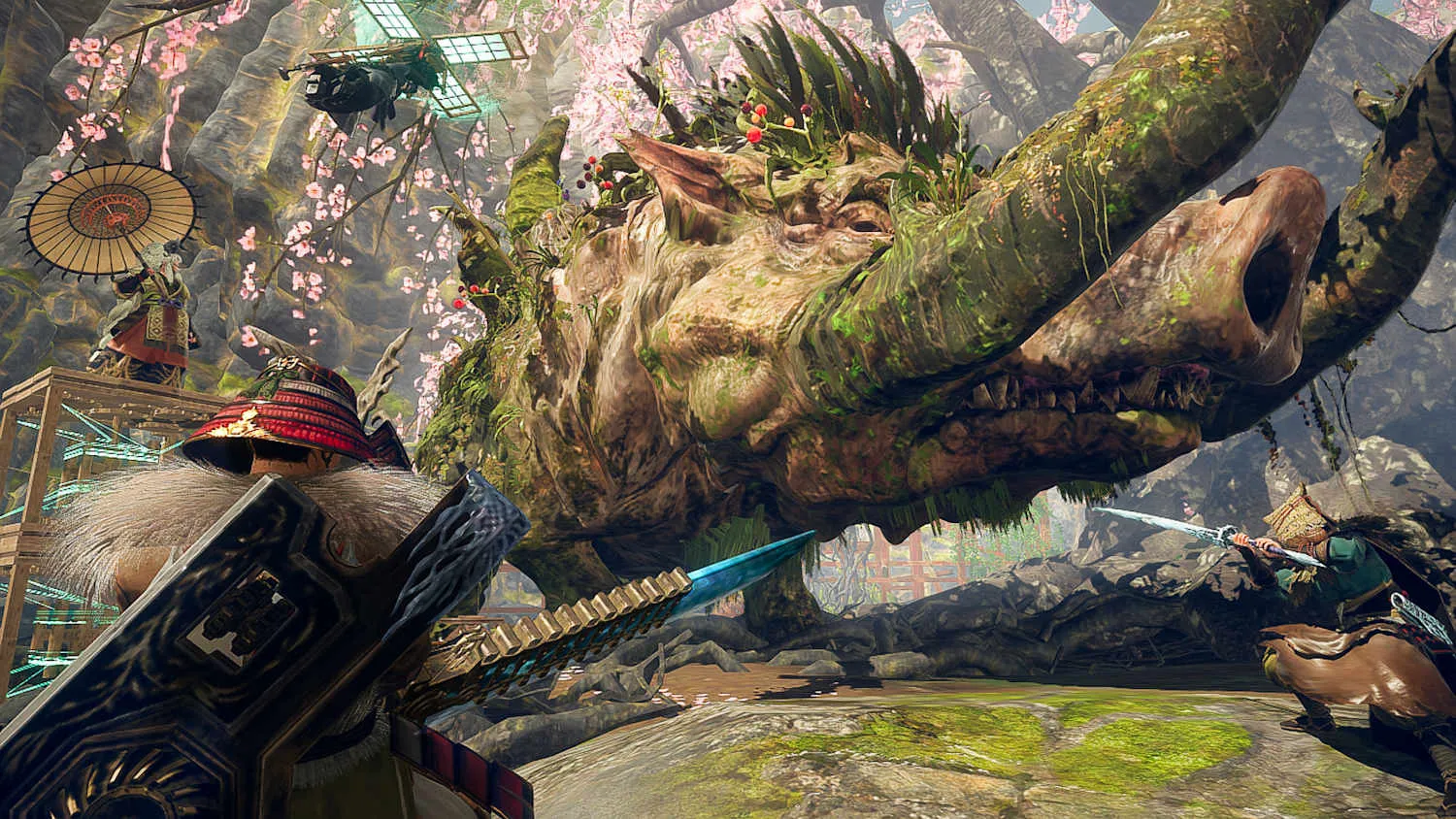
These zones are more than just pretty arenas; they are landscapes to be tamed. Exploration is tied directly to your power as a hunter. Activating ancient Dragon Pits scattered across the map expands your Celestial Thread capacity, giving you more energy to build Karakuri within that region.
Searching for hidden Tsukumo, small spherical automatons, provides upgrades for your solo-play companion, making curiosity a tangible reward. You also establish a home in the village of Minato, which you can improve by building facilities that grant permanent health boosts, making your progression feel grounded in the world.
This loop feeds into a deep and satisfying crafting system. Slaying Kemono provides the materials to forge new weapons and armor, a familiar cycle for the genre. The weapon upgrade path is a sprawling tree where you can strategically detour to acquire valuable inherited skills before reaching your target weapon. The armor system introduces an interesting wrinkle with its human-kemono alignment gauge.
Equipping armor sets pushes your affinity toward one side, unlocking powerful latent skills tied to that path. This creates a compelling layer of strategic build-crafting, forcing you to balance defensive stats against the potent skills you wish to activate. It’s a purely mechanical choice, however, one that sadly lacks any narrative consequence in a game thematically centered on the conflict between humanity and nature.
The Symphony of Shared Chaos
While Wild Hearts S is a complete experience for a solo player, its systems fully blossom in cooperative play. This version expands the hunting party to four players, and the result is a beautiful, energetic mess. A single hunter uses Karakuri with surgical precision; four hunters working together create a storm of improvisational teamwork.
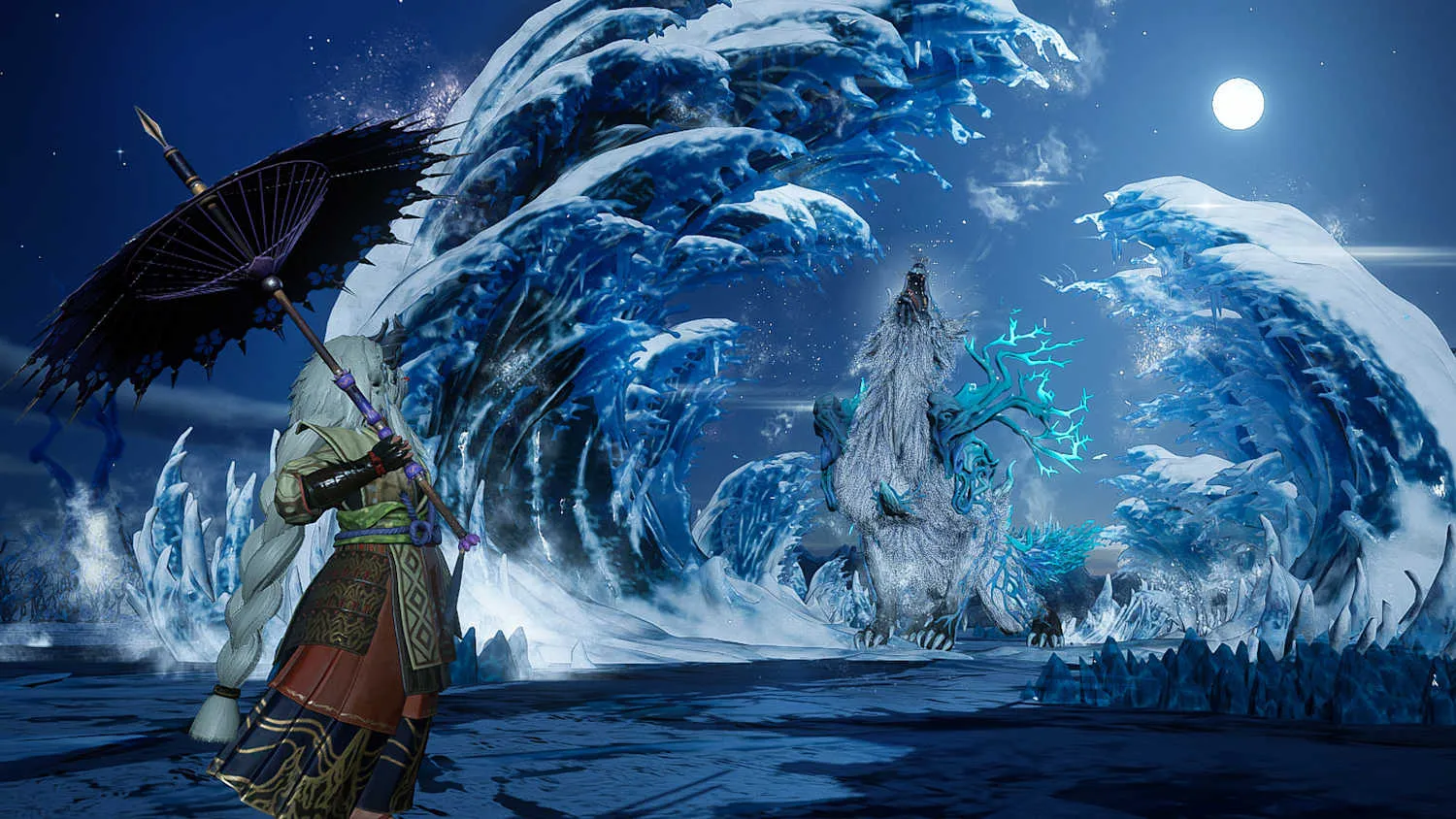
One player might erect a wall to block a charge, which another uses as a springboard for an aerial assault, while a third sets up a healing mist. A well-placed zipline from one hunter can become a highway for the entire team to reposition. The battlefield becomes a constantly shifting web of player-made structures, leading to unscripted moments of brilliance and hilarity.
The ability to revive teammates also makes the game’s high difficulty more approachable, encouraging bolder strategies. The Kemono AI can sometimes struggle to track multiple threats, leading to moments where a beast panics, but this often just adds to the delightful bedlam.
You can easily jump into a friend’s world or call for aid when a particular Kemono proves too difficult, and the entire story campaign can be played with friends, fostering a genuine sense of a shared adventure. The only significant drawback is the absence of cross-platform support, which partitions the player base and limits your hunting party to those on the same hardware.
A Hunt Held in Your Hands
Bringing a game this visually dense to a portable system necessitates compromise, and the Switch 2 version of Wild Hearts S makes that trade-off clear. The graphics have been noticeably scaled back, with simplified environmental textures, reduced shadow quality, and more aggressive pop-in.
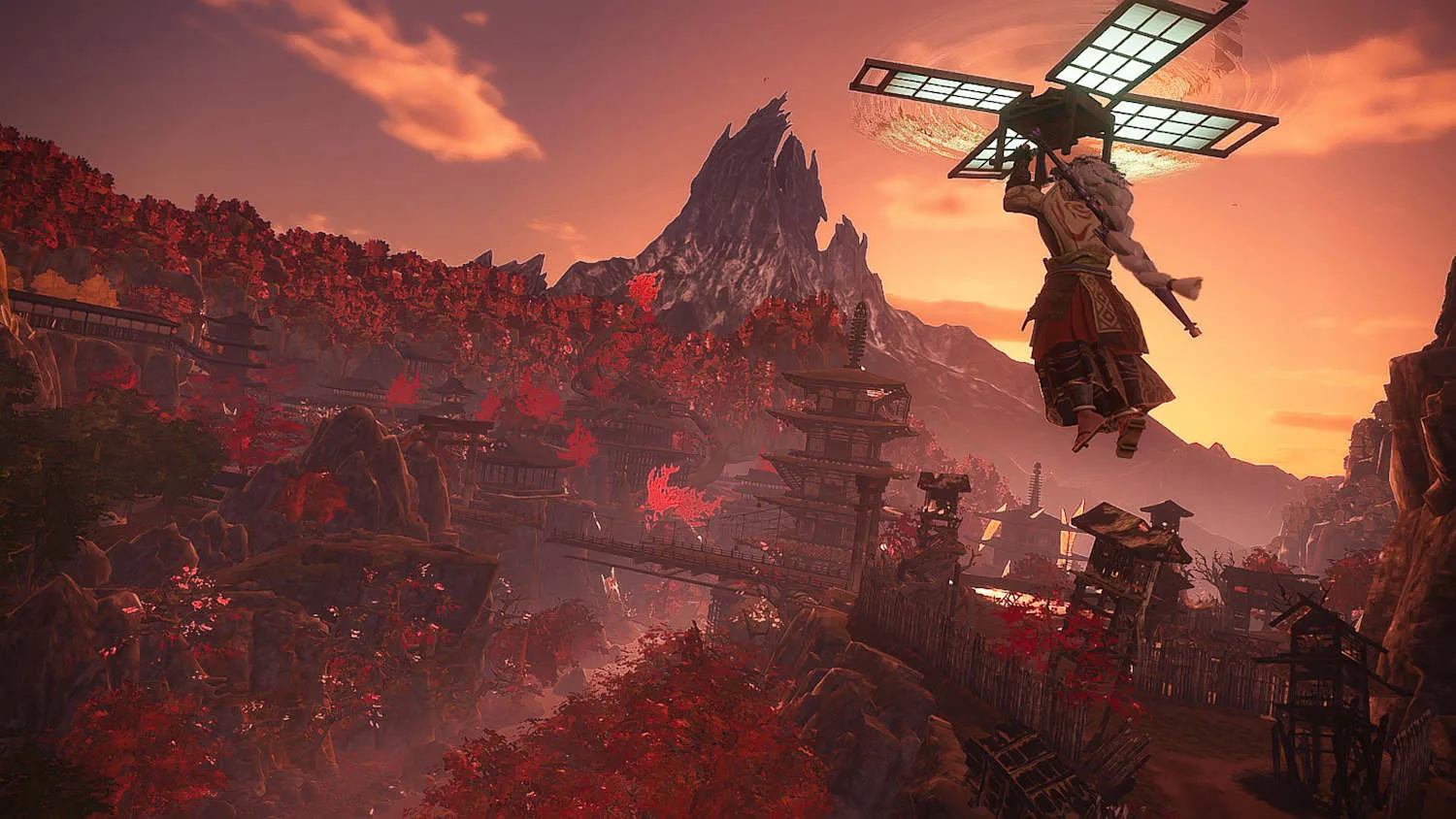
Yet, the game’s powerful art direction endures, and the Kemono themselves remain impressively detailed and animated. Performance is the more significant issue. The framerate is unstable, and during visually cluttered fights with multiple players and effects, the action can become choppy.
In a game that demands precise timing for dodges and parries, a sudden stutter can be the difference between a clean hunt and a failed one. This port does include welcome quality-of-life updates, like monsters fleeing less often, and the four-player support is a key draw. Ultimately, it presents a classic dilemma: the convenience of a hunt on the go weighed against a visibly and tangibly compromised technical execution.
The Review
Wild Hearts S
Wild Hearts is a bold and inventive take on the hunting genre, elevated by its brilliant Karakuri system which turns every battle into a dynamic, creative puzzle. Its deep combat, rewarding progression, and chaotic co-op create a powerful core loop. However, this ambition is hampered by a threadbare story and significant technical flaws on the Switch 2, including an unstable framerate and a frequently cumbersome camera. It's a fantastic beast of a game that is unfortunately caged by its technical shortcomings.
PROS
- Innovative Karakuri system adds incredible strategic depth.
- Deep and varied weapon mechanics.
- Engaging cooperative multiplayer that enhances the core gameplay.
- Rewarding crafting and character progression.
CONS
- Unstable performance and visual downgrades on the Switch 2 port.
- Frustrating camera can be an enemy in itself.
- Story and characters are forgettable.
- No cross-platform play limits the multiplayer pool.