
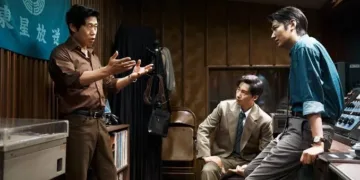


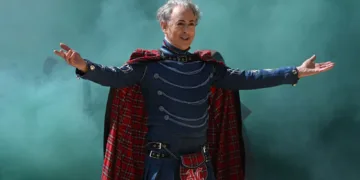










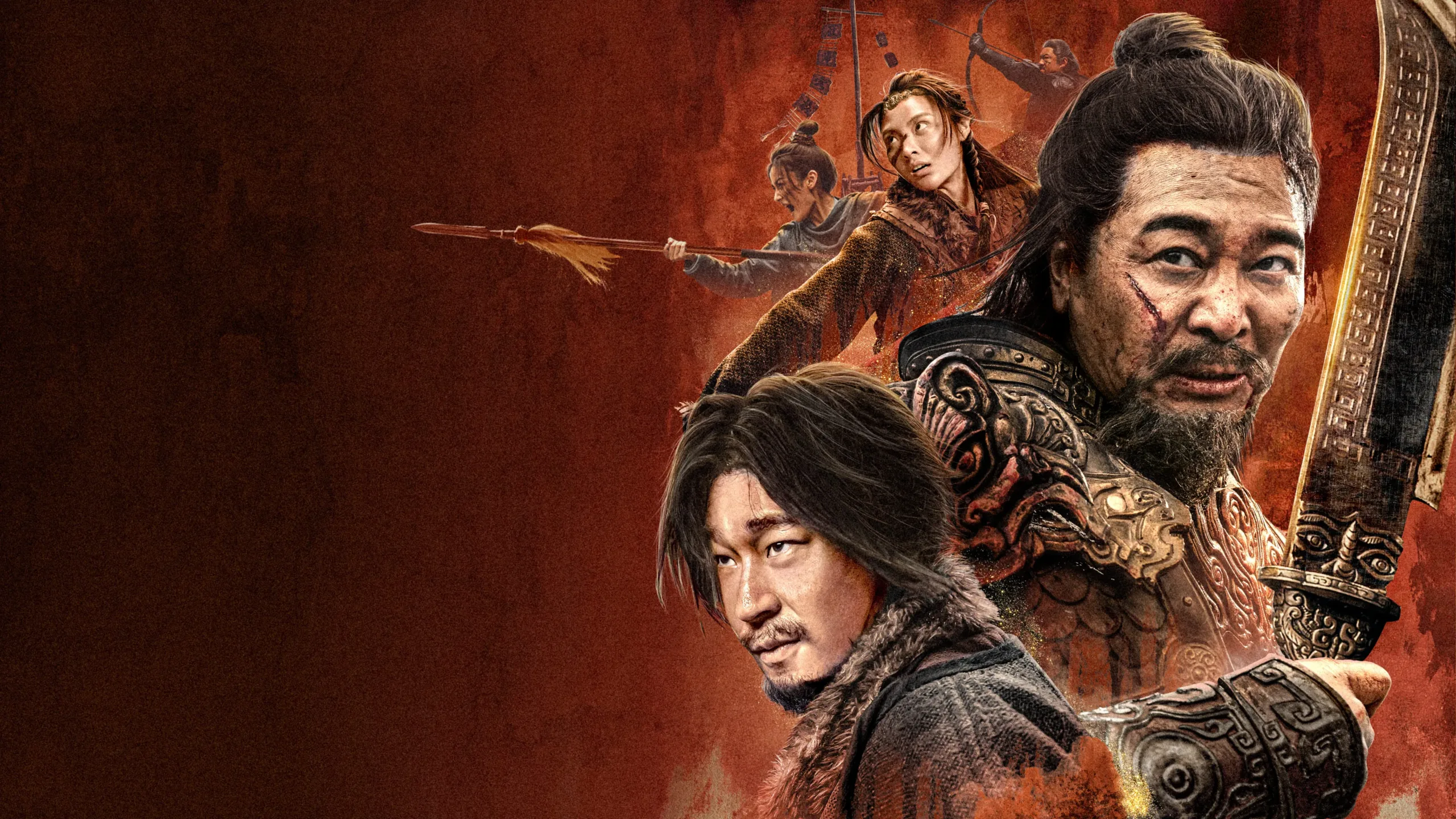

The film opens with a maelstrom of steel and sacrifice. General Yang Ye, a bastion of the Song Dynasty, fights a doomed battle, his body pierced by countless arrows as he heroically falls. His reward is posthumous: the Nine-Ring Golden Dagger, a weapon that becomes a symbol of his family’s honor. A decade passes, and this emblem of valor is lost in enemy Liao territory.
The general’s daughters, Yang Baba and Yang Jiumei, step out of the shadow of history to reclaim their legacy. Their quest to retrieve this artifact, a narrative familiar across many cultures, is steeped in the specific dynastic conflicts of China.
Their journey leads them not to a grand battlefield, but to a rundown roadside inn. Here they find an ally in the proprietor, Jiao Guangpu, a disillusioned veteran who once served their father. The stage is quickly set for a tense, claustrophobic standoff, a wuxia story that balances grim swordplay with unexpected moments of quirky humor.
Choreography in a Crucible
The film’s heart beats to the rhythm of combat. Its brisk 90-minute runtime is packed with near-constant action, ensuring a relentless pace. The choreography is a dynamic mix of grounded, messy brawling and the fantastical, gravity-defying wire-work endemic to the wuxia genre.
This specific aesthetic of “wire-fu” is an artistic tradition, a visual language that prioritizes grace and spectacle over realism, allowing warriors to transcend earthly limitations and enter a mythic space of combat. The film’s most clever choice is containing this spectacle within the four walls of the inn.
This setting becomes a character itself, a crucible for combat that recalls the single-location tension of films from King Hu’s Dragon Gate Inn to the saloons of American Westerns. While a Western shootout emphasizes horizontal space and the tense quiet before the draw, here the action explodes vertically.
Fighters use the second-floor balcony for acrobatic assaults and swing from support beams. Every object is a potential weapon or obstacle. In one memorable sequence, a character continues to battle with the wooden frame of a shattered table around his torso, a perfect blend of absurdity and grit. Director Xiaojun Feng shows his range by contrasting these tight quarters with an earlier fight in tall grass, and his restraint is visible in the welcome scarcity of cheap CGI.
Faded Portraits in a Crowded Room
For a story centered on a heroic quest, the heroes themselves feel strangely indistinct. The narrative is set in motion by the determination of the Yang sisters, yet they are rendered with such similar strokes that they fail to emerge as individuals. This represents a significant missed opportunity.
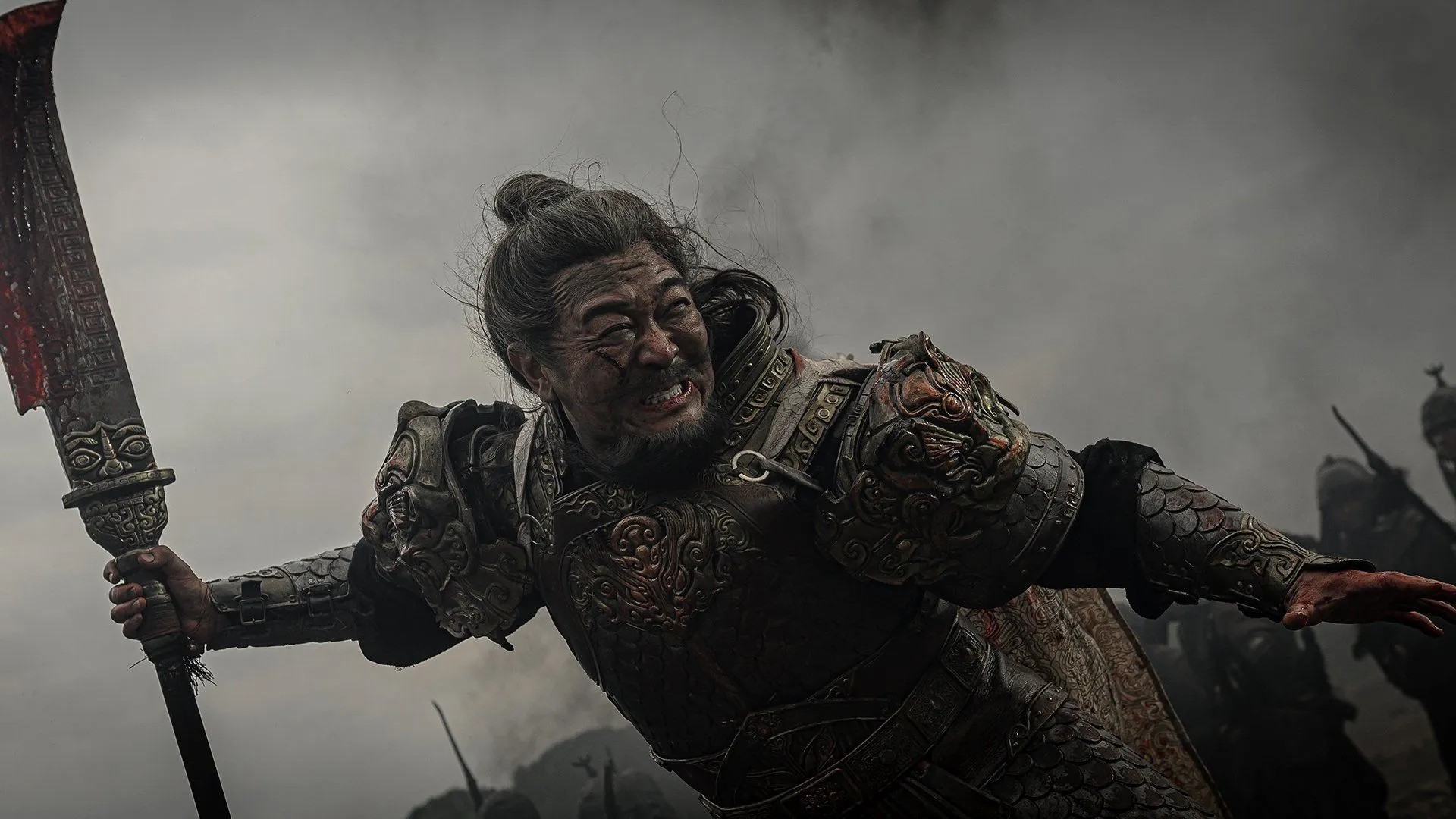
The film introduces a powerful premise—daughters taking up their father’s mantle in a patriarchal society—but it fails to explore the emotional or social texture of their position. They are functions of the plot, not fully formed people. The nominal male lead, the innkeeper Jiao Guangpu, is a stoic archetype—the cynical warrior redeemed by a cause—who comes off as bland and is easily overshadowed by the vibrant figures around him.
The film’s personality comes from its supporting cast: a towering waiter, a diminutive chef, and a foppish captive nobleman provide moments of genuine humor. These characters, however, are given too little screen time to feel like anything more than amusing sketches. The primary villain, in contrast, is a formidable presence who provides a genuine threat.
The plot’s structural weakness is most apparent in how it handles its central objective. The retrieval of the dagger, which should be the heroic centerpiece of the first act, happens entirely off-screen. This narrative shortcut fundamentally undermines the “quest” structure, prioritizing the need to get everyone to the inn for the extended siege.
A Modern Echo of a Classic Form
First-time director Xiaojun Feng demonstrates considerable skill in making a visually handsome film from limited resources. He turns the single-location inn into a strength, creating a contained, almost theatrical atmosphere that feels both intimate and intense. This constraint forces a focus on practical choreography and clever staging over expensive digital spectacle, a creative solution born from necessity.
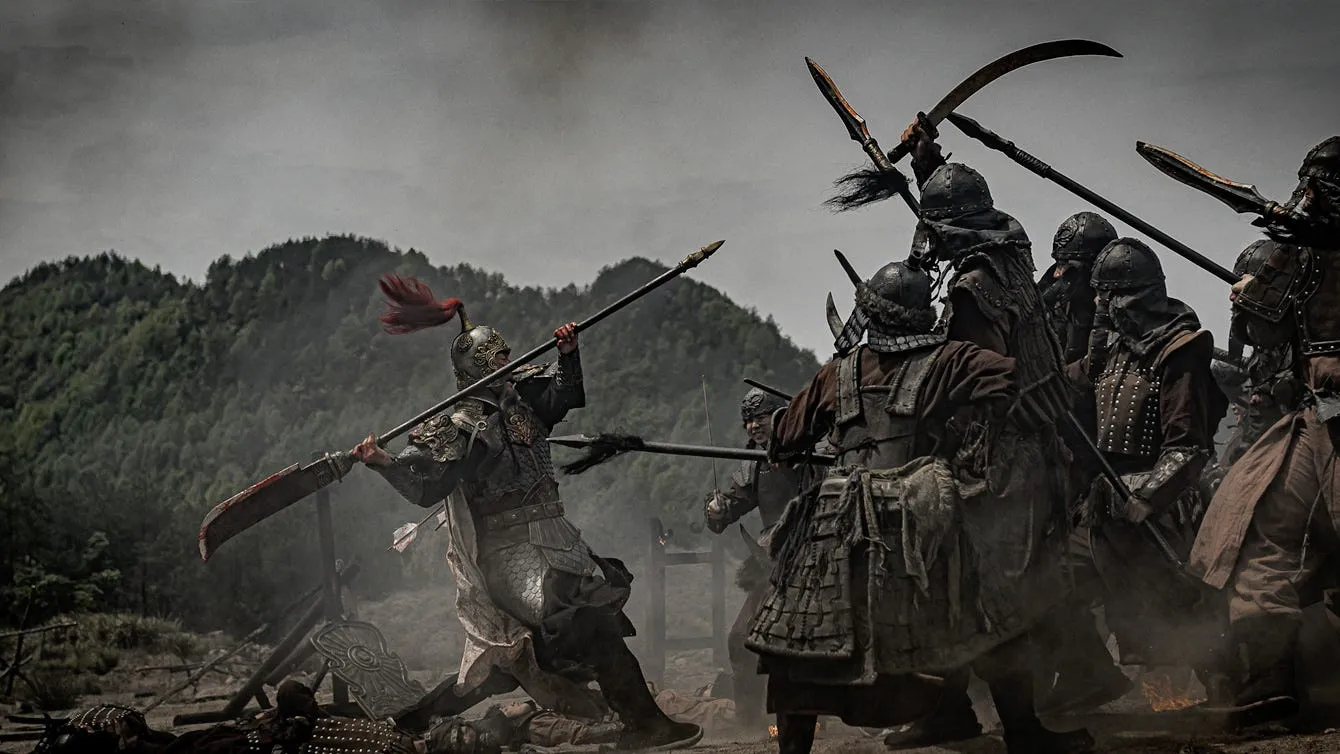
The production design and costumes effectively evoke the period without the need for massive set pieces. The film’s tone is a curious hybrid, shifting between brutal, bloody fights and moments of slapstick comedy, particularly involving the mismatched duo of the cook and waiter. This blend, while potentially jarring to some, is a deliberate choice with roots in Hong Kong cinema, which often treats life as an absurd mixture of tragedy and farce.
Nine-Ring Golden Dagger stands as an entertaining, if minor, entry in the modern wuxia canon. It is a product of its time and mode of distribution, representing the “streaming epic”—a film that borrows the aesthetic of a blockbuster but is built for quick consumption.
Its primary asset is its creatively staged action within a well-utilized location. Its main shortcoming is a story populated by thin characters. The film successfully delivers a compact and kinetic action experience but lacks the narrative weight to leave a lasting impression.
Nine-Ring Golden Dagger is a 2024 Chinese wuxia-infused historical drama film. It was released on Digital, Blu-ray, and DVD in the US on July 1, 2025, distributed by Well Go USA Entertainment.
Full Credits
Director: Feng Xiaojun
Cast: Song Tianshuo, Zhang Xintong, Zhang Kai, Yu Kang, Wu Yue
The Review
Nine-Ring Golden Dagger
Nine-Ring Golden Dagger is a kinetic and stylish wuxia adventure that delivers on its promise of relentless, creatively staged action. While its single-location setting is used to brilliant effect, the film is hampered by a shallow narrative and underdeveloped characters who fail to leave a lasting impression. It’s a visually engaging ride for martial arts fans looking for a quick fix of impressive choreography, but it lacks the emotional core to become a memorable classic.
PROS
- The fight scenes are frequent, well-staged, and make excellent use of the confined inn setting.
- At a brisk 90 minutes, the film never overstays its welcome.
- Despite a limited budget, the film looks handsome and effectively utilizes its sets and costumes.
- The main antagonist provides a genuine sense of threat.
CONS
- The heroes, particularly the two sisters, are thinly written and lack distinct personalities.
- Key plot points are rushed or happen off-screen, lessening the story's emotional impact.
- The mix of brutal violence and goofy humor can feel jarring at times.