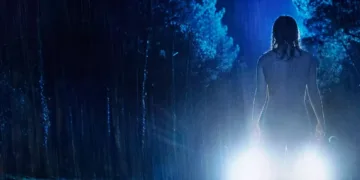

















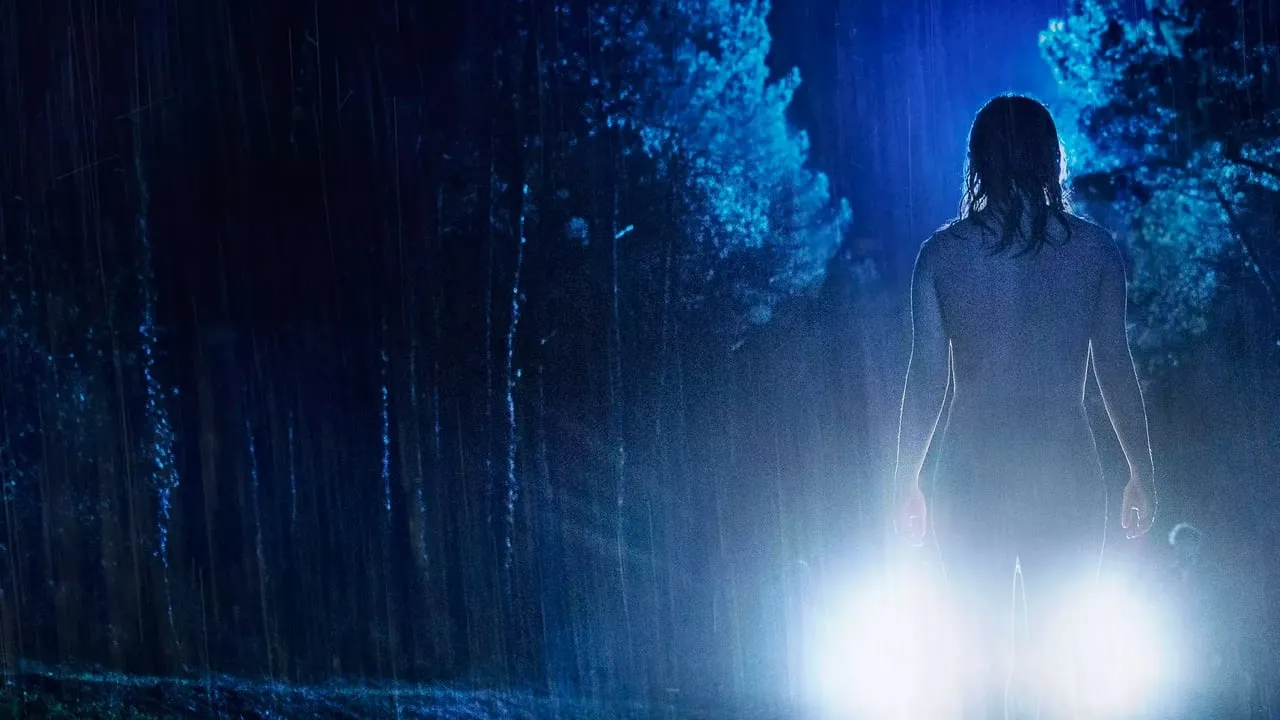

It is a truth universally acknowledged that a French thriller must begin on a dark road, in the rain, with a car striking something mysterious. Prométhée does not disappoint. The series opens as headteacher Caroline and her doctor husband, Charles, have their drive home interrupted by a teenage girl darting from the woods. The subsequent checklist of tropes is dispatched with brisk efficiency.
The girl is naked. She is, miraculously, without a scratch. She remembers nothing but an unusual name: Prométhée. As mysteries go, it’s a classic setup, familiar to anyone who has ever seen a European drama. With no missing person reports and only a cryptic jellyfish tattoo on her wrist for a clue, the local police and a conveniently available psychoanalyst are called in.
The stage is set with standard pieces, yet the atmospheric direction hints that the game being played here might have some unfamiliar rules. The central question hangs in the damp air: who is this girl, and what is she running from?
Six Degrees of Small-Town Trauma
A girl with amnesia is a fine start, but Prométhée quickly complicates its own formula by tying her fate to the town’s open wounds. Any small community that has suffered a recent, violent tragedy develops a specific kind of scar tissue.
Here, that wound is the unsolved murder of teenager Lea two months prior, a crime that has left the local police force looking ineffectual and the residents quietly suspicious of one another. The investigation, led by the perpetually vaping Officer Elise, has stalled completely, mired in a frustrating lack of evidence or witnesses. The case file is gathering dust.
Then Prométhée appears, and her mysterious flashbacks begin to disturb the town’s fragile peace. She produces drawings, frantic sketches of a crime she cannot consciously recall, that mirror confidential photos from Lea’s case file. Suddenly, the strange amnesiac is not just a medical curiosity; she is a potential witness, a suspect, or something else entirely.
The series wisely intertwines this public crime with a deeply private one. The Lasset family, who have taken Prométhée in, are still navigating the silent, suffocating aftermath of losing their own daughter in a motorcycle accident. Their home is a museum of grief, each room holding the ghost of a life cut short. Their decision to shelter Prométhée is born from this emptiness.
She is a project, a distraction, and perhaps a desperate, subconscious attempt to parent a child who needs them. This act of compassion immediately becomes fraught with complexity, upsetting the delicate, miserable balance they have maintained with their surviving son, Hugo.
The show’s architecture is pure small-town thriller, constructing a web of relationships so interconnected it borders on claustrophobic. In a move of narrative efficiency, we learn that Hugo’s girlfriend, Vanessa, is the younger sister of Officer Elise.
This link is no accident; it is a deliberate collapsing of the story’s worlds, ensuring that the domestic drama of the Lasset household is inextricably bound to the official police investigation. Every secret whispered in the Lasset home now has a direct path to the lead investigator. Prométhée is the catalyst, the foreign element introduced into a volatile solution, forcing long-buried grief and dormant suspicions to the surface.
A Cast of Wounded Sleuths
In Prométhée, everyone is an investigator, and everyone is profoundly damaged. The series populates its world with characters driven by personal loss and professional obsession, turning the search for answers into a messy, multi-front war. The Lassets themselves become amateur sleuths, their motivations colored by their unending sorrow.
Charles, as a doctor, approaches the mystery with a clinician’s eye that barely masks a father’s desperation. He is fixated on the physical impossibility of Prométhée’s condition. The blood on the car’s windscreen versus the girl’s unblemished skin presents a logical paradox he cannot accept.
His decision to send a sample for private analysis is an act of a man trying to impose scientific order on a world that has become cruelly irrational. Caroline, the headteacher, appears to operate from a more emotional space, seeing a lost child where her husband sees a medical puzzle.
Fantine Harduin’s Prométhée is refreshingly active. She is not content to be a passive object of study. Her amnesia is a terrifying void, and she fights to fill it with relentless urgency. She becomes her own lead detective, pursuing the phantom images from her mind. Her quest to find the tattoo artist who marked her with the jellyfish symbol is a search for a primary source, a tangible link to a life she cannot remember. Her journey is a compelling fight for identity in the face of complete erasure.
The official investigators are presented as a study in contrasts. Officer Elise is a picture of grounded frustration, her constant vaping a nervous tic that signals her investigation’s stalled momentum. She is a practical cop facing a case that seems to defy all practical explanation. Opposite her is Marie, Charles’s psychoanalyst colleague, an unnervingly calm and watchful figure.
Her professional interest in Prométhée feels layered with something colder, more personal. Her out-of-place admission that she suffers from brittle bone disease is a masterstroke of characterization, a detail so specific and strange it demands attention. It functions as a classic Chekhov’s gun, a piece of information that feels less like a medical fact and more like a clue to her own hidden fragility or a past trauma that informs her every move.
When a Thriller Turns Superpower
Just as the audience settles into the rhythms of a moody French procedural, Prométhée pulls the rug out. The narrative takes a sharp turn when the girl begins to manifest extraordinary physical abilities. The mystery evolves from a standard “whodunit” to a far more speculative “what is it?”. This pivot forces a re-evaluation of everything we have seen.
Prométhée’s impossible survival after the car accident was not a plot hole but the first clue in a different kind of puzzle. The series confidently shifts its genre gears, blending the grounded realism of its grief-stricken drama with the overt fantasy of a superhero origin story. This blend is a high-wire act that recalls other European successes like The Returned, where the supernatural serves as an unnerving metaphor for human loss and recovery.
The success of this genre fusion rests on the show’s execution. The direction maintains a consistently “stylishly creepy” atmosphere, likely employing a cool, desaturated color palette to emphasize the bleakness of the setting and the coldness of the central mystery. The pacing is deliberately accelerated, structured for the modern binge-watching model where each episode ends on a revelation designed to make reaching for the remote impossible. It is polished, effective television that knows its audience.
What elevates the series beyond a simple potboiler is its refusal to let the supernatural elements overshadow the human pain at its core. The sorrow of the two sets of parents, the Lassets and the parents of the murdered Lea, provides a powerful emotional anchor.
Their very real, very human suffering keeps the story grounded even as its protagonist begins to defy the laws of physics. The story promises a tidy resolution to its central plot, a satisfaction for viewers seeking answers. Yet the true measure of its impact might be the questions it leaves behind. Does a supernatural explanation for human tragedy offer comfort, or does it ultimately function as a narrative cheat?
Full Credits
Director: Christophe Campos
Writers: Nicolas Jean, Claire Kanny, Fabien Adda, Solenn Le Priol, Christophe Campos
Producers: Franck Calderon, Benjamin Hess, Christophe Louis, Jean-David Lévy, Henry Le Turc
Cast: Fantine Harduin, Camille Lou, Odile Vuillemin, Marie-Josée Croze, Thomas Jouannet, Aymeric Fougeron, Samy Seghir, Margot Heckmann
Director of Photography (Cinematographer): Bruno Romiguière
Composer: David Gubitsch, Jérôme Bensoussan
The Review
Prométhée
Prométhée weaves familiar threads of crime, grief, and supernatural mystery into a stylish and effective package. While it relies on genre conventions and convenient plotting, its brisk pacing and a strong emotional core rooted in parental sorrow keep it engaging. It is a well-crafted, bingeable thriller that succeeds by confidently executing its hybrid premise, even if it never breaks new ground.
PROS
- An engaging and fast-paced narrative ideal for binge-watching.
- Effectively blends crime procedural, family drama, and supernatural elements.
- The characters' grief provides significant emotional depth.
- A compelling central mystery surrounding the main character's identity and abilities.
CONS
- Relies on familiar tropes of the French thriller genre.
- Key plot connections can feel overly convenient.
- The shift into supernatural territory may not appeal to all viewers.