
























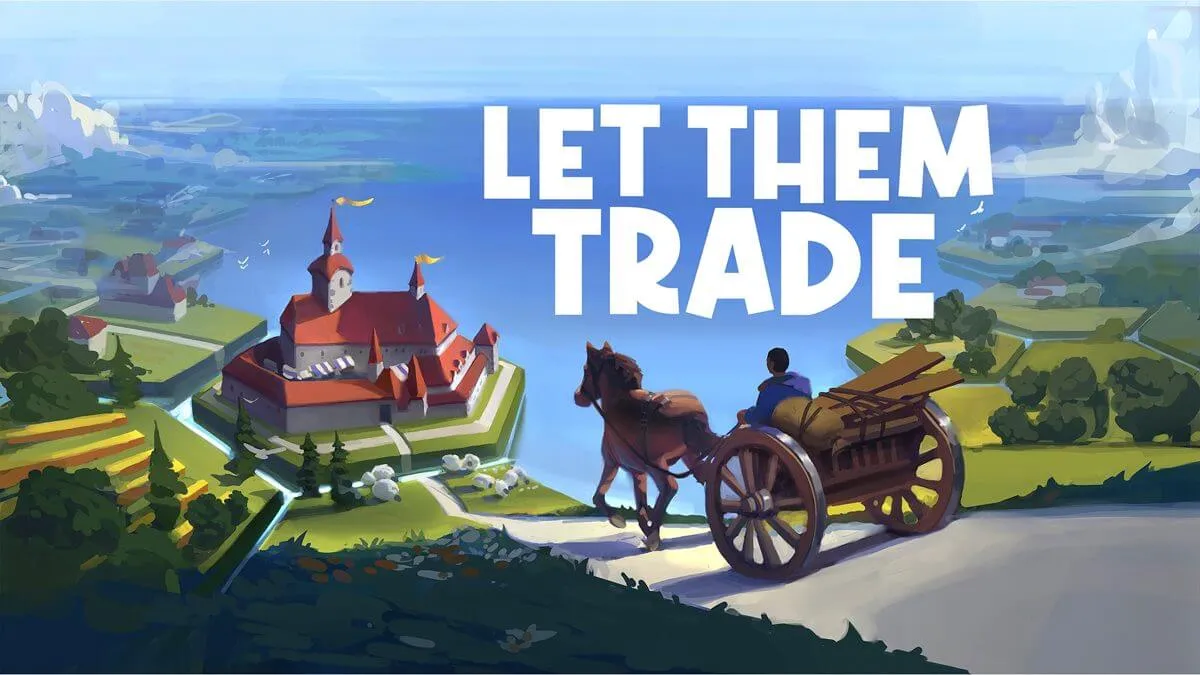

“Let Them Trade” enters the city-building space with a clear and quiet proposition. It is a game focused on economic management, placing the player in the role of a monarch overseeing a growing kingdom. The core premise involves establishing a network of settlements that, once connected, trade goods autonomously.
This design immediately sets it apart from more intensive simulations by emphasizing a relaxed, low-pressure style of play. Its identity is further defined by a distinct visual presentation that mimics a physical board game laid out on a table.
The player’s function here is not one of granular control over every citizen and workshop. Instead, the game asks you to be a facilitator, making high-level decisions about placement and infrastructure, then sitting back to watch your clockwork kingdom run on its own.
The Wind-Up Kingdom
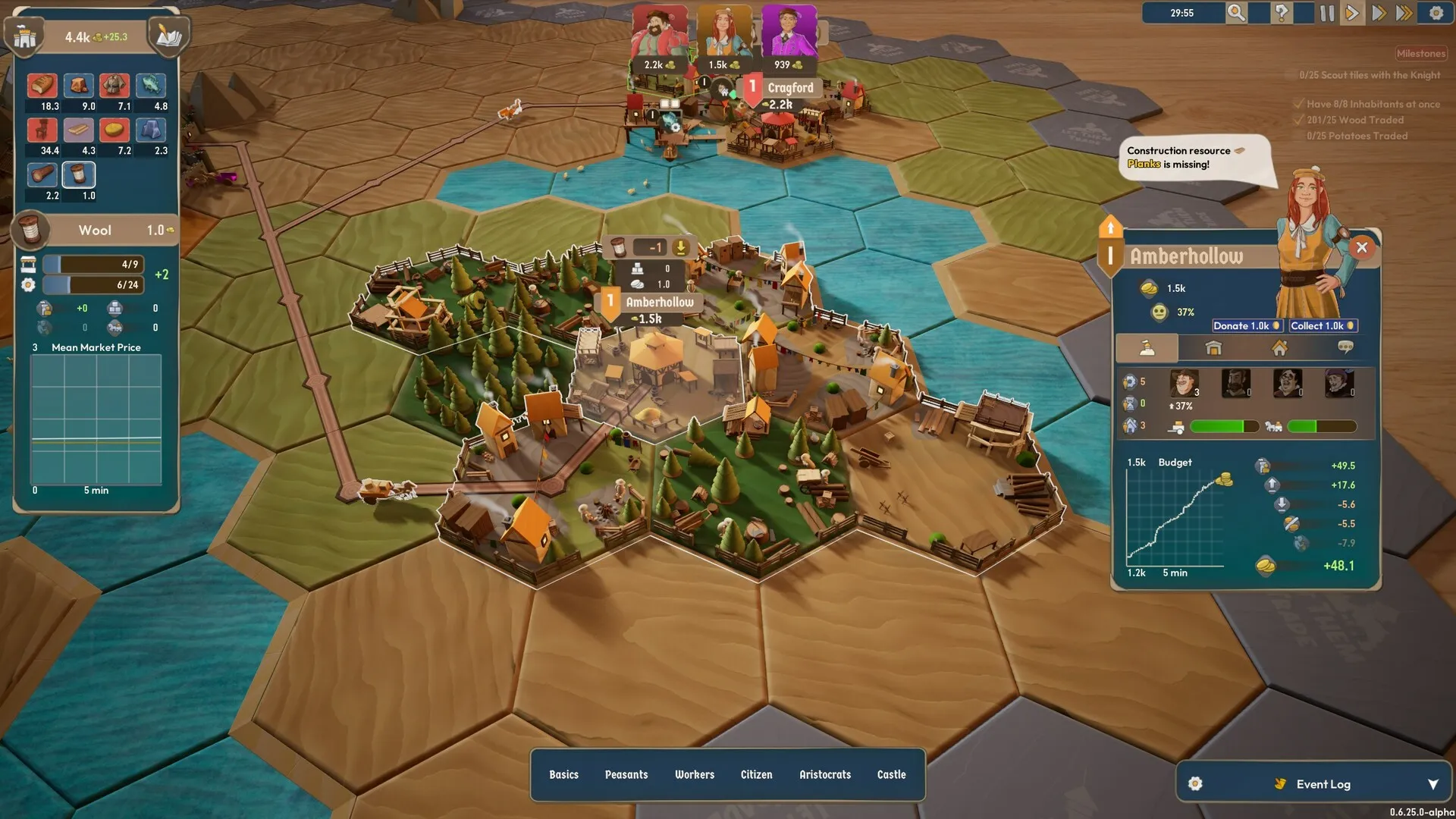
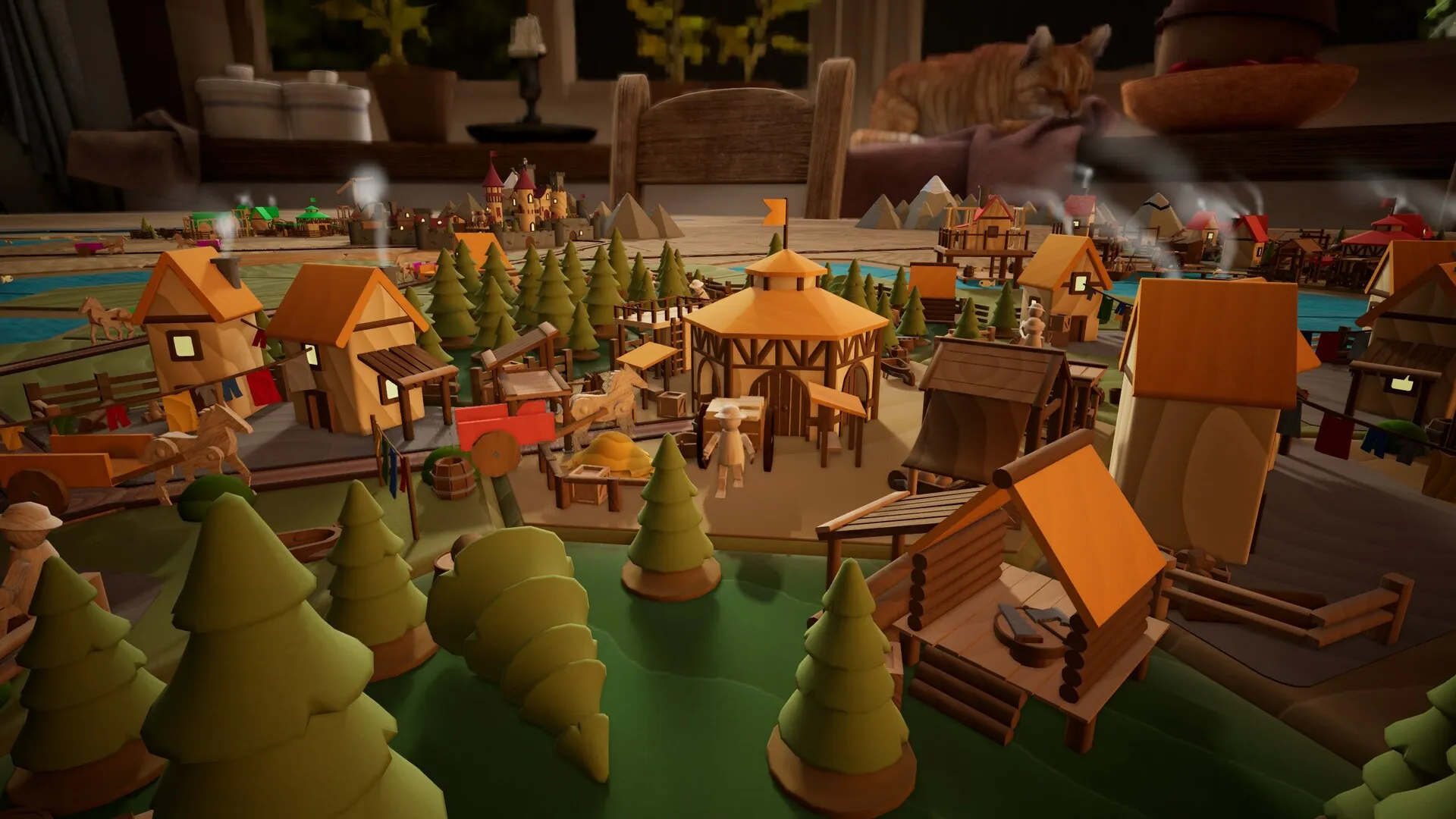
The game’s aesthetic is its most immediate and defining feature. The entire world is presented as a handcrafted board game, a miniature diorama of a kingdom sitting on a wooden table. The hexagonal tiles that form the land, the resource tokens, and the small character figurines all appear to be carved from wood, with visible grain giving them a tactile, charming quality.
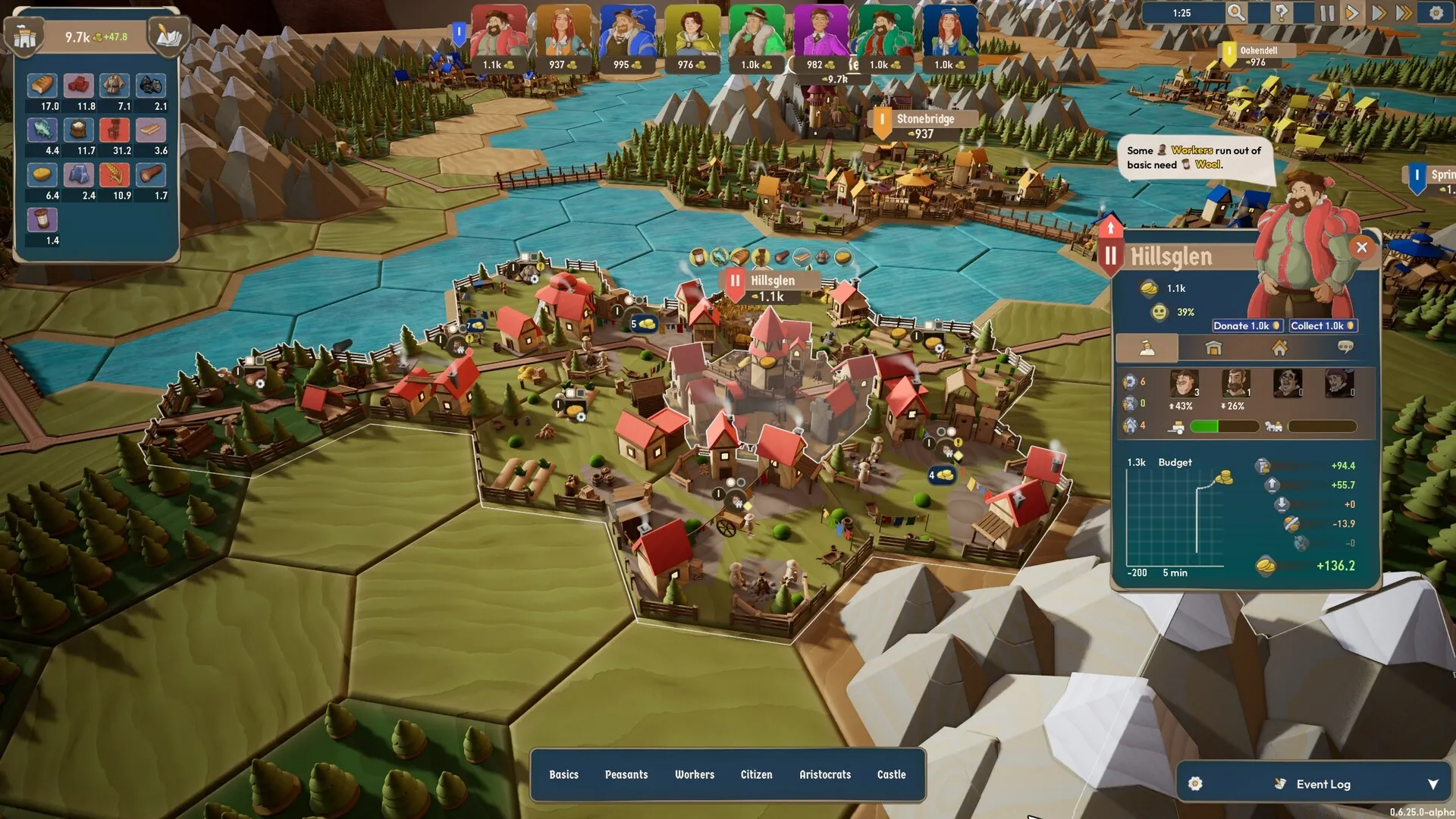
This presentation is not merely cosmetic; it informs the entire feel of the experience. The core gameplay loop is an extension of this tabletop philosophy. The player’s primary actions are placing cities on the grid, usually near essential resources like forests or stone deposits, and then drawing trade routes to connect them. Once linked, the system takes over.
A city producing potatoes will automatically send its goods to a city that needs them, generating tax revenue for the royal treasury. This hands-off economic model is central to the game’s identity, creating a relaxing atmosphere where the goal is to build a self-sustaining engine rather than constantly manage supply lines, a notable departure from the demanding logistics of games like the Anno series.
Levers of a Clockwork Realm
While the economy runs itself, player progression is guided by a few key systems. The main driver is the Research Tree, a large panel of unlockable buildings and upgrades that gate your kingdom’s advancement. Here you can unlock a bakery to turn wheat into bread or upgrade your lumberjacks for better efficiency. While extensive, this system suffers from a lack of clarity.
Some upgrades, like the tavern, offer no descriptive text, leaving the player to guess its function. This ambiguity can frustrate strategic planning. Player agency on the map comes from a controllable Knight unit, used to explore new tiles and deal with bandits. The combat system is intentionally simple; encounters are resolved with a single, automatic dice roll.
This design choice effectively removes complex conflict as a central pillar, framing bandits as a simple nuisance that can disrupt trade rather than a serious military threat. For players wanting an even more peaceful experience, the game includes an option to disable them entirely, reinforcing that the game’s heart is in building, not battling.
A Forgiving Monarch
“Let Them Trade” offers two primary ways to play, both reinforcing its accessible nature. The Campaign mode presents a series of scenarios that cleverly double as an extended tutorial, introducing core mechanics like resource chains and managing citizen happiness through specific objectives.
These missions guide the player effectively, though some objectives can be initially vague, requiring a bit of trial and error. For those who prefer unrestricted creation, the Sandbox mode allows players to build freely without mission constraints.
The game’s philosophy of forgiveness is one of its strongest features. Misplacing a city or building an inefficient production chain is not a catastrophic failure. Players can demolish any structure and receive a partial refund of its cost, which encourages experimentation and lowers the stakes considerably. This forgiving design is complemented by a light, satirical tone in its writing.
The king’s advisors and subjects often make self-aware jokes about the absurdities of monarchy, such as the populace’s displeasure at funding a gaudy golden statue, adding a layer of humor to the proceedings.
The Shallow End of the Supply Chain
The game’s greatest strength, its simplicity, is also the source of its most significant limitation. “Let Them Trade” is designed to be approachable, but this comes at the cost of long-term strategic depth. Once the core economic loop is mastered, the game offers few new challenges or complex systems to engage with.
Progression becomes a matter of increasing the scale of your existing network rather than adapting to new, evolving problems. For players accustomed to deep, intricate simulators, the gameplay may feel shallow after a few hours, hitting a “content wall” where there is little left to discover in the research tree or the game’s mechanics.
This intentional lack of complexity is a valid design choice for a “cosy” game, but it may leave strategy veterans wanting more. The experience is also hampered by some technical faults. Reported bugs include campaign progress being reset, UI elements vanishing, and incorrect character portraits appearing in dialogue, minor issues that can disrupt the otherwise smooth experience.
The Review
Let Them Trade
"Let Them Trade" successfully delivers on its promise of a relaxing city-builder with a delightful board game aesthetic. Its forgiving, hands-off economic loop is perfect for newcomers seeking a low-pressure experience. While its intentional simplicity results in a lack of long-term strategic depth and some minor technical flaws are present, it is a charming and well-realized game for its target audience.
PROS
- Charming and consistent board game visual style.
- Relaxing, low-pressure gameplay loop.
- Forgiving mechanics encourage experimentation.
- Excellent entry point for newcomers to the genre.
CONS
- Lacks deep, long-term strategic complexity.
- Some upgrade descriptions are unclear.
- Can feel shallow once the core loop is mastered.
- Minor but noticeable technical bugs.