





















Every era develops its own rituals of courtship, and ours, it seems, is defined by performance. We curate profiles, stage photographs, and broadcast relationships for public consumption, often leaving the authenticity of the underlying connection as an open question. The romantic comedy, a genre perpetually engaged with these rituals, must adapt.
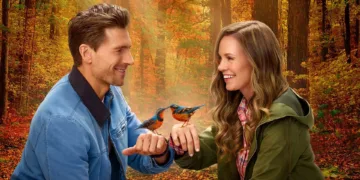
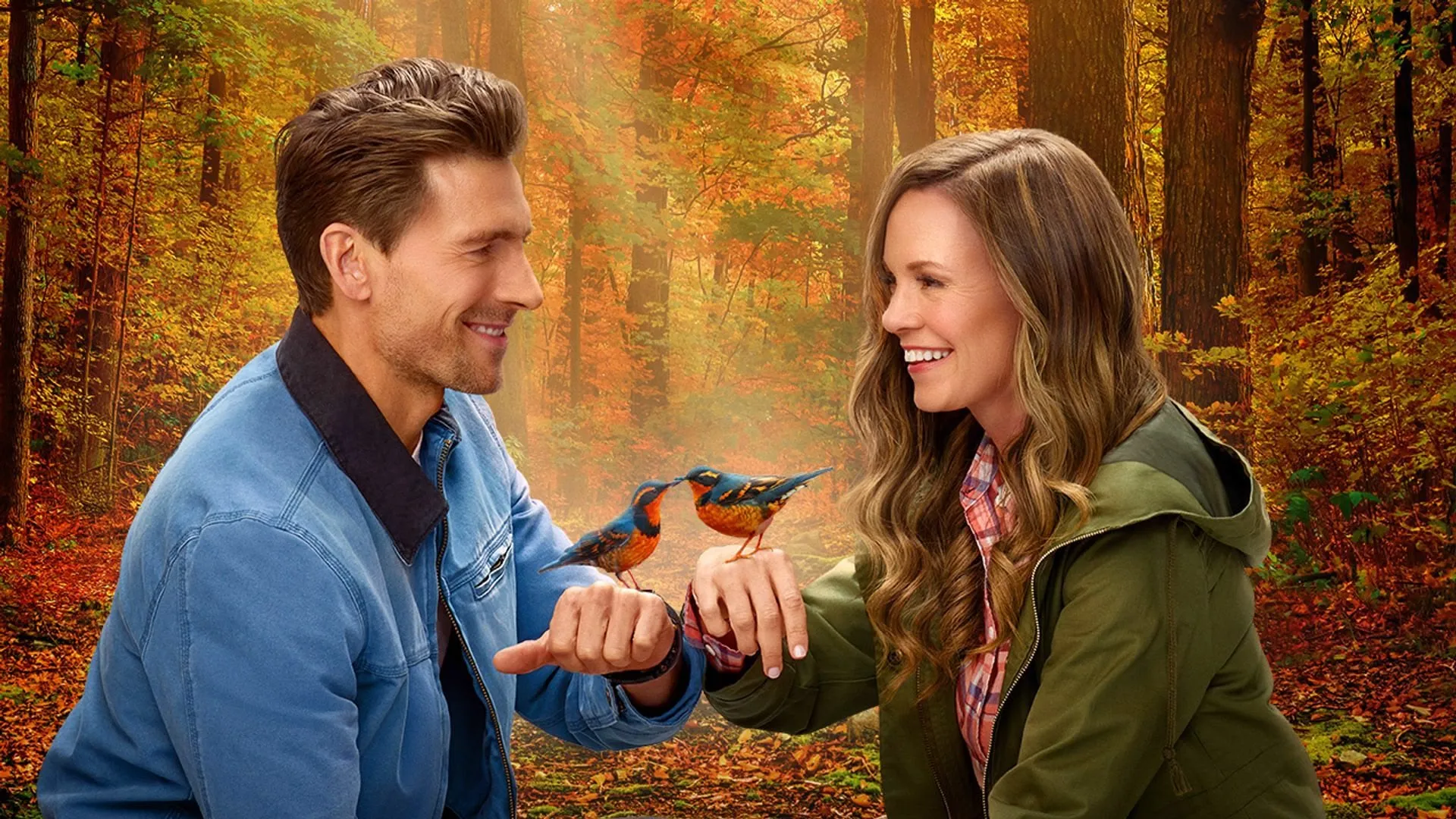
Adventures in Love & Birding places this modern preoccupation inside a story that feels, on its surface, entirely traditional. It presents two individuals, Celeste and John, both recovering from the emotional shrapnel of broken relationships. Thrown together by the gentle machinations of plot, they enter a multi-week birding competition, a quiet and contemplative hobby that seems a world away from the pressures of digital life.
The film’s central conceit, however, is pure performance. A misunderstanding prompts them to feign a romance, a charade they maintain to appease a circle of meddling colleagues. This act of “performative coupling” becomes the film’s primary subject. It uses the quiet backdrop of ornithology to explore a thoroughly contemporary dilemma: in a world that demands the constant broadcasting of happiness, can a simulated emotion, held long enough and practiced with sufficient care, eventually alchemize into the real thing? The narrative follows this delicate process, watching as a relationship, designed for an audience, slowly turns inward.
A Symbiotic Pairing
The film’s emotional core is sustained by its two leads, characters who feel less like romantic archetypes and more like specific studies in post-breakup inertia. Celeste, played with a gentle vulnerability by Rachel Boston, is grappling with a form of identity dissolution. After a 22-year relationship, she is untethered from the roles that defined her adulthood, and she faces the impending quiet of an empty nest.
Her cautiousness is a form of self-preservation, a life organized to prevent further emotional damage. The birding competition, and by extension John, is an unsought disruption, a catalyst that forces her out of a carefully maintained stasis. For her, the journey is one of rediscovery, of finding a self that exists independently of her history.
John (Andrew Walker) embodies a different kind of modern malaise: vocational dissatisfaction. Trapped in a corporate job that offers stability but no meaning, his passion for the natural world represents an escape. He is a man who would rather understand the migration patterns of the spotted barn owl than climb a corporate ladder. The prize money from the competition is his ticket out, a chance to align his work with his passion.
Their connection is therefore symbiotic. He offers her a new interest and a gentle push back into the world; she offers him unwavering encouragement for a dream others dismiss as impractical. Their chemistry is not one of fiery passion but of quiet restoration. The public kiss at a bowling alley becomes a pivotal moment, a rupture in their shared performance where the line between the act and the feeling dissolves, creating a genuine intimacy that catches them both off guard.
The Trope as Ecosystem
A narrative trope like “fake dating” cannot exist in a vacuum; it requires a carefully constructed ecosystem of social pressures to feel plausible. The film builds this environment with methodical precision. The birding competition itself is the perfect narrative framework, a low-stakes contest that enforces proximity and shared purpose over an extended period.
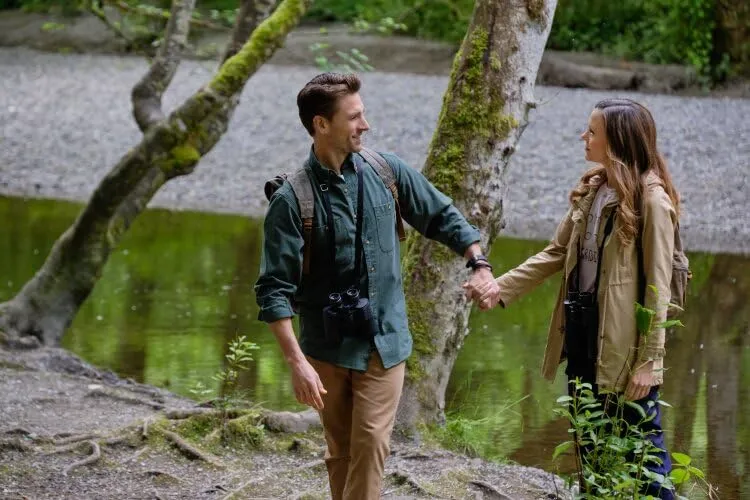
It is an activity that demands patience and quiet observation, mirroring the slow, tentative way their actual feelings develop. This is the antithesis of the modern “swipe right” romance; their connection is built through whispered conversations in the woods and shared moments of discovery, not witty text exchanges.
The supporting characters act as the system’s environmental pressures. Celeste’s coworkers exert a kind of “coercive community pressure,” a well-intentioned but suffocating force that reflects a societal belief that a single woman must be actively seeking partnership. Their nosiness is the catalyst that validates the romantic charade. John’s competitive ex-girlfriend provides the necessary antagonist, a figure from the past whose presence reinforces their bond as a team.
These external forces create a feedback loop: the world’s expectation of their romance compels them to act, and the act itself generates the emotion the world expects. The almost painfully direct symbolism of Celeste’s artist daughter preparing to “flee the nest” serves as a generational counterpoint. While the daughter consciously chooses her new path, Celeste stumbles into hers, discovering that a new beginning can be something you are pushed into, not just something you choose.
The Comforts of a Gilded Cage
One approaches a film like this not for the shock of the new, but for the deep, predictable comfort of the familiar. Its narrative arc is a feature, not a flaw. The film operates within the gilded cage of its genre conventions, a structure that guarantees a gentle journey and a happy resolution.
In a media landscape saturated with moral ambiguity and grim realism, the appeal of such a constrained, optimistic world is undeniable. It serves a specific cultural function as a form of emotional regulation, a safe harbor from the complexities of modern life. Its purpose is to be a pleasant and effective escape.
The film succeeds within these constraints because it decorates its cage beautifully. The unique birding premise provides a splash of fresh color, preventing the story from feeling stale. The film’s aesthetic, rich with autumnal hues and scenic natural landscapes, is integral to its function as a “comfort watch.”
The ultimate message, that personal renewal is always possible, taps into a powerful contemporary ideal of the “second act.” It presents this transformative journey in a highly idealized, low-stakes format, which is both its primary charm and its most significant departure from reality. It offers a hopeful, heartfelt story that delivers precisely what its audience seeks: a romance that feels both as comfortable as a well-worn sweater and as refreshing as an autumn morning.
Full Credits
Director: Michael Robison
Writers: Nicole Baxter, Sarah T. Dubb
Cast: Rachel Boston, Andrew Walker, Talisa Mae Stewart, Veena Sood, Jason Tremblay
The Review
Adventures in Love & Birding
Adventures in Love & Birding successfully navigates the predictable flight path of a Hallmark romance, elevated by the genuine chemistry between Rachel Boston and Andrew Walker. Its unique birding premise provides a fresh backdrop for the familiar "fake dating" trope, resulting in a story that is both comforting and quietly charming. While it never soars beyond the confines of its genre, the film is a heartfelt and well-crafted escape, proving that a familiar story, told with sincerity and warmth, can still be a delightful watch.
PROS
- The believable connection between Rachel Boston and Andrew Walker is the film's heart.
- Using a competitive birding event as the setting feels fresh and original for the genre.
- The movie is a successful piece of feel-good, low-stress escapism.
CONS
- The story follows the standard rom-com formula with few surprises.
- Conflicts are gentle and resolved easily, lacking significant tension.
- It operates strictly within the Hallmark template, which may not appeal to all viewers.