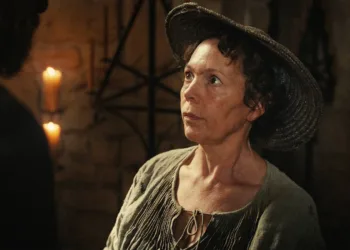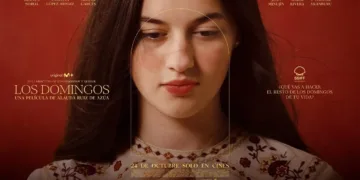


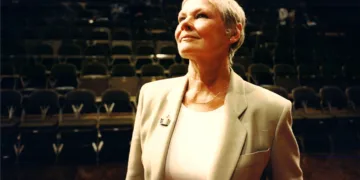









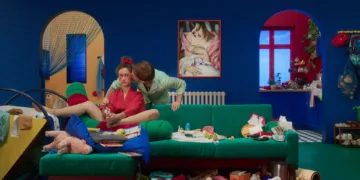


















Stories of teenage rebellion are common. Stories of teenage renunciation are not. Sundays begins by posing a quiet, almost anachronistic question within a thoroughly modern context: what does a family do when their daughter chooses God over the world? The film introduces us to Ainara, an intelligent seventeen-year-old whose life is sketched with familiar details.
She attends a Catholic school, navigates life with a widowed, distracted father named Iñaki, and finds a surrogate mother in her fiercely secular aunt, Maite. This carefully balanced world, already stressed by unspoken financial and emotional debts, is irrevocably tilted when Ainara announces her intention to become a cloistered nun.
Director Alauda Ruiz de Azúa frames this decision not with hysterical drama, but with a disquieting calm. The narrative is not concerned with the spectacle of a crisis, but with the intricate, painful process of a family confronting a choice that lies completely outside their collective understanding. It sets its stage as a behavioral study, examining the fallout of a single, radical act of faith.
Fault Lines at the Dinner Table
Ainara’s decision functions as a pressure test on the family’s structural integrity, and the resulting fractures are deep. The film methodically dissects each character’s response, revealing their own insecurities and contradictions. Her father Iñaki’s reaction is a masterful portrait of passive resistance.
He champions Ainara’s right to choose, a liberal stance that doubles as a convenient excuse to avoid a difficult confrontation. This deliberate inaction creates a vacuum of authority, forcing others to act. Maite, Ainara’s aunt, rushes to fill that space with a frantic, almost dogmatic opposition. Her horror is rooted in a secular worldview that sees the convent as a prison and her niece’s choice as a tragic surrender of potential. Her arguments reveal her own anxieties about a life fully lived.
The film uses the recurring set piece of the family meal to great effect. These scenes are not simple arguments; they are brilliantly choreographed displays of dysfunction, where years of resentment surface through loaded statements and weaponized silence.
The grandmother and uncle oscillate between the two poles, their wavering positions showing a generation caught between fading tradition and assertive modernity. The family’s inability to communicate becomes a reflection of a larger cultural tension in Spain, where a deep Catholic history collides with an equally fervent secularism.
The Architecture of Belief
The narrative’s boldest choice is its refusal to fully explain its protagonist. Ainara is the film’s center of gravity, yet her internal world remains deliberately opaque. The script presents several potential catalysts for her vocation—the unresolved grief over her mother’s death, the quiet charisma of the Mother Superior, a flicker of teenage romance—but commits to none of them.
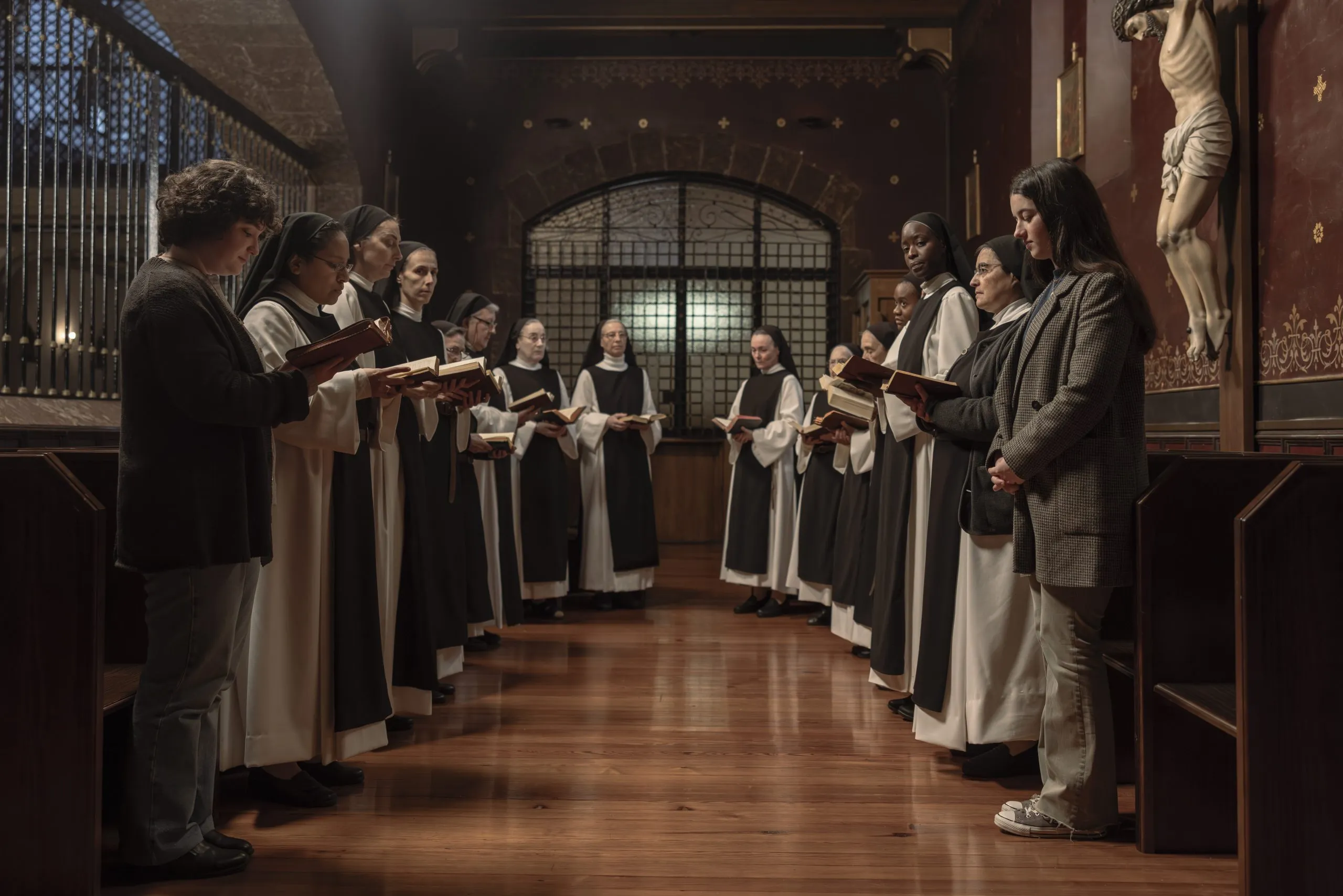
This ambiguity is the key to the film’s structure. It shifts the story’s focus away from a simple psychological profile and toward a study of how an inexplicable choice is interpreted by others. Ainara becomes a mirror, reflecting the beliefs, fears, and prejudices of her family. Blanca Soroa’s debut performance is a marvel of restraint.
She communicates Ainara’s conviction not through speeches, but through an unwavering gaze and a stillness that feels like a form of strength. This quietude is the perfect counterpoint to Patricia López Arnaiz’s masterful work as Maite.
Arnaiz portrays the aunt’s love and frustration as two sides of the same coin. She makes Maite a compelling, complex antagonist, a woman whose fierce desire to protect her niece is indistinguishable from her need to see her own values validated. Their dynamic forms the powerful, emotionally honest core of the film.
A Cinema of Restraint
Alauda Ruiz de Azúa’s direction is defined by its patience and precision. The visual language is observant, keeping an emotional distance that encourages analysis over sentimentality. The camera does not seek to judge or explain but to witness the unfolding of this interpersonal drama.

This disciplined approach allows the film to avoid the caricatures that often plague stories about faith. It presents a genuine duel between deeply held worldviews, treating each with structural integrity. The film’s most nuanced theme may be its exploration of secular fanaticism.
It suggests that Maite’s rigid inability to comprehend Ainara’s choice is its own form of fundamentalism, a certainty that ultimately isolates her. In an era marked by a search for meaning, the film feels timely, examining the appeal of ancient structures in a disorienting world without offering an easy endorsement.
It is a work that trusts its audience, withholding simple answers and instead leaving behind a provocative and resonant silence, embodied in a final shot that resolves nothing and questions everything.
“Sundays” is a Spanish drama film directed by Alauda Ruiz de Azúa. It premiered at the 73rd San Sebastián International Film Festival on September 22, 2025, and is set for a theatrical release in Spain on October 17, 2025. The story follows Ainara, a brilliant 17-year-old who surprises her family by considering a life as a cloistered nun instead of going to university. The film is a production of several companies including Buenapinta Media, Sayaka Producciones, and Movistar Plus+.
Full Credits
Director: Alauda Ruiz de Azúa
Writers: Alauda Ruiz de Azúa
Producers: Marisa Fernández Armenteros, Sandra Hermida, Nahikari Ipiña, Manu Calvo
Cast: Blanca Soroa, Patricia López Arnaiz, Miguel Garcés, Juan Minujín, Mabel Rivera, Nagore Aranburu
Director of Photography (Cinematographer): Bet Rourich
Editors: Andrés Gil
Composer: David Cerrejón
The Review
Sundays
Alauda Ruiz de Azúa's Sundays is a meticulously constructed and intellectually honest film that forgoes melodrama for a more challenging quietude. Anchored by two phenomenal performances, it examines the collision of faith and secularism with rare maturity. The film's deliberate pace and refusal to provide easy answers may not satisfy all viewers, but for those seeking a thoughtful and superbly acted drama, it is a deeply rewarding experience. It is a potent study of belief and the familial fault lines it can expose.
PROS
- The screenplay handles complex themes of faith, family, and secularism with nuance and without judgment.
- The cast is excellent, with Blanca Soroa and Patricia López Arnaiz delivering powerful, layered performances that ground the film's central conflict.
- The patient and observational direction from Alauda Ruiz de Azúa is confident and serves the story perfectly.
- The film avoids simple heroes or villains, presenting a family of flawed, believable people.
CONS
- The methodical and slow pace might feel alienating to viewers accustomed to more plot-driven dramas.
- The refusal to explain the protagonist's motivations or offer a clean resolution may be frustrating for some.
- The restrained, analytical style can create an emotional distance, emphasizing observation over immersion.