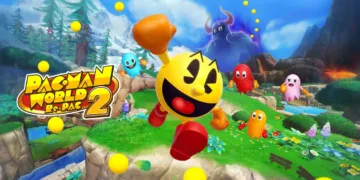



























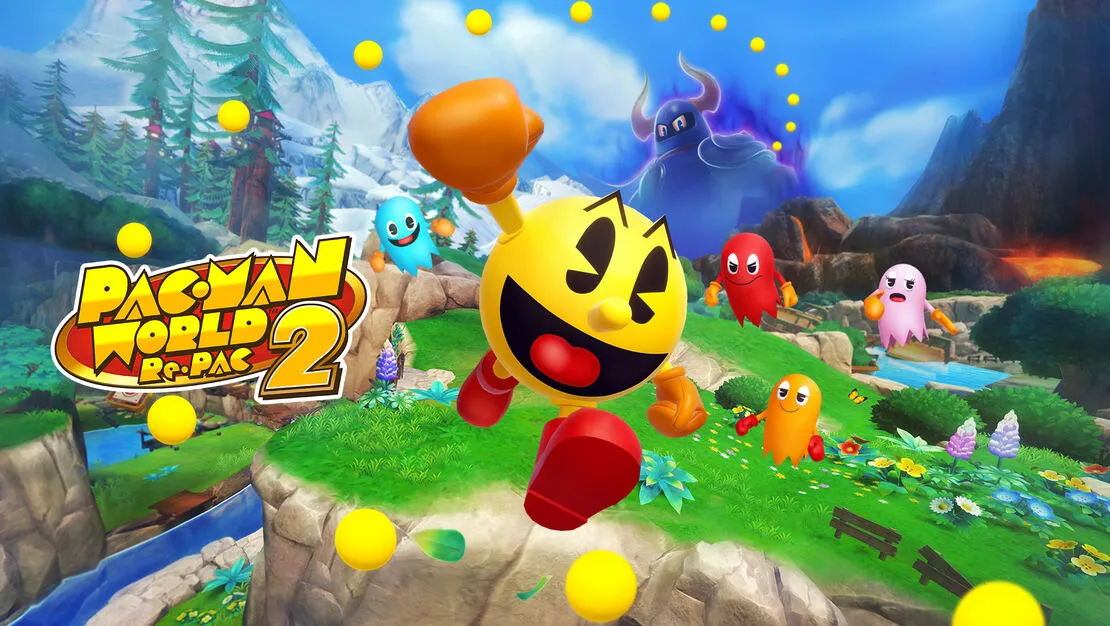

Pac-Man World 2: Re-Pac arrives as part of the yellow icon’s broader cultural revival, appearing alongside his darker reimagining in Secret Level and crossover appearances in racing games. This represents far more than the typical remaster treatment we’ve seen applied to countless retro titles. Bandai Namco has essentially rebuilt the 2002 GameCube, PlayStation 2, and Xbox platformer from the ground up, addressing nearly every criticism leveled at the original while preserving what made it memorable in the first place.
The premise remains charmingly simple: the Ghost Gang infiltrates Pac-Village under cover of darkness, stealing the sacred golden fruit that keeps the malevolent spirit Spooky sealed away. Their mischief backfires spectacularly, releasing this supernatural threat who commands them to scatter the fruit across six distinct regions while plotting revenge against the Pac citizens. What follows is a quest through themed environments that balances classic 3D platforming conventions with mechanics drawn directly from Pac-Man’s arcade heritage.
The experience clocks in at roughly six to seven hours for the main campaign, though completionists will find significantly more content through mission challenges, time trials, and collectible hunting. This places it squarely within the shorter end of the platformer spectrum, though the density of optional content and replay incentives helps justify the package.
Refined Movement: How Re-Pac Fixes the Original’s Shortcomings
The most immediately noticeable improvement lies in Pac-Man’s expanded and refined moveset. His core abilities feel familiar to anyone who played the original: the signature butt-bounce can stun enemies while reaching elevated platforms, the Rev Roll builds momentum like Sonic’s spin dash, and pellet throwing provides ranged combat options. The flutter jump extends air time for tricky platforming sequences, while power pellets transform him into the chomping force we know from the arcade games.
Where Re-Pac truly shines is in its quality-of-life enhancements. The addition of a landing indicator eliminates the guesswork that plagued 3D platformers of the early 2000s, showing exactly where your jumps will connect. This single feature transforms potentially frustrating precision sections into smooth, enjoyable traversal. The flip kick, now executable both in the air and on solid ground, becomes one of your most frequently used attacks thanks to its versatility and satisfying impact.
The camera system deserves special recognition as perhaps the remake’s greatest technical achievement. The original’s fixed and often problematic camera has been completely rebuilt with free movement and intelligent positioning that rarely interferes with gameplay. This addresses what was arguably the 2002 version’s most significant flaw, allowing players to appreciate the level design without wrestling with sightlines.
Vehicle sections break up the standard platforming with submarine piloting and skating segments that feel natural within the game’s world. The two-player Pac-Drone mode offers a clever solution for involving less experienced players, allowing them to assist without requiring full platforming skills. Accessibility options including the invincibility-granting “fairy mode” ensure that players of varying skill levels can experience the adventure.
The Rev Roll’s default button mapping to B creates some awkwardness when trying to aim with the right stick simultaneously, representing one of the few control decisions that feels less than optimal. This minor complaint aside, the movement mechanics successfully preserve the original’s strengths while systematically eliminating its weaknesses.
Reimagined Worlds: Level Design That Improves Upon Memory
Rather than creating direct recreations of the 2002 levels, the development team has taken the bold approach of reimagining and expanding each stage while maintaining their core identity. The very first level demonstrates this philosophy by relocating a maze segment from the opening to a later point in the stage, improving pacing while preserving the original’s structure. Environmental hazards have been updated with modern sensibilities: confusing thorn bushes become clearly identifiable bear traps, eliminating visual ambiguity that could frustrate players.

The six themed regions follow platformer conventions while finding ways to make each area feel distinct. Forest environments emphasize vertical traversal through treetops, ice levels introduce skating mechanics and slippery surfaces, while underwater sections showcase Pac-Man’s unlimited oxygen supply in submarine segments. Each region typically contains three to four standard levels before culminating in an enhanced boss encounter.
Boss battles represent some of the remake’s most successful improvements. The mechanical frog that serves as your first major opponent exemplifies this approach: where the original simply required waiting for tongue attacks and countering with butt-bounces, Re-Pac introduces multiple attack patterns, environmental hazards, and strategic elements like explosive enemies that can be caught in the boss’s tongue for additional damage opportunities.
The mission system adds substantial replay value through three challenges per level, typically involving comprehensive fruit collection (often 20+ items per stage), time trial medals, and varied bonus objectives. While the high collectible count can feel excessive given that items reset between attempts, the system provides clear goals for players seeking extra content. Successful mission completion unlocks costumes, village decorations, and classic arcade games housed within Pac-Village’s hub area.
Time trials with online leaderboards add a competitive element that extends the game’s lifespan, though some players may find the levels too lengthy for optimal speedrunning. The hub world itself offers charm through character interactions and arcade access, though legal issues have removed Ms. Pac-Man from the available titles, leaving players with the original Pac-Man, Pac-Mania, and Pac-Attack.
Technical Excellence Meets Nostalgic Charm
The visual transformation impresses immediately, replacing the original’s somewhat dated polygonal style with a bright, colorful presentation that brings Pac-Land’s inhabitants to life with genuine personality. The decision to render cutscenes in-engine rather than using FMV sequences allows for much higher fidelity storytelling that integrates seamlessly with gameplay visuals. Character animations feel lively and expressive, particularly during boss encounters where enemies display clear personality through their movements and reactions.

Performance on Switch 2 offers two distinct modes: a 60fps performance option that maintains smooth gameplay and a 30fps quality mode with marginally improved resolution. The performance difference makes the 60fps option clearly superior for platforming, while the resolution boost in quality mode provides minimal visual benefit. Original Switch owners are limited to 30fps maximum across all modes, though the game remains playable. Switch Lite users may find the presentation uncomfortable due to screen size limitations that make certain visual elements difficult to parse.
The audio design successfully modernizes classic Pac-Man sound effects while preserving their nostalgic appeal. Martin Sherman’s return as Pac-Man’s voice provides continuity with later series entries, while Xander Mobus delivers an entertainingly villainous performance as Wormwood. The bouncy soundtrack remains unchanged from the original, a wise decision given its quality and perfect match to the game’s energetic tone.
Steam Deck compatibility adds another platform option with verified status and solid performance metrics, running consistently at 60fps with high settings while providing approximately three and a half hours of battery life on LCD models.
The pricing at £34.99 creates the package’s primary point of contention. While fans of the original will likely find the improvements justify the cost, newcomers may struggle with spending full price on a six to seven hour experience in a genre filled with alternatives. The substantial replay value through missions, time trials, and collectibles helps offset the brief main campaign, though this additional content appeals more to completionists than casual players.
This definitive version succeeds in making the 2002 original feel genuinely primitive by comparison, representing the rare remake that improves upon nearly every aspect of its source material. For genre enthusiasts and series fans, Re-Pac stands as an exemplar of how to properly modernize a classic platformer. The question of value will depend largely on individual tolerance for shorter experiences and appetite for optional content, though the quality of execution makes a compelling case regardless of duration.
The Review
Pac-Man World 2: Re-Pac
Pac-Man World 2: Re-Pac transforms a flawed but charming platformer into something genuinely excellent. The landing indicator, rebuilt camera system, and expanded levels address every major criticism while preserving the original's playful spirit. Though the brief campaign and premium pricing may deter casual players, this represents platforming craftsmanship at its finest. A masterclass in how remakes should be executed.
PROS
- Excellent camera system fixes original's biggest flaw
- Landing indicator eliminates platforming frustration
- Enhanced boss battles with new mechanics
- Solid 60fps performance on modern hardware
- Substantial replay value through missions and time trials
CONS
- Short 6-7 hour main campaign
- High price point for the content offered
- Rev Roll button mapping feels awkward
- Some invisible boundaries remain from original era
- Limited appeal for newcomers to the series